
Neural Processing Units (NPUs)
Revolutionizing AI Computation with Specialized Hardware
Key Takeaways
- Specialized Efficiency: NPUs are tailored for AI and machine learning tasks, offering superior power efficiency and parallel processing capabilities compared to traditional CPUs and GPUs.
- Versatile Applications: From smartphones and IoT devices to data centers, NPUs enhance performance in a wide range of devices by accelerating tasks like image recognition and natural language processing.
- Future Integration: The ongoing advancements and industry investments are driving the integration of NPUs into mainstream computing architectures, paving the way for more sophisticated AI-driven applications.
Introduction to Neural Processing Units
Neural Processing Units (NPUs) represent a significant advancement in computing technology, specifically designed to accelerate artificial intelligence (AI) and machine learning (ML) tasks. Unlike traditional Central Processing Units (CPUs) and Graphics Processing Units (GPUs), NPUs are specialized hardware accelerators optimized for the unique demands of neural network computations. By focusing on parallel processing and energy efficiency, NPUs enhance the performance of AI applications across various platforms and devices.
Technical Architecture of NPUs
Parallel Processing Capabilities
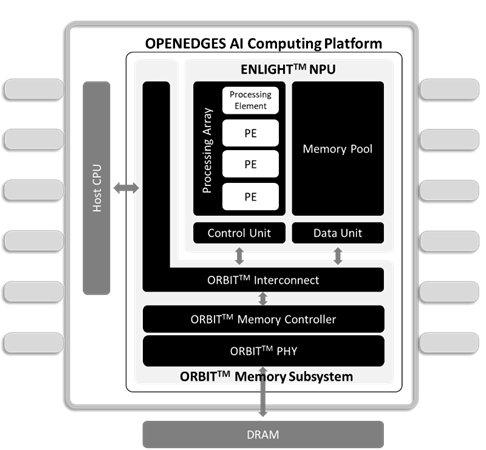
At the core of NPU architecture is the ability to perform parallel processing, which is essential for handling the complex mathematical operations inherent in neural networks. NPUs are designed to execute multiple operations simultaneously, significantly speeding up tasks such as matrix multiplications and vector operations that are common in deep learning algorithms.
Specialized Circuits for Matrix Operations
NPUs incorporate dedicated circuits specifically optimized for matrix and vector computations. These specialized components allow NPUs to handle operations like convolutions and activations more efficiently than general-purpose processors. By tailoring the hardware to the specific needs of neural networks, NPUs achieve higher throughput and reduced latency in AI tasks.
Memory Hierarchies and Data Routing
Efficient memory management is crucial for maximizing the performance of NPUs. They feature optimized memory hierarchies and advanced data routing networks that facilitate rapid data access and minimal bottlenecks. This ensures that large models and high volumes of data can be processed swiftly, maintaining the flow of information necessary for real-time AI applications.
Reconfigurable Logic
Some advanced NPUs are equipped with reconfigurable logic, allowing them to adapt their architecture dynamically to different types of neural network workloads. This flexibility enables NPUs to handle a diverse range of AI applications, from real-time image processing to natural language understanding, without compromising performance.
Comparison with CPUs and GPUs
Central Processing Units (CPUs)
CPUs are the backbone of general-purpose computing, capable of handling a wide array of tasks with versatility. However, their architecture is not optimized for the highly parallel and specific computations required by deep learning models. While CPUs can perform AI tasks, they do so less efficiently in terms of power consumption and processing speed compared to NPUs.
Graphics Processing Units (GPUs)
GPUs excel at parallel processing and have been extensively used for training deep neural networks. They leverage numerous cores to perform simultaneous computations, making them well-suited for matrix and vector operations. However, NPUs surpass GPUs in power efficiency and are often more finely tuned for inference tasks on edge devices, where energy conservation and real-time processing are critical.
Other Accelerators: TPUs and Beyond
Tensor Processing Units (TPUs) and other AI accelerators share similarities with NPUs, focusing on enhancing neural network computations. While TPUs, developed by companies like Google, are designed for specific ecosystems, NPUs offer broader applicability across various hardware platforms. The terminology and specific optimizations may vary by vendor, but the overarching goal remains the same: to improve the efficiency and speed of AI processing.
Applications of NPUs
Consumer Electronics
NPUs are increasingly integrated into consumer devices such as smartphones, laptops, and tablets. In smartphones, NPUs enable advanced AI-driven features like facial recognition, real-time image and video processing, and enhanced voice assistants. In laptops, NPUs contribute to smoother performance in AI applications, providing users with faster and more efficient computing experiences.
Internet of Things (IoT) Devices
IoT devices, often constrained by power and computational resources, benefit significantly from NPUs. By offloading AI tasks to NPUs, these devices can perform complex processing locally, reducing the need for constant cloud connectivity. This leads to lower latency, improved privacy, and extended battery life, making NPUs essential for the next generation of smart and autonomous devices.
Data Centers and Enterprise Applications
In data centers, NPUs accelerate AI workloads, enhancing the efficiency of tasks such as natural language processing, image analysis, and predictive analytics. Enterprises leverage NPUs to improve the performance of AI-driven applications, enabling faster data processing and more accurate insights. The integration of NPUs into data center infrastructure supports the growing demand for scalable and high-performance AI solutions.
AI-Driven Applications
NPUs play a critical role in powering various AI-driven applications across different sectors. For instance, in healthcare, NPUs facilitate real-time diagnostics and personalized treatment plans through advanced data analysis. In automotive industries, they enhance autonomous driving systems by enabling real-time perception and decision-making. Additionally, NPUs support applications in augmented and virtual reality, providing users with immersive and responsive experiences.
Software Ecosystem and Integration
Specialized Software Stacks
To fully leverage the capabilities of NPUs, specialized software stacks and libraries are essential. These software ecosystems are designed to interface effectively with NPU hardware, enabling developers to optimize AI models for enhanced performance. Frameworks such as TensorFlow and PyTorch have incorporated support for NPUs, allowing seamless integration and accelerated development of AI applications.
Software Development Kits (SDKs) and APIs
Vendors provide dedicated SDKs and APIs that empower developers to optimize model inference and, in some cases, even training on NPUs. These tools facilitate the conversion and quantization of models, reducing precision from 32-bit floating-point to 16-bit or 8-bit integers. Such optimization techniques maintain model accuracy while boosting performance, making NPUs more efficient for deployment in diverse environments.
Model Optimization Techniques
Efficient utilization of NPUs often involves model compression and quantization. These techniques streamline AI models, reducing their size and computational complexity without significantly compromising accuracy. By adapting models to the specific strengths of NPUs, developers can achieve faster inference times and minimized resource usage, enabling broader application of AI technologies across various platforms.
Advantages of NPUs
Energy Efficiency
One of the standout advantages of NPUs is their superior energy efficiency compared to CPUs and GPUs when executing AI tasks. This is particularly crucial for mobile and edge devices where power consumption directly impacts battery life and overall device performance. NPUs deliver high computational power while maintaining low energy usage, making them ideal for sustained and intensive AI operations.
Performance Benefits
NPUs offer significant performance improvements in AI workloads, characterized by higher throughput and lower latency. Their ability to process multiple operations in parallel accelerates tasks such as image recognition, speech processing, and real-time data analysis. This leads to more responsive AI applications, enhancing user experiences and enabling new functionalities in various devices and systems.
Specialized Architecture
The architecture of NPUs is meticulously engineered to support neural network computations. By focusing on operations like matrix multiplication and convolution, NPUs provide a specialized pathway for AI processing. This tailored approach ensures that AI tasks are executed more efficiently, reducing the computational overhead and allowing for more complex and capable AI models.
Enhanced Edge AI Processing
NPUs are instrumental in advancing edge AI processing, where data is processed locally on devices rather than being sent to centralized servers. This local processing reduces latency, enhances privacy, and lowers bandwidth requirements. By integrating NPUs into edge devices, AI applications can operate more autonomously and efficiently, opening up possibilities for real-time and context-aware functionalities.
Industry Trends and Developments
Major Investments in NPU Technology
Leading technology companies such as Intel, AMD, and Qualcomm are heavily investing in the development and integration of NPUs. These investments reflect the growing recognition of NPUs' potential to enhance AI capabilities across various computing platforms. By incorporating NPUs into their product lines, these companies are setting the stage for widespread adoption of specialized AI hardware.
Integration into Mainstream Processors
NPUs are increasingly being integrated into mainstream processors, blurring the lines between traditional CPUs/GPUs and dedicated AI accelerators. For example, Intel's Core Ultra processors and AMD's Ryzen AI series include built-in NPUs, providing enhanced AI performance without the need for additional hardware. This seamless integration simplifies the deployment of AI applications and makes advanced AI features more accessible to consumers and enterprises alike.
Acquisitions and Partnerships
Strategic acquisitions and partnerships are driving the expansion and refinement of NPU technologies. For instance, NXP Semiconductors' acquisition of NPU startup Kinara underscores the strategic importance of NPUs in the semiconductor industry. Such moves enable companies to integrate cutting-edge NPU innovations into their products, accelerating the development of more powerful and efficient AI solutions.
Future Prospects
Growth in Edge Computing
The demand for edge computing is fueling the adoption of NPUs in a variety of applications that require real-time data processing and minimal latency. As devices become smarter and more autonomous, NPUs will play a pivotal role in enabling efficient and effective local AI processing. This trend is expected to continue, driving innovations that further enhance the capabilities and applications of NPUs.
Hybrid Architectures
Future developments in computing architectures are likely to feature hybrid systems that combine the strengths of CPUs, GPUs, and NPUs. Such hybrid architectures will provide versatile and power-efficient solutions capable of handling diverse computational tasks. By leveraging the specialized capabilities of NPUs alongside traditional processors, these systems will optimize performance and energy consumption across a wide range of applications.
Advancements in Algorithm Design
The evolution of NPUs is closely tied to advancements in AI and machine learning algorithms. As algorithms become more sophisticated, NPUs will adapt to support new computational patterns and requirements. This synergy will drive the creation of more powerful and efficient AI models, further expanding the potential applications and impact of NPUs in various industries.
Comparison Table: CPUs vs GPUs vs NPUs
| Feature | CPU | GPU | NPU |
|---|---|---|---|
| Primary Function | General-purpose computing | Parallel processing and graphics rendering | Accelerated AI and neural network computations |
| Architecture | Few cores optimized for sequential tasks | Many cores optimized for parallel tasks | Highly parallel with specialized circuits for AI operations |
| Energy Efficiency | Moderate | Less efficient for AI tasks | Highly efficient for AI and ML tasks |
| Use Cases | Running operating systems, applications | Gaming, graphics-intensive applications, some AI training | On-device AI processing, real-time inference, edge computing |
| Performance in AI Tasks | Less optimized | Good for training, less so for inference | Highly optimized for both training and inference |
| Integration | Found in all computing devices | Primarily in gaming and high-performance systems | Integrated into smartphones, IoT devices, and modern processors |
Conclusion
Neural Processing Units (NPUs) are transforming the landscape of artificial intelligence by providing specialized hardware tailored for the demanding computational needs of modern AI and machine learning applications. Their ability to deliver high performance with remarkable energy efficiency makes them indispensable across a myriad of devices and industries, from consumer electronics to enterprise data centers. As the technological ecosystem continues to evolve, the integration of NPUs into mainstream computing architectures and the ongoing advancements in NPU technology promise to unlock new possibilities in AI-driven innovation. The strategic investments by leading tech companies further underscore the critical role NPUs are set to play in shaping the future of intelligent computing.
References
Last updated February 13, 2025