
The Science of Nitrite Determination: Essential Methods for Health, Environment and Industry
Discover the critical techniques, applications, and significance of measuring nitrite levels across multiple sectors
Key Insights About Nitrite Determination
- Nitrites are crucial indicators of water quality, environmental pollution, and food safety that require precise measurement techniques.
- Multiple detection methods exist, from simple colorimetric tests to advanced spectrophotometry and chromatography, each with specific applications.
- Elevated nitrite levels can cause serious health issues including methemoglobinemia and potential carcinogenic effects through nitrosamine formation.
Understanding Nitrites and Their Significance
Nitrites (NO₂⁻) are nitrogen-oxygen compounds that serve as intermediate products in the nitrogen cycle. Their presence in water, food, and biological samples has significant implications for environmental quality, food safety, and human health. Nitrites can form naturally during biological processes or result from human activities like agricultural fertilizer use, improper waste management, or industrial processes.
Accurate determination of nitrite levels is essential across multiple sectors, from ensuring drinking water safety to monitoring aquatic ecosystems, from controlling food preservation to diagnosing urinary tract infections. The methods for nitrite determination have evolved significantly, offering various options tailored to different applications, precision requirements, and resource availability.
The Environmental and Health Impact of Nitrites
Nitrites play a dual role in our environment and health contexts. While they serve important functions in certain applications (like food preservation), their presence often indicates contamination or biological imbalances. High nitrite levels in drinking water can lead to methemoglobinemia (especially dangerous for infants), where nitrites interfere with oxygen transport in the blood. Additionally, nitrites can react with amines to form nitrosamines, compounds with known carcinogenic potential.
In aquatic ecosystems, nitrites are toxic to fish and other organisms even at relatively low concentrations. Their presence often indicates incomplete nitrification processes or pollution from agricultural runoff, sewage, or industrial waste. For these reasons, regular monitoring of nitrite levels is a critical component of environmental management and public health protection.
Principal Methods for Nitrite Determination
Spectrophotometric Methods
The Griess Reaction
The most widely used method for nitrite determination is based on the Griess reaction. This colorimetric method involves two main steps:
- Diazotization of sulfanilamide by nitrite in acidic medium.
- Coupling of the resulting diazonium compound with N-(1-naftil)-etilendiamina (NED) to form a colored azo compound.
The resulting purple-reddish compound's intensity is directly proportional to the nitrite concentration in the sample. This intensity is measured using a spectrophotometer at wavelengths typically between 520-540 nm. The method is highly sensitive, capable of detecting nitrite concentrations as low as 0.01 mg/L.
Chromotropic Acid Method
This alternative spectrophotometric method utilizes the reaction between nitrites and chromotropic acid to produce a colored compound. Commercial test kits like the HI3873 employ this method for measuring nitrite nitrogen (NO₂⁻-N) in water samples with a measurement range of 0.0 to 1.0 mg/L.
Commercial Test Kits and Field Methods
Chemical Test Kits
Various commercial test kits are available for field and laboratory use. These kits typically contain all necessary reagents and equipment for performing nitrite tests based on colorimetric principles. They offer simplicity and portability, making them ideal for on-site testing in aquaculture, aquariums, and preliminary environmental assessments.
Digital "Checkers" and Photometers
More advanced than traditional test kits, digital nitrite checkers combine the chemical reactions of colorimetric methods with electronic measurement. These handheld devices provide more precise readings than visual comparison methods, eliminating human error in color interpretation while maintaining field portability.
Test Strips
Nitrite test strips offer the simplest method for quick screening. These paper strips are impregnated with reagents that change color in the presence of nitrites. While less precise than other methods, they provide immediate results and are extensively used for preliminary testing in aquariums, pools, and basic water quality assessments.
Advanced Analytical Methods
Flow Injection Analysis (FIA)
FIA combines the efficiency of automated flow systems with the sensitivity of spectroscopic detection. It allows for high-throughput analysis with minimal sample volume and reagent consumption. This method is particularly valuable for environmental monitoring where large numbers of samples require processing.
Chromatographic Methods
Gas chromatography coupled with mass spectrometry (GC-MS) and high-performance liquid chromatography (HPLC) offer high sensitivity and specificity for nitrite determination in complex matrices. These methods are particularly useful in research settings and for analyzing samples with multiple interfering compounds.
Cadmium Reduction Method
This method involves the reduction of nitrates to nitrites using a copper-coated cadmium column, followed by colorimetric determination of the total nitrite concentration. By analyzing samples before and after reduction, both nitrate and nitrite levels can be determined. This approach is commonly used in automated segmented flow analyzers for environmental water testing.
Nitrite Determination Across Different Sectors
| Sector | Common Methods | Significance | Typical Limits/Standards |
|---|---|---|---|
| Drinking Water | Spectrophotometry, Test kits, FIA | Public health protection, contamination indicator | 0.1-3.0 mg/L (varies by country) |
| Environmental Waters | Spectrophotometry, FIA, Automated analyzers | Pollution monitoring, ecosystem health | 0.06-0.5 mg/L for aquatic life protection |
| Aquaculture/Aquariums | Test strips, Test kits, Digital checkers | Fish health, system stability | ≤0.1 mg/L (freshwater), near zero (marine) |
| Food Industry (Meat) | Spectrophotometry, HPLC | Preservative control, food safety | 150-200 mg/kg (varies by product) |
| Clinical (Urine) | Test strips, Automated analyzers | UTI diagnosis, kidney function | Negative (healthy), Positive (potential infection) |
| Pharmaceutical | HPLC, GC-MS, Spectrophotometry | Quality control, nitrosamine prevention | Product-specific, typically very low |
Standard Procedure for Spectrophotometric Nitrite Determination
The following procedure outlines the general steps for determining nitrite concentration using the Griess reaction spectrophotometric method:
Materials Required
- Spectrophotometer capable of measuring at 540 nm
- Standard solutions of sodium nitrite
- Sulfanilamide solution
- N-(1-naftil)-etilendiamina (NED) solution
- Volumetric flasks and pipettes
- Distilled/deionized water
Step-by-Step Procedure
- Preparation of Standard Curve:
- Prepare a stock solution of sodium nitrite (e.g., 100 mg/L)
- Create dilutions to obtain standards of known concentrations (e.g., 0.1, 0.2, 0.5, 1.0 mg/L)
- Add the colorimetric reagents to each standard
- Measure absorbance at 540 nm
- Plot the standard curve (concentration vs. absorbance)
- Sample Analysis:
- Filter sample if necessary to remove suspended particles
- Take appropriate volume of sample
- Add the same colorimetric reagents as used for standards
- Allow color development (typically 10-30 minutes)
- Measure absorbance at 540 nm
- Calculate nitrite concentration using the standard curve
Comparative Assessment of Nitrite Detection Methods
This radar chart compares the performance characteristics of different nitrite determination methods across key parameters. Spectrophotometric methods offer excellent sensitivity and specificity but require more technical expertise. Test strips and commercial kits excel in ease of use and portability, making them ideal for field applications. Advanced analytical methods provide the highest precision but at greater cost and complexity.
Nitrite Determination in Practice: Visual Guide
This instructional video demonstrates how to measure nitrite levels in aquarium water using commercial test kits. The API Master Test Kit shown in the video is widely used by aquarists to monitor water parameters including pH, ammonia, nitrite, and nitrate levels. Regular testing is crucial for maintaining a healthy aquatic environment, as nitrite spikes can be lethal to fish and other aquatic organisms. The video provides step-by-step instructions on proper testing technique, color interpretation, and explains the significance of the results within the nitrogen cycle.
Visual Equipment for Nitrite Testing
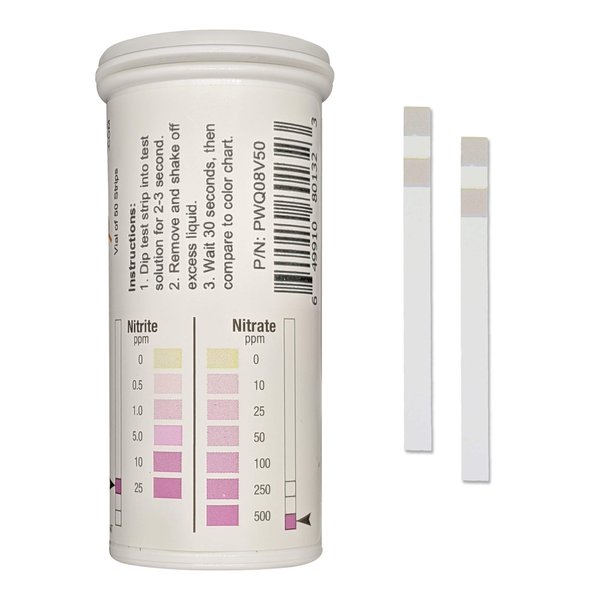
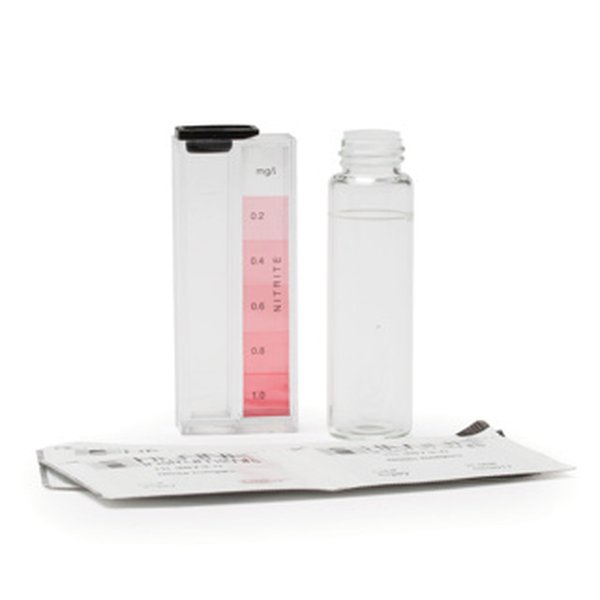
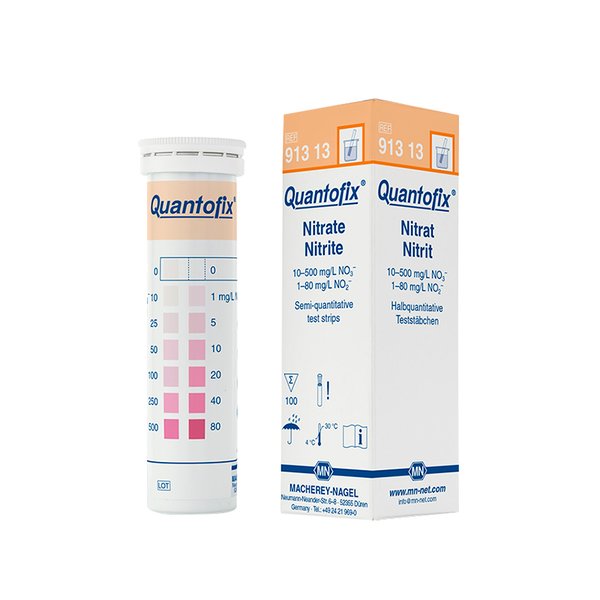
The images above show common nitrite testing equipment used across different applications. The test strips (left) offer quick results with simple color comparison, making them ideal for routine monitoring in aquariums and pools. The Hanna Instruments chemical test kit (center) provides more precise measurements through liquid reagents and color comparison, suitable for environmental and aquaculture applications. The Quantofix test strips (right) are designed for higher concentration ranges, typically used in industrial applications, wastewater monitoring, and food safety testing.
Understanding the Nitrite Context: Conceptual Overview
Nitrite determination should be understood within the broader context of nitrogen cycling, environmental management, and health implications. The following mindmap illustrates the interconnected aspects of nitrite testing and its significance across different domains:
Frequently Asked Questions
References
- Determinación de nitratos y nitritos en agua: Comparación de costos entre un método de flujo continuo y un método estándar - Scielo
- Kit Químico de Pruebas para Nitrito - Hanna Instruments
- Checker Nitritos - Hanna Instruments España
- Nitritos en Orina - Cuidate con Salud
- Determinación de nitritos - Pharmatech
- Determinación de nitritos en aguas por espectroscopía de absorción molecular UV-Vis - Institut Mercè Rodoreda
- Determinación de nitritos en carne: análisis y seguridad alimentaria - Carnicería Moderna
Recommended Topics
 amazon.es

 amazon.com.mx
Last updated April 8, 2025