
Unlocking Norway's Digital Goldmine: A Developer's Guide to Public APIs
Navigate the rich landscape of Norwegian public data and services through APIs, leveraging common standards and key governmental portals.

- 1.Key Insights into Norwegian Public APIs
- 2.The Digital Gateway: data.norge.no and Specialized Portals
- 3.Categorized Overview of Norwegian Public APIs
- 4.Evaluation of API Attributes: Documentation, Rate Limits, and Uptime
- 5.High-Value Datasets for Commercial Use
- 6.Comparative Analysis of API Categories
- 7.Resource Utilization and Accessibility
- 8.Frequently Asked Questions
- 9.Conclusion
- 10.Recommended Further Exploration
- 11.Referenced Search Results
Key Insights into Norwegian Public APIs
- Centralized Discovery:
data.norge.noserves as the primary hub for discovering a vast array of Norwegian public datasets and APIs, simplifying access for developers. - Standardized Authentication: Maskinporten is the essential national solution for corporate authorization, ensuring secure and standardized access to many public APIs.
- Open Licensing: The Norwegian Licence for Open Government Data (NLOD) facilitates broad reuse of public data, often without requiring registration.
Norway's public sector offers a wealth of data accessible through Application Programming Interfaces (APIs), designed to foster innovation and facilitate data exchange for developers and businesses. This comprehensive guide maps out these resources, focusing on key portals like data.norge.no, Kartverket, Entur, SSB, Skatteetaten, and Brønnøysundregistrene. We delve into technical standards, authentication mechanisms, licensing, and practical considerations such as documentation quality, rate limits, and uptime.
The Digital Gateway: data.norge.no and Specialized Portals
The cornerstone of Norway's open data initiative is data.norge.no, a central catalog for datasets, concepts, and APIs from both public and private entities. This platform aims to make discovery, understanding, and utilization of data as straightforward as possible. Beyond this central hub, specialized portals provide deeper access to specific domains.
Technical Standards and Best Practices
Many Norwegian public APIs predominantly utilize REST/JSON for data exchange, promoting ease of integration and broad compatibility. Recommendations for API design include adhering to the OpenAPI Specification for documentation and Semantic Versioning (Semver) for version control. For HTTP-based APIs, supporting ETag and compression (gzip, brotli) is advised to optimize data transfer speeds.
Authentication: The Role of Maskinporten
For secure and authorized access to many governmental APIs, Maskinporten stands as the national shared solution. It handles corporate authorization and access control, allowing API owners to define access rights based on the consumer's organization number and specific "scopes." Access to Maskinporten is managed through Digdir's Samarbeidsportalen.
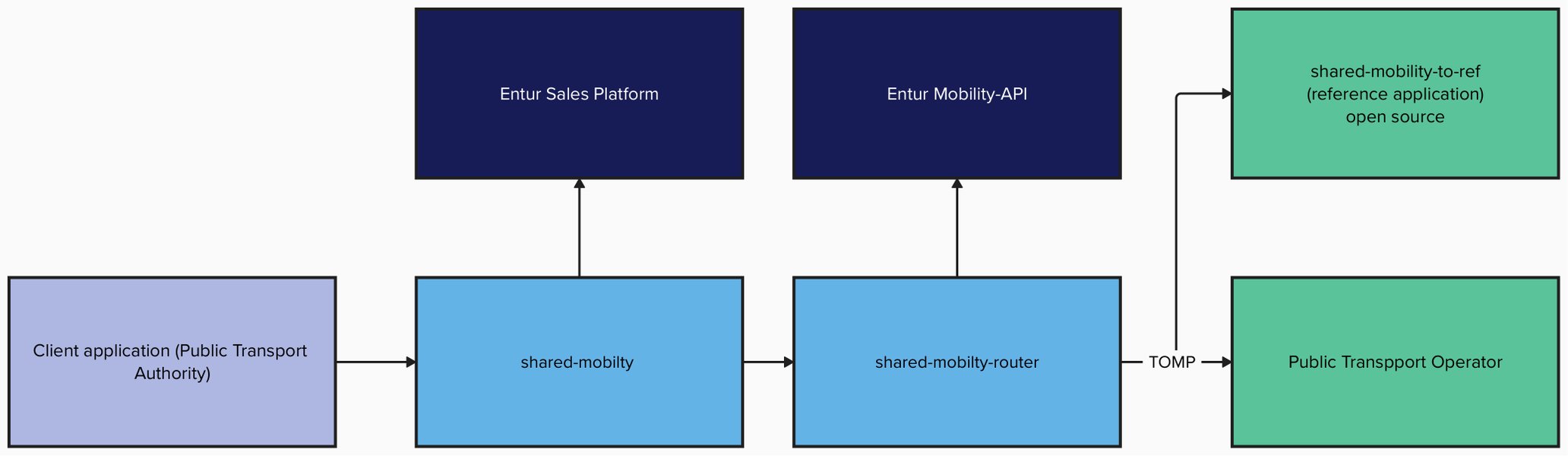
An illustrative architecture showcasing components of a modern API ecosystem, relevant to how Maskinporten integrates within public services.
Licensing: The Norwegian Licence for Open Government Data (NLOD)
A significant portion of public datasets is made available under the Norwegian Licence for Open Government Data (NLOD). This license typically permits free reuse of data without the need for registration, promoting transparency and fostering innovation.
Categorized Overview of Norwegian Public APIs
To provide a structured understanding, Norwegian public APIs can be categorized by domain, each offering unique datasets and functionalities.
Geodata: Navigating the Norwegian Landscape
Kartverket (the Norwegian Mapping Authority) is a primary provider of geodata, offering critical information for urban planning, navigation, and environmental analysis.
Key Offerings from Kartverket:
- Eiendomsdata: APIs provide access to property boundaries, buildings, and addresses from the Cadastre (Matrikkelen).
- Stedsnavnregister: Data from the Central Place Name Register.
- Elevation Models: APIs delivering detailed terrain data.
These APIs are generally available via REST/JSON and can often be found on Geonorge. Authentication for some services might require Maskinporten, and data is typically licensed under NLOD 1.0. Documentation is comprehensive, often leveraging Swagger.

A visual representation of terrain data, illustrating the kind of detailed geodata available from Kartverket.
Transport: Moving Norway Forward
The transport sector benefits from APIs that provide real-time information and vehicle data.
Key Players and Offerings:
- Statens vegvesen (Norwegian Public Roads Administration): Offers a REST API for querying technical vehicle data using chassis or registration numbers. This API provides technical specifications but excludes owner information.
- Technical Standards: REST/JSON.
- Rate Limits: Up to 50,000 calls per API key per day.
- Example Endpoint:
https://www.vegvesen.no/ws/no/vegvesen/kjoretoy/felles/datautlevering/enkeltoppslag/kjoretoydata
- Entur: Provides APIs for journey planning and real-time public transport information.
- Technical Standards: REST/JSON.
- Authentication: Maskinporten for production use.
- Licensing: NLOD.
- Documentation: Good.
- Rate Limits: Around 100 requests per minute.
Næringsliv: Business and Economic Data
APIs in this category are vital for businesses requiring official company information and tax-related data.
Key Players and Offerings:
- Brønnøysundregistrene: Offers open data from the Central Coordinating Register for Legal Entities (Enhetsregisteret), which assigns organization numbers for unique identification.
- Example Data: Basic information on legal persons and other entities.
- Example Endpoint: API Documentation for Åpne Data fra Enhetsregisteret
- Skatteetaten (Norwegian Tax Administration): Provides API documentation for various data and collaboration services, including reporting APIs.
- Example API: Innrapportering drosjetjenester API (with technical specification on SwaggerHub).
Authentication for many of these APIs is mandatory via Maskinporten, and licensing is typically NLOD. Documentation is generally robust, and uptime is high.
Demografi & Statistikk: Understanding Society
Statistisk sentralbyrå (SSB) is the primary source for comprehensive demographic and statistical data, invaluable for research and policy-making.
Key Offerings from SSB:
- Statistikkbanken: Offers over 5,000 tables as open data through its REST-based API, providing data in XML, JSON, and CSV formats.
- Example Data: Interest rates, exchange rates, population figures, census data, climate, and environmental statistics.
- Example Endpoint:
https://data.ssb.no/api/klass/v1(for SSB classifications).
SSB APIs often require Maskinporten for detailed access and are licensed under NLOD. Documentation is typically excellent, with generous rate limits.
Helse & Klima: Emerging Data Frontiers
While specific open APIs for health and climate may be less numerous compared to other categories, aggregated statistics are available.
Key Players and Offerings:
- SSB: Provides aggregated health, climate, and environmental statistics via REST/JSON.
- Helsedirektoratet: Offers some aggregated health statistics.
Access to more detailed health data often requires Maskinporten. Documentation can be moderate, and rate limits vary.
Evaluation of API Attributes: Documentation, Rate Limits, and Uptime
The usability and reliability of public APIs are heavily influenced by their documentation, rate limits, and uptime.
This radar chart evaluates the typical perceived quality of Norwegian public APIs across several critical dimensions, alongside an ideal benchmark.
Documentation Quality: The Developer's Compass
Good documentation is paramount for API adoption. The recommendation is to use the OpenAPI Specification, which provides a language-agnostic interface description. data.norge.no actively promotes clear documentation to ensure datasets are easily discoverable and usable. Examples like SwaggerHub for Skatteetaten's APIs demonstrate adherence to these best practices.
Rate Limits: Managing Resource Access
Rate limits are imposed to ensure fair usage and system stability. These vary significantly between different APIs. For instance, Statens vegvesen's vehicle data API permits up to 50,000 calls per API key daily, while Entur's transport APIs have a limit of approximately 100 requests per minute.
Uptime: Ensuring Availability
While specific uptime guarantees are not always explicitly stated in public search results, public services are generally expected to maintain a high degree of availability to support critical applications and services.
High-Value Datasets for Commercial Use
Several datasets hold significant commercial potential for developers and businesses looking to build innovative solutions or gain competitive insights.
Examples of High-Value Datasets:
- Enhetsregisteret (Brønnøysundregistrene): Business registry data provides foundational information about legal entities, crucial for financial services, market analysis, and compliance.
- Eiendomsinformasjon (Kartverket): Property data, including boundaries and building information, is valuable for real estate, urban development, and insurance sectors.
- Statistikkbanken (SSB): Demographic and economic statistics offer deep insights into population trends, consumer behavior, and market dynamics.
- Tekniske Kjøretøydata (Statens vegvesen): Technical vehicle specifications are highly relevant for the automotive industry, insurance companies, and logistics providers.
- Reisedata (Entur): Journey planning and real-time transport data are vital for mobility services, logistics, and tourism.
- Høydemodeller (Kartverket): Elevation data is critical for construction, environmental modeling, and infrastructure planning.
A mindmap illustrating the various categories of Norwegian public APIs and their potential commercial value, highlighting key data points.
Comparative Analysis of API Categories
To further illustrate the landscape, let's look at how different API categories stack up in terms of their key characteristics.
| Kategori | Primær Kilde | Tekniske Standarder | Autentisering | Lisensiering | Dokumentasjon Kvalitet | Eksempel på Endepunkt |
|---|---|---|---|---|---|---|
| Geodata | Kartverket (Geonorge) | REST/JSON | Maskinporten (for some) | NLOD 1.0 | Høy (Swagger) | https://ws.geonorge.no/adresser |
| Transport | Entur, Statens vegvesen | REST/JSON | Maskinporten (production) | NLOD | God | https://www.vegvesen.no/ws/.../kjoretoydata |
| Næringsliv | Brønnøysundregistrene, Skatteetaten | REST/JSON | Maskinporten | NLOD | Robust | Enhetsregisteret API Docs |
| Demografi/Statistikk | SSB | REST/JSON (XML, CSV) | Maskinporten (for detailed) | NLOD | Excellent | https://data.ssb.no/api/klass/v1 |
| Helse | SSB, Helsedirektoratet | REST/JSON | Maskinporten (for detailed) | NLOD | Moderat | (Aggregated statistics endpoints) |
| Klima | SSB | REST/JSON | Maskinporten | NLOD | Solid | (Environmental statistics endpoints) |
Resource Utilization and Accessibility
The accessibility and ease of use of these APIs can vary depending on the sector and specific service. Understanding the general effort required for integration and data processing is crucial for developers.
This bar chart provides an opinionated comparative analysis of different API categories based on their integration complexity, data richness, and commercial potential.
Understanding these aspects helps developers prioritize which APIs to integrate based on their project's requirements and available resources.
Frequently Asked Questions
What is data.norge.no?
What is Maskinporten?
What is NLOD?
Are there rate limits for all Norwegian public APIs?
Conclusion
The landscape of Norwegian public APIs offers a rich and diverse set of resources for developers. With central discovery platforms like data.norge.no, standardized authentication via Maskinporten, and open licensing under NLOD, the framework is robust. While technical standards predominantly favor REST/JSON, variations in documentation quality, rate limits, and uptime necessitate careful evaluation for each API. High-value datasets from Kartverket, Entur, SSB, Brønnøysundregistrene, and Statens vegvesen present significant commercial opportunities across various sectors, from geospatial analysis to business intelligence and transport services. By understanding these components, developers can effectively harness the power of Norwegian open data to build innovative applications and services.
Recommended Further Exploration
- Hvordan bruke Maskinporten for API-autentisering?
- Dybdeanalyse av Kartverkets geodata API-er
- Kommersielle muligheter med SSBs statistikk-API
- Beste praksis for API-design og dokumentasjon i offentlig sektor