
Unlocking the Transcriptome Universe: A Deep Dive into OmicVerse
A comprehensive Python framework revolutionizing multi-omics data analysis for bulk, single-cell, and spatial RNA sequencing.
Key Insights into OmicVerse
- Unified Multi-Omics Platform: OmicVerse is a Python library specifically designed to integrate and analyze bulk, single-cell, and spatial RNA-seq data, providing a single, comprehensive framework for transcriptomic research.
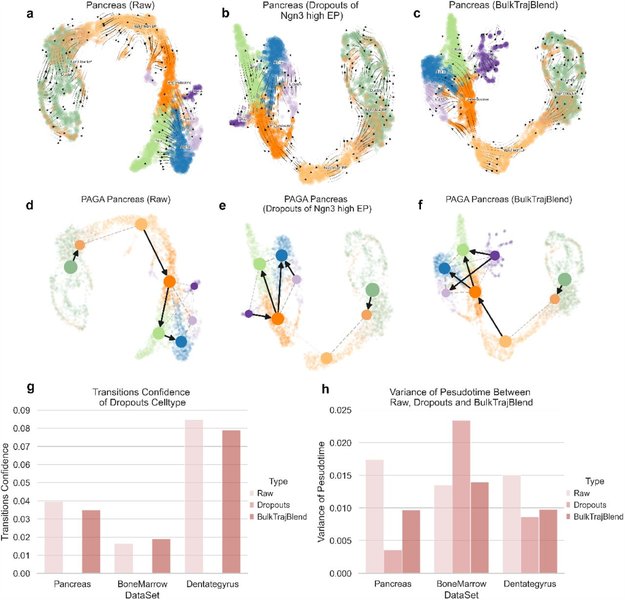
- Innovative Algorithms: It features advanced algorithms like "BulkTrajBlend" which addresses data "omission" in single-cell RNA-seq by leveraging bulk data, and includes a rich toolkit for batch correction, cell type annotation, trajectory inference, and more.
- User-Friendly and Scalable: Built on Python with cross-platform compatibility, OmicVerse emphasizes ease of use, efficient visualization, and GPU acceleration for handling large datasets, all supported by extensive documentation and active development.
OmicVerse stands as a pioneering Python-based software package engineered for the in-depth analysis of multi-omics data, with a pronounced focus on bulk RNA sequencing (RNA-seq), single-cell RNA sequencing (scRNA-seq), and spatial RNA-seq. This robust framework serves as a singular, cohesive pipeline designed to bridge and enhance understanding across these diverse sequencing modalities. Its development addresses the inherent complexities of omics data, offering an expansive toolkit that significantly improves efficiency and accessibility for researchers in the bioinformatics and genomics fields.
OmicVerse: A Comprehensive Framework for Transcriptomic Analysis
OmicVerse represents a significant leap forward in multi-omics data analysis. Its core functionality revolves around providing a unified environment for processing and interpreting complex RNA sequencing datasets. By integrating various analysis tasks into a single platform, OmicVerse mitigates the need for researchers to navigate disparate tools, thereby enhancing computational efficiency and bolstering the reproducibility of research outcomes.
Core Features and Capabilities
OmicVerse boasts a rich array of features that cater to the diverse needs of transcriptomic research:
- Multi-Omics Integration: It supports the analysis of bulk, single-cell, and spatial RNA-seq data, allowing for seamless integration and deeper biological insights by combining perspectives from different data types.
- Python-Based Framework: As a Python library, OmicVerse leverages the vast ecosystem of machine learning tools and models available within the Python community, providing a flexible and extensible platform for transcriptome analysis.
- Unified Workflow: The framework streamlines computational processes, enabling users to perform a wide range of analyses within a single programming environment. This unified approach minimizes inefficiencies and promotes consistency in research workflows.
- Advanced Algorithms: OmicVerse incorporates cutting-edge algorithms for data deconvolution, normalization, batch correction, cell type annotation, trajectory inference, pathway enrichment, cell-cell interaction analysis, and drug response prediction.
- Visualization and Scalability: The platform prioritizes exquisite data visualization and computational efficiency. It utilizes GPU-accelerated Uniform Manifold Approximation and Projection (UMAP) via
pymdefor efficient dimension reduction and visualization of large datasets. It also supports accelerated computation on both CPU and GPU, including mixed CPU-GPU modes for high-performance analyses. - Open-Source and Well-Documented: OmicVerse is open-source (GPL 3.0 licensed), with its source code available on GitHub. It is accompanied by comprehensive documentation, including detailed installation guides and tutorials on ReadTheDocs, facilitating widespread adoption and community contributions.
- Cross-Platform Support: The library is compatible with Linux, Windows (with some feature limitations), and macOS, ensuring broad accessibility across different operating systems.
Addressing Data Omission with BulkTrajBlend
A standout feature of OmicVerse is the "BulkTrajBlend" algorithm. This innovative algorithm is specifically designed to tackle the common issue of cellular "omission" or "interruptions" in single-cell sequencing data, which often arise due to throughput limitations. BulkTrajBlend employs a Beta-Variational AutoEncoder for deconvolution and integrates graph neural networks for overlapping community discovery. This sophisticated approach effectively interpolates and restores continuity in these "omitted" or "interrupted" cells by intelligently leveraging information from bulk RNA-seq data. This capability significantly enhances the resolution and biological insights derivable from scRNA-seq studies.

An illustration of the BulkTrajBlend algorithm's workflow, showcasing its ability to integrate bulk and single-cell RNA-seq data for improved trajectory inference.
Extensive Toolkit for RNA-seq Analysis
OmicVerse provides a comprehensive suite of tools and algorithms for both bulk and single-cell RNA-seq analysis, offering seamless access to diverse methodologies. Key modules and their functionalities include:
| Category | Module/Algorithm | Description |
|---|---|---|
| Data Preprocessing | Batch Correction (pyComBat, Scanorama) | Algorithms to remove non-biological variation from datasets, ensuring accurate comparisons across samples. |
| Cell Characterization | Cell Type Annotation (pySCSA, CellMarker 2.0, CancerSEA, gptcelltype) | Tools for identifying and labeling different cell populations based on gene expression profiles, including advanced methods utilizing large language models. |
| Intercellular Dynamics | Cell-Cell Interactions Analysis (CellPhoneDB, COMMOT) | Functions to infer and analyze communication pathways between cells, crucial for understanding tissue function and disease. |
| Developmental Processes | Trajectory Inference (pyVIA) | Algorithms to reconstruct developmental or differentiation paths of cells, revealing transitions and intermediate states. |
| Functional Analysis | Pathway Analysis (AUCell, pathway_enrichment, pyGSEA) | Methods for evaluating gene set enrichment and scoring based on area under the curve, and Gene Ontology (GO) enrichment analysis to understand biological functions. |
| Network Analysis | Gene Co-expression Network (pyWGCNA) | Tools for constructing gene co-expression networks to identify functionally related genes and modules. |
| Network Analysis | Protein-Protein Interaction Network (pyPPI) | Integrates with STRING web API to build and analyze protein-protein interaction networks. |
| Differential Analysis | Differential Expression Analysis (pyDEG) | Supports various statistical tests (Deseq2, t-test, Wilcoxon) to identify genes with significant expression changes between conditions. |
| Drug Discovery | Drug Response Prediction (scDrug) | Predicts cellular responses to various drugs based on transcriptomic data. |
| Spatial Transcriptomics | Spatial Deconvolution (starfysh) | Deconvolves spatial transcriptomic data to infer cell type proportions without requiring single-cell RNA-seq references. |
| Multi-Omics Integration | MOFA, GLUE | Multi-omics factor analysis and generalized latent embeddings for multi-layered biological interpretation. |
| Data Integration | TCGA Data Analysis (pyTCGA) | Enables analysis of TCGA (The Cancer Genome Atlas) data, including survival analysis. |
Performance and Usability Metrics
To provide a comprehensive understanding of OmicVerse's capabilities and its standing among similar tools, the following radar chart illustrates its performance and usability across key metrics based on aggregated insights. Please note these are qualitative assessments derived from the provided information.
This radar chart visually represents OmicVerse's strengths across various essential metrics. It excels particularly in Multi-Omics Integration and Algorithm Diversity, showcasing its comprehensive approach to handling complex biological data. High scores in Documentation Quality and Computational Performance highlight its user-friendliness and efficiency, while strong ratings in Novelty of Features reflect its continuous innovation in the field.
The Scientific Impact and Development Trajectory
OmicVerse's scientific credibility is underscored by its primary publication in Nature Communications in July 2024 by Zeng et al. This publication formally introduces OmicVerse as a framework designed to bridge bulk and single-cell RNA-seq technologies, effectively addressing the limitations inherent in each method and providing a more holistic understanding of transcriptomic landscapes. The framework consolidates a wide array of established and emerging algorithms, facilitating unified analyses and promoting standardization in transcriptomics research.
Ongoing Development and Community Engagement
The OmicVerse project is actively maintained and continuously evolving. Recent releases have introduced new algorithms and features, such as COMMOT for spatial RNA-seq cell-cell interaction calculation, starfysh for spatial transcriptomic deconvolution without scRNA-seq, and gptcelltype for cell type annotation using large language models. The project actively encourages user engagement through its GitHub repository, accepting "Stars" for release notifications and open donations to support its development. This commitment to continuous improvement and community involvement ensures OmicVerse remains a cutting-edge tool in the field of multi-omics analysis.
An overview illustrating the integrated ecosystem of OmicVerse, showcasing its various modules and their interconnectedness.
Navigating the OmicVerse Ecosystem
To further illustrate the comprehensive nature of OmicVerse, the following mindmap outlines its key components, functionalities, and broader impact. This visual representation helps to grasp the interconnectedness of its various modules and its overarching goal of unifying multi-omics analysis.
This mindmap visually structures the key aspects of OmicVerse, from its primary analytical focus on different RNA-seq modalities to its underlying technical framework and significant scientific contributions. It highlights the breadth of its integrated algorithms and its commitment to user accessibility and ongoing development.
Understanding OmicVerse through a Visual Example
To further elucidate the practical applications of OmicVerse, consider the video below, which delves into single-cell RNA-seq analysis, a core area where OmicVerse provides substantial advancements. While the video specifically focuses on the concept of cell-cell communication in spatial transcriptomics, it aligns with OmicVerse's capabilities in analyzing spatial RNA-seq data and performing cell-cell interaction studies, which are critical for understanding complex biological systems at a granular level. OmicVerse's COMMOT module, for instance, is designed to calculate cell-cell interactions within spatial RNA-seq contexts, demonstrating a direct relevance to the subject matter of the video.
The video discusses spatial transcriptomics and how it allows for the study of cell-cell communication within tissues. This directly relates to OmicVerse's features such as the COMMOT module, which enables the calculation of cell-cell interactions in spatial RNA-seq datasets. By integrating and analyzing data from both single-cell and spatial modalities, OmicVerse facilitates a more comprehensive understanding of cellular functions and interactions within their native tissue environment, just as the video illustrates the importance of spatial context in biological studies.
Frequently Asked Questions (FAQ)
What types of omics data can OmicVerse analyze?
What is the "BulkTrajBlend" algorithm, and how does it help in scRNA-seq analysis?
How can I install OmicVerse?
pip install -U omicverse or conda install omicverse -c conda-forge. It is generally recommended to use a conda environment to manage dependencies.Is OmicVerse open-source, and where can I find its documentation?
Conclusion
OmicVerse stands as a powerful and indispensable Python framework for modern multi-omics research. Its ability to seamlessly integrate and analyze bulk, single-cell, and spatial RNA-seq data within a single, user-friendly platform addresses critical challenges in transcriptomic studies. By offering advanced algorithms like BulkTrajBlend and a comprehensive toolkit for various analytical tasks, OmicVerse empowers researchers to derive deeper, more coherent biological insights. Its active development, robust documentation, and strong community engagement ensure that OmicVerse will continue to evolve and serve as a cornerstone for future discoveries in genomics and bioinformatics.
Recommended Searches
- Explore OmicVerse applications in cancer research.
- Conduct a comparative analysis of OmicVerse versus other single-cell analysis tools.
- Perform a deep dive into BulkTrajBlend algorithm technical details.
- Investigate future developments and the roadmap for OmicVerse.