
Revolutionizing On-Board Fuel Management: Compact Emulsion & Viscosity Solutions Unveiled
Discover cutting-edge compact technologies for creating stable fuel-water emulsions and precisely measuring fuel viscosity directly on your vessel.
Optimizing fuel consumption and reducing emissions are paramount in modern engine operations. This guide explores compact, on-board solutions for two critical aspects of fuel management: creating fuel-water emulsions to enhance combustion and lower NOx emissions, and accurately measuring fuel viscosity for optimal engine performance. We delve into innovative technologies that can be seamlessly integrated into existing fuel systems, including those similar to an OM60x engine environment.
Key Insights: Enhancing Fuel Efficiency & Environmental Compliance
- Fuel-Water Emulsions: Integrating compact systems like homogenizers or inline mixers to create stable water-in-fuel emulsions can significantly reduce NOx and particulate matter (PM) emissions by improving fuel atomization and promoting more complete combustion.
- Compact Viscosity Measurement: On-board, real-time kinematic viscosity monitoring using devices such as vibrational, rotational, or innovative plunger-based concept viscometers ensures fuel is at its optimal viscosity for efficient injection and combustion, adapting to varying fuel qualities.
- Seamless Integration: Modern solutions prioritize compact designs and ease of integration into existing closed-loop fuel systems, offering automated control and robust performance in demanding marine or industrial environments.
On-Board Compact Solutions for Fuel-Water Emulsion
Innovations in Mixing Water and Fuel for Cleaner Combustion
Creating a stable fuel-water emulsion (WFE) directly on-board is a proven strategy to enhance combustion efficiency and reduce harmful emissions. By dispersing fine water droplets (typically 5-20%) uniformly within the fuel, several benefits are achieved. During combustion, these water droplets rapidly vaporize, causing "micro-explosions" that shatter larger fuel particles. This secondary atomization leads to a more complete burn, significantly reducing Nitrogen Oxides (NOx) and Particulate Matter (PM). The key is to achieve a stable and fine emulsion, which requires specialized compact equipment integrated into the fuel supply line, often in a closed loop before the engine.
Homogenizer-Based Systems
Homogenizers are dynamic milling machines crucial for creating stable fuel-water emulsions. They employ high shear forces to mix, mash, and agitate fuel and water molecules, breaking them down to a significantly smaller size (e.g., 1/20th of their original size) and ensuring uniform dispersion. This process enhances the emulsion's stability over time, which is vital for consistent engine performance. Companies like Aquametro Oil & Marine offer Water-in-Fuel Emulsion (WFE) units that integrate a homogenizer, water tank, pump, and control systems into a compact package suitable for on-board installation. These systems can handle heavy fuel oil (HFO) and marine gas oil (MGO) and often use distilled water to prevent mineral buildup, though potable water can be an alternative.
Inline Mixers and Blenders
Inline mixers, including static mixers and high-shear dynamic mixers, offer a compact solution for emulsification within the fuel loop. Static mixers, like those from Fuel Tech Inc., feature carefully engineered internal geometries that promote efficient blending with minimal energy consumption. They have no moving parts, making them reliable and easy to integrate into existing pipework. High-shear inline mixers actively agitate the fuel-water mixture, producing fine and stable emulsions. These can be adapted to handle viscous fuels and varying flow rates.
Cavitation-Based Emulsification
Innovative technologies like FOWE Eco Solutions' Cavitech device utilize controlled hydrodynamic cavitation to emulsify fuel oil with fresh water. Cavitation creates and collapses tiny vapor bubbles, generating intense localized pressure and shear forces that effectively disperse water into the fuel. These systems can produce stable emulsions without chemical additives and are designed as compact, plug-and-play units for on-board integration. Scorpio Tankers, for example, has adopted this technology across a large fleet, highlighting its practicality and effectiveness in reducing emissions and improving fuel efficiency.
Ultrasonic Emulsifiers
Compact ultrasonic emulsifiers can be integrated into the fuel line to generate nano- or micro-scale water droplets. These devices use high-frequency sound waves to create cavitation and intense mixing, resulting in highly stable emulsions. Ultrasonic systems often have no moving parts in the mixing zone, contributing to their reliability and compact footprint.
Integrated Injection and Emulsification Systems
Some systems combine precision water dosing with an emulsification unit. The IPCO Power FID Injector, for instance, is an advanced system that blends water (up to 20%) with fuel to create a stable emulsion. It's designed for on-board use to lower NOx and PM emissions while enhancing fuel atomization and overall fuel efficiency. These units are typically compact and come with control systems to manage the water-to-fuel ratio accurately.
IPCO Power's FID Injector technology explained, showcasing an advanced system for creating water-fuel emulsions to enhance combustion and reduce emissions.
Compact Methods for Measuring Fuel Viscosity On-Board
Ensuring Optimal Fuel Atomization through Precise Viscosity Control
Fuel viscosity is a critical parameter influencing its atomization and combustion efficiency. For engines to operate optimally, fuel (especially heavier grades) must be supplied to the injectors at a specific viscosity, often around 10-20 centistokes (cSt). Measuring kinematic viscosity on-board allows for real-time adjustments, typically by controlling fuel heaters, to maintain this target. Compact, robust, and accurate viscometers are essential for this purpose.
Your concept of a small, electromagnet-powered plunger pushing fuel through a calibrated orifice to determine kinematic viscosity is indeed insightful. This principle shares similarities with existing technologies, such as piston-type or flow-resistance viscometers, where the time taken for a fluid to pass through a restriction, or the pressure drop across it, is correlated to its viscosity.
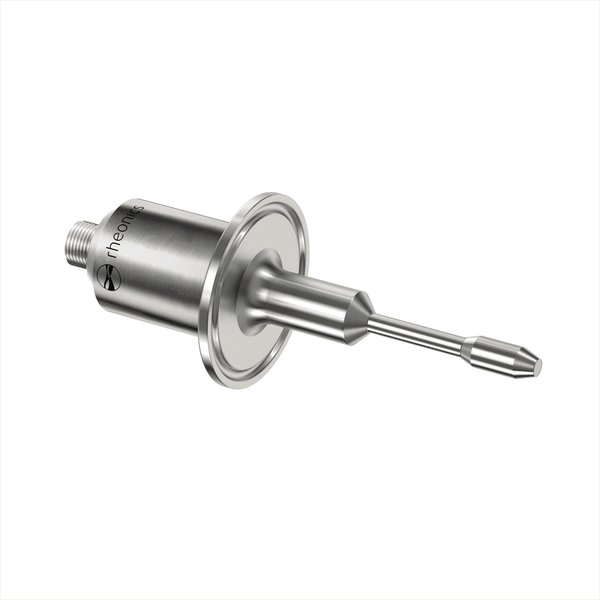
An example of a compact inline process viscometer, designed for real-time monitoring in industrial applications.
Vibrational or Resonant Viscometers
These devices, such as Emerson's Micro Motion HFVM Viscomaster, measure viscosity by vibrating an element (e.g., a tine or a plate) immersed in the fluid. The fluid's viscosity damps these vibrations, and the changes in vibrational frequency or amplitude are correlated to the viscosity. These sensors are compact, capable of continuous inline measurement even with heavy fuels, and can often measure density simultaneously, allowing for direct calculation of kinematic viscosity. They provide real-time data with high accuracy (e.g., ±1% of full scale).
Rotational Viscometers
Compact rotational viscometers, like those in Anton Paar’s SVM series (e.g., SVM 1101 Simple Fill) or ViscoQC range, measure viscosity by determining the torque required to rotate a spindle immersed in the fuel at a constant speed. Some models can simultaneously measure density, providing kinematic viscosity. While traditionally lab-based, miniaturized versions are available for portable or inline use, offering compliance with standards like ASTM D4052.
Miniature Inline and Portable Viscometers
Several manufacturers offer highly compact viscometers designed for OEM integration or portable use. The Wika DEVIL (Density and Viscosity L Meter) is an example of one of the smallest integrated density and viscosity meters, suitable for embedding into liquid analyzers or fuel metering systems. Portable kinematic viscometers, such as Spectro Scientific’s MiniVisc 3000, require very small sample volumes (just a few drops) and use a split-cell capillary channel design. Fuel is drawn through the channel, and its flow characteristics are used to determine kinematic viscosity. These are excellent for spot checks and quick on-site analysis.
Capillary Viscometers
While traditional glass capillary viscometers (e.g., Ubbelohde type) are lab instruments, the principle of measuring flow time through a narrow capillary under gravity or controlled pressure can be automated and miniaturized. Some portable devices adapt this principle for field use.
Viscosity Controllers
Often, on-board viscometers are part of a larger viscosity control system. The viscometer's output signal is fed to a controller that regulates a fuel oil heater (often via a three-way valve) to maintain the fuel temperature, and thus its viscosity, at the desired setpoint before it reaches the engine's fuel injectors.
Comparative Analysis of On-Board Fuel Technologies
Evaluating Emulsion and Viscosity Solutions
To provide a clearer picture, the following radar chart offers an opinionated comparison of different on-board fuel treatment and measurement technologies. The scores (out of 10, where 10 is best) reflect general characteristics and may vary based on specific models and applications. This analysis considers factors like compactness, efficiency in their primary role, relative cost, ease of integration, and operational stability or accuracy.
This chart illustrates the trade-offs involved. For instance, while ultrasonic emulsifiers might be highly compact, their initial cost or complexity in some applications might be higher. Vibrational viscometers offer excellent accuracy and reliability for continuous monitoring but may represent a larger investment than portable units designed for periodic checks.
Mindmap of On-Board Fuel Solutions
Visualizing Key Concepts and Technologies
The mindmap below provides a hierarchical overview of the technologies discussed for creating fuel-water emulsions and measuring fuel viscosity on board. It connects the primary objectives with the various methods and examples of systems available.
(e.g., Aquametro WFE)"] id1b2["Inline Mixers
(Static/Dynamic)"] id1b3["Cavitation Devices
(e.g., FOWE Cavitech)"] id1b4["Ultrasonic Emulsifiers"] id1b5["Integrated Injection Systems
(e.g., IPCO FID Injector)"] id2["Fuel Viscosity Measurement"] id2a["Importance"] id2a1["Optimal Atomization"] id2a2["Combustion Efficiency"] id2a3["Engine Protection"] id2a4["Fuel Heating Control"] id2b["Compact Devices (Kinematic Viscosity)"] id2b1["Vibrational/Resonant
(e.g., Emerson HFVM)"] id2b2["Rotational
(e.g., Anton Paar SVM)"] id2b3["Miniature Inline
(e.g., Wika DEVIL)"] id2b4["Portable Devices
(e.g., Spectro MiniVisc)"] id2b5["Plunger-based Concept
(Flow Resistance Principle)"] id2b6["Capillary-based Systems"]
This mindmap helps to quickly grasp the relationships between the overall goals of improved fuel management and the specific technological approaches used to achieve them, differentiating between emulsion creation and viscosity measurement strategies.
Overview of Selected On-Board Fuel Technologies
Comparing Features of Emulsion and Viscosity Systems
The following table summarizes key features of some of the prominent compact on-board fuel-water emulsion and viscosity measurement technologies discussed. This comparison aims to highlight their primary mechanisms, typical applications, and notable characteristics.
| Technology/System | Primary Function | Mechanism | Key Characteristics | Typical On-Board Application |
|---|---|---|---|---|
| Homogenizer Units (e.g., Aquametro WFE) | Fuel-Water Emulsion | High-shear mechanical milling | Creates stable, fine emulsions; integrated water dosing; compact unit. | Main engine fuel supply (HFO/MGO) for emissions reduction. |
| FOWE Cavitech | Fuel-Water Emulsion | Hydrodynamic cavitation | Additive-free emulsion; plug-and-play; good stability reported. | Vessel fuel lines for improved combustion and lower emissions. |
| IPCO FID Injector | Fuel-Water Emulsion | Controlled water injection and emulsification | Adjustable water ratio; aims for significant NOx/PM reduction. | Diesel engines in marine and industrial settings. |
| Emerson Micro Motion HFVM Viscomaster | Viscosity & Density Measurement | Vibrational/Resonant sensor | Continuous, real-time kinematic viscosity; high accuracy; robust for heavy fuels. | Fuel oil conditioning systems, viscosity control loops. |
| Anton Paar SVM Series | Viscosity & Density Measurement | Rotational principle (modified Couette) | Measures dynamic & kinematic viscosity, density; compact lab/portable options. | On-board fuel quality checks, compliance verification. |
| Spectro Scientific MiniVisc 3000 | Kinematic Viscosity Measurement | Split-cell capillary flow | Portable; small sample volume; rapid results. | On-site oil condition monitoring, quick viscosity checks for various fuels/oils. |
This table serves as a quick reference to understand the diverse approaches available for enhancing fuel properties and monitoring critical parameters like viscosity directly on a vessel, contributing to both environmental compliance and operational efficiency.
Frequently Asked Questions (FAQ)
What are the main benefits of using fuel-water emulsions in engines?
Fuel-water emulsions offer several key benefits:
- Reduced NOx Emissions: The presence of water lowers combustion temperatures, which is a primary factor in NOx formation.
- Reduced Particulate Matter (PM): The "micro-explosion" effect from water vaporizing within fuel droplets leads to finer atomization and more complete combustion, reducing soot and PM.
- Improved Fuel Atomization: Secondary atomization caused by rapidly expanding steam helps break down larger fuel droplets, increasing the surface area for combustion.
- Potential for Improved Fuel Efficiency: More complete combustion can, in some cases, lead to marginal improvements in fuel efficiency, although this is highly dependent on the engine, fuel type, and emulsion quality.
- Cleaner Engine Components: Reduced soot can lead to less deposit formation on injectors and in the combustion chamber.
What are the challenges in creating and maintaining stable fuel-water emulsions on board?
While beneficial, on-board fuel-water emulsion systems face challenges:
- Emulsion Stability: Ensuring the water remains finely and evenly dispersed in the fuel over time and under varying conditions (temperature, vibration) is crucial. Unstable emulsions can lead to water separation, causing corrosion or engine damage.
- Water Droplet Size: Achieving and maintaining an optimal water droplet size is critical. Too large, and they may not vaporize effectively; too small in some systems might be less effective or harder to achieve.
- Water Quality: Using contaminated water (e.g., with salts or minerals) can lead to deposits, corrosion, or injector clogging. Distilled or demineralized water is often preferred.
- Accurate Dosing: The water-to-fuel ratio must be precisely controlled. Too much water can lead to engine misfires, power loss, or damage. Too little may not provide the desired emission reduction.
- Material Compatibility: Components in the fuel system must be resistant to potential corrosion from water.
- System Complexity and Cost: While compact solutions exist, they add complexity and initial cost to the fuel system. Maintenance requirements also need consideration.
Why is measuring kinematic viscosity important for fuel, and how does it differ from dynamic viscosity?
Dynamic viscosity (often denoted by \( \eta \) or \( \mu \)) measures a fluid's resistance to flow under an applied force (shear stress). It's essentially the "thickness" or internal friction of the fluid. Its SI unit is Pascal-second (Pa·s).
Kinematic viscosity (denoted by \( \nu \)) is the ratio of dynamic viscosity to the fluid's density (\( \rho \)). So, \( \nu = \frac{\eta}{\rho} \). It represents a fluid's resistance to flow under the influence of gravity. Its SI unit is square meters per second (m²/s), though centistokes (cSt) is commonly used (1 cSt = 1 mm²/s).
Importance of Kinematic Viscosity for Fuel:
- Atomization: Fuel injectors are designed to operate optimally with fuel within a specific kinematic viscosity range. If viscosity is too high, atomization is poor, leading to larger fuel droplets, incomplete combustion, increased emissions, and carbon deposits. If too low, it can cause fuel leakage in pumps/injectors or insufficient lubrication for certain fuel system components.
- Pumpability: Viscosity affects how easily fuel can be pumped through lines and filters, especially at low temperatures.
- Combustion Quality: Proper viscosity ensures the correct spray pattern and penetration in the combustion chamber, leading to efficient and complete combustion.
- Engine Wear: Some fuel system components rely on the fuel's viscosity for lubrication. Incorrect viscosity can lead to premature wear.
On-board measurement of kinematic viscosity allows for adjustments (usually by heating the fuel) to ensure it meets the engine manufacturer's specifications at the point of injection.
Recommended Further Exploration
Delve Deeper into Fuel Management Technologies
- Explore a detailed comparison of homogenizer versus ultrasonic emulsification technologies for marine fuel applications.
- Investigate the specific impact of varying water content percentages in fuel-water emulsions on NOx and PM emission levels.
- Learn about advanced control strategies for maintaining optimal fuel viscosity in dynamically changing temperature environments on board ships.
- Understand the long-term operational costs and maintenance requirements associated with different on-board fuel emulsion systems.
References
Last updated May 14, 2025