
Comprehensive Overview of the Opium Wars
Understanding the Causes, Events, and Consequences of the Mid-19th Century Conflicts
Key Takeaways
- Economic Impacts: The Opium Wars significantly altered global trade dynamics, particularly in favor of Western powers.
- Political Consequences: The wars weakened the Qing dynasty, leading to internal instability and calls for modernization.
- Social and Cultural Effects: The conflicts exposed China to Western ideologies and technologies, setting the stage for profound societal changes.
Introduction to the Opium Wars
The Opium Wars, comprising the First Opium War (1839–1842) and the Second Opium War (1856–1860), were pivotal conflicts between China and Western powers, primarily Britain, and later France. These wars marked a significant turning point in Chinese history, symbolizing the clash between traditional Chinese society and the aggressive expansionist policies of Western imperialism. The primary catalyst for these conflicts was the British trade in opium, which had profound economic, social, and political ramifications for China. The wars not only exposed the military and technological disparities between China and the West but also initiated a series of "unequal treaties" that eroded Chinese sovereignty and altered the nation's trajectory towards modernization and reform.
Causes of the Opium Wars
Economic Disparities and Trade Imbalances
By the early 19th century, Britain faced a significant trade imbalance with China. The British demand for Chinese goods such as tea, silk, and porcelain was met with limited interest in British manufactured products in China. To rectify this imbalance, British merchants turned to the opium trade, exporting large quantities of opium grown in India to China. The illicit opium market not only generated substantial profits but also exacerbated the trade deficit by reversing the flow of silver out of Britain and into China.
Social and Economic Impact of Opium in China
The rampant smuggling and widespread addiction to opium had devastating effects on Chinese society. Addiction rates soared, leading to significant economic drain as silver continued to flow out of the country to sustain the opium trade. Socially, opium undermined the health and productivity of the population, contributing to economic stagnation and weakening the social fabric. The Qing government's inability to control the opium influx and mitigate its effects led to internal instability and eroded the dynasty's legitimacy.
Imperialism and Diplomatic Tensions
The British Empire's pursuit of free trade and territorial expansion was a defining feature of its imperialist agenda. China's rigid adherence to the Canton System, which restricted foreign trade to specific ports and maintained tight control over foreign merchants, clashed with British desires for greater commercial and diplomatic privileges. The enforcement of the opium ban by Chinese authorities, led by Commissioner Lin Zexu, was perceived by Britain as an affront to its national interests and prestige, thereby escalating tensions that eventually led to military confrontation.
The First Opium War (1839–1842)
Outbreak and Early Engagements
The First Opium War was ignited by China's determination to suppress the opium trade. In 1839, Commissioner Lin Zexu enacted stringent measures to eradicate the opium menace, including the confiscation and destruction of over 20,000 chests of opium in Guangzhou. This decisive action directly challenged British economic interests and provided the pretext for military intervention. The British response was swift and well-coordinated, leveraging their superior naval technology and military organization to assert dominance over Chinese forces.
Major Battles and Military Tactics
The British fleet, equipped with advanced steam-powered ships and superior artillery, quickly established naval superiority along the Chinese coast. Key engagements, such as the Battle of Chuenpee and the capture of the Bogue Forts, demonstrated the effectiveness of British military tactics and the vulnerability of Chinese defenses. The Qing navy, ill-equipped and lacking cohesive command structures, struggled to counter the technologically advanced British forces, leading to a series of decisive defeats for China.
Treaty of Nanjing and Its Terms
The war concluded with the signing of the Treaty of Nanjing in 1842, the first of the unequal treaties imposed on China. The treaty mandated the cession of Hong Kong Island to Britain, the opening of five major ports (Canton, Amoy, Fuzhou, Ningbo, and Shanghai) to foreign trade, and the establishment of a "fair and reasonable" indemnity to compensate British merchants for destroyed opium and war expenses. Additionally, the treaty granted extraterritorial rights to British citizens, effectively placing them above Chinese law, and allowed freedom of movement for British merchants within the designated ports.
Immediate Aftermath and Impact
The Treaty of Nanjing had immediate and far-reaching consequences for China. It marked the beginning of the "Century of Humiliation," a period characterized by foreign intervention, territorial concessions, and internal turmoil. The economic benefits reaped by Western powers from the newly opened ports further exacerbated China's trade imbalance and economic dependency. Domestically, the Qing dynasty's perceived weakness emboldened internal rebellions and catalyzed movements advocating for modernization and reform, setting the stage for future upheavals.
The Second Opium War (1856–1860)
Escalation and Causes
The Second Opium War, also referred to as the Arrow War, stemmed from lingering grievances and the incomplete implementation of treaties established after the First Opium War. Incidents such as the boarding of the Arrow, a vessel registered under the British flag by Chinese authorities for alleged piracy, served as immediate catalysts. Britain, seeking to renegotiate the terms of trade and secure further concessions, allied with France to challenge China's sovereignty and assert their imperialist ambitions more aggressively.
Military Campaigns and Key Battles
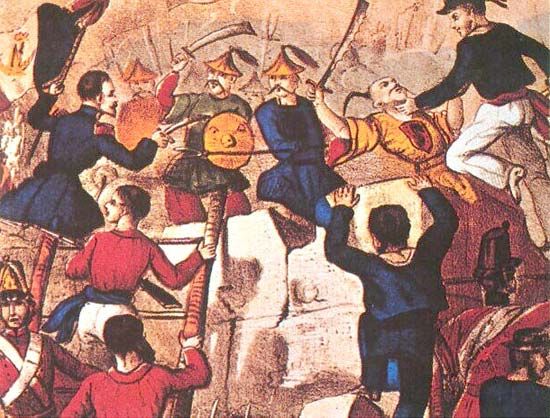
Anglo-French forces launched a series of coordinated military campaigns targeting key strategic locations across China. The capture of Guangzhou and the subsequent advance towards Beijing showcased the combined naval and land military prowess of the Western allies. The destruction of the Summer Palace in Beijing became a symbolic act of dominance, underscoring the lengths to which the Western powers would go to achieve their objectives. The Qing military, still reeling from previous defeats, faced systemic challenges in mounting an effective defense against the technologically superior invaders.
Treaties of Tianjin and Convention of Beijing
The war culminated in the Treaty of Tianjin (1858) and the Convention of Beijing (1860), which further entrenched Western influence in China. These agreements legalized the opium trade, expanded the number of treaty ports, and granted greater religious and diplomatic freedoms to foreign missionaries and diplomats. Additionally, the treaties imposed indemnities on China, allowing foreign powers to station troops within Chinese territory and exerting greater control over China's internal affairs. The Convention of Beijing also mandated the repair and indemnification related to the destruction of the Summer Palace.
Long-Term Consequences and Legacy
The Second Opium War had profound and lasting implications for China and its relationship with the Western world. The treaties enforced during this period solidified the presence and power of foreign nations within China's borders, undermining the Qing dynasty's authority and accelerating its decline. The increased foreign influence contributed to economic exploitation, territorial fragmentation, and social unrest, further destabilizing the region. These conflicts also fueled nationalist sentiments among the Chinese populace, laying the groundwork for later movements aimed at reclaiming sovereignty and fostering modernization.
Economic Impacts of the Opium Wars
Redirection of Trade and Economic Exploitation
The Opium Wars drastically reoriented China's trade dynamics, leading to the establishment of a system skewed heavily in favor of Western powers. The forced opening of treaty ports facilitated the influx of foreign goods, capital, and technology, but primarily benefited Western merchants and industries. China's economy became increasingly dependent on foreign trade, particularly the importation of Western manufactured goods, which disrupted traditional industries and contributed to economic dislocation.
Indemnities and Economic Burdens
The treaties imposed significant financial burdens on China, necessitating large-scale indemnity payments to compensate for war damages, destroyed opium stocks, and other concessions. These financial obligations strained the already weakened Qing economy, diverting resources from essential areas such as infrastructure, education, and military modernization. The economic strain exacerbated social tensions and fueled public discontent, contributing to the overall decline of the Qing dynasty's economic stability.
Infrastructure Development and Foreign Investments
While the Opium Wars predominantly facilitated economic exploitation, they also inadvertently paved the way for certain infrastructural developments within China. Increased foreign investments led to the construction of railways, telegraph lines, and other modern infrastructure projects, primarily serving the interests of foreign businesses. These developments, while benefiting the Western powers, also introduced new technologies and administrative practices to China, laying the groundwork for future modernization efforts, albeit under foreign influence.
Political Consequences and Dynastic Decline
Erosion of Qing Dynasty Authority
The Opium Wars significantly undermined the authority and legitimacy of the Qing dynasty. The repeated military defeats and the imposition of unequal treaties exposed the dynasty's inability to protect national interests and maintain sovereignty. This perceived weakness eroded public confidence in the ruling regime, fostering political instability and weakening centralized control.
Rise of Reform Movements and Internal Unrest
The socio-political turmoil exacerbated by the Opium Wars catalyzed various reform movements aimed at revitalizing and modernizing China. The Self-Strengthening Movement sought to adopt Western technologies and modernize the military, infrastructure, and educational systems. However, resistance from conservative factions within the Qing court and bureaucratic inertia limited the effectiveness of these reforms, failing to address the underlying systemic issues plaguing the empire.
Impact on China's Sovereignty and Territorial Integrity
The treaties and territorial concessions resulting from the Opium Wars significantly compromised China's sovereignty and territorial integrity. The cession of Hong Kong, the establishment of foreign-controlled treaty ports, and the allowance of foreign military presence within China eroded the nation's control over its own territory and governance. These infringements on sovereignty set precedents for further foreign encroachments and contributed to the eventual fragmentation and unrest that led to the dynasty's downfall in the early 20th century.
Social and Cultural Effects
Widespread Opium Addiction and Social Decay
The widespread availability and consumption of opium had devastating social consequences in China. Addiction rates surged, leading to the degradation of public health and the undermining of familial and societal structures. The social decay caused by opium addiction contributed to increasing poverty, crime, and a general decline in societal productivity, further straining the resources and stability of the Qing dynasty.
Exposure to Western Ideologies and Technologies
The Opium Wars facilitated unprecedented exposure to Western ideologies, technologies, and administrative practices. This cultural exchange, though often coercive and exploitative, introduced new concepts of governance, industrialization, and social organization to China. The influx of Western ideas helped to lay the intellectual foundations for later reform movements and the eventual push towards modernization, despite resistance from traditionalist factions.
Impact on Education and Missionary Activities
The treaties signed after the Opium Wars granted greater freedom for Christian missionaries to operate within China, leading to the establishment of schools, hospitals, and churches. While these institutions provided educational and medical advancements, they were also vehicles for cultural imperialism and the dissemination of Western religious and moral values. The presence of missionaries and their institutions played a complex role in Chinese society, contributing both to the intellectual awakening and the cultural tensions of the period.
Military and Technological Disparities
Naval and Military Superiority of Western Powers
The Opium Wars starkly highlighted the technological and organizational superiority of Western military forces compared to those of the Qing dynasty. The British navy's advanced steam-powered ships, rifled artillery, and effective naval blockades overwhelmed Chinese naval capabilities, which were hampered by outdated technology and fragmented command structures. This technological disparity was a critical factor in the rapid and decisive victories achieved by Western forces.
Impact on Chinese Military Reforms
The recognition of military shortcomings during the Opium Wars spurred efforts within China to modernize its armed forces. The Self-Strengthening Movement sought to acquire and adopt Western military technologies, establish modern arsenals, and train a new generation of military officers with Western expertise. Despite these initiatives, internal resistance, bureaucratic inefficiency, and limited resources hindered the comprehensive transformation of China's military capabilities.
Technological Transfers and Industrialization
While the Opium Wars were a period of military defeat for China, they inadvertently facilitated technological transfers from the West. The introduction of Western industrial practices, engineering techniques, and educational curricula helped lay the groundwork for China's eventual industrialization. However, the benefits of these technological advancements were unevenly distributed and often exploited to serve foreign interests, limiting their transformative potential for the broader Chinese society.
Long-Term Geopolitical Implications
Shift in Regional Power Dynamics
The Opium Wars significantly altered the balance of power in East Asia, firmly establishing Western dominance over China. The enforced open-door policies and territorial concessions enabled Western powers to exert unparalleled influence over China's internal and external affairs, diminishing China's regional hegemony and accelerating its integration into the global imperialist system.
Prelude to Further Foreign Interventions
The outcomes of the Opium Wars set precedents for subsequent foreign interventions and encroachments into China. The pattern of military coercion followed by treaty concessions became a standard modus operandi for Western powers seeking to secure their interests in the region. This trajectory of continued foreign dominance contributed to a series of internal rebellions, such as the Taiping Rebellion and the Boxer Rebellion, as Chinese society grappled with the pressures of foreign imperialism and sought ways to regain autonomy.
Influence on Modern Chinese Nationalism
The humiliation and degradation experienced during the Opium Wars profoundly influenced the development of Chinese nationalism. The collective memory of foreign aggression and the loss of sovereignty became rallying points for nationalist movements aimed at national rejuvenation, modernization, and the restoration of China's status as a regional power. These sentiments fueled political ideologies and movements that would shape China's trajectory into the 20th century and beyond.
Conclusion
The Opium Wars were not merely conflicts over trade and opium but were symbolic of the broader clash between Western imperialism and traditional Chinese society. These wars exposed the vulnerabilities of the Qing dynasty and underscored the urgent need for China's modernization and reform. The economic exploitation, political subjugation, and social upheaval resulting from the Opium Wars left indelible marks on China's national consciousness, fueling movements towards sovereignty, reform, and eventual revolution. Understanding the Opium Wars is essential for comprehending the historical forces that shaped modern China and its complex relationship with the West.
References
Last updated January 23, 2025