
Unraveling the Mystery: Null Effective Start Dates in Oracle HCM's PER_ALL_ASSIGNMENTS_F
Exploring how and why this critical date field in employee assignment records might unexpectedly be empty.
In Oracle Human Capital Management (HCM), the PER_ALL_ASSIGNMENTS_F table plays a crucial role in storing employee assignment information. This table is "date-tracked," meaning it maintains a history of changes, with each record having an EFFECTIVE_START_DATE and EFFECTIVE_END_DATE defining its validity period. The EFFECTIVE_START_DATE marks the precise moment an assignment record or a change to it becomes active. Understanding instances where this date might be NULL is key to maintaining data integrity within your HCM system.
Key Insights: Why Might EFFECTIVE_START_DATE Be Null?
- Data Integrity Anomaly: A NULL
EFFECTIVE_START_DATEinPER_ALL_ASSIGNMENTS_Fis generally not standard behavior and typically signals an underlying data issue. - Multiple Potential Causes: Reasons can range from data loading errors and system bugs to data corruption or incomplete record processing.
- Impact on System Functionality: Such nulls can disrupt processes, reporting, and integrations that rely on accurate date-tracking.
The Fundamental Role of EFFECTIVE_START_DATE
The PER_ALL_ASSIGNMENTS_F table is designed to provide a temporal view of an employee's assignment history. Each row represents a specific version of an assignment, valid for the period between its EFFECTIVE_START_DATE and EFFECTIVE_END_DATE. The EFFECTIVE_START_DATE is foundational to this model because it establishes the beginning of a record's validity. Standard Oracle HCM processes and queries heavily rely on this field being populated to accurately retrieve and process assignment data for any given point in time.
For example, when you look up an employee's current job, the system queries PER_ALL_ASSIGNMENTS_F for records where the current date falls between the EFFECTIVE_START_DATE and EFFECTIVE_END_DATE. A NULL EFFECTIVE_START_DATE breaks this logic.
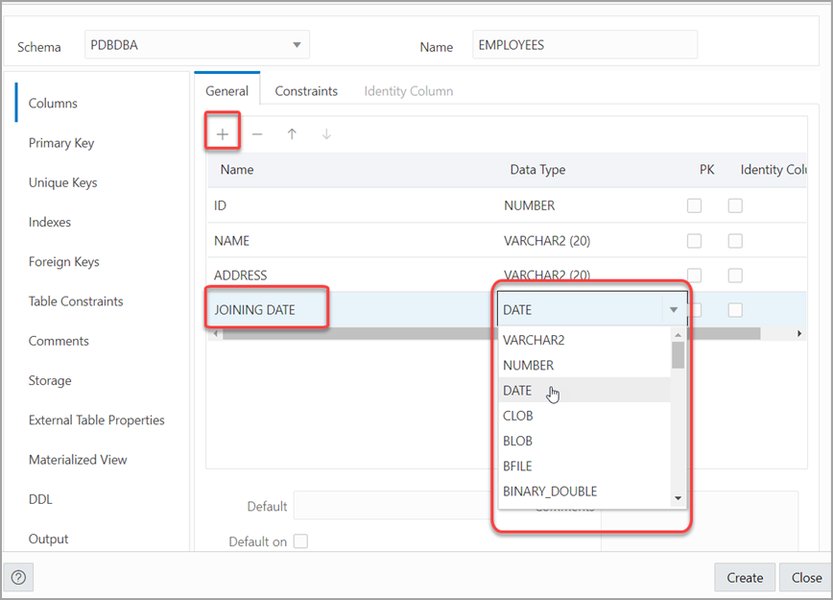
Illustrative example of a database table column definition interface, similar to what one might encounter in Oracle SQL Developer when examining table structures like PER_ALL_ASSIGNMENTS_F.
Why a Null Value is Problematic
In a correctly functioning Oracle HCM environment, the EFFECTIVE_START_DATE in PER_ALL_ASSIGNMENTS_F should not be NULL for any valid, active, or historical assignment record. Its presence is crucial for:
- Accurate historical tracking of assignment changes.
- Correctly identifying current and future-dated assignment records.
- Ensuring the integrity of payroll calculations, benefits administration, and other HCM processes that depend on time-sensitive data.
- Reliable reporting and analytics.
If you encounter a record with a NULL EFFECTIVE_START_DATE, it generally indicates an anomaly that needs investigation and correction.
Potential Causes for a Null EFFECTIVE_START_DATE
While a NULL EFFECTIVE_START_DATE is atypical, several scenarios could lead to this situation. These usually point to data integrity problems or errors in data management processes.
1. Data Corruption
Data corruption can occur due to various reasons, including system errors, unexpected interruptions during data processing, or complex data updates that go awry. For instance, Oracle Support documents have noted instances where changing an employee's hire date, especially after multiple periods of service, can lead to corruption in assignment effective dates within PER_ALL_ASSIGNMENTS_F. Such corruption might manifest as invalid or missing effective dates.
2. Data Loading or Import Errors
When data is loaded into Oracle HCM, particularly using tools like HCM Data Loader (HDL) or custom interfaces, errors can occur if the source data is incomplete or incorrectly mapped. If an EFFECTIVE_START_DATE is missing in the source file or if the loading process encounters an issue, it might result in a NULL value being inserted. HDL processes, for example, require valid effective start dates, and errors are typically flagged if these are missing or incorrect. However, a flaw in a custom loader or a misconfiguration might bypass such validations.
3. System Bugs or Patch-Related Issues
Occasionally, software bugs within Oracle HCM itself or issues introduced by specific patches or release updates (RUPs) can affect data integrity. There have been known instances where certain patches in Oracle E-Business Suite (EBS) or HCM Cloud have inadvertently caused anomalies in effective-dated tables, potentially leading to NULL or incorrect dates in critical fields like EFFECTIVE_START_DATE.
4. Incomplete Data or Pending States
In some workflows, an assignment record might be created in a preliminary or staging state before all information is fully populated and validated. While less common for EFFECTIVE_START_DATE, if a transaction creating or updating an assignment is interrupted or fails to complete, it could leave the record in an inconsistent state with a NULL effective date. This might also apply to placeholder records for applicants or pre-hires if they haven't been fully converted to employee assignments with proper effective dates.
5. Legacy Data Migration Issues
When migrating data from older or disparate systems into Oracle HCM, the source data might contain inconsistencies, missing values, or date formats that are not correctly transformed. If legacy assignment records lacked proper effective start dates, or if these were not handled correctly during the migration, NULL values could be carried over into PER_ALL_ASSIGNMENTS_F.
6. Incorrect Manual Data Entry or Updates
While Oracle HCM UIs generally enforce the entry of an effective start date for assignment changes, errors can still occur, especially if there are customizations or less stringent validation rules in certain contexts. Direct data manipulation (if permissible and attempted) without proper safeguards could also lead to such issues.
7. Transitional Record States During Complex Transactions
During certain complex data operations, such as a delete or a significant update transaction, records might momentarily pass through an interim state where some date fields could be temporarily nullified as part of the system's internal processing logic before being corrected or finalized. If such a transaction fails or is rolled back incompletely, the record might be left in this anomalous state.
Analyzing Potential Causes: Likelihood and Impact
The various reasons for a NULL EFFECTIVE_START_DATE can differ in their likelihood of occurrence and the potential severity of their impact on your HCM data and processes. The radar chart below provides a conceptual illustration of these factors for common causes. "Likelihood" refers to the general probability of the cause occurring, and "Impact" refers to the potential disruption or data integrity issues it might create.
Conceptual Radar Chart: Likelihood vs. Impact of Causes for Null EFFECTIVE_START_DATE.
This chart visualizes that while some causes like data loading errors might be perceived as more frequent, data corruption or system bugs, though potentially rarer, can have a very high impact. All these causes necessitate careful investigation.
Visualizing the Problem Landscape
A mindmap can help illustrate the interconnected nature of a NULL EFFECTIVE_START_DATE, its potential origins, and the areas it impacts. This provides a holistic view of the issue within the Oracle HCM ecosystem.
in PER_ALL_ASSIGNMENTS_F"] id1["Potential Causes"] id1a["Data Corruption
(e.g., hire date changes)"] id1b["Data Loading/Import Errors
(e.g., HDL, custom interfaces)"] id1c["System Bugs / Patch Issues
(Oracle HCM/EBS specific versions)"] id1d["Incomplete Data / Pending States
(e.g., failed transactions, pre-hire data)"] id1e["Legacy Data Migration
(e.g., poor data transformation)"] id1f["Incorrect Manual Updates
(e.g., UI errors, direct DML)"] id2["Consequences & Impacts"] id2a["Inaccurate Reporting & Analytics"] id2b["Payroll & Benefits Errors"] id2c["Integration Failures with other systems"] id2d["Compromised Data Integrity"] id2e["Operational Disruptions in HCM processes"] id3["Detection Methods"] id3a["SQL Queries
(WHERE EFFECTIVE_START_DATE IS NULL)"] id3b["System Health Checks / Audits"] id3c["User Reported Issues"] id4["Resolution Strategies"] id4a["Data Correction Scripts (Oracle Support)"] id4b["Re-processing / Correcting Data Loads"] id4c["Applying Oracle Patches"] id4d["Manual Correction via UI (if possible)"] id4e["Root Cause Analysis & Process Improvement"]
Mindmap illustrating causes, impacts, detection, and resolution of NULL EFFECTIVE_START_DATE.
Identifying Records with Null EFFECTIVE_START_DATE
To find assignment records where the EFFECTIVE_START_DATE is NULL, you can execute a straightforward SQL query against the PER_ALL_ASSIGNMENTS_F table. This will help you identify the scope of the problem.
SELECT
    ASSIGNMENT_ID,
    PERSON_ID,
    EFFECTIVE_START_DATE,
    EFFECTIVE_END_DATE,
    ASSIGNMENT_NUMBER,
    ASSIGNMENT_TYPE,
    ACTION_CODE,
    LAST_UPDATE_DATE,
    LAST_UPDATED_BY
FROM
    PER_ALL_ASSIGNMENTS_F
WHERE
    EFFECTIVE_START_DATE IS NULL;
Running this query will list all assignment records that are missing this critical date, allowing for further investigation into their specific circumstances and history.
Addressing the Issue: A General Approach
If you find records with a NULL EFFECTIVE_START_DATE, the approach to resolution will depend on the root cause:
- Identify Affected Records: Use the SQL query provided above or similar diagnostic tools.
- Investigate the Cause: For each affected record or group of records, try to determine why the date is NULL. Was it a recent data load? A system change? A specific transaction? Check audit logs if available.
- Consult Oracle Support: If data corruption or a system bug is suspected, raising a service request with Oracle Support is crucial. They may provide specific patches, data fix scripts, or guidance.
- Data Correction:
- For errors due to data loading, the data may need to be corrected in the source and reloaded, or corrected in the system using appropriate tools like HDL or through the UI (e.g., Manage Employment page), ensuring a valid
EFFECTIVE_START_DATEis supplied. - Oracle documentation provides methods for correcting assignment-related transaction start dates, which might involve deleting and recreating records with correct effective dates.
- For errors due to data loading, the data may need to be corrected in the source and reloaded, or corrected in the system using appropriate tools like HDL or through the UI (e.g., Manage Employment page), ensuring a valid
- Review and Improve Processes: If the issue stems from faulty data loading procedures, inadequate validation in custom interfaces, or problematic manual practices, these processes should be reviewed and improved to prevent recurrence.
- Validate Data Post-Correction: After applying any fixes, thoroughly validate the data to ensure the issue is resolved and no unintended consequences have arisen.
Summary of Potential Causes and Implications
The following table summarizes the common causes of a NULL EFFECTIVE_START_DATE and their potential implications:
| Cause | Description | Potential Implications |
|---|---|---|
| Data Corruption | Integrity of data compromised due to system errors or faulty updates (e.g., complex hire date changes). | Widespread data inaccuracies, system instability, incorrect historical records. |
| Data Loading/Import Errors | Errors during data migration or ongoing loads (e.g., via HDL) where dates are missed or processed incorrectly. | Incomplete or inaccurate new assignment records, downstream processing failures. |
| System Bugs/Patches | Flaws in Oracle HCM software or issues introduced by patches affecting date-tracked tables. | Unpredictable behavior, potential for widespread data issues until bug is fixed. |
| Incomplete Data/Pending States | Records created but not fully processed, or transactions that failed mid-way. | Orphaned or unusable records, process blockages. |
| Legacy Data Migration | Issues from migrating data from older systems with different structures or missing data. | Historical data inaccuracies, challenges in longitudinal reporting. |
| Incorrect Manual Updates | Errors made during manual data entry or direct database modifications (if allowed). | Isolated or widespread inaccuracies depending on the scope of manual error. |
Frequently Asked Questions (FAQ)
Is it ever valid for EFFECTIVE_START_DATE to be NULL in PER_ALL_ASSIGNMENTS_F?
No, for any standard, active, or historical assignment record that is part of an employee's valid assignment history, the EFFECTIVE_START_DATE should not be NULL. Date-tracking fundamentally relies on this field to define the start of a record's validity. A NULL value invariably points to a data anomaly or an incomplete/erroneous record.
Can a NULL EFFECTIVE_START_DATE affect payroll?
Yes, significantly. Payroll calculations often depend on the employee's assignment status, job, grade, and other details as of specific dates. If the EFFECTIVE_START_DATE is NULL, the system may not be able to correctly determine the assignment attributes for a given pay period, potentially leading to incorrect payments or processing errors.
How does EFFECTIVE_START_DATE relate to PER_ALL_ASSIGNMENTS_M?
PER_ALL_ASSIGNMENTS_F is typically a view or a processed table derived from a base table often referred to as PER_ALL_ASSIGNMENTS_M (the "_M" can signify that it's the main, multi-row table that stores all changes). The "_F" table (or view) is usually structured to show date-effective slices. The integrity of effective dates in the base table is critical for the correct representation in the "_F" version. Issues in PER_ALL_ASSIGNMENTS_M regarding effective dates would propagate to PER_ALL_ASSIGNMENTS_F.
What's the difference between a NULL EFFECTIVE_START_DATE and a very old EFFECTIVE_START_DATE?
A very old EFFECTIVE_START_DATE (e.g., 01-JAN-1900) is a valid date that indicates the record became effective a long time ago. This is common for foundational data or very long-serving employees. A NULL EFFECTIVE_START_DATE means the date is unknown or not set, which is a data integrity issue. The system cannot determine when the record was supposed to start, making it unusable for date-based logic.
Recommended Further Exploration
To deepen your understanding of Oracle HCM data integrity and effective dating, consider exploring these related topics:
- What are the best practices for data loading in Oracle HCM using HDL to prevent date issues?
- How does Oracle HCM handle corrections to assignment effective dates once records are created?
- What are common data corruption scenarios in PER_ALL_ASSIGNMENTS_F and their typical fixes?
- How does effective dating in Oracle HCM impact reporting and analytics accuracy?
References
The information synthesized in this response is based on common Oracle HCM principles and interpretations from various technical discussions and Oracle documentation. For authoritative guidance, always refer to official Oracle resources.
 vamsimantripragada.blogspot.com
 rajdeepchauhan.wordpress.com
 josephbijoy.blogspot.com
 mogalafzal.blogspot.com
Last updated May 8, 2025