
An Overview of Donald Trump: Policies, Actions, and Recent Developments
Examining the Political Landscape Surrounding the 47th U.S. President
Key Takeaways
- Alignment with Conservative Agenda: While publicly distancing himself from Project 2025, President Trump's executive orders and policy initiatives often align closely with the detailed proposals found in this conservative blueprint for reshaping the federal government.
- Focus on Executive Authority and Deregulation: A central theme of his administration involves expanding presidential power, reducing federal bureaucracy, and challenging existing regulations, particularly in areas like climate programs and labor unions.
- Prominent Stances on Immigration and Trade: Core policies continue to revolve around strict immigration enforcement, including efforts to challenge birthright citizenship, and protectionist trade measures like tariffs on foreign goods.
Introduction to Donald J. Trump
Donald John Trump, born June 14, 1946, is an American politician, media personality, and businessman who serves as the 47th president of the United States. He is the Republican nominee for president for the third consecutive election cycle. His political views have often been described as nationalist, populist, nativist, protectionist, and semi-isolationist. Skeptical of immigration, free trade, and military interventionism, Trump's "America First" policies represent a significant departure from traditional foreign policy approaches.
Having previously served as president from 2017 to 2021, Trump was notably elected without prior electoral experience, a rarity among U.S. presidents, with the exception of those who were Army generals. His tenure and subsequent political activities have been marked by a focus on reshaping the federal government, implementing significant policy shifts through executive action, and engaging in public disputes with various institutions and political opponents.

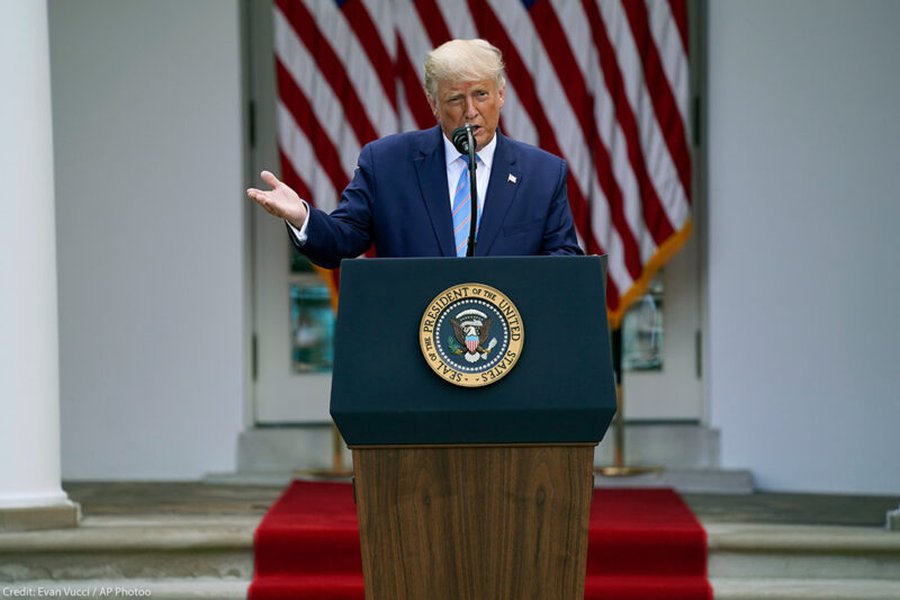
President Donald Trump addresses supporters at a rally.
Key Policy Positions and Agenda
President Trump's policy agenda draws from his stated positions, campaign promises, and actions taken during his first term and in the early days of his current administration. His approach is often characterized by a desire to challenge established norms and regulations across various sectors.
Economic Policy
Economically, Trump has been primarily identified as a protectionist. His policies aim to raise tariffs on foreign goods, particularly targeting countries perceived as engaging in unfair trade practices with the U.S. This includes a focus on establishing a "reciprocal tariff" policy. He has also expressed views on taxation, including the SALT (State and Local Tax) deduction, which allows taxpayers to subtract some of what they pay to state and local governments from their federal taxable income.
Trade and Tariffs
Trump's trade stance is centered on renegotiating trade deals and using tariffs as a tool to protect domestic industries and reduce trade deficits. This approach has sometimes led to trade disputes with major economic partners.
Taxation and Spending
Beyond the SALT deduction, Trump's approach to taxation involves broader reforms. His administration has also proposed significant budget cuts, including a proposal to reduce funding for federal health agencies by billions of dollars, though Congress holds ultimate appropriation authority.
Immigration
A cornerstone of Trump's agenda is immigration enforcement. His focus includes strengthening border security and implementing stricter controls on legal and illegal immigration. A particularly contentious proposal is the effort to end birthright citizenship, the right to become a U.S. citizen if born in the U.S., regardless of parents' immigration status. The Supreme Court is currently hearing arguments on whether the administration can partially enforce an executive order related to this issue.

Crowds gather for a Donald Trump rally.
Foreign Policy
Trump's foreign policy is characterized by the "America First" principle, emphasizing national interests above multilateral agreements and alliances. His administration has engaged in military actions, such as ordering strikes against the Houthis in Yemen. He has also cultivated relationships with certain foreign leaders who align with his political philosophy, such as Italy's right-wing Prime Minister Giorgia Meloni, whom he has lauded as a "fantastic leader."
Military Actions and Global Relations
The decision-making process regarding military actions has sometimes drawn scrutiny. Recent events, such as the controversy surrounding the use of encrypted messaging apps for discussing sensitive military plans, highlight ongoing challenges in communication and security within the administration.
Social Issues and Government Structure
Trump's stance on social issues reflects a conservative viewpoint. This includes policies related to gender identity, such as establishing "male and female" as the only genders recognized by the U.S. government, and regulating gender-affirming care for minors, mirroring laws passed in several states. His administration has also targeted diversity, equity, and inclusion (DEI) programs, including efforts to withhold federal funding for public schools implementing such programs, which has led to legal challenges.
Challenging Established Institutions and Regulations
Beyond social issues, Trump's agenda involves a broader challenge to federal bureaucracy and established institutions. This includes actions against state climate programs and expressing intent to potentially challenge the tax-exempt status of institutions like Harvard University, arguing they are not acting in the public interest. His administration has also taken steps that union leaders interpret as attempts to eliminate collective bargaining for federal workers, filing lawsuits to support these moves.
The Influence of Project 2025
Project 2025 is a significant political initiative, spearheaded by the Heritage Foundation and authored by former Trump administration officials, that aims to reshape the federal government and consolidate executive power. Described as a 900-page policy wish list, it proposes a radical restructuring of the executive branch and advocates for an ultra-conservative social vision. Its goals include expanding presidential control over the entire federal bureaucracy, including independent agencies like the Department of Justice, based on the controversial idea of "unitary executive theory."
Despite President Trump publicly distancing himself from Project 2025 during his campaign, stating he had "nothing to do with Project 2025," had not read it, and found some ideas "absolutely ridiculous and abysmal," many of his actions and executive orders since taking office have closely aligned with the blueprint's proposals. Analysts have noted that nearly two-thirds of his recent executive actions mirror or partially mirror proposals from the document.
This image relates to discussions around Trump administration policies impacting areas like race and gender.
Key figures associated with Project 2025, such as Russ Vought, Trump's pick to lead the Office of Management and Budget (OMB), who co-authored the project's playbook for the first 180 days, are now in positions within the administration. Paul Dans, the former director of Project 2025, has expressed satisfaction with the administration's actions, reportedly stating that what Trump is doing is "actually way beyond my wildest dreams" and that "What we had hoped would happen has happened."
Project 2025 proposes hundreds of policy changes impacting various aspects of life and constitutional freedoms, including reviving a 19th-century law, the Comstock Act, to ban the mailing of abortion medications and related materials. The American Civil Liberties Union (ACLU) has raised concerns about Project 2025's potential implications for democratic norms, institutions, and rights, highlighting proposals that would affect reproductive rights, LGBTQ rights, immigrants' rights, and racial equity.
President Trump signs executive orders in the Oval Office and takes questions from reporters. This video provides insight into the President's use of executive actions and direct communication with the press regarding his policy decisions, reflecting a key method of implementing his agenda, often aligning with proposals like those in Project 2025.
Summary of Key Policies and Approaches
To provide a clearer picture, here is a summary of some of President Trump's key policy areas and his general approach, based on the provided information:
| Policy Area | Trump's Stance/Approach | Relevant Concepts/Initiatives |
|---|---|---|
| Economy & Trade | Protectionist; Use of tariffs; Focus on trade deficits; Tax reform; Proposing budget cuts. | Reciprocal Tariffs, SALT Deduction, Proposed HHS Budget Cuts |
| Immigration | Strict enforcement; Border security; Limiting legal immigration. | Building the wall, Efforts to end Birthright Citizenship |
| Foreign Policy | "America First"; Skeptical of multilateralism; Transactional relationships. | Military action in Yemen, Relationships with leaders like Giorgia Meloni |
| Government Structure & Regulation | Consolidating executive power; Reducing federal bureaucracy; Challenging regulations. | Project 2025 (alignment), Unitary Executive Theory, Challenging Climate Programs, Actions against Federal Unions |
| Social Policy | Conservative stances; Focus on traditional gender definitions; Opposing DEI initiatives; Restricting access to abortion-related materials. | Defining Gender, Regulating Gender-Affirming Care, Challenging DEI Programs, Comstock Act (proposed revival via Project 2025) |
| Education & Institutions | Challenging perceived bias in institutions; Threatening funding or status based on actions. | Threats to Harvard's tax-exempt status, Efforts to withhold funding for DEI programs in schools |
This table synthesizes various policy positions mentioned across the sources, illustrating the breadth of areas where President Trump's administration is seeking to enact changes.
Recent Activities and Controversies
The early period of President Trump's current term has seen a flurry of activity and several notable controversies. Beyond implementing policies through executive orders that align with Project 2025, the administration has been involved in various high-profile events.
Signal Chat Controversy
A significant recent issue involved the use of a Signal group chat by administration officials, including Defense Secretary Pete Hegseth, to discuss sensitive military actions, such as planned strikes against the Houthis in Yemen. The controversy arose when a journalist was accidentally included in the chat. This incident sparked calls for investigation from both Republican and Democratic senators and drew criticism regarding national security protocols. While some officials downplayed the issue, polls indicated that a majority of Americans, including a significant portion of Republicans, viewed the use of the messaging app for such discussions as a serious problem. The White House has faced pressure to address the controversy, which President Trump has dismissed as a "witch hunt."
President Donald Trump attends a meeting in the Cabinet Room at the White House.
Engagement with Foreign Leaders
Continuing his active role in international relations, President Trump recently met with Italy's Prime Minister Giorgia Meloni at the White House. This meeting highlights his engagement with European leaders, particularly those with aligned political ideologies, amidst broader discussions about EU dynamics and international cooperation.
Challenges to Educational Institutions and Funding
The administration has continued its focus on higher education, notably with discussions around challenging Harvard University's tax-exempt status. This move echoes previous statements by President Trump escalating his fight with the institution. Furthermore, a legal battle has begun over the administration's alleged threats to withhold federal funding from public schools based on their implementation of DEI programs, raising questions about the extent of presidential authority to condition federal money on specific policies.
Executive Actions and Personnel
Throughout his time in office, President Trump has frequently utilized executive orders to enact policy changes. His recent actions, as noted, often align with the detailed roadmap presented in Project 2025, despite his public disavowal of the project during the campaign. Personnel appointments, such as Russ Vought at OMB and John Ratcliffe as CIA director, reflect the placement of individuals who align with his vision for the executive branch.
Frequently Asked Questions
What is Donald Trump's current role in U.S. politics?
Donald Trump is currently serving as the 47th President of the United States and is the presumptive Republican nominee for the upcoming presidential election, seeking a second non-consecutive term.
What are some of President Trump's main policy focuses?
His main policy focuses include strict immigration enforcement, protectionist trade measures, deregulation, challenges to federal bureaucracy, and conservative stances on social issues.
How does Project 2025 relate to President Trump's agenda?
Project 2025 is a policy blueprint developed by conservative groups, including former Trump officials, outlining proposals to restructure the federal government. Although President Trump has publicly distanced himself from it, many of his recent executive actions and policy decisions align closely with proposals detailed in the Project 2025 document.
What is the unitary executive theory, and how might it apply to the current administration?
The unitary executive theory is a controversial idea proposing that the entire federal bureaucracy, including independent agencies, should be under direct presidential control. Project 2025 advocates for this approach, and actions aligning with Project 2025's goals of consolidating executive power could be seen as moving towards this theory's principles.
What recent controversies has the Trump administration faced?
Recent controversies include the use of an unsecured messaging app (Signal) by officials to discuss sensitive military plans (Signal chat controversy), legal challenges regarding efforts to restrict birthright citizenship, and disputes over challenging the tax status of universities and federal funding for school programs like DEI.
References
Last updated April 18, 2025