
Unveiling Pavement Cracks: A Visual Guide to Conventional and Deep Learning Methods
Exploring the Architectures and Schematics Behind Automated Crack Recognition
Key Highlights
- Conventional image processing techniques like thresholding, edge detection, and morphological operations provide foundational approaches for identifying pavement cracks based on pixel intensity, gradient changes, and structural characteristics.
- Thresholding methods, particularly Otsu's method, are widely used for their simplicity in segmenting potential crack pixels by analyzing grayscale histograms, though they can be sensitive to uneven lighting and noise.
- Edge detection algorithms such as Canny and Sobel are effective in highlighting the boundaries of cracks by identifying sharp changes in pixel intensity, often serving as a preliminary step in more complex crack detection pipelines.
- Morphological operations, including dilation and erosion, are crucial for refining crack segmentation results, connecting fragmented crack lines, and removing noise by manipulating the shape and structure of objects in binary images.
Automated pavement crack recognition is a critical task for effective road maintenance and ensuring traffic safety. Historically, this process relied heavily on manual visual inspection, which is time-consuming, subjective, and potentially hazardous. The advent of image processing and, more recently, deep learning techniques has revolutionized this field, enabling faster, more objective, and safer methods for identifying and analyzing pavement distresses. This review focuses on two primary categories of automated crack recognition: conventional image processing methods and deep learning approaches, with a specific emphasis on providing illustrative figures and diagrams for better understanding.
Conventional Image Processing Techniques
Conventional image processing methods leverage fundamental principles of digital image manipulation to identify cracks. These techniques often involve analyzing pixel values, spatial relationships, and structural patterns within pavement images. While less complex than deep learning models, they form the basis for many automated systems and can be highly effective under controlled conditions.
Thresholding Approaches
Thresholding is a straightforward yet powerful image segmentation technique that separates pixels based on their intensity values. In the context of pavement crack detection, cracks often appear as darker regions against a lighter pavement background. Thresholding aims to distinguish these darker crack pixels from the surrounding pavement pixels by establishing a threshold intensity value. Pixels with intensity below the threshold are classified as crack pixels, while those above are considered background.
One of the most popular thresholding methods is Otsu's method, which automatically determines an optimal global threshold by maximizing the variance between the foreground (crack) and background (pavement) pixels in the image histogram. This method is unsupervised and adapts to the specific characteristics of each image, making it more robust than fixed thresholding.
However, thresholding methods can be susceptible to variations in lighting conditions, shadows, and the presence of noise or other dark features on the pavement surface, which can lead to misclassification. Adaptive thresholding techniques, which calculate thresholds for smaller regions of the image, can help mitigate the effects of uneven illumination.
Schematic Diagram of Otsu's Thresholding Method
Below is a conceptual illustration of how Otsu's thresholding method works. It highlights the analysis of the image histogram to find the optimal separation point between crack and non-crack pixels.
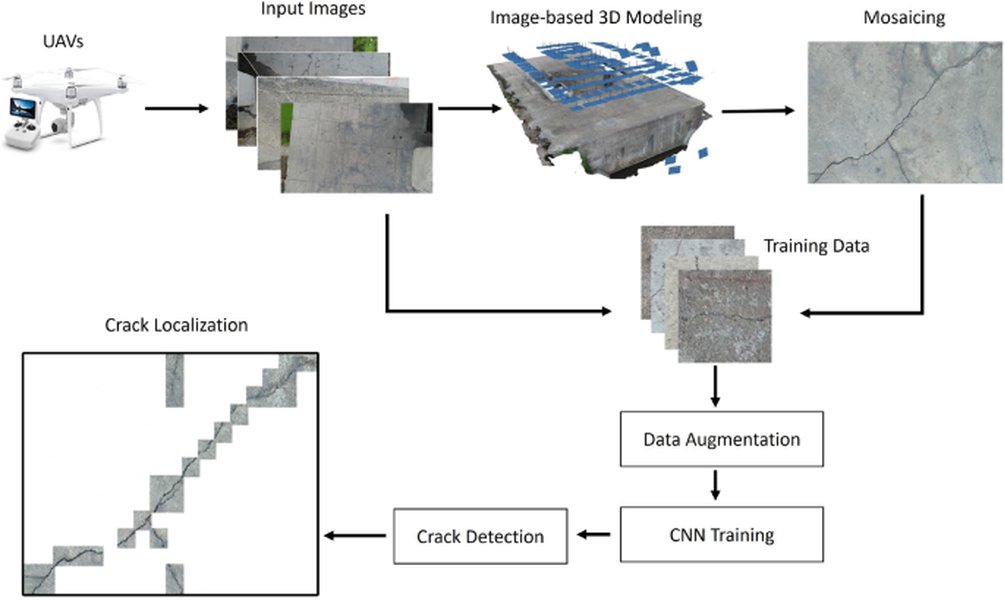
Conceptual flow of Otsu's thresholding for crack detection.
Edge Detection Techniques
Edge detection focuses on identifying points in an image where the image brightness changes sharply, which are often indicative of object boundaries. Pavement cracks, being structural discontinuities, typically exhibit strong edges where the crack surface meets the surrounding pavement. Edge detection algorithms highlight these transitions, effectively outlining the potential crack network.
Common edge detection operators include Sobel, Prewitt, Canny, and Roberts. The Canny edge detector is particularly well-regarded for its ability to detect a wide range of edges while minimizing noise-induced false positives. It typically involves multiple steps: noise reduction, gradient calculation, non-maximum suppression to thin the edges, and hysteresis thresholding to connect edge segments.
Edge detection can be a valuable step in a crack detection pipeline, providing a foundation for further processing to connect fragmented edges and identify complete crack structures. However, like thresholding, its performance can be affected by image noise and the complexity of the pavement surface texture.
Illustration of Edge Detection in Pavement Images
This image demonstrates how edge detection can reveal the structural outlines of cracks within a pavement surface.
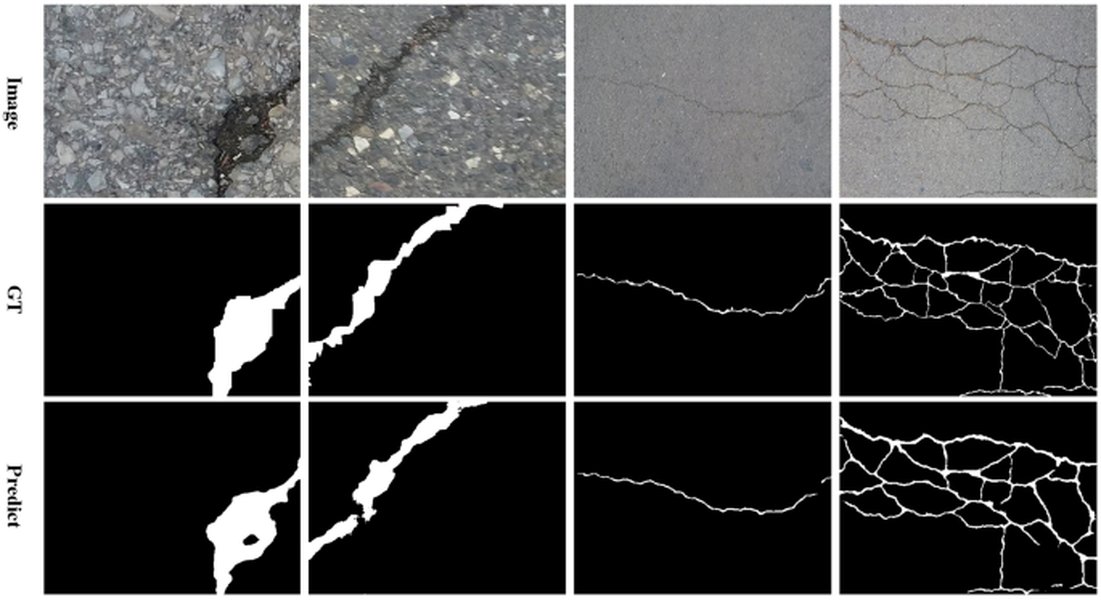
Visualizing crack edges through edge detection.
Morphological Operations
Mathematical morphology is a framework for analyzing and processing images based on shape. It applies set theory to image analysis, using structuring elements to probe and modify the shapes within an image. In the context of pavement crack detection, morphological operations are instrumental in refining the results of initial segmentation or edge detection steps.
Key morphological operations include erosion and dilation. Erosion shrinks or thins shapes, which can be used to remove small noise particles or disconnect thin connections between objects. Dilation expands shapes, which can be used to fill gaps in crack lines, connect fragmented crack segments, or thicken detected crack regions. More complex operations, such as opening (erosion followed by dilation) and closing (dilation followed by erosion), can be used to smooth contours, remove small features, or bridge small gaps.
Morphological operations are often applied to binary images (images where pixels are either black or white, representing crack or non-crack). They are particularly useful for post-processing to improve the connectivity and representation of detected cracks, leading to more accurate crack length and width measurements.
Example of Morphological Operations for Crack Refinement
The following diagram illustrates how morphological operations can be used to process crack images, for instance, to connect fragmented segments.
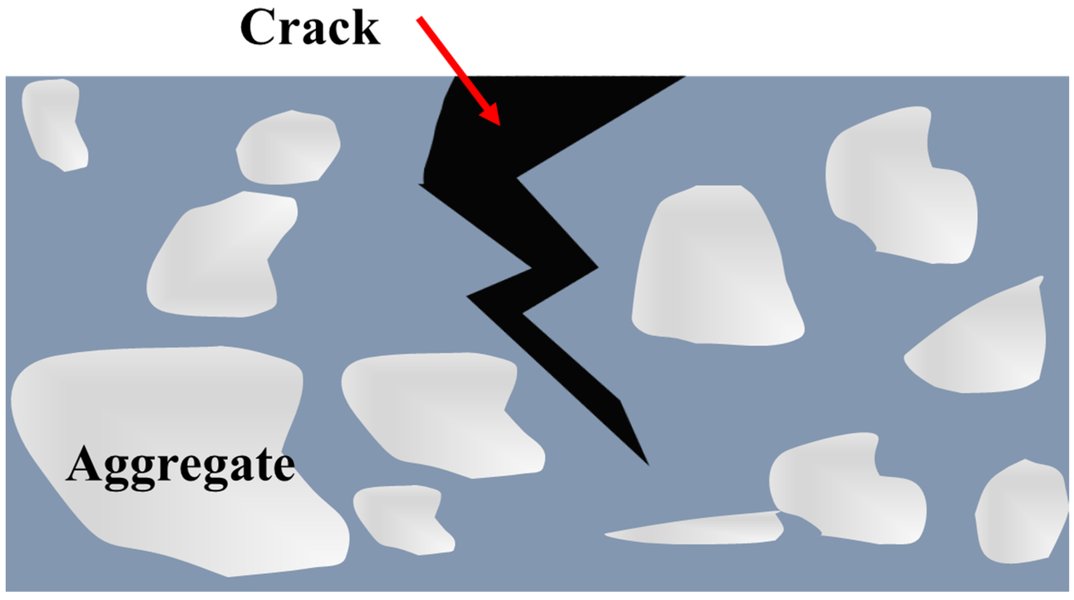
Applying morphological operations to enhance crack representation.
Integrating Conventional Methods
Often, a combination of these conventional image processing techniques is employed in a multi-stage pipeline for pavement crack detection. For example, an initial thresholding step might identify potential crack pixels, followed by morphological operations to refine the shape and connectivity of these regions. Edge detection could then be used to confirm the boundaries of the detected cracks. The specific combination and sequence of operations are typically tailored to the characteristics of the pavement images and the desired outcome.
Deep Learning Based Methods
Deep learning, particularly convolutional neural networks (CNNs), has emerged as a powerful approach for image-based pavement crack detection. Unlike conventional methods that rely on handcrafted features and explicit rules, deep learning models learn hierarchical features directly from raw image data. This allows them to capture complex patterns and variations associated with cracks, making them more robust to challenging conditions such as uneven lighting, shadows, and complex pavement textures.
Deep learning models for crack detection can be broadly categorized into image classification, object detection, and semantic segmentation approaches. Image classification models determine if an image contains a crack or not. Object detection models locate cracks within an image by drawing bounding boxes around them. Semantic segmentation models provide a pixel-level mask of the crack, precisely delineating the crack area.
Popular deep learning architectures adapted for pavement crack detection include U-Net, Faster R-CNN, and YOLO. These networks utilize multiple layers of convolutions and pooling to extract increasingly abstract features, followed by layers that perform the classification, detection, or segmentation task.
Conceptual Architecture of a Deep Learning Model for Crack Detection
This diagram provides a simplified view of a deep learning architecture, highlighting the typical flow of information from input image through convolutional layers to output.
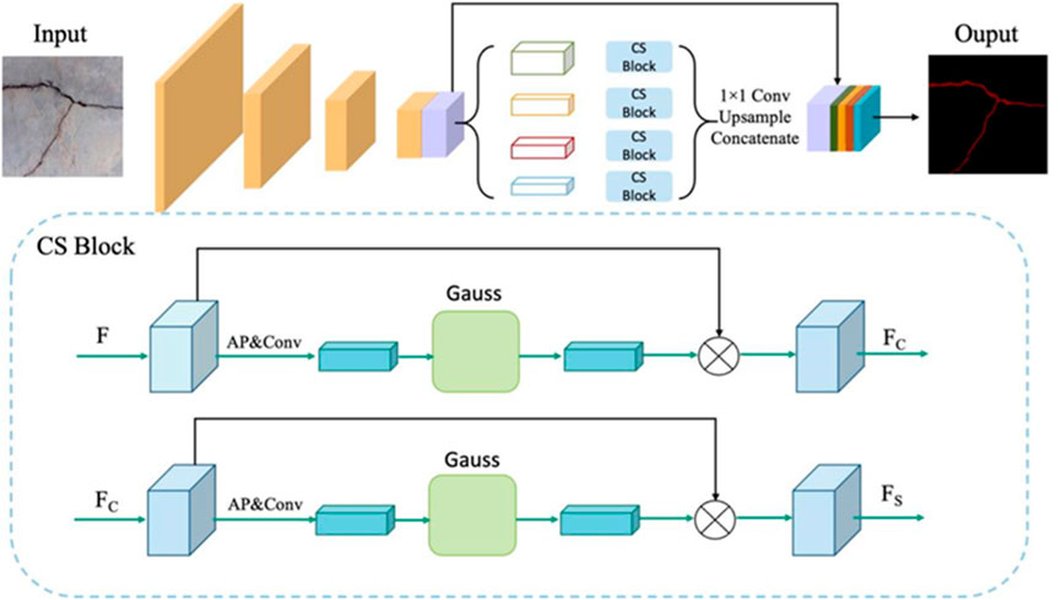
Simplified representation of a CNN architecture for crack analysis.
Advantages of Deep Learning
- Automated Feature Extraction: Deep learning models automatically learn relevant features from data, reducing the need for manual feature engineering.
- Improved Accuracy: These models can achieve higher accuracy in detecting complex and varied crack patterns.
- Robustness: Deep learning methods are generally more robust to variations in illumination and background noise compared to traditional techniques.
Challenges in Deep Learning for Crack Detection
- Data Requirements: Training deep learning models requires large datasets of labeled pavement images, which can be time-consuming and expensive to acquire and annotate.
- Computational Cost: Training and deploying deep learning models can be computationally intensive, requiring specialized hardware.
- Interpretability: The decision-making process within deep learning models can be less transparent compared to conventional methods.
Comparison of Conventional and Deep Learning Methods
Both conventional and deep learning methods have their strengths and weaknesses. Conventional methods are often simpler to implement, require less data, and are computationally less expensive. However, their performance can be limited by complex image conditions and the difficulty of designing algorithms that capture all variations of cracks. Deep learning methods, while requiring more resources, offer higher accuracy and robustness, making them suitable for large-scale automated inspection systems.
The choice between conventional and deep learning methods, or a hybrid approach, depends on the specific application, available resources, and desired performance level. For simple scenarios with good image quality, conventional methods might suffice. For challenging environments and high accuracy requirements, deep learning is often preferred.
Performance Comparison Radar Chart
The following radar chart provides a qualitative comparison of conventional and deep learning methods based on various performance aspects in pavement crack detection.
Qualitative comparison highlighting trade-offs between conventional and deep learning approaches.
Further Insights into Pavement Crack Detection
To provide a more in-depth understanding of automated pavement crack detection, the following video discusses the application of deep learning techniques for road crack detection.
Exploring road crack detection using deep learning techniques.
This video delves into how deep learning models are utilized to identify cracks in road surfaces, showcasing the practical application of these advanced techniques in infrastructure assessment.
Comparing Techniques in Detail
To further illustrate the characteristics and typical applications of these methods, the following table provides a comparative overview:
| Method Category | Key Techniques | Advantages | Disadvantages | Typical Applications |
|---|---|---|---|---|
| Conventional Image Processing | Thresholding (e.g., Otsu's), Edge Detection (e.g., Canny, Sobel), Morphological Operations (e.g., Erosion, Dilation) | Simpler to implement, lower computational cost, less data required | Sensitive to noise and lighting variations, limited in capturing complex crack patterns | Basic crack presence detection, preliminary crack segmentation |
| Deep Learning | CNNs (e.g., U-Net, Faster R-CNN, YOLO) | High accuracy, robust to complex conditions, automated feature extraction | Requires large datasets, computationally intensive, can be less interpretable | Accurate crack localization, pixel-level crack segmentation, crack type classification |
Frequently Asked Questions
Recommended Reading
- Exploring deep learning models for pixel-level pavement crack segmentation.
- A comparative study of different edge detection algorithms in identifying pavement cracks.
- Discovering how morphological image processing enhances road inspection tasks.
- Investigating the effectiveness of combining conventional and deep learning methods for improved crack recognition.
References
Last updated May 20, 2025