
Unveiling the Past: Understanding the Term "Peasant" and Its Connection to Jesus
Exploring the historical meaning of 'peasant' and why scholars apply this term to Jesus of Nazareth.
The term "peasant" evokes various images, often tied to historical agricultural societies. Understanding its definition is crucial before exploring why historical and biblical scholarship sometimes applies this label to Jesus. This exploration delves into the socio-economic world of first-century Galilee to provide context.
Highlights: Key Insights
- Defining "Peasant": Historically, a peasant is a member of a pre-industrial lower class, typically involved in small-scale farming or rural labor, often with limited land ownership and socio-economic power.
- Jesus's Context: Jesus lived in first-century Galilee, a predominantly rural, agrarian region under Roman rule, where much of the population consisted of farmers, fishermen, and artisans living modestly.
- Scholarly Perspective: Many scholars describe Jesus as a "peasant" to accurately place him within his historical setting – a member of the working class in a marginalized rural society, whose message resonated deeply with others in similar circumstances.
Defining the Term "Peasant"
Who Were the Peasants in History?
The term "peasant" refers to a specific social and economic class predominantly found in pre-industrial or agrarian societies. Understanding this term requires looking at several key characteristics derived from historical and sociological studies:
Agricultural Role and Livelihood
Peasants are fundamentally tied to the land. They are typically small-scale farmers, agricultural laborers, or rural workers engaged in manual tasks like tilling soil, cultivating crops, herding animals, or fishing. Their primary goal is often subsistence – producing enough food and resources to sustain their own family or household.
Economic and Social Standing
Historically, peasants occupied the lower strata of the social hierarchy. They generally possessed limited wealth, owned small plots of land, or worked land owned by others (landlords, feudal lords). They often had minimal political influence or economic power. Their economies were characterized by relatively simple technology and a division of labor often based on age and sex within the family unit, which served as the basic unit of production and consumption.
Historical Context: Feudalism and Beyond
The term gained prominence in contexts like medieval Europe under feudalism. Peasants could range from non-free slaves and semi-free serfs (bound to the land and a lord) to free tenants who paid rent, taxes, or provided services. While primarily associated with the past, the term is sometimes used today, occasionally neutrally (e.g., by the UN to describe rural populations in developing nations) but sometimes pejoratively to imply lack of sophistication.
Lifestyle and Community
Peasant life was typically centered in rural villages or hamlets. It involved a close connection to the land, the seasons, and the local community. Education was often limited, and life revolved around agricultural cycles and communal or familial obligations.
Why Is Jesus Sometimes Called a Peasant?
Placing Jesus in His Socio-Historical Context
Applying the term "peasant" to Jesus is a conclusion drawn by many historical scholars attempting to understand his life within the realities of first-century Jewish Palestine, particularly Galilee. It's not intended to diminish his significance but to ground him accurately in his social environment. Here’s a breakdown of the reasoning:
The Galilean Setting
Jesus hailed from Nazareth, described as a small, obscure rural village or hamlet in Galilee. First-century Galilee was largely agrarian, populated by farmers, fishermen, and artisans. It was part of the Roman Empire, and its inhabitants, particularly the rural poor, faced economic pressures like heavy taxation and potential land dispossession. This environment was characteristic of a peasant society within a larger imperial domination system.
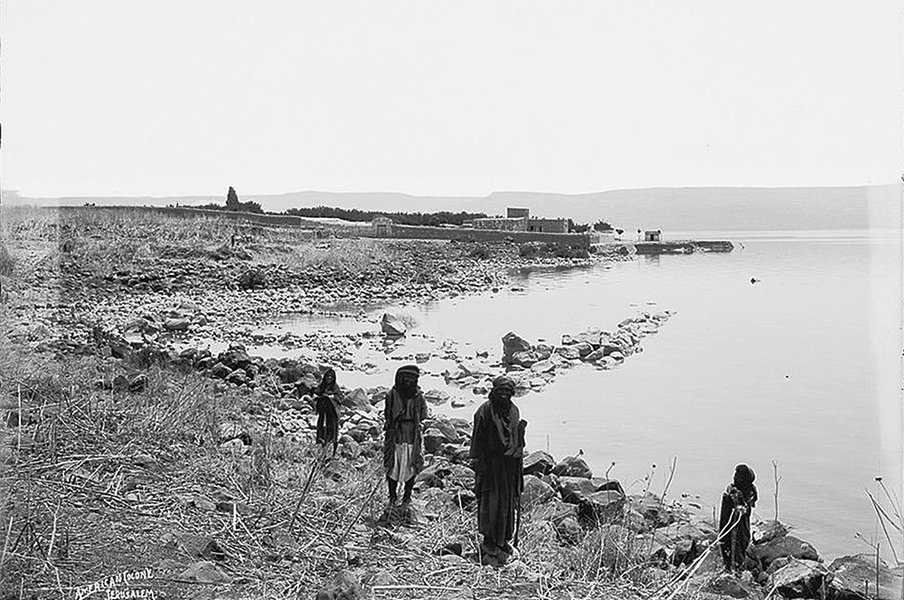
Imagining Capernaum: An illustration depicting the kind of village setting Jesus frequented in Galilee.
Socio-Economic Background
Jesus's family background appears modest. He is identified in the Gospels as the son of a carpenter and possibly a carpenter (tekton in Greek) himself. While 'tekton' can mean builder or craftsman and implies skill, it was still a form of manual labor common among the non-elite, working classes in rural areas. There's no historical evidence suggesting Jesus came from wealth, landowning aristocracy, or the educated priestly class. His lifestyle, depicted as itinerant and reliant on the hospitality of others, aligns more with lower or modest social strata.
Language, Teachings, and Audience
Jesus spoke Aramaic, the common vernacular of the region, rather than the Greek of the elite or the Hebrew primarily used in religious scholarship. His teachings frequently employed parables and metaphors drawn directly from rural and agricultural life – sowing seeds, harvesting, fishing, shepherding, vineyard work, and master-servant relationships common in agrarian estates. This suggests an intimate familiarity with the world of peasants and an intention to communicate effectively with a primarily rural, non-elite audience. His message often addressed themes of poverty, debt, social justice, and the subversion of established hierarchies (religious and political), which would have strongly resonated with the experiences of marginalized peasants.
Scholarly Interpretations
Prominent scholars, such as John Dominic Crossan, have characterized the historical Jesus as a "Mediterranean Jewish peasant" or even a "peasant Jewish Cynic." This perspective emphasizes Jesus as someone from the lower social orders who challenged the prevailing social, economic, and religious structures of his time. His advocacy for an egalitarian "Kingdom of God" is seen as a radical response to the inequalities and oppressions faced by the peasant class under Roman and Temple authority. While recent archaeological findings might add nuance to the picture of Galilee (e.g., proximity of Nazareth to the city Sepphoris), the predominant view in historical Jesus studies places him firmly within the peasant or working-class context of his time.
Visualizing Social Context: Peasant Characteristics and Jesus
A Comparative Perspective
To visualize how Jesus's described background aligns with typical peasant characteristics, the following radar chart offers a comparative perspective based on scholarly interpretations. It contrasts the general profile of a historical peasant with how Jesus might be viewed across dimensions like land ownership, economic status, social influence (within their respective spheres), formal education (as distinct from wisdom/teaching), political power, and connection to rural life. The values are relative estimations for illustrative purposes.
This chart highlights that while Jesus shared the rural connection and lack of political power common to peasants, his social influence (as a teacher and leader of a movement) and possibly his trade (carpenter/builder) might differentiate him slightly within the broad spectrum of the lower classes, though still firmly outside the elite strata.
Mapping the Concepts: Peasantry and Jesus's World
Connecting the Dots
The relationship between the definition of a peasant and the reasons Jesus is often described as one can be visualized in a mindmap. This map links the core concept to its defining characteristics and connects them to the specific factors in Jesus's life and environment considered by historians.
This mindmap illustrates how understanding the general definition of a peasant provides the framework for interpreting Jesus's social standing based on his background, occupation, the nature of his teachings, and the scholarly consensus that aims to place him accurately within his time.
Comparing Peasant Life and Jesus's Experience
A Tabular Overview
The following table summarizes key aspects comparing a generalized view of peasant life with what is known or inferred about Jesus's life, based on historical and biblical scholarship:
| Aspect | Typical Peasant (Historical Generalization) | Jesus (Based on Historical/Biblical Context) |
|---|---|---|
| Primary Occupation | Farming, agricultural labor, herding | Carpenter/Builder (Tekton), later Itinerant Preacher/Teacher |
| Residence | Rural village/hamlet, tied to land | Grew up in rural village (Nazareth), later became itinerant (no fixed home) |
| Social Circle | Family, local villagers, fellow laborers | Family, disciples (fishermen, tax collector, others from common backgrounds), crowds of ordinary people, also interacted with religious authorities |
| Economic Standing | Subsistence level, low income, often indebted or tenant | Modest background, working class (artisan), relied on support/hospitality during ministry |
| Relation to Land | Directly worked the land (owned, rented, or bound) | Familiarity with agriculture (evident in parables), but primary occupation wasn't farming; likely landless |
| Literacy/Education | Generally low or none (practical skills prioritized) | Debated, but could read (Luke 4:16-20); demonstrated deep knowledge of Jewish scriptures, though likely not formal rabbinic training of the elite |
| Message/Focus | Survival, local community, fulfilling obligations | Kingdom of God, social justice, repentance, challenging religious/social norms, healing |
This comparison highlights both similarities (rural roots, modest means, connection to common people) and differences (occupation shift, itinerant nature, specific mission) that inform the scholarly discussion about classifying Jesus as a peasant.
Defining the Term: Peasant
Video Explanation
For a concise visual explanation of the term "peasant," the following video provides definitions and examples, helping to solidify understanding of this key term before applying it to historical figures like Jesus.
This video offers basic definitions helpful for understanding the general meaning of the word "peasant" as used in various contexts, including historical discussions.
Frequently Asked Questions (FAQ)
Was Jesus extremely poor, like the lowest level of peasantry?
Scholarly opinions vary. While Jesus certainly wasn't part of the wealthy elite, classifying him as belonging to the absolute poorest stratum is debated. His trade as a tekton (carpenter/builder) suggests a skilled laborer status, which might have placed him slightly above subsistence farmers or landless day laborers, though still firmly within the lower/working classes of the time. His family seems to have been modest, not destitute. During his ministry, he lived an itinerant life, relying on the support of others, which reflects a detachment from material wealth but doesn't necessarily equate to the chronic poverty of the most destitute peasants.
What does the Greek word 'tekton' really mean?
Tekton (τέκτων) is a Greek term often translated as "carpenter," but its meaning is broader, encompassing artisans or craftspeople who worked with hard materials like wood, stone, or metal. It could mean a general builder, craftsman, or woodworker. In the context of a rural village like Nazareth, a tekton would likely have been involved in various construction and repair tasks necessary for the community – making tools, furniture, plows, building houses, etc. It implies a skilled trade within the working class.
Is calling Jesus a "peasant" disrespectful?
Within historical and sociological scholarship, using the term "peasant" for Jesus is generally not intended to be disrespectful. Instead, it's a technical term used to describe his socio-economic background and place him accurately within the social structure of first-century Galilee. It highlights his connection to the common people, his non-elite status, and the context from which his message emerged. While the word "peasant" can have negative connotations in modern casual language, scholars use it descriptively to understand the historical figure and the radical nature of his teachings against the backdrop of social inequality.
Did Jesus primarily interact with other peasants?
The Gospels depict Jesus interacting with a wide range of people, but a significant portion of his ministry occurred among the common folk of Galilee – fishermen (like Peter, Andrew, James, John), farmers, women, tax collectors (often viewed as collaborators but still non-elite), and those considered sick or ritually impure. His parables often resonated with their daily lives. While he did engage with religious leaders (Pharisees, Sadducees, scribes) and Roman authorities, the core of his following and the primary audience for much of his public teaching appear to have been drawn from the peasant and working classes.
Recommended Reading
- What was daily life like for ordinary people in first-century Galilee?
- Explore the economic conditions under Roman rule in Judea during Jesus's time.
- Who was John Dominic Crossan and what are his key arguments about the historical Jesus?
- How did Jesus's teachings specifically challenge the social and religious hierarchy of his time?
References
 historicaljesusresearch.blogspot.com

Last updated May 5, 2025