
Penguins: Nature’s Marvels Inspiring AI Educators
Exploring the Intersection of Penguin Resilience and Artificial Intelligence
Key Takeaways
- Resilience and Adaptability: Penguins thrive in extreme environments, showcasing resilience and adaptability akin to AI systems.
- Social Collaboration: The cooperative behaviors of penguins mirror the collaborative nature essential in AI development and education.
- Inspiration for AI Concepts: Penguins’ natural behaviors provide valuable analogies for explaining complex AI concepts in educational settings.
Introduction to Penguins
Penguins are a captivating group of flightless birds primarily found in the Southern Hemisphere. From the towering Emperor Penguin of Antarctica to the diminutive Little Penguin of Australia and New Zealand, there are 18 recognized species, each with unique adaptations and behaviors that have fascinated humans for centuries. These remarkable birds are not just symbols of the polar regions; they embody resilience, community, and the seamless integration of form and function—traits that resonate deeply with the principles of artificial intelligence (AI) and education.
For AI educators and influencers, penguins offer a rich source of metaphors and real-world examples to elucidate complex AI concepts. Their social structures, adaptive strategies, and survival tactics provide tangible parallels to the collaborative and evolving nature of AI systems. This blog post delves into the fascinating world of penguins, drawing insightful connections to AI education and exploring how these majestic birds can inspire and inform the future of teaching and technological innovation.
Penguins’ Adaptations and Abilities
Physical Adaptations for Survival
Penguins are marvels of evolutionary engineering, equipped with a suite of physical adaptations that enable them to thrive in some of the most challenging environments on Earth. Their streamlined bodies and powerful flippers make them exceptional swimmers, capable of reaching speeds up to 22 miles per hour underwater. This hydrodynamic efficiency not only aids in escaping predators but also in hunting for fish, squid, and krill—their primary food sources.
Their distinctive black and white plumage serves a crucial purpose: countershading. This form of camouflage helps penguins blend into their aquatic surroundings, making them less visible to both prey and predators. Additionally, penguins possess a dense layer of feathers and a thick layer of blubber, which provides excellent insulation against the cold temperatures of their habitats, be it the frigid waters of Antarctica or the relatively warmer regions where species like the Galápagos Penguin reside.
Behavioral Adaptations and Intelligence
Beyond their physical traits, penguins exhibit complex behaviors that demonstrate a high degree of social intelligence and adaptability. Emperor Penguins, for instance, embark on arduous journeys across ice fields to reach breeding colonies, enduring temperatures as low as -40°C. Their ability to navigate vast distances and manage resource scarcity is a testament to their resilience and strategic planning.
Penguins are also known for their sophisticated communication methods. Each penguin has a unique vocalization, which is essential for mate recognition and maintaining social bonds within large colonies. This ability to recognize individual calls among thousands of peers is akin to advanced pattern recognition algorithms in AI, where systems must accurately identify and differentiate between vast datasets.
The Social Structure of Penguins
Community and Cooperation
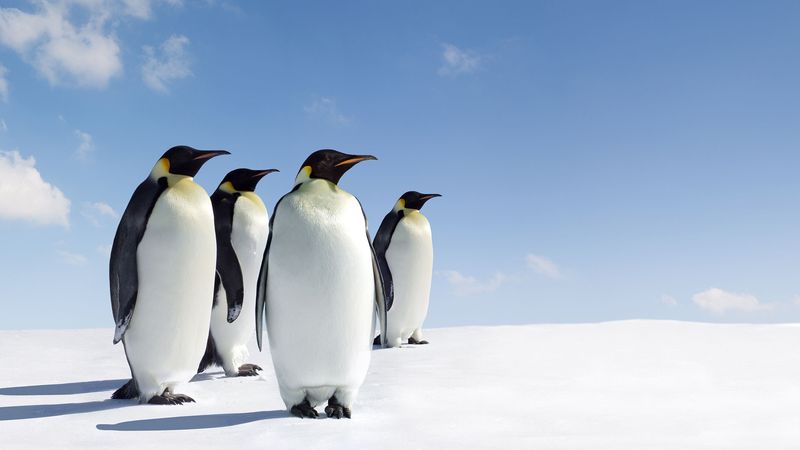
Penguins are inherently social creatures, relying heavily on community and cooperation for survival. In the harsh climates of Antarctica, Emperor Penguins huddle together in large groups to protect themselves from severe winds and extreme cold. This collective behavior is not only a survival mechanism but also a display of social cohesion and mutual support.
Such cooperative strategies are critical in understanding the dynamics of AI systems, particularly those that require collaborative inputs and distributed processing. Just as penguins work together to maintain warmth and share responsibilities, AI development often involves collaborative efforts among teams and integration of diverse data sources to achieve optimal performance.
Parental Investment and Role Sharing
The parental behaviors of penguins further exemplify their commitment to communal success. In many penguin species, both parents take active roles in incubating eggs and feeding chicks. For example, the Male Emperor Penguin balances the egg on his feet, covered by a brood pouch, while the female forages for food. This role-sharing ensures higher survival rates for the offspring and reflects the importance of distributed responsibilities—a concept highly relevant in AI project management and teamwork.
Penguins as a Metaphor for AI Concepts
Data-Driven Decision Making
Penguins rely on environmental cues and instinctual behaviors to make critical decisions, such as when to migrate or where to forage for food. This mirrors the data-driven decision-making processes in AI, where algorithms analyze vast amounts of data to derive insights and inform actions. Just as penguins navigate their surroundings using available information, AI systems utilize data to optimize outcomes and improve efficiency.
Adaptive Learning and Evolution
Penguins exhibit remarkable adaptability, evolving to survive in diverse climates and changing environments. This adaptability is paralleled in AI through the concept of machine learning, where systems continuously learn and improve based on new data and experiences. The ability of penguins to adjust their behaviors in response to environmental shifts provides a natural analogy for the dynamic learning processes inherent in AI technologies.
Swarm Intelligence and Collaboration
The collective behavior of penguin colonies can be likened to swarm intelligence in AI, where decentralized systems collaborate to solve complex problems. The synchronized movements and coordinated foraging of penguins demonstrate how individual agents can work together to achieve a common goal, much like AI algorithms that communicate and cooperate to enhance performance and problem-solving capabilities.
Applying Penguin-Inspired Strategies in AI Education
Collaborative Learning Environments
Drawing inspiration from penguins’ social structures, AI educators can foster collaborative learning environments that encourage teamwork and shared knowledge. Group projects, peer-to-peer learning, and collaborative problem-solving activities can emulate the cooperative behaviors observed in penguin colonies, enhancing student engagement and collective intelligence.
Adaptive Curriculum Design
Just as penguins adapt to their environments, AI educators should design adaptive curricula that respond to the evolving needs of students and the dynamic nature of AI technologies. Incorporating adaptive learning platforms and personalized learning pathways can ensure that educational content remains relevant and effective, akin to how penguins modify their behaviors to suit changing conditions.
Integrating Real-World Analogies
Utilizing penguins as analogies in teaching can make complex AI concepts more relatable and understandable. For example, explaining neural networks through the lens of penguins’ communication systems or illustrating optimization algorithms using penguins’ foraging strategies can provide tangible examples that enhance comprehension and retention among learners.
Penguins in the Age of AI: Conservation and Technology
AI-Driven Conservation Efforts
AI technologies are playing an increasingly vital role in penguin conservation efforts. Machine learning algorithms analyze satellite imagery and environmental data to monitor penguin populations, track migration patterns, and assess habitat changes. By leveraging AI, conservationists can make informed decisions to protect these vulnerable species and respond swiftly to threats such as climate change and overfishing.
Citizen Science and Data Collection
AI-powered platforms enable citizen scientists to contribute to penguin research by analyzing photographs, recording observations, and participating in data collection initiatives. These collaborative projects not only enhance the scope and accuracy of research but also engage the public in meaningful conservation activities, highlighting the symbiotic relationship between technology and environmental stewardship.
Fun Penguin Facts for AI Enthusiasts
To add a touch of delight, here are some intriguing penguin facts that blend perfectly with an AI educator’s passion:
-
Penguins can drink seawater thanks to specialized glands that filter out excess salt.
-
The Emperor Penguin is the largest penguin species, standing nearly 4 feet tall and diving up to 1,850 feet deep.
-
Little Penguins are also known as Fairy Penguins and are the smallest of all penguin species, measuring about 16 inches in height.
-
Penguins have a unique method of keeping their feathers waterproof by preening with oil from a gland near their tails.
-
Some penguin species engage in elaborate courtship rituals, such as gift-giving with pebbles and synchronized calling.
Conclusion
Penguins are more than just charming, tuxedo-clad birds; they are exemplars of resilience, adaptability, and community. For AI educators and influencers, these remarkable creatures offer a wealth of analogies and lessons that can enrich teaching methodologies and inspire innovative approaches to technology and education.
By observing penguins’ social structures, adaptive behaviors, and survival strategies, AI educators can draw meaningful parallels to the principles of machine learning, collaborative development, and data-driven decision-making. Integrating these natural examples into curricula not only makes learning more engaging but also bridges the gap between biological and artificial intelligence, illustrating the interconnectedness of all intelligent systems.
Moreover, the application of AI in penguin conservation underscores the profound impact that technology can have on preserving our natural world. As AI continues to evolve, it holds the promise of enhancing our understanding of these extraordinary birds and ensuring their survival for generations to come.
In celebrating penguins, we celebrate the harmony between nature and technology, reminding us that the lessons learned from the animal kingdom can profoundly inform and improve our advancements in artificial intelligence.
References
Last updated January 24, 2025