
Understanding the Immutable Foundations of Physics
Exploring Why Gravity Pulls and Physics Remains Unchangeable
Key Takeaways
- Gravity as a Universal Pulling Force: Gravity consistently acts as an attractive force due to the inherent properties of mass and spacetime curvature.
- Empirical and Mathematical Foundations: Physics is grounded in empirical evidence and mathematical consistency, ensuring its laws are universal and unchangeable.
- Universality and Predictive Power: The universal applicability and predictive accuracy of physical laws prevent them from being altered based on subjective desires.
The Nature of Gravity: Why It Pulls and Not Pushes
Newtonian Gravity: The Classical Perspective
Isaac Newton's law of universal gravitation posits that every mass attracts every other mass with a force proportional to the product of their masses and inversely proportional to the square of the distance between their centers. Mathematically, this is expressed as:
$$ F = G \frac{m_1 m_2}{r^2} $$
Where:
- F is the gravitational force
- G is the gravitational constant
- m₁ and m₂ are the masses
- r is the distance between the centers of the two masses
This equation illustrates that gravity is inherently attractive; there is no provision for a repulsive gravitational force in Newtonian mechanics.
Einstein's General Theory of Relativity: A Deeper Insight
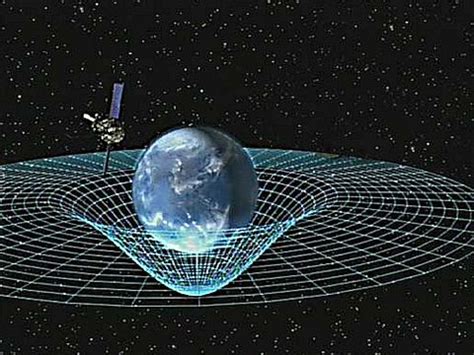
Albert Einstein revolutionized our understanding of gravity with his General Theory of Relativity (GR), which describes gravity not as a force but as a curvature of spacetime caused by mass and energy. In this framework:
- Mass-Energy Curvature: Massive objects cause a distortion in the fabric of spacetime, creating what can be visualized as a "dip" or "well."
- Geodesic Motion: Objects move along the straightest possible paths (geodesics) in this curved spacetime, which results in what we perceive as gravitational attraction.
Mathematically, GR is encapsulated in Einstein's field equations:
$$ R_{\mu\nu} - \frac{1}{2}g_{\mu\nu}R + g_{\mu\nu}\Lambda = \frac{8\pi G}{c^4} T_{\mu\nu} $$
Where:
-
Rμν is the Ricci curvature tensor
-
gμν is the metric tensor
-
R is the scalar curvature
-
Λ is the cosmological constant
-
Tμν is the stress-energy tensor
-
G is the gravitational constant
-
c is the speed of light
These equations demonstrate that the presence of mass and energy dictates the geometry of spacetime, inherently leading to an attractive interaction without a mechanism for repulsion under normal circumstances.
Why Gravity Does Not Push
The concept of a "pushing" gravity lacks empirical support and theoretical foundation in established physics. While certain speculative theories and models might explore alternative interpretations, such as modifications to spacetime or the introduction of exotic matter, these ideas remain outside mainstream scientific consensus due to the absence of observational evidence. Gravity's consistent attractive behavior aligns with all observed phenomena, from the motion of celestial bodies to the behavior of objects on Earth.
The Immutable Nature of Physical Laws
Empirical Foundations of Physics
Physics is deeply rooted in empirical evidence. Observations and experiments form the bedrock upon which physical laws are established. The reproducibility and consistency of experimental results across different conditions and scales reinforce the universality of these laws.
For example, the gravitational pull experienced by objects on Earth is consistent with observations of celestial bodies. This consistency across vastly different environments underscores the reliability and universality of gravitational laws.
Mathematical Consistency and Predictive Power
Physical laws are expressed through precise mathematical frameworks that ensure internal consistency and coherence. These mathematical models not only describe current observations but also predict future phenomena with remarkable accuracy.
The predictive power of physics is exemplified by technologies such as GPS systems, which rely on both Newtonian mechanics and General Relativity to provide accurate positioning by accounting for gravitational time dilation effects.
Any arbitrary alteration to these laws would disrupt the mathematical consistency and predictive capabilities that underpin much of modern technology and scientific understanding.
Universality and Objectivity of Natural Laws
The laws of physics are universal and objective, applying equally across time and space. This universality ensures that the same principles govern interactions from the smallest subatomic particles to the largest cosmic structures.
For instance, gravity operates identically on Earth as it does on the Moon or in distant galaxies. This consistent behavior is a testament to the objective nature of physical laws, which are not subject to human preferences or desires.
Conservation Laws and Symmetry Principles
Many fundamental physical laws are tied to conservation principles and symmetries. The conservation of energy, momentum, and charge are indispensable aspects of physical interactions, ensuring that these quantities remain constant within closed systems.
These conservation laws emerge from symmetries in nature, as articulated by Noether's theorem, which links conserved quantities to symmetrical properties of physical systems. Altering physical laws would disrupt these fundamental symmetries, leading to inconsistencies and violations of conservation principles.
Limitations of Human Influence on Physical Laws
While humans can manipulate and harness natural forces for technological advancements, they cannot alter the foundational laws that govern these interactions. The immutable nature of these laws ensures the stability and predictability of the universe.
For example, while technology allows us to create environments that simulate different gravitational conditions (like in space stations), the underlying gravitational laws remain unchanged. This distinction underscores the separation between human technological capabilities and the fundamental properties of the universe.
Implications of Immutable Physical Laws
Formation and Stability of Structures in the Universe
The consistent application of gravitational laws is crucial for the formation and stability of astronomical structures. Stars, galaxies, and planetary systems form through the gravitational attraction of matter, leading to the aggregation and organization observed in the cosmos.
If gravity were to behave differently, such as acting repulsively, the formation of these structures would be impossible. Matter would not clump together, preventing the existence of stars, planets, and ultimately, life as we know it.
Biological and Ecological Stability on Earth
On Earth, the consistent behavior of gravity ensures the stability of ecosystems and the viability of life. Gravity dictates the movement of oceans, the growth patterns of plants, and the stability of the atmosphere.
Fluctuations or alterations in gravitational behavior could lead to catastrophic environmental changes, making it impossible for life to adapt and thrive.
Technological Advancements and Dependence on Physical Laws
Modern technology relies heavily on the predictable nature of physical laws. Engineering, electronics, aerospace, and many other fields depend on the precise application of principles like Newtonian mechanics and electromagnetism.
Any deviation from established physical laws would render much of current technology ineffective, highlighting the critical importance of these immutable principles in technological development.
Exploring Mathematical Representations and Models
Mathematical Models of Gravity
Mathematical models provide a robust framework for understanding and predicting gravitational interactions. Newton's equation of universal gravitation and Einstein's field equations of General Relativity are prime examples.
Table: Comparison of Newtonian Gravity and General Relativity
| Aspect | Newtonian Gravity | General Relativity |
|---|---|---|
| Nature of Gravity | Force of attraction between masses | Curvature of spacetime caused by mass and energy |
| Mathematical Framework | $$ F = G \frac{m_1 m_2}{r^2} $$ | $$ R_{\mu\nu} - \frac{1}{2}g_{\mu\nu}R + g_{\mu\nu}\Lambda = \frac{8\pi G}{c^4} T_{\mu\nu} $$ |
| Applicability | Effective for most everyday calculations and weak gravitational fields | Necessary for understanding strong gravitational fields and cosmological phenomena |
| Predictive Power | Explains planetary orbits, tides, and falling objects | Explains gravitational lensing, black holes, and the expansion of the universe |
Mathematical Consistency and Integrity
Maintaining mathematical consistency is paramount in physics. Equations and models must not only describe observed phenomena accurately but also avoid internal contradictions. This consistency ensures that physical theories remain robust and reliable.
For example, General Relativity has been confirmed through numerous experiments and observations, such as the bending of light around massive objects and the precise orbit of Mercury, which Newtonian mechanics could not fully explain.
Predictive Models and Experimental Validation
Predictive models in physics allow scientists to anticipate outcomes of experiments and observations. The ability to make accurate predictions is a critical test of any physical theory.
Both Newtonian gravity and General Relativity have demonstrated exceptional predictive capabilities. The successful prediction of gravitational waves by General Relativity, later confirmed by LIGO, exemplifies the theory's profound predictive power and empirical validity.
Why Physics Cannot Be Altered to Personal Preferences
Objectivity and Universality
Physics is an objective science that seeks to describe the universe as it is, not as we might wish it to be. The universality of physical laws means they apply equally regardless of individual perspectives or desires.
This objectivity ensures that scientific findings are reliable and not influenced by subjective biases, maintaining the integrity and consistency of the discipline.
Limitations Imposed by Physical Reality
The fundamental properties of the universe impose strict limitations on what is possible. Physical laws define what can and cannot occur, independent of human intention.
For instance, the second law of thermodynamics, which stipulates that entropy in a closed system can never decrease, is a fundamental principle that cannot be overridden by human desire.
Interconnectedness of Physical Laws
Physical laws are deeply interconnected, forming a cohesive framework that governs all natural phenomena. Modifying one aspect of these laws would have cascading effects, disrupting the entire structure and leading to inconsistencies.
For example, altering the gravitational constant would affect not only the strength of gravitational attraction but also influence the behavior of time and energy as described by General Relativity.
Empirical Evidence as the Ultimate Arbiter
Empirical evidence serves as the ultimate test for any physical theory. No matter how intuitive or appealing a desired alteration might be, it must withstand rigorous experimental scrutiny to be considered viable.
Until and unless there is substantial empirical evidence supporting an alternative model, the established physical laws remain the authoritative descriptions of natural phenomena.
Philosophical Considerations: Realism vs. Idealism
From a philosophical standpoint, realism posits that the universe operates independently of our perceptions and desires, while idealism suggests that reality is mentally constructed. Modern physics operates under the realist paradigm, assuming that physical laws are objective truths that exist regardless of human consciousness.
This philosophical stance reinforces the notion that physics cannot be bent to personal will, as it seeks to uncover and describe the objective workings of the universe.
Implications for Science and Technology
Technological Reliance on Consistent Physical Laws
Modern technology is built upon the consistent application of physical laws. From electronics and engineering to space exploration and medical technologies, the reliability of these laws ensures that technologies function as intended.
Any variability or alteration in fundamental laws would render existing technologies obsolete and disrupt the progress of scientific and technological advancements.
Scientific Progress and Theoretical Development
Scientific progress relies on the robustness and reliability of physical laws. The development of new theories and models builds upon established principles, extending our understanding without contradicting the foundational laws.
For instance, quantum mechanics and General Relativity, while dealing with different scales and phenomena, do not undermine the validity of each other but rather complement the broader framework of physics.
Educational Foundations and Knowledge Transmission
Physics education is structured around the universal laws that govern natural phenomena. This consistency ensures that knowledge and training are transferable and applicable across different contexts and geographies.
Educators and students rely on the unchanging nature of physical laws to build a coherent and cumulative body of knowledge, fostering scientific literacy and innovation.
Conclusion
Physics operates as it does because it is a meticulous and objective description of the fundamental principles that govern our universe. Gravity, consistently acting as an attractive force, exemplifies the reliability and universality of physical laws shaped by both Newtonian mechanics and Einstein's General Relativity.
The unchangeable nature of these laws is anchored in their empirical foundations, mathematical consistency, and universal applicability. These principles are not subject to personal desires or arbitrary modifications, ensuring the stability and predictability essential for scientific understanding and technological advancement.
Understanding the immutable foundations of physics not only deepens our appreciation of the natural world but also underscores the importance of adhering to evidence-based principles in the pursuit of knowledge and innovation.
References
These references provide comprehensive insights into the nature of gravity and the steadfast principles that govern physical laws, reinforcing the explanations provided herein.
Last updated January 19, 2025