
Understanding Place Value in Mathematics
A deep dive into the concept that forms the foundation of numeric comprehension
Key Highlights
- Fundamental Concept: Place value determines the numeric value of each digit based on its position, forming the bedrock of the decimal system.
- Structure and Application: Understanding how digits are arranged in ones, tens, hundreds, and beyond is crucial for accurate calculations in arithmetic.
- Importance of Zero and Decimals: The strategic role of zero and the extension of the concept to decimal numbers ensure precision in representing values.
Introduction
Place value is one of the most fundamental concepts in mathematics, essential for understanding the structure of numbers and performing arithmetic operations. The concept answers a seemingly simple question: What does each digit in a number represent? By assigning value based on a digit’s location within the number, the place value system enables us to write, read, and manipulate numbers accurately.
Developed from the base-10 numeral system, the idea that each digit in any number has a value dependent on its position is key for both basic arithmetic and advanced mathematics. This concept not only underpins everyday computations such as addition, subtraction, multiplication, and division but also lays the groundwork for understanding more complex numerical relationships and operations.
Detailed Explanation and Structure
Fundamental Definition
Place value refers to the numerical value attributed to a digit by virtue of its position within a number. In the widely adopted decimal system (base-10), each position—from the rightmost digit to the left—represents a different power of ten. For example, the rightmost digit represents the ones place (\(10^0\)), the next represents tens (\(10^1\)), followed by hundreds (\(10^2\)), thousands (\(10^3\)), and so forth.
Basic Components
Understanding place value involves distinguishing several core components:
- Digit: A single numeral between 0 and 9.
- Face Value: The inherent value of the digit itself, independent of its position.
- Place Value: The value of the digit in the context of its position in the number. This is calculated by multiplying the face value with the corresponding power of ten defined by its position.
The Decimal System: Powers of Ten
The decimal system is built upon the concept of powers of ten, which means that each subsequent place represents a value ten times that of the previous one. This systematic progression is what enables us to interpret and manipulate large numbers with ease. The place value structure is as follows:
Standard Place Value Positions
The typical positions in the decimal system include:
- Ones (Units) Place: Represents \(10^0\) which equals 1.
- Tens Place: Represents \(10^1\) which equals 10.
- Hundreds Place: Represents \(10^2\) which equals 100.
- Thousands Place: Represents \(10^3\) which equals 1,000.
- Ten-Thousands, Hundred-Thousands, etc.: Continues in the same pattern as needed.
For numbers containing a decimal point, the digits to the right similarly decrease by powers of ten:
- Tenths Place: Represents \(10^{-1}\) which equals 0.1.
- Hundredths Place: Represents \(10^{-2}\) which equals 0.01.
- Thousandths Place: Represents \(10^{-3}\) which equals 0.001.
Practical Examples and Demonstrations
To further explain the concept, let’s look at some practical examples which demonstrate how place value functions in both whole numbers and decimals.
Whole Number Example
Example: The Number 3,743
Consider the number 3,743. In this number:
- The digit 3 is in the thousands place, so its value is \(3 \times 1000 = 3000\).
- The digit 7 is in the hundreds place, so its value is \(7 \times 100 = 700\).
- The digit 4 is in the tens place, so its value is \(4 \times 10 = 40\).
- The digit 3 in the ones place contributes \(3 \times 1 = 3\).
When aggregated, these values sum up to form the original number: \(3000 + 700 + 40 + 3 = 3743\). This clear arrangement shows why understanding place value is key to comprehending the numerical structure.
Decimal Number Example
Example: The Number 5.32
In the decimal number 5.32:
- The digit 5 is in the ones place, giving \(5 \times 1 = 5\).
- The digit 3 is in the tenths place, and its value is \(3 \times 0.1 = 0.3\).
- The digit 2 is in the hundredths place, making its value \(2 \times 0.01 = 0.02\).
Thus, the number 5.32 is comprised of the sum \(5 + 0.3 + 0.02\). This demonstration shows how each digit, regardless of whether it is before or after the decimal point, serves a specific role in defining the overall number.
The Role of Zero
Often underestimated, zero plays an indispensable role in the place value system. It acts as a placeholder that ensures the correct positioning of digits in a number. For instance, in the number 1,002, the placement of zeros between 1 and 2 maintains that the digit 1 resides in the thousands place and 2 in the ones place. Without the zero, the number would be misinterpreted, significantly altering its value.
The role of zero is further underscored in cases where the number requires alignment for arithmetic operations. When adding or subtracting numbers with differing numbers of digits, zeros can be used to fill in gaps, ensuring that corresponding place values remain aligned and the calculations are accurate.
Applications of Place Value in Mathematics
Place value is not just an academic construct; it has vast real-world applications across various disciplines. Understanding the place value system enhances our ability to perform numerical computations effectively and deepens our appreciation of the numeric structure.
Arithmetic Operations
The most immediate application of place value is in the realm of arithmetic. When we perform operations such as addition, subtraction, multiplication, and division, aligning numbers by their place values is critical to ensure accuracy. For example, when adding 123 and 456, placing the digits in the correct columns (ones, tens, hundreds) guarantees that each digit is added to its corresponding positional value, leading to the correct sum.
Rounding and Estimation
Beyond basic arithmetic, place value is crucial when rounding numbers. By identifying the appropriate place value, one can round large numbers to the nearest ten, hundred, or thousand, which is particularly useful in estimation. This practice is invaluable in financial calculations, statistical analyses, and when handling large datasets where precision may be less critical than obtaining a reasonable approximation.
Advanced Mathematics and Algebra
A strong grasp of place value is essential in higher-level mathematics. It is often a stepping stone to algebraic manipulation and even more advanced topics like polynomial representation, where similar positional ideas are adapted to variables and coefficients. Moreover, understanding place value helps in interpreting scientific notation—a common method for representing very large or very small numbers in scientific and engineering contexts.
Visualization Tools
One of the most effective methods for teaching and understanding place value is through the use of place value charts. These charts visually represent where every digit in a number belongs, making it easier to break down and comprehend the numerical composition.
Example Place Value Chart
| Place | Power of Ten | Example Digit Value (for digit '4') |
|---|---|---|
| Ten-Thousands | \(10^4\) (10,000) | \(4 \times 10,000 = 40,000\) |
| Thousands | \(10^3\) (1,000) | \(4 \times 1,000 = 4,000\) |
| Hundreds | \(10^2\) (100) | \(4 \times 100 = 400\) |
| Tens | \(10^1\) (10) | \(4 \times 10 = 40\) |
| Ones | \(10^0\) (1) | \(4 \times 1 = 4\) |
This chart not only demonstrates the progression of place values but also reinforces the idea that the value of a digit depends on its specific position within a number.
The Relationship Between Place Value and Larger Mathematical Concepts
Place value is intricately linked with broader mathematical theories and practices. Here, we explore its connections to other critical areas of mathematics.
Number Sense and Mental Math
Developing a robust number sense is one of the primary benefits of mastering place value. When students understand that the number 52369, for example, is a composition of 50,000, 2,000, 300, 60, and 9, they are better equipped to perform mental calculations and estimate results quickly. This mental model is essential in everyday mathematics, helping individuals make quick decisions based on numerical estimates.
Foundation for Algebra
The principles of place value extend into the realm of algebra, where the structure of numbers is generalized and variables enter the equation. In algebra, numbers are often represented in expanded form, where the contributions of each digit are clearly expressed. For example, the number 947 can be expanded as \(9 \times 100 + 4 \times 10 + 7 \times 1\). This method instills a deeper understanding of the numeric system and paves the way for solving equations and understanding polynomial expressions.
Scientific Notation
Another significant application is in scientific notation, where large and small numbers are represented compactly. Scientific notation relies on the concept of place value to express numbers as a coefficient multiplied by a power of ten. This representation is common in fields such as physics, astronomy, and engineering where it is necessary to manage extreme ranges of values. For instance, the speed of light is approximately represented as \(3 \times 10^8\) meters per second, succinctly demonstrating how place value underpins this powerful notation system.
Error Minimization in Computations
In practical computations, especially those involving multiple digit operations, an accurate grasp of place value minimizes errors. When carrying out algorithms such as long division or multi-digit multiplication, understanding how each digit contributes to the overall value ensures that each digit is appropriately aligned. This awareness is especially pivotal in areas like computer science and engineering, where precision is paramount.
Educational Importance and Strategies for Mastery
Given its foundational role, place value is one of the first concepts taught in mathematics curricula around the world. Educators emphasize learning place value through various methods, such as interactive games, manipulatives (like base-ten blocks), and visual aids including charts and graphs.
Teaching Strategies
Effective strategies for teaching place value include:
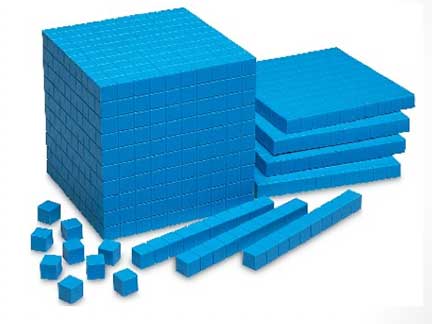
- Use of Manipulatives: Base-ten blocks and visual aids help students physically see the differences between ones, tens, hundreds, and larger units.
- Place Value Charts: These charts can simplify the process of breaking numbers apart, reinforcing the value each digit holds based on its position.
- Interactive Games: Digital and in-person games centered around number recognition and arrangement can solidify these concepts in young learners.
- Real-World Problems: Integrating place value recognition into everyday contexts, such as money management or measurement, makes the learning experience more tangible and applicable.
Overcoming Common Challenges
Students often find the concept of place value challenging when first introduced. Common hurdles include misinterpreting the role of zero or failing to understand why the position of a numeral alters its value. To address these challenges:
- Cumulative Practice: Repeated exercises that gradually increase in complexity help reinforce the concept.
- Clear and Concise Explanations: Teachers can ensure that students understand that a digit's value is not fixed but varies with its position.
- Real-Life Analogies: Relating number positions to everyday objects and scenarios, such as seating arrangements or stacked blocks, can make the abstract concept of place value more concrete and relatable.
Interactive Learning with Technology
The advent of digital platforms has revolutionized the way place value and other mathematical concepts are taught. Various educational websites, interactive apps, and software tools provide dynamic place value charts and virtual manipulatives that allow students to experiment with numbers in engaging ways.
Digital Tools
These tools often incorporate features such as:
- Drag and Drop Interfaces: Allow students to rearrange digits into the correct place value positions, reinforcing learning through hands-on interaction.
- Instant Feedback: Immediate corrections help students understand mistakes and learn the proper placement of digits.
- Gamified Learning: Incorporating levels and rewards for correctly assembling and decomposing numbers helps motivate learners.
Real-World Simulation
In addition to interactive tools, many educational systems integrate real-world data and simulations to further illustrate the practical applications of place value. These simulations often include scenarios such as balancing budgets, measuring distances, or interpreting scientific data, all of which rely on a deep understanding of number values and their relative magnitudes.
Expanding the Concept Beyond Base-10
While the base-10 system is the most commonly used, place value is not restricted to it. Other numeral systems, such as binary (base-2), octal (base-8), and hexadecimal (base-16), also employ the concept of place value, though the progression of place values differs according to each system's base.
Comparison Across Number Systems
In the binary system, for example, each position represents a power of 2. For the binary number 1011:
- The rightmost digit is in the \(2^0\) position.
- The next digit is in the \(2^1\) position.
- The following digit is in the \(2^2\) position.
- The leftmost digit is in the \(2^3\) position.
Similar principles apply in other numeral systems, reinforcing that place value is a universal concept in numerical representation. This broader application highlights its fundamental role in mathematics and computer science alike.
Concluding Thoughts
Place value is more than just a method for reading and writing numbers—it is the cornerstone upon which all arithmetic and complex mathematical operations are built. By understanding how each digit’s position informs its value, one gains the essential skills required for accurate computation, effective problem-solving, and a deeper understanding of numerical relationships.
The systematic nature of the place value system, particularly in the base-10 framework, not only simplifies numerical operations but also serves as a springboard into advanced mathematical concepts, from algebra to scientific notation. The educational strategies and digital tools available today make it easier than ever to visualize and master this key concept, ultimately enhancing mathematical literacy and cognitive problem-solving abilities.
In conclusion, mastering place value equips learners with the ability to handle both everyday arithmetic and advanced numerical challenges, making it an indispensable part of mathematics education. Its applicability across different numeral systems ensures that the concept remains relevant regardless of the context, whether in a traditional classroom setting or in modern technological applications.
Conclusion
The concept of place value is at the heart of mathematics. It enables us to deconstruct and reconstruct numbers in a meaningful way so that complex operations become manageable. From the fundamental understanding required for everyday arithmetic to its indispensable role in high-level mathematics and technology, place value is essential. By appreciating how each digit’s position defines its value, learners can gain confidence in their numerical skills and apply this knowledge in diverse fields such as science, finance, and engineering. Furthermore, innovative teaching methods and digital tools have made it easier for students of all ages to grasp and apply the concept effectively.
References
- Place Value - Math.net
- Place Value in Maths: Definitions, Charts, and Examples - GeeksforGeeks
- Place Value - Math Monks
- What is Place Value? Definition, Examples, Facts - SplashLearn
- Place Value - Cuemath
- Place Value (Easy Explanation for Kids with Examples) - BYJU'S
- Place Value of Numbers: Detailed Explanation - 98thPercentile
- What is Place Value? Explained For Elementary School - Third Space Learning
- Place Value — Definition & Examples - Brighterly
Recommended Related Queries
Last updated February 22, 2025