
Unlocking Revenue Potential with Power BI Predictive Analytics
How advanced data insights drive revenue growth and strategic decision-making
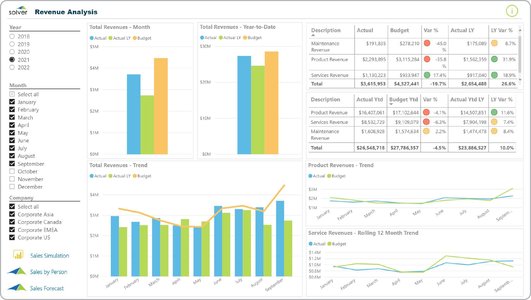
Key Highlights
- Data-Driven Forecasting: Leverage historical data using advanced predictive models for informed revenue forecasting.
- Real-Time Insights & Visualization: Integrate dynamic dashboards and interactive reporting to monitor market trends and customer behaviors.
- AI & Machine Learning Integration: Combine Power BI with AI tools like Copilot for automated and enhanced predictive modeling.
Introduction to Power BI Predictive Analytics
Power BI predictive analytics offers businesses an effective way to harness the power of historical data, apply statistical techniques, and integrate advanced machine learning capabilities. Designed to forecast future events, predict revenue growth, identify opportunities and mitigate risks, it empowers organizations with actionable insights. This comprehensive approach helps companies plan better, target strategic areas, and drive overall business success.
Understanding Predictive Analytics in Power BI
The Analytical Framework
Predictive analytics in Power BI involves analyzing past data to generate models that forecast future outcomes. These models use statistical methodologies, such as time series forecasting, regression analysis, and machine learning algorithms, to predict customer behavior, sales trends, and revenue generation capabilities. By leveraging these techniques, businesses can explore:
- Revenue Forecasting: Analyze historical sales data and identify trends that inform future revenue projections.
- Customer Behavior Analysis: Segment customers based on purchasing patterns and predict churn or conversion likelihood.
- Market Trend Identification: Understand seasonal trends and external factors that influence buying behavior and revenue outcomes.
Steps to Implement Predictive Analytics in Power BI
-
Data Preparation
Consolidate and cleanse data from multiple sources, ensuring accuracy and consistency. Power BI’s robust data integration capabilities enable organizations to combine disparate data sources – from sales and marketing to finance – into a single, cohesive dataset.
-
Model Selection and Customization
Choose from a variety of built-in predictive models such as binary prediction for customer purchase behavior, time series forecasting for seasonal trends, and advanced regression models for quantitative predictions. With the integration of R and Python, businesses can further customize these models to align with specific revenue-related queries.
-
Integration with AI Tools
The integration of AI and machine learning—especially with tools like Copilot—elevates the capabilities of Power BI. Copilot facilitates automated preprocessing, model generation, and even anomaly detection, ensuring that the predictive models continue adapting to new data and scenarios.
-
Visualization and Reporting
With interactive dashboards and real-time reporting, Power BI allows decision-makers to monitor predictions actively. This democratization of data through clear visualizations ensures that insights are accessible to both technical and non-technical stakeholders, enhancing strategic decision-making.
Key Features of Power BI for Predictive Analytics
Power BI stands out for its comprehensive suite of features tailored to predictive analytics. Below is a table summarizing essential features that enable businesses to boost revenue through data-driven insights:
| Feature | Description | Application |
|---|---|---|
| Data Integration | Consolidates diverse data sources such as sales, marketing, and finance into a unified view. Automatically cleanses and transforms data for analysis. | Enables cross-departmental insights, ensuring a comprehensive picture of business performance. |
| Time Series Forecasting | Uses models like TBATS and ARIMA to forecast seasonal behaviors and revenue trends. | Assists businesses in planning inventory, managing cash flows, and aligning operational strategies with forecasted demand. |
| Interactive Dashboards | Offers real-time visualization of predictive models, KPIs, and growth trends. | Allows stakeholders to quickly interpret data, monitor ongoing performance, and adjust strategies accordingly. |
| AI & Machine Learning Integration | Seamlessly embeds AI capabilities using R, Python, and Copilot for automating model creation and predicting outliers. | Optimizes revenue forecasting by detecting subtle patterns and anomalies that traditional models might miss. |
Applications of Predictive Analytics for Revenue Growth
Predictive analytics in Power BI is broadly applicable across different industries, leading to tangible revenue enhancements. Here, we explore several practical applications:
Sales and Revenue Forecasting
By leveraging historical sales data, businesses can create detailed forecasts that predict future revenue streams. This foresight enables better inventory management, targeted pricing strategies, and enhanced budgeting. For instance, time series models analyze seasonal peaks, allowing organizations to prepare for high-demand periods and mitigate risks during low seasons.
Customer Analytics and Segmentation
Understanding customer behavior is fundamental to revenue growth. Power BI enables companies to perform advanced customer segmentation based on purchasing history, demographic data, and interaction patterns. Predictive models anticipate customer churn and potential upselling opportunities, helping businesses tailor their marketing strategies to retain high-value customers.
Market Trend Analysis
Financial institutions, retail chains, and service industries leverage predictive analytics to monitor market trends. Power BI dashboards help in tracking macroeconomic indicators, competitive behaviors, and regional performance variations. This allows companies not only to stay ahead of market shifts but also to pivot strategies efficiently to capitalize on emerging opportunities.
Operational Efficiency and Resource Allocation
Beyond revenue predictions, predictive analytics enhances operational decision-making. By analyzing current operational data against historical trends, businesses can optimize their resource allocation—whether it is staffing, budgeting, or production scheduling. This ensures that investments are directed toward high-impact areas, maximizing overall profitability.
Integration of AI and Machine Learning
A transformative aspect of using Power BI is its ability to integrate with AI-driven tools. This integration not only automates the prediction process but also escalates the accuracy of forecasts. For example, incorporating Copilot into Power BI enhances:
- Automated Data Preprocessing: Reduces manual intervention by intelligently cleaning and organizing data for modeling.
- Enhanced Anomaly Detection: Identifies irregular patterns or outlier events that may indicate opportunities or risks.
- Adaptive Modeling: Continuously refines predictive models based on new data streams, ensuring ongoing relevance and precision.
Case Studies in Revenue Growth
Several industries have reaped significant benefits by integrating predictive analytics with Power BI:
Hospitality Sector
Hotels and resorts use Power BI to forecast occupancy rates based on historical booking data and seasonal trends. This allows them to adjust pricing strategies dynamically, manage staffing, and optimize service delivery, directly impacting revenue.
Retail & E-commerce
Retailers harness data from online and in-store sales to predict consumer buying patterns. By forecasting peak demand periods, they adjust inventory levels and promotional campaigns, maximizing sales and customer satisfaction.
Financial Services
Banking and fintech companies apply predictive analytics to enhance customer targeting, identify high-value segments, and anticipate market fluctuations. This data-driven approach allows for refined risk management strategies and, ultimately, sustainable revenue growth.
Future Trends and Considerations
As technology continues to evolve, the capabilities of predictive analytics in Power BI are set to expand further. Future trends include increased integration with cloud-based AI platforms, real-time predictive monitoring, and even more granular customer behavior modeling. Organizations should:
- Invest in Continuous Learning: Regularly update models to reflect changing market conditions and consumer behaviors.
- Enhance Data Quality: Emphasize robust data governance to support accurate predictive outputs.
- Adopt Scalable Solutions: Leverage cloud computing and advanced analytics platforms to manage growing data volumes and complexity.
References
- Predictive Analysis with Power BI – Medium
- Leverage Power BI for Predictive Analytics – Preludesys
- Combining Power BI with AI for Predictive and Smarter Insights – TekRevol
- Predictive Analysis of Financial Data with Copilot and Power BI – Q Services IT
- Power BI Predictive Analytics Consulting – EPC Group
Recommended Searches for Deeper Insights
Last updated March 27, 2025