
Essential Guide: Informing an Employer About Employee Pregnancy and Symptoms
Crafting a professional medical letter for workplace notification regarding pregnancy and associated conditions.
When a healthcare provider needs to inform an employer about an employee's pregnancy and related health conditions, such as nausea and vomiting, it's crucial to do so with clarity, professionalism, and an understanding of the implications. This guide provides a comprehensive template and context for such a communication, ensuring all necessary information is conveyed appropriately.
Key Highlights for Effective Communication
- Clarity and Conciseness: The letter should clearly state the pregnancy diagnosis and any associated symptoms without ambiguity, providing only necessary medical information relevant to the workplace.
- Professional Tone: Maintain a formal and respectful tone throughout the letter, reflecting the professional relationship between the healthcare provider and the patient, as well as the formal nature of communication with an employer.
- Awareness of Employee Rights: While the primary purpose is informational, it's beneficial for all parties to be implicitly aware of employee protections and potential needs for workplace adjustments, such as those covered under laws like the Pregnant Workers Fairness Act (PWFA).
Crafting the Notification Letter
Below is a sample letter template designed to inform a company about Ms. DF's pregnancy and her experience with moderate nausea and vomiting. This letter is intended for informational purposes to the workplace and is drafted based on professional best practices.
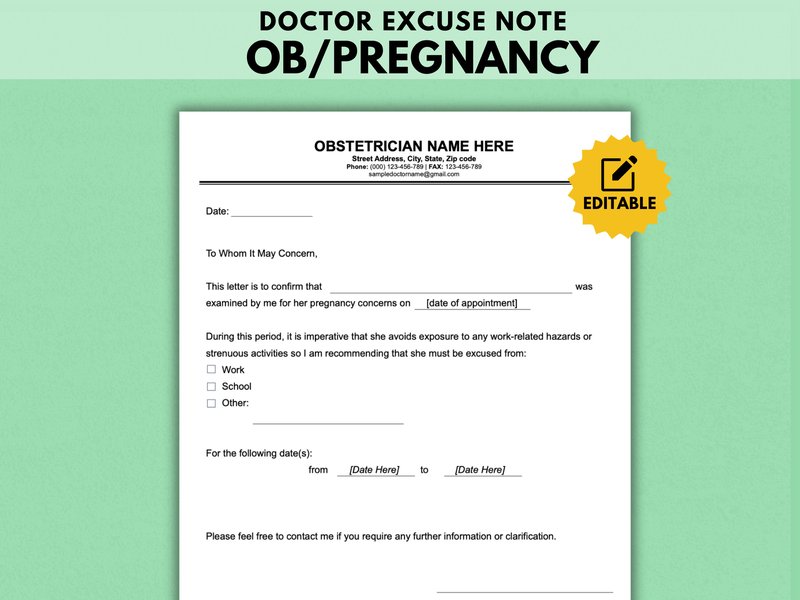
An example of a medical note format, often used for formal workplace communication regarding health conditions.
Sample Medical Notification Letter
This template can be adapted by the healthcare provider. It is crucial to ensure accuracy and obtain patient consent before sharing any medical information.
[Your Medical Practice/Clinic Letterhead]
[Your Full Name, Medical Qualifications]
[Your Position/Title]
[Your Medical Practice/Clinic Name]
[Street Address]
[City, State, Zip Code]
[Phone Number]
[Email Address]
[Date: May 13, 2025]
[Recipient’s Name or HR Department]
[Company Name]
[Company Address]
[City, State, Zip Code]
Subject: Medical Information Regarding Ms. DF – Confirmation of Pregnancy and Associated Symptoms
Dear [Recipient’s Name or HR Department],
I am writing to inform you that Ms. DF is a patient under my medical care. This letter serves to confirm that Ms. DF is pregnant.
In association with her pregnancy, Ms. DF is currently experiencing moderate nausea and vomiting. These are common symptoms experienced during pregnancy.
This information is provided solely to inform the workplace of Ms. DF’s diagnosis and current condition, as per her request. Understanding her condition can help in creating a supportive work environment.
Should you require any further essential medical information directly pertinent to her work context, please do not hesitate to contact my office, with Ms. DF's explicit consent for any additional disclosures.
Thank you for your attention to this matter and your support for Ms. DF.
Sincerely,
[Your Full Name, Medical Qualifications]
[Your Position/Title]
Understanding the Context and Importance
Informing an employer about an employee's pregnancy, especially when accompanied by symptoms like nausea and vomiting, is a significant step. It facilitates understanding and allows for potential workplace adjustments. This formal notification, typically from a healthcare provider, substantiates the employee's condition.
Legal Protections and Employer Responsibilities
The Pregnant Workers Fairness Act (PWFA)
The PWFA requires covered employers (typically those with 15 or more employees) to provide "reasonable accommodations" to a worker's known limitations related to pregnancy, childbirth, or related medical conditions, unless the accommodation will cause the employer an "undue hardship." Moderate nausea and vomiting can be considered such a limitation. Accommodations might include:
- More frequent breaks.
- Flexible working hours.
- Modifications to job duties.
- Permission to keep food or drinks at a workstation.
- Access to a private space for rest.
The Pregnancy Discrimination Act (PDA)
The PDA, an amendment to Title VII of the Civil Rights Act of 1964, forbids discrimination based on pregnancy when it comes to any aspect of employment, including hiring, firing, pay, job assignments, promotions, layoff, training, fringe benefits (such as leave and health insurance), and any other term or condition of employment. An employer cannot penalize an employee for being pregnant or for conditions related to pregnancy.
Timing and Nature of Disclosure
While an employee is not always legally obligated to disclose their pregnancy by a specific deadline (unless company policy for leave requests dictates otherwise), early communication can be beneficial. Informing the employer allows them to plan and provide necessary support. When symptoms like moderate nausea and vomiting affect work performance or well-being, disclosure becomes more pertinent. A letter from a healthcare provider adds a formal and credible basis to this disclosure.
Managing Symptoms in the Workplace
Moderate nausea and vomiting (often termed "morning sickness," though it can occur at any time) is a common experience in pregnancy. For the employee, strategies might include:
- Eating small, frequent meals.
- Staying hydrated.
- Avoiding known triggers (e.g., strong smells).
- Getting adequate rest.
Key Elements of a Pregnancy Notification Letter
The following table outlines the essential components of a medical letter informing an employer about an employee's pregnancy and related symptoms, along with the purpose of each element. This structure ensures clarity, professionalism, and provides all necessary information for the workplace.
| Element | Purpose |
|---|---|
| Healthcare Provider Information | Establishes the credibility of the source and provides a point of contact if further (authorized) information is needed. Includes name, title, practice name, and contact details. |
| Date | Records the date the notification was formally issued, which can be important for documentation and timelines. |
| Employer/Recipient Information | Ensures the letter is directed to the appropriate person or department within the company (e.g., HR Manager, direct supervisor). |
| Clear Subject Line | Immediately informs the recipient about the letter's content, for example, "Medical Information Regarding [Employee's Name]". |
| Confirmation of Pregnancy | A direct and unambiguous statement confirming the employee's pregnancy, as diagnosed by the healthcare provider. |
| Description of Associated Symptoms | Details relevant symptoms (e.g., "moderate nausea and vomiting") that may impact the employee's work or well-being, providing context for potential needs. |
| Statement of Purpose | Clarifies that the letter's intent is to inform the workplace of the diagnosis, often at the employee's request, to facilitate awareness and support. |
| Offer for Further Information (Conditional) | May offer to provide additional relevant medical details if necessary, always contingent upon the patient's consent and privacy regulations. |
| Professional Closing and Signature | Maintains formality and concludes the letter appropriately (e.g., "Sincerely," followed by the provider's name and credentials). |
Comparative Aspects of Workplace Pregnancy Notification
When notifying an employer about pregnancy, various factors come into play. The radar chart below illustrates a qualitative comparison of different considerations in the notification process. This is an opinionated analysis to highlight nuances, not based on specific datasets. The scale for each aspect ranges from 1 (Minimal Emphasis) to 10 (Maximum Emphasis). A higher score indicates a greater focus or proficiency in that area. For instance, a 'Legally Informed Approach' would score highly on 'Legal Awareness' and 'Proactive Accommodation Hint'.
This chart helps visualize that a more comprehensive approach (like the 'Legally Informed & Supportive Notification') aims for high scores across multiple critical areas, ensuring the employee is well-supported and the employer is adequately informed, including awareness of their responsibilities regarding potential accommodations for symptoms like nausea.
Navigating Workplace Pregnancy: A Mindmap Overview
The process of informing an employer about pregnancy involves several interconnected steps and considerations. The mindmap below provides a visual outline of this journey, from the initial diagnosis to the desired outcomes of fostering a supportive and compliant workplace environment. It highlights key areas such as the purpose of the notification, essential letter components, legal frameworks, and workplace adjustments.
(e.g., Moderate Nausea, Vomiting)"] id2["Purpose of Formal Notification"] id2.1["Inform Employer Officially"] id2.2["Facilitate Workplace Awareness & Planning"] id2.3["Document Medical Condition"] id2.4["Foundation for Requesting Accommodations"] id3["Key Components of the Notification Letter"] id3.1["Sender (Healthcare Provider) & Recipient (Employer) Details"] id3.2["Date & Clear Subject Line"] id3.3["Unambiguous Statement of Pregnancy Diagnosis"] id3.4["Description of Relevant Symptoms"] id3.5["Statement of Informational Purpose"] id3.6["Professional Tone & Closing"] id4["Legal & Workplace Considerations"] id4.1["Employee Rights & Protections
(e.g., PWFA, PDA, State Laws)"] id4.2["Employer Responsibilities
(e.g., Non-discrimination, Reasonable Accommodations)"] id4.3["Patient Confidentiality (HIPAA implications for provider)"] id4.4["Timing of Disclosure (Employee's discretion, symptom impact)"] id5["Managing Symptoms & Seeking Support"] id5.1["Self-Care Strategies for Employee"] id5.2["Communicating Needs to Employer"] id5.3["Types of Reasonable Accommodations
(Flexible schedule, breaks, modified duties)"] id6["Desired Outcomes"] id6.1["Creation of a Supportive Work Environment"] id6.2["Implementation of Appropriate Adjustments"] id6.3["Compliance with Legal Obligations"] id6.4["Continued Employee Well-being & Productivity"]
This mindmap illustrates that effective communication is central, supported by an understanding of both medical and legal contexts, ultimately aiming for a positive experience for the pregnant employee within their workplace.
Insights on Notifying Your Employer About Pregnancy
The video below offers general advice and perspectives on when and how an employee might consider informing their employer about their pregnancy. While the letter discussed in this guide is a formal medical notification, understanding the employee's perspective on disclosure can be beneficial for all parties involved.
This video discusses general considerations for employees when deciding to notify their manager about pregnancy.
Key takeaways from such discussions often revolve around the timing of the announcement, who to inform first (HR or direct manager), and how to frame the conversation. The formal medical letter serves as a supporting document, especially when specific symptoms like nausea and vomiting are present and may require understanding or adjustments from the employer.
Frequently Asked Questions (FAQ)
Why is a formal letter from a healthcare provider to the employer important when an employee is pregnant?
A formal letter from a healthcare provider serves multiple purposes:
- Official Confirmation: It provides official medical confirmation of the pregnancy and any associated symptoms, such as nausea and vomiting. This lends credibility to the employee's situation.
- Documentation: It creates a formal record of notification, which can be important for both the employee and employer for administrative and legal purposes.
- Basis for Accommodations: It can serve as a basis for discussions about reasonable workplace accommodations, as potentially required under laws like the Pregnant Workers Fairness Act (PWFA).
- Clarity: It clearly communicates the necessary information, reducing misunderstandings.
What key information should be included in this medical notification letter?
The letter should be concise but comprehensive, including:
- Patient's name (Ms. DF).
- Confirmation of pregnancy.
- Mention of associated symptoms (e.g., "moderate nausea and vomiting").
- A statement that the letter is to inform the workplace of the diagnosis.
- Healthcare provider's name, title, and contact information.
- Date of the letter.
- It should be written on official letterhead if possible.
Are there any legal protections for Ms. DF once her employer is informed of her pregnancy?
Yes, pregnant employees are protected by several federal laws in the United States, and often by state laws as well:
- Pregnancy Discrimination Act (PDA): Prohibits discrimination on the basis of pregnancy, childbirth, or related medical conditions.
- Pregnant Workers Fairness Act (PWFA): Requires covered employers to provide reasonable accommodations for known limitations related to pregnancy, childbirth, or related medical conditions, unless it causes undue hardship. Symptoms like moderate nausea and vomiting can qualify as such limitations.
- Family and Medical Leave Act (FMLA): Provides eligible employees with unpaid, job-protected leave for specified family and medical reasons, which can include pregnancy and childbirth.
- State and local laws may offer additional protections.
What kind of workplace support might Ms. DF need for moderate nausea and vomiting?
Moderate nausea and vomiting can significantly impact daily functioning. Workplace support could include:
- Flexible Scheduling: Allowing adjustments to work hours, such as starting later or taking more frequent, shorter breaks.
- Dietary Accommodations: Permitting snacks and drinks at the workstation.
- Reduced Sensory Triggers: If possible, minimizing exposure to strong smells or other triggers in the work environment.
- Modified Duties: Temporarily adjusting tasks that might exacerbate symptoms (e.g., those requiring intense physical exertion or exposure to particular environments).
- Access to Rest Areas: Providing a quiet place to rest if symptoms become severe during the workday.
Recommended Further Exploration
To deepen your understanding of pregnancy in the workplace and related topics, consider exploring these queries:
- What are the employer's responsibilities under the Pregnant Workers Fairness Act?
- How can an employee request reasonable accommodations for pregnancy symptoms?
- What are common strategies for managing morning sickness at work?
- What are the guidelines for discussing maternity leave with an employer?
References
The information and letter template provided are informed by general best practices and resources related to workplace pregnancy notifications. For specific legal advice or medical guidance, consultation with qualified professionals is essential. The following resources offer further context:
Last updated May 13, 2025