
Navigating Prostate Cancer Screening: A Transatlantic Comparison
Unpacking the Divergent Approaches to Prostate Exam Recommendations in the USA and Germany
Prostate cancer is a significant health concern for men worldwide, being the most common cancer among men in Germany and the second most common in the United States. While early detection can lead to more effective management, the recommendations and practices for prostate cancer screening, particularly concerning the prostate-specific antigen (PSA) test and digital rectal exam (DRE), vary considerably between countries like the USA and Germany. These differences stem from varying health policies, historical approaches to screening, and ongoing debates about the balance between the benefits of early detection and the potential harms of overdiagnosis and overtreatment.
Key Insights into Prostate Screening Differences
- Divergent Screening Philosophies: The USA generally adopts a more proactive, PSA-centric screening approach, often encouraging shared decision-making, while Germany historically has a more conservative, government-recommended stance against widespread PSA screening, focusing more on the DRE for its national program.
- Impact on Outcomes: Despite Germany's more conservative approach, survival rates for prostate cancer have shown improvements in both countries, although the USA generally exhibits higher 5- and 10-year relative survival rates, potentially influenced by earlier and more widespread PSA testing.
- Evolving Guidelines: Both nations are seeing evolving guidelines, with Germany showing a move towards more risk-adapted PSA testing, particularly among urologists, and the USA continually refining its recommendations to emphasize individualized assessment and shared decision-making.
Understanding Prostate Cancer Screening Modalities
Before diving into country-specific recommendations, it's crucial to understand the primary tools used for prostate cancer screening: the Prostate-Specific Antigen (PSA) blood test and the Digital Rectal Exam (DRE).
The Prostate-Specific Antigen (PSA) Test
The PSA test measures the level of prostate-specific antigen in the blood. Elevated PSA levels can indicate prostate cancer, but they can also be raised due to other conditions such as benign prostatic hyperplasia (BPH), inflammation, or even recent ejaculation. The PSA test is a key component of prostate cancer screening, with various guidelines providing different recommendations for its use.
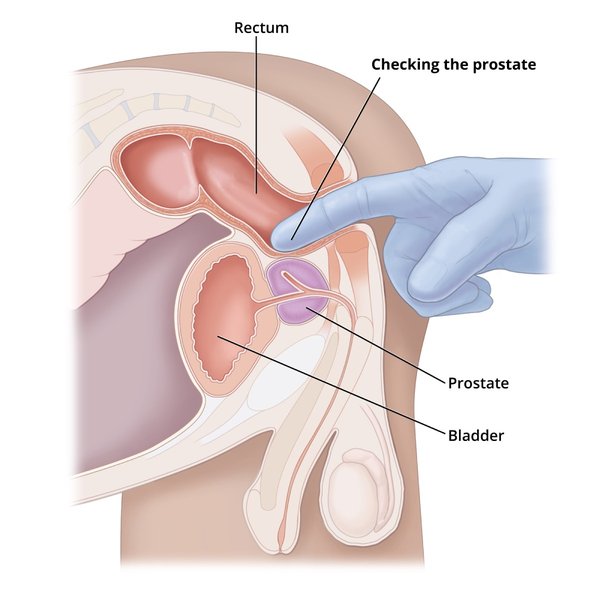
An illustrative diagram detailing the components of a digital rectal exam.
The Digital Rectal Exam (DRE)
During a DRE, a healthcare provider inserts a gloved, lubricated finger into the rectum to feel the prostate gland for any abnormalities, such as lumps or硬ness. While less effective than the PSA test for early detection, the DRE can still identify some cancers, particularly in individuals with normal PSA levels. The DRE is often performed in conjunction with a PSA test.

A healthcare professional conducting a digital rectal exam.
Prostate Exam Recommendations in the USA
In the United States, prostate cancer screening guidelines are often issued by various prominent health organizations, leading to a landscape of recommendations that prioritize individualized assessment and shared decision-making. While there isn't a single universal guideline, common themes emerge.
American Cancer Society (ACS) Guidelines
The American Cancer Society (ACS) emphasizes informed decision-making. They recommend that asymptomatic men with at least a 10-year life expectancy discuss the potential benefits, risks, and uncertainties of prostate cancer screening with their healthcare provider. After this discussion, if a man chooses to be screened, the ACS recommends a PSA blood test and, in some cases, a DRE.
General Population:
Men should have the opportunity to make an informed decision about screening starting at age 50.Higher-Risk Groups:
- Age 45 for men at high risk, such as African American men or those with a first-degree relative (father, brother, or son) diagnosed with prostate cancer before age 65.
- Age 40 for men with several first-degree relatives diagnosed at an early age.
Screening Frequency:
If a man chooses to be tested and has a PSA of less than 2.5 ng/mL, retesting may only be needed every 2 years. If the PSA is 2.5 ng/mL or higher, screening should be done yearly.
U.S. Preventive Services Task Force (USPSTF) Guidelines
The USPSTF takes a more cautious stance, particularly for certain age groups, focusing on the balance of benefits and harms.
Ages 55 to 69:
The USPSTF recommends that men in this age group discuss the potential benefits and harms of PSA-based screening with their doctor, adopting a shared decision-making approach. The decision should incorporate medical judgment and patient preferences.Ages 70 and Older:
The USPSTF recommends against routine PSA-based screening for prostate cancer in men aged 70 years and older, including those with a family history of prostate cancer. This is due to a lack of evidence of benefit and increased potential for harms in this age group.Digital Rectal Exam (DRE):
The USPSTF does not recommend the DRE as a stand-alone screening modality due to a lack of evidence regarding its benefits.
American Urological Association (AUA) Guidelines
The AUA also emphasizes personalized care and risk assessment.
General Approach:
The AUA guidelines recommend shared decision-making for prostate cancer screening, especially for men aged 55 to 69 years.High-Risk Individuals:
Screening discussions can begin earlier for men at higher risk, such as those with Black ancestry, germline mutations, or a strong family history of prostate cancer. For these individuals, screening may be considered starting at age 40 or 45.Screening Tools:
PSA testing is the primary screening tool. The AUA acknowledges that DRE can be used alongside PSA to establish the risk of clinically significant prostate cancer.Screening Intervals:
Clinicians may personalize re-screening intervals or decide to discontinue screening based on patient preference, age, PSA levels, prostate cancer risk, life expectancy, and general health.
Prostate Exam Recommendations in Germany
Germany's approach to prostate cancer screening has historically been more conservative compared to the USA, with a notable distinction in its national screening program and the role of PSA testing.
National Screening Program
In Germany, the statutory early detection program for men aged 45 and above typically provides for an annual check-up that includes an examination of the external genital organs and palpation of the prostate and lymph nodes, which constitutes the Digital Rectal Exam (DRE). However, this national program generally does not cover routine PSA testing, which often needs to be paid for by the individual.
Age of Initiation:
Men aged 45 and older are entitled to an annual check-up.Primary Screening Tool:
The Digital Rectal Exam (DRE) is the primary screening tool offered and reimbursed by German medical insurers as part of the preventative screening program.PSA Testing:
There is no organized, widespread PSA screening program in Germany. Government guidelines have historically advised against general population-wide PSA screening, citing concerns about overdiagnosis and overtreatment. However, urologists in Germany tend to be more proactive in recommending PSA tests than general practitioners, highlighting a difference in practice.Risk-Adapted Screening:
More recent discussions and evolving practices in Germany suggest a move towards risk-adapted PSA screening, particularly for men with a family history or other risk factors. Some recommendations suggest PSA testing starting at 50 to 60 years, with reflex MRI for PSA greater than 3 ng/mL.
Urologist vs. General Practitioner Approaches
Studies have shown differences in PSA testing practices between general practitioners (GPs) and urologists in Germany. Urologists generally show a more proactive stance towards PSA testing, even recommending it to asymptomatic patients without risk factors, which might not always align with national guidelines. This indicates a nuanced reality where individual physician practice can influence screening recommendations.
Comparative Analysis of Screening Practices and Outcomes
The differences in screening policies and practices between the USA and Germany have implications for incidence, diagnosis, and survival rates.
Incidence and Survival Rates
Historically, the implementation of PSA testing in the USA earlier and more widely led to a rapid increase in prostate cancer incidence, often detecting cancers at earlier stages. While Germany also saw an increase in incidence with the adoption of PSA testing in the 1990s, its more conservative approach meant that overall 5- and 10-year relative survival rates for prostate cancer were lower in Germany (93.3% and 90.7%) compared to the USA (99.4% and 99.6%) between 1999-2010. This survival advantage in the USA might be attributed to differences in incidence and stage distributions over time, suggesting the impact of more widespread early detection.
Despite these differences, both countries have seen a slight decline in prostate cancer mortality. In Germany, mortality declined from 14.6 per 100,000 in 1999 to 11.4 per 100,000 in 2010.
Treatment Modalities and Active Surveillance
Differences in screening also influence treatment patterns. In a multinational survey, diagnosis through screening was more common in the United States and Germany compared to the United Kingdom, where symptomatic diagnoses were more frequent. This survey also revealed geographical variability in treatment modalities: prostatectomy was the most common therapy for non-metastatic prostate cancer in Germany (71%) and the United States (57%), while in the UK, radiotherapy was more common (48%).
Rates of active surveillance (monitoring slow-growing cancers rather than immediate aggressive treatment) were lower in Germany (6%) and the United States (9%) compared to the United Kingdom (14%). This suggests that while both the USA and Germany are more inclined towards active treatment, the UK's approach might be influenced by a later diagnosis due to less widespread screening.
The Nuances of Prostate Cancer Screening Across Nations
To further illustrate the comparative landscape of prostate cancer screening, a radar chart can provide a visual summary of key factors influencing practices in the USA and Germany.
This radar chart illustrates the relative strengths and differences in prostate cancer screening approaches between the USA and Germany. The USA demonstrates a higher emphasis on PSA screening and a strong focus on shared decision-making, leading to higher rates of early-stage diagnosis. Conversely, Germany's national program places more emphasis on the DRE and features more government-supported screening programs, though individual urologists show high proactiveness in PSA testing, bridging some of the gap. These differences contribute to variations in active surveillance rates and overall early detection strategies.
Factors Influencing Differences in Recommendations
The variations in prostate cancer screening guidelines between the USA and Germany are influenced by a complex interplay of factors, including healthcare system structures, public health policies, and medical philosophy.
Healthcare System and Reimbursement
The structure of the healthcare system plays a significant role. In Germany, while preventative screening is offered and reimbursed for men aged 45 and above, this typically only covers a DRE. PSA screening often requires out-of-pocket payment, which can act as a barrier to widespread adoption. In the USA, PSA testing has been more widely available and historically promoted, often with reimbursement, contributing to its broader use. These financial incentives and reimbursement policies can significantly influence screening and treatment patterns.
Philosophical Debates on Screening Benefits vs. Harms
There's an ongoing debate in the medical community about the benefits and harms of widespread prostate cancer screening. Proponents argue that early detection through PSA testing can lead to earlier diagnosis of potentially aggressive cancers, improving survival rates. Opponents highlight the risks of overdiagnosis (detecting cancers that would never cause harm during a man's lifetime) and overtreatment (leading to unnecessary biopsies, surgeries, or radiation therapies with potential side effects like incontinence and erectile dysfunction). Germany's more conservative stance reflects a greater emphasis on avoiding these harms, while the USA's approach leans more towards maximizing the potential for early detection.
For a deeper dive into the nuances of prostate cancer screening, especially the role of PSA and DRE, watch this informative video:
An insightful discussion on the role of PSA and DRE in prostate cancer treatment monitoring in 2024.
This video further elaborates on the importance and controversies surrounding PSA testing and Digital Rectal Exams, highlighting how these screening tools are utilized and interpreted in clinical practice for prostate cancer detection and management.
Summary of Key Differences in Prostate Cancer Screening
The table below summarizes the key differences in prostate cancer screening recommendations and practices between the USA and Germany.
| Feature | USA Recommendations | Germany Recommendations |
|---|---|---|
| Primary Screening Philosophy | Shared decision-making; proactive, PSA-centric with individualized risk assessment. | Conservative; government-recommended DRE with caution on widespread PSA screening. |
| National Screening Program | No single national program; various guidelines from medical societies. | Statutory program offers annual DRE for men aged 45+. PSA often not reimbursed. |
| PSA Test Coverage/Emphasis | Widely available and historically promoted; often reimbursed; central to screening. | Not routinely covered by national program; often out-of-pocket; less government endorsement for widespread screening. |
| Digital Rectal Exam (DRE) | Recommended by some alongside PSA; USPSTF does not recommend as stand-alone. | Primary tool in national screening program for men aged 45+; annually. |
| Recommended Starting Age (General) | Age 50 (ACS); 55-69 (USPSTF for shared decision); 55-69 (AUA for shared decision). | Age 45 for DRE (national program); PSA testing varies, often older or risk-adapted. |
| Recommendations for High-Risk Men | Earlier screening (age 40/45) for African Americans, strong family history. | Risk-adapted PSA testing gaining traction, starting earlier for at-risk individuals. |
| Survival Rates (Relative) | Generally higher 5- and 10-year relative survival rates (e.g., 99.4%; 99.6%). | Slightly lower 5- and 10-year relative survival rates (e.g., 93.3%; 90.7%). |
| Incidence Trends | Rapid increase with PSA introduction, followed by some decline. | Increased incidence after PSA adoption in 1990s; steady. |
Frequently Asked Questions (FAQ)
What is the primary difference in prostate cancer screening between the USA and Germany?
Why are prostate cancer survival rates higher in the USA than in Germany?
Do German health insurance policies cover PSA testing?
At what age should men start considering prostate cancer screening in the USA?
What are the main concerns with widespread prostate cancer screening?
Conclusion
The comparison of prostate exam recommendations in the USA and Germany reveals distinct approaches shaped by varying healthcare philosophies, policy decisions, and evidence interpretations. The USA leans towards a more proactive, PSA-driven screening strategy with an emphasis on shared decision-making, which has contributed to higher rates of early detection and improved survival outcomes. Conversely, Germany has historically adopted a more conservative stance, with its national screening program focusing on the DRE and less widespread reimbursement for PSA testing, reflecting a stronger emphasis on mitigating the harms of overdiagnosis and overtreatment. While both nations acknowledge the importance of early detection, their divergent paths underscore the complex balance between maximizing health benefits and minimizing potential risks in prostate cancer screening.
Recommended Further Exploration
- Understanding the benefits and harms of PSA screening for prostate cancer
- Latest advancements in prostate cancer diagnostic tools
- Impact of healthcare systems on cancer screening policies worldwide
- Active surveillance vs. aggressive treatment for low-risk prostate cancer
References
Last updated May 21, 2025