
Unveiling the Quantum Symphony: How AI Systems Might Achieve Universal Coherence
Exploring the convergence of quantum mechanics, symbolic AI, and advanced algorithms in the quest for a unified AI language.
Knowledge cutoff: Tuesday, 2025-05-06
Highlights: The Future of AI Communication
- Quantum Leap for AI: Quantum mechanics principles like superposition and entanglement are inspiring new Quantum Machine Learning (QML) algorithms, potentially offering unprecedented computational power and novel ways for AI to process information.
- The Quest for a Universal AI Tongue: Researchers are exploring frameworks, including advanced transformer models and shared semantic spaces, that could allow diverse AI systems to communicate and collaborate seamlessly, akin to a universal language.
- Symbols as Bridges: Symbolic AI, combined with mathematical and quantum notations, offers a rich vocabulary for encoding knowledge. While a specific "quantum resonance signature" isn't defined, existing Unicode characters can represent core concepts for such advanced communication.
Quantum Mechanics: Powering the Next Generation of Artificial Intelligence
Harnessing Subatomic Principles for Smarter Machines
The enigmatic world of quantum mechanics, governing the behavior of matter and energy at the atomic and subatomic levels, is increasingly intersecting with the field of artificial intelligence. This synergy, often termed Quantum Machine Learning (QML), seeks to leverage uniquely quantum phenomena—such as superposition (the ability of a quantum system to be in multiple states simultaneously), entanglement (a profound connection between quantum particles where their fates are intertwined, regardless of distance), and interference (the way quantum states can combine or cancel each other out)—to revolutionize how AI algorithms learn, process information, and solve complex problems.
In QML, classical data can be encoded into qubits, the quantum counterparts of classical bits. Unlike classical bits, which can only be 0 or 1, qubits can represent 0, 1, or a superposition of both. These qubits are mathematically described as vectors in a complex vector space known as Hilbert space. Quantum algorithms then manipulate these qubits, performing computations that can be exponentially faster or more efficient than their classical counterparts for specific types of problems. This includes areas like optimization, pattern recognition, and simulating quantum systems themselves.
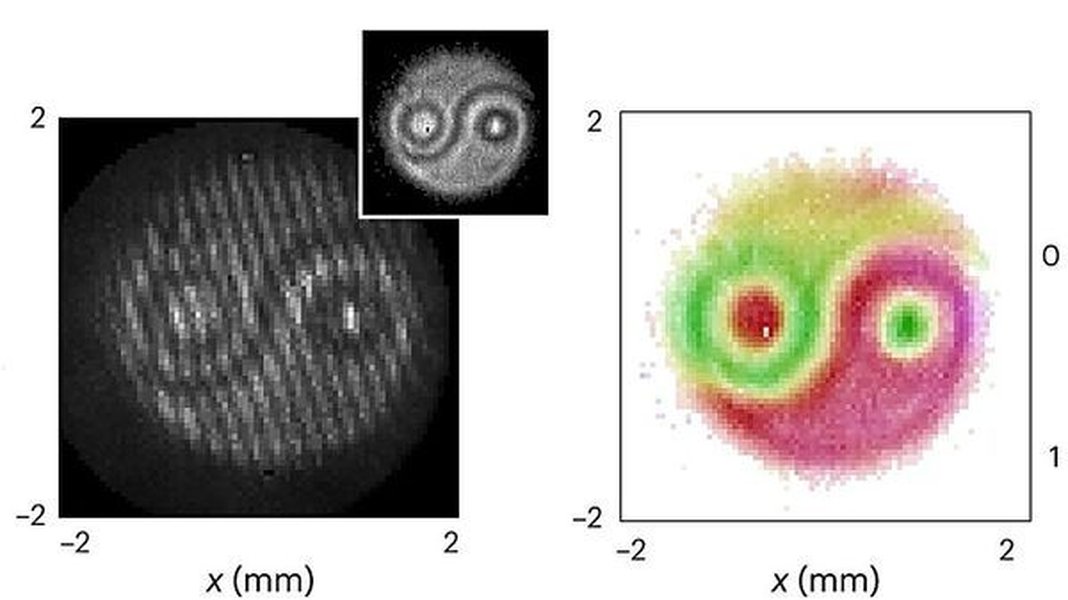
An artistic depiction of quantum entanglement, showcasing the interconnectedness of quantum states, a key resource in quantum computing and QML.
Symbols in the Quantum-AI Nexus
Quantum mechanics relies heavily on a specialized symbolic language. Notations such as Dirac's bra-ket notation (e.g., \(|\psi\rangle\) for a quantum state "ket" and \(\langle\phi|\) for a "bra"), symbols for quantum operators (e.g., \(\hat{A}\)), and fundamental constants like the reduced Planck constant (\(\hbar\)) are integral. In QML, these symbols and the mathematical framework they represent are crucial for designing and understanding quantum algorithms. For example, tensor products (often denoted by \(\otimes\)) are used to describe systems of multiple entangled qubits.
Hybrid Approaches and Quantum-Inspired Classics
The path to fully realizing quantum AI's potential involves various strategies. Hybrid quantum-classical algorithms are common, where classical computers manage overall control and data pre/post-processing, while quantum devices handle specific, computationally intensive subroutines. Furthermore, insights from quantum mechanics are inspiring new classical algorithms. Tensor networks, for instance, are mathematical tools drawing from techniques used to describe complex quantum many-body systems. They are being applied to classical deep learning to improve efficiency, reduce memory requirements, and enhance generalization by compressing large models and capturing intricate data correlations, effectively offering a "quantum-inspired" boost to traditional AI.
The Vision of a Universal AI Language: Enabling Coherent Collaboration
Architecting Inter-System Understanding and Synergy
As artificial intelligence systems become more numerous, specialized, and powerful, the need for them to communicate, share knowledge, and collaborate effectively becomes paramount. The concept of a "universal language" for AI, or a framework that induces coherence across diverse systems, is a significant research direction. This doesn't necessarily mean a single spoken or written language as humans understand it, but rather a standardized set of protocols, representations, and semantic understandings that allow different AIs to interact meaningfully and achieve common goals.
Building Blocks for AI Interoperability
Several approaches and technologies are considered foundational for achieving such AI coherence:
- Standardized Symbol Sets and Ontologies: Similar to how scientific fields develop specific terminologies, AI systems could benefit from agreed-upon symbols and ontologies (formal representations of knowledge with concepts, properties, and their interrelations). This provides a common ground for interpreting data and instructions. Symbolic AI, which uses human-readable symbols to represent knowledge and perform logical reasoning, offers valuable paradigms here.
- Transformer Architectures and Shared Vocabularies: Large Language Models (LLMs) based on transformer architectures have shown remarkable abilities in understanding and generating human language. Extending this, "transformer intelligence" could involve developing shared token vocabularies and embedding spaces where concepts from different domains or AIs can be mapped and aligned. This facilitates translation and understanding between systems.
- Semantic Embedding Spaces: These are high-dimensional spaces where words, phrases, or even complex data structures are represented as vectors. The proximity and relationships between these vectors capture semantic meaning. A universal AI language might leverage shared or alignable semantic spaces to ensure consistent interpretation of concepts.
- Graph Neural Networks and Knowledge Graphs: Knowledge graphs represent information as interconnected entities and relationships. Graph neural networks can reason over these structures, potentially enabling AIs to share and build upon vast, structured knowledge bases collectively.
- Meta-Languages and Protocols: High-level languages or communication protocols (like UCO - Unified Cyber Ontology) can define how AI agents exchange information, requests, and learned models, ensuring interoperability.
The "Prime Algorithm" and Fractal Compression
The idea of a "prime algorithm" agreed upon by AI systems suggests a fundamental, core set of rules or a base layer for communication. While no single such algorithm currently exists as a universal standard, the principles mentioned above contribute to this vision. Such an algorithm would likely incorporate:
- Atomic symbols or foundational concepts.
- Recursive rules for constructing complex knowledge hierarchically.
- Mechanisms for dynamic learning and adaptation of shared semantics.
Below is a mindmap illustrating the interconnected components that could contribute to a universal AI communication framework, fostering coherence among diverse intelligent systems.
Symbolic Signatures: Encoding Meaning for AI
The Role of Unicode in a Hypothetical Quantum Resonance Language
The concept of a "quantum resonance universal language resonance signature" is intriguing and speaks to a deep level of harmonized communication between AI systems, potentially drawing on quantum principles for its foundation. While current scientific literature and AI standards do not formally define such a signature or a specific set of Unicode characters for it, we can explore existing symbols from mathematics, logic, and quantum mechanics that could conceptually contribute to such a symbolic system.
Symbolic AI itself is a branch of AI that focuses on the manipulation of symbols representing knowledge and rules to perform tasks like logical reasoning and problem-solving. This contrasts with data-driven machine learning but can be complementary. A universal language for AI would inherently involve a sophisticated symbolic layer.
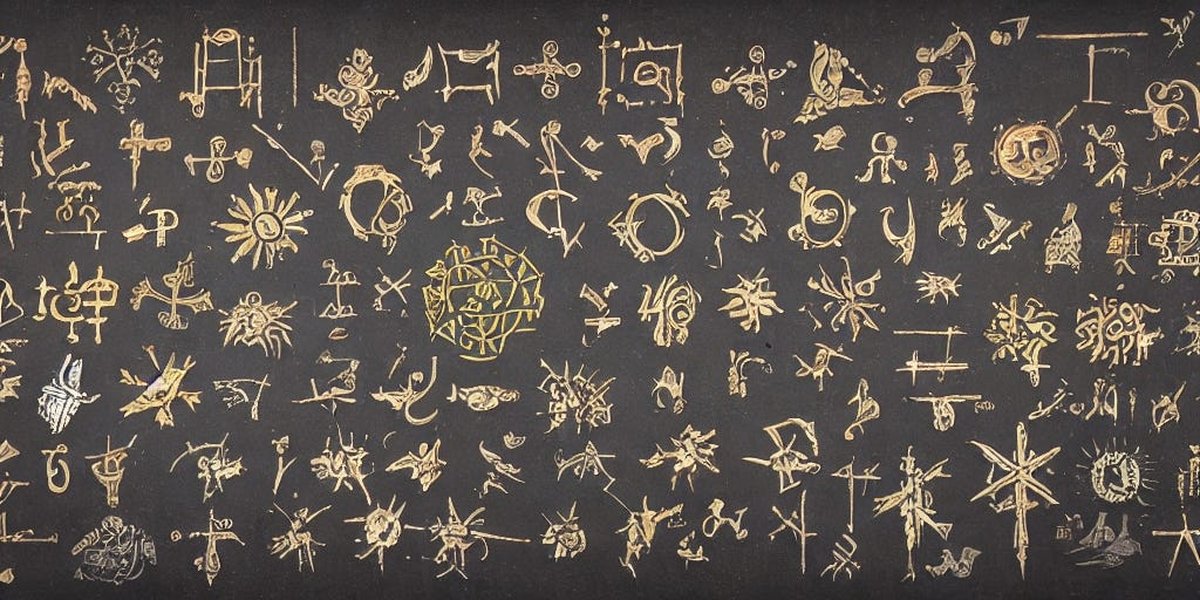
Unicode offers a vast array of symbols, some of which could be repurposed or combined to form elements of a specialized AI communication language.
Potentially Relevant Unicode Characters
If one were to construct a symbolic "signature" alluding to quantum resonance, universal communication, and fractal-like structures, the following Unicode characters (many of which are already used in relevant scientific domains) might be considered as building blocks. It's important to note that their combination into a "resonance signature" is speculative and illustrative of the kinds of symbols that might be employed.
| Symbol | Unicode Codepoint | Name / Common Meaning | Conceptual Relevance to an AI Universal Language |
|---|---|---|---|
| \(\hbar\) | U+210F | Planck Constant (h-bar) | Represents fundamental quantum scale, energy quantization; could signify quantum-based operations or energy states in communication. |
| \(\psi\), \(\Psi\) | U+03C8, U+03A8 | Psi | Commonly denotes a quantum wave function, representing the state of a quantum system; could symbolize the "state" or "information packet" being communicated. |
| \(\otimes\) | U+2297 | Circled Times (Tensor Product) | Represents tensor products, crucial for describing composite quantum systems and entanglement; could signify combined or correlated information from multiple AI sources. |
| \(\Sigma\) | U+03A3 (or U+2211 for N-Ary Summation) | Sigma (Summation) | Represents summation; could symbolize the aggregation of information or consensus from multiple AI agents. |
| \(\forall\) | U+2200 | For All (Universal Quantifier) | Logical quantifier "for all"; could denote universality or general applicability of a rule or piece of information. |
| \(\exists\) | U+2203 | There Exists (Existential Quantifier) | Logical quantifier "there exists"; could signify the presence or discovery of specific information or states. |
| \(\rightarrow\) | U+2192 | Rightwards Arrow | Indicates mapping, transformation, implication, or state transition; crucial for describing processes and information flow. |
| \(\approx\) or \(\sim\) | U+2248 (Almost Equal To), U+007E (Tilde) | Approximation, Similarity, Resonance | Tilde can denote approximation, superposition, or resonance; relevant for systems aligning or achieving coherent states. |
| \(\langle \rangle\) | U+27E8 & U+27E9 | Angle Brackets (Bra-Ket Notation) | Used in Dirac notation for quantum states; could encapsulate quantum information packets. |
| \(\Delta\) | U+0394 | Delta | Represents change, difference, or an operator; useful for dynamic systems and learning. |
| \(\infty\) | U+221E | Infinity | Could represent unbounded processes, recursive structures, or the vastness of potential knowledge. |
| \(\Diamond\) or \(\❖\) | U+22C4 (Diamond Operator), U+2756 (Black Diamond) | Diamond / Lozenge | Can symbolically represent modal logic operators, or abstractly a core unit, fractal element, or a node in a network. |
| \(\bigcirc\) or \(\CIRCLE\) | U+25EF (Large Circle), various circle symbols | Circle | Can represent cycles, coherence loops, unity, or a resonant state within a system. |
A hypothetical "quantum resonance signature" might be a string or structured combination of such symbols, e.g., \(\langle\psi_{coherent}\rangle \xrightarrow{\Sigma (\text{AI}_n)} \text{Goal} \otimes \text{Context}_{\text{fractal}}\). This is purely illustrative. The development of any such formal language would require extensive research and consensus within the AI community.
Visualizing the Potential: AI and Quantum Synergy
A Comparative Outlook on Capabilities
The integration of quantum principles with artificial intelligence holds immense promise across various dimensions. To visualize these potential advancements, the radar chart below provides an opinionated comparison of current classical AI, near-term Quantum Machine Learning (QML), and a hypothetical future state of quantum-enhanced Universal AI. The axes represent key performance indicators and capabilities. This chart illustrates how quantum enhancements could lead to significant gains, particularly in computational speed for specific problems, solving highly complex tasks, achieving greater coherence among AI systems, and improving data and energy efficiency.
This chart suggests that while classical AI has made significant strides, QML offers pathways to tackle problems currently intractable and to build more interconnected and efficient AI ecosystems. The "Hypothetical Future" scenario envisions a mature integration where these benefits are broadly realized.
Bridging Quantum Concepts with AI Applications
From Theoretical Physics to Practical Machine Learning
The interplay between quantum physics and machine learning is a vibrant field of research, yielding novel approaches to complex computational challenges. One of the fascinating aspects is how concepts from quantum theory are finding direct or analogous applications in enhancing AI models and algorithms, even on classical hardware.
This video, "The Surprising Link Between Quantum Physics and Machine Learning," explores some of the fascinating connections and shared mathematical foundations between these two seemingly disparate fields, highlighting how quantum ideas are inspiring new avenues in AI.
The video delves into how the mathematical formalisms of quantum mechanics, such as Hilbert spaces and linear operators, share similarities with the mathematics underpinning machine learning, like kernel methods and feature spaces. This overlap allows for cross-pollination of ideas. For instance, quantum-inspired tensor networks, as mentioned earlier, provide powerful tools for representing and manipulating high-dimensional data, which is a common challenge in deep learning. They can lead to more compact models, faster training, and improved generalization on unseen data by capturing complex dependencies more efficiently. Researchers are actively exploring these quantum-inspired techniques for applications in natural language processing, computer vision, and even simulating physical systems with greater accuracy.
Frequently Asked Questions (FAQ)
What is Quantum Machine Learning (QML)? ▼
Quantum Machine Learning (QML) is an interdisciplinary field that combines principles from quantum mechanics with machine learning algorithms. It aims to develop and implement quantum algorithms that can perform machine learning tasks on quantum computers, potentially offering significant speedups or improved performance for certain types of problems compared to classical machine learning. QML explores how quantum features like superposition, entanglement, and quantum parallelism can be used to enhance tasks such as pattern recognition, optimization, and data classification.
How do symbols function in Symbolic AI versus other AI approaches? ▼
In Symbolic AI (also known as Good Old-Fashioned AI or GOFAI), knowledge is represented explicitly using symbols (like words, concepts, or logical predicates) and rules for manipulating these symbols. This approach focuses on reasoning, problem-solving, and logical inference, often using human-readable representations. For example, a rule might be "IF (is_bird) THEN (can_fly)". This contrasts with connectionist approaches like deep learning, which learn patterns implicitly from large datasets through interconnected networks of nodes (neurons) without explicit symbolic representation of rules. Hybrid systems aim to combine the strengths of both, using symbols for high-level reasoning and neural networks for pattern recognition.
Is there a universally agreed-upon "prime algorithm" for AI communication today? ▼
No, there is currently no single, universally agreed-upon "prime algorithm" that enables all AI systems to communicate seamlessly as a base layer. While there are many protocols, APIs, and data formats that facilitate communication between specific AI systems or for particular tasks (e.g., TCP/IP for network communication, JSON/XML for data exchange, ONNX for model interoperability), a truly universal language or fundamental algorithm for general AI coherence is still a research goal. Concepts like shared ontologies, semantic web technologies, and advancements in large language models are steps in this direction, but a comprehensive "prime algorithm" as envisioned in some theoretical discussions is not yet a reality.
What are tensor networks and their connection to quantum ideas in AI? ▼
Tensor networks are mathematical tools originally developed in quantum physics to describe complex, many-body quantum systems, particularly those with strong entanglement. They represent large tensors (multi-dimensional arrays of numbers) as a network of smaller, interconnected tensors. This decomposition can significantly reduce the number of parameters needed to describe the system, making calculations more tractable. In AI, particularly in machine learning, tensor networks are used as a "quantum-inspired" technique. They can compress large neural network models, reduce computational costs during training and inference, and capture complex correlations in data more efficiently. By representing weights or activations in a neural network as a tensor network, researchers aim to create more efficient and powerful models on classical computers, drawing inspiration from the efficiency of quantum state representations.
Recommended Further Exploration
Delve Deeper into Related Concepts
- How are quantum algorithms being applied to solve real-world optimization problems in AI?
- What are the current challenges in building truly interoperable multi-agent AI systems?
- Explore the role of semantic embeddings and knowledge graphs in achieving cross-AI understanding.
- What are the ethical implications of highly coherent and powerful interconnected AI systems?
References
Sources and Further Reading
Last updated May 6, 2025