
Unlocking Rapid Skill Mastery: Your Comprehensive Guide to Accelerated Learning
Mastering new abilities isn't about innate talent; it's about strategic approaches and consistent application.
Key Insights for Accelerated Skill Acquisition
- Deconstruct the Skill: Break down complex skills into smaller, manageable sub-skills to create a clear, focused learning path.
- Embrace Deliberate Practice: Engage in focused, intentional practice that pushes you outside your comfort zone, actively seeking feedback and refining your approach.
- Leverage the "20-Hour Rule": Achieve a noticeable level of proficiency in a new skill with approximately 20 hours of concentrated effort, emphasizing rapid iteration over perfection.
In today's fast-paced world, the ability to rapidly acquire and master new skills is more crucial than ever. Whether for personal growth, career advancement, or simply the joy of learning, efficient skill acquisition can be a transformative force. Many people believe that mastering a skill requires thousands of hours, often citing the "10,000-hour rule." While extensive practice is indeed necessary for true expertise, a significant level of proficiency, or "functional mastery," can be achieved much faster through strategic methods.
The Core Principles of Rapid Skill Acquisition
Rapid skill acquisition isn't about shortcuts; it's about smart work. It involves a systematic approach that optimizes your learning process, moving you from novice to proficient with remarkable speed.
Defining and Deconstructing the Skill
Before you even begin, it's vital to clearly define the specific skill you want to acquire. Vague goals lead to vague progress. Once defined, the next crucial step is to deconstruct the skill into its fundamental components or sub-skills. This breaking down of complexity makes the learning process less overwhelming and allows for focused practice on essential elements.
Identifying Essential Sub-Skills
Think of a skill like a complex machine. You don't learn to build the whole machine at once; you learn about its individual parts and how they interact. For instance, if you want to learn public speaking, sub-skills might include crafting a compelling message, vocal modulation, body language, and managing stage fright. By identifying these sub-skills, you can create a targeted learning plan. This strategy prevents overwhelm and helps you create a clear learning path.
The Power of Focused, Deliberate Practice
Once you've deconstructed the skill, the emphasis shifts to deliberate practice. This isn't just mindlessly repeating an action; it's about intentional, focused effort aimed at improving specific aspects of your performance.
Beyond Rote Repetition: The Science of Improvement
Deliberate practice involves "repeatedly stepping outside your comfort zone and trying activities beyond your current abilities." It requires concentration, immediate feedback, and consistent adjustment. This type of practice helps you develop new skills and improve your existing ones by pushing your cognitive and physical boundaries. It’s about engaging with the material, strengthening your understanding, and improving your ability to recall and apply what you've learned.
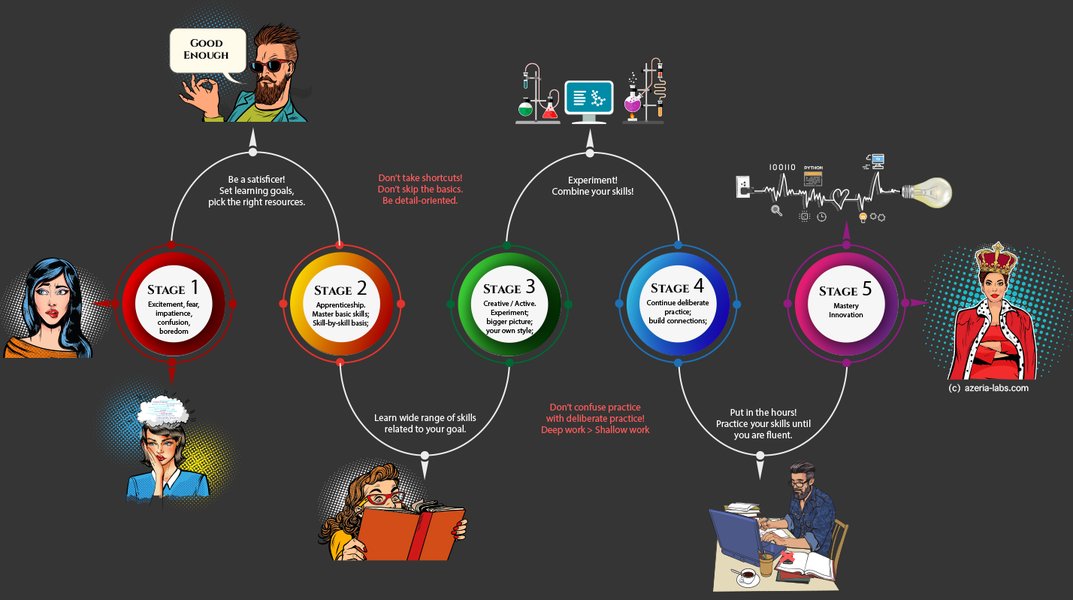
Understanding the iterative process of skill mastery.
The "20-Hour Rule" and Setting Realistic Expectations
Popularized by Josh Kaufman, the "20-Hour Rule" suggests that you can achieve a noticeable level of proficiency in a new skill with approximately 20 hours of focused, deliberate practice. This is not about achieving mastery, but rather about overcoming the initial frustration barrier and becoming "competently bad" at something.
From Zero to Functionally Proficient
The concept encourages a temporary obsession and a rapid iteration approach. Instead of aiming for perfection from the outset, the goal is to get good enough to perform the skill at a certain threshold to get a desired result. This means dedicating approximately 45 minutes a day for a month, or four hours a day for a week, to concentrated learning. The key is to emphasize quantity and speed in early-stage practice, prioritizing frequent engagement over meticulous precision.
Strategic Approaches to Accelerate Learning
Beyond the core principles, several strategic approaches can significantly speed up your skill acquisition journey.
Optimizing Your Learning Environment
Your physical and mental environment plays a significant role in your ability to learn quickly. Minimizing distractions and creating a dedicated practice space can set you up for success.
Removing Barriers and Fostering Focus
Eliminate potential interruptions, whether they are digital notifications or physical clutter. Creating a conducive learning environment means having the right tools readily available and a quiet space where you can concentrate without interruption. This also involves managing your schedule to allocate consistent, focused blocks of time for learning, even if it's just 20-45 minutes daily.
Leveraging Feedback Loops and Self-Correction
One of the most effective ways to learn quickly is through rapid feedback. This means getting accurate information about your performance and using that information to improve.
The Iterative Cycle of Improvement
Feedback loops can come from various sources: a mentor, a coach, self-assessment (e.g., videotaping yourself), or the immediate results of your actions. The faster and more often you receive feedback, the quicker you can identify errors and adjust your approach. This continuous cycle of practice, feedback, and correction is fundamental to efficient learning.
The Role of Mentorship and Community
You don't have to navigate the learning process alone. Learning from those who have already mastered the skill can provide invaluable shortcuts.
Standing on the Shoulders of Giants
Finding a guide or mentor who can provide insights, correct mistakes, and offer structured guidance can significantly accelerate your progress. Additionally, joining a community of people learning or practicing the same skill can provide motivation, peer feedback, and shared resources. Learning from the lessons of others allows you to bypass common pitfalls and adopt proven strategies.
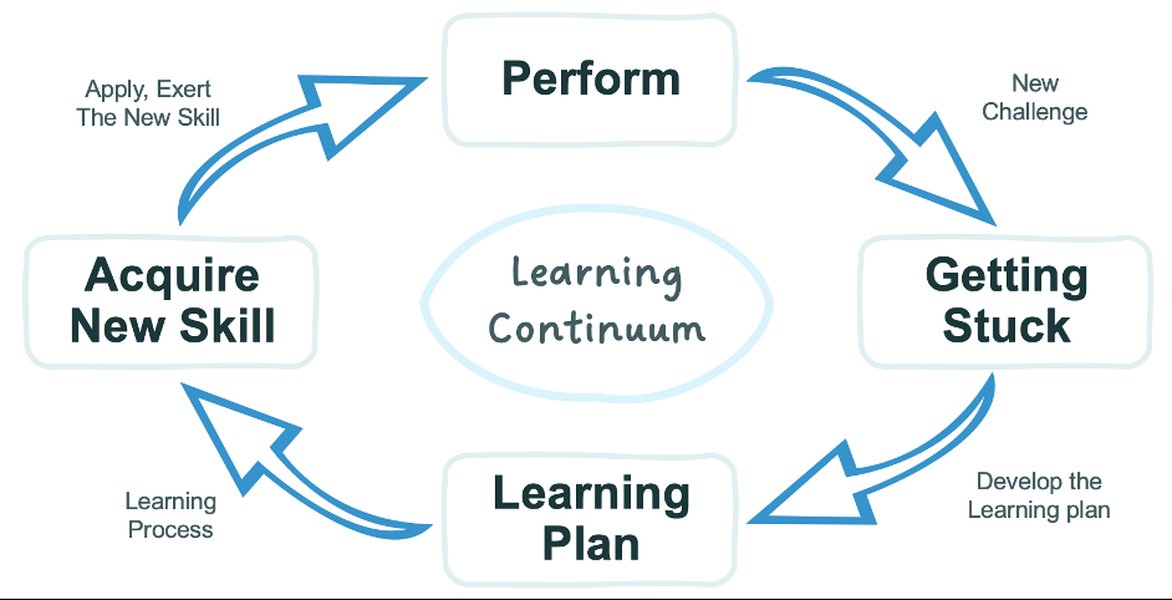
Visualizing the dynamic interplay between learning and performing for continuous growth.
Embracing Active Learning Techniques
Passive learning, such as simply reading or watching, is less effective than active engagement. To truly absorb and apply a new skill, you need to be actively involved in the learning process.
Beyond Passive Consumption: Engaging with the Material
Techniques like "learning by doing" are paramount. This involves physically engaging with the skill, even if you feel unprepared. Continuously alternate between research and practice. Other powerful methods include:
- Retrieval Practice: Actively recalling information from memory rather than just re-reading it.
- Spaced Repetition: Reviewing material at increasing intervals to strengthen memory retention.
- Teaching Others: Explaining a concept to someone else solidifies your own understanding (the protégé effect).
- Note-Taking by Hand: Engaging more deeply with the material compared to typing.
The Mindset for Mastery
Beyond techniques, a critical component of rapid skill acquisition is cultivating the right mindset. This includes patience, resilience, and a willingness to embrace mistakes.
Overcoming Obstacles and Maintaining Motivation
Learning a new skill is rarely a linear process; frustration and setbacks are normal. A positive mindset, the ability to break down what's blocking you, and the willingness to try different approaches are essential. Visualizing yourself mastering the skill and tracking your progress can also provide significant motivation. Recognize that consistent progress, not perfection, is the goal.
Practical Strategies for Implementing Rapid Skill Acquisition
Translating these principles into actionable steps requires a structured approach.
A Step-by-Step Framework for Learning
Here’s a synthesized framework for rapidly acquiring new skills:
| Step | Description | Key Actions |
|---|---|---|
| 1. Define & Deconstruct | Clearly identify the specific skill and break it into core sub-skills. | Set a clear learning goal; list essential components. |
| 2. Research & Gather Resources | Find reliable learning materials, experts, and tools. | Identify mentors, online courses, books, and practice tools. |
| 3. Remove Barriers | Optimize your environment to minimize distractions and facilitate practice. | Create a dedicated learning space; manage time effectively. |
| 4. Practice Deliberately | Engage in focused, intentional practice, pushing past your comfort zone. | Apply the "20-hour rule"; prioritize consistent, active practice. |
| 5. Seek & Integrate Feedback | Actively solicit and use feedback to correct mistakes and improve. | Find a mentor, use self-recording, or join a learning community. |
| 6. Teach & Apply | Reinforce learning by explaining concepts or applying the skill in real-world scenarios. | Teach others; take on new projects requiring the skill. |
| 7. Reflect & Iterate | Regularly assess your progress and adjust your learning strategy. | Keep a learning journal; redefine goals as needed. |
This systematic approach ensures that your effort is directed efficiently, maximizing your learning speed.
The Role of Technology in Accelerated Learning
The digital age offers unprecedented resources for skill acquisition, from online courses to interactive apps.
Leveraging Digital Tools for Enhanced Learning
E-learning platforms, online forums, and specialized apps can provide structured curricula, immediate feedback, and opportunities for practice. Many of these tools are designed for self-paced learning, allowing you to fit skill acquisition into a busy schedule. Utilize AI role-play scenarios for practice or online question banks to test your knowledge.
Understanding Your Learning Aptitude: A Radar Chart Analysis
To further understand how different attributes contribute to rapid skill acquisition, let's visualize key factors that influence a learner's ability to master new skills quickly. This radar chart illustrates the relative importance and typical strengths associated with accelerated learning, based on a combination of strategic approach and inherent qualities.
This chart highlights that an "Optimal Learner" excels across all dimensions, particularly in clear goal setting, consistent deliberate practice, and effective integration of feedback. While an "Average Learner" may show some strengths, there are clear areas for improvement. Resourcefulness, adaptability, and focus are also crucial traits that facilitate quicker learning, demonstrating that a blend of strategic action and personal attributes contributes significantly to rapid skill acquisition. Prior knowledge can provide a foundation, making it faster to learn new skills if they are similar to what you already know.
Visualizing the Journey: How to Learn New Skills Quickly
To further illustrate the process, consider this insightful video which delves into a 4-step process for rapid skill acquisition, offering practical advice and perspectives from experts in the field of learning.
A concise guide to a 4-step process for rapidly acquiring new skills.
This video provides a valuable visual and auditory explanation of how to apply the principles discussed, emphasizing the practical application of techniques to shorten your learning curve. It reinforces the idea that learning to learn effectively is a skill in itself, crucial for anyone looking to master new abilities efficiently.
Frequently Asked Questions (FAQ)
What is "Rapid Skill Acquisition"?
Is the "10,000-hour rule" still relevant for mastering a skill?
How important is motivation in learning a new skill quickly?
Can I learn multiple skills simultaneously?
What are some immediate steps I can take to start learning a new skill rapidly?
Conclusion
Mastering a new skill quickly is not a mystical talent, but a disciplined process built on strategic planning, focused effort, and continuous adaptation. By deconstructing complex abilities, engaging in deliberate practice, leveraging fast feedback, and cultivating an optimal learning environment, you can significantly accelerate your journey from novice to proficient. The "20-hour rule" offers a powerful incentive to overcome initial barriers, encouraging consistent action over the pursuit of unattainable perfection. Embrace the mindset of a lifelong learner, and you will find that the ability to rapidly acquire new skills becomes one of your most valuable assets in an ever-evolving world.
Recommended Further Exploration
- How to apply deliberate practice for skill development?
- What are effective strategies for overcoming learning plateaus?
- Explore the neuroscience behind accelerated learning.
- How to build a personal learning system for continuous growth?
References

Last updated May 21, 2025