
Unraveling the T Cell Enigma: How Rogue Immune Cells Drive Multiple Sclerosis Activity
Exploring the intricate link between reactive T lymphocytes and MS flare-ups, and what this means for patients and treatments.
Multiple Sclerosis (MS) is a complex autoimmune disease where the body's own immune system mistakenly attacks the central nervous system (CNS), specifically the protective myelin sheath that insulates nerve fibers. This assault leads to inflammation, demyelination (loss of myelin), and ultimately, neurodegeneration. Among the key orchestrators of this immune onslaught are reactive T cells. Understanding the direct correlation between these T cells and MS activity is crucial for developing effective therapies and diagnostic tools.
Key Insights: T Cells and MS Activity
- Direct Link to Damage: Increased numbers and activation of myelin-reactive T cells (T cells that wrongly identify myelin components as foreign) in the blood and cerebrospinal fluid (CSF) directly correlate with MS disease activity, including clinical relapses and the formation of new or enlarging brain lesions visible on MRI scans.
- Therapeutic Targets: This strong correlation validates targeting T cells as a primary strategy for many current and emerging MS disease-modifying therapies (DMTs), aiming to reduce their activation, proliferation, or migration into the CNS.
- Complex Interplay: While the correlation is evident, the relationship is nuanced. Myelin-reactive T cells can also be found in healthy individuals, and not all reactive T cells are harmful; some even play regulatory roles. The balance between pathogenic and protective T cell responses is critical.
The Direct Correlation: Reactive T Cells as Drivers of MS Activity
The immune system's T lymphocytes are vital for defending against pathogens. However, in MS, a subset of these T cells becomes "reactive" or "autoreactive," meaning they mistakenly recognize components of the body's own myelin sheath—such as myelin basic protein (MBP), proteolipid protein (PLP), and myelin oligodendrocyte glycoprotein (MOG)—as foreign invaders. This triggers an inflammatory cascade within the CNS.
Evidence for the Correlation
Numerous studies underscore the direct link between these errant T cells and MS activity:
Increased Frequency and Activation
Patients with MS often exhibit significantly higher frequencies of T cells reactive to myelin antigens in their peripheral blood and, even more notably, in their cerebrospinal fluid (CSF) compared to healthy individuals. These T cells are frequently in an activated state, ready to mount an immune attack. For instance, an increase in activated CD4+ or CD4+CD25+ T cells has been linked to relapses and worsening disability. Changes in peripheral T-lymphocyte activation markers (like CD25, MHC class II, or CD26) correlate significantly with both clinical and radiological indicators of MS activity, including lesion volume and gadolinium-enhancing lesions on MRI.
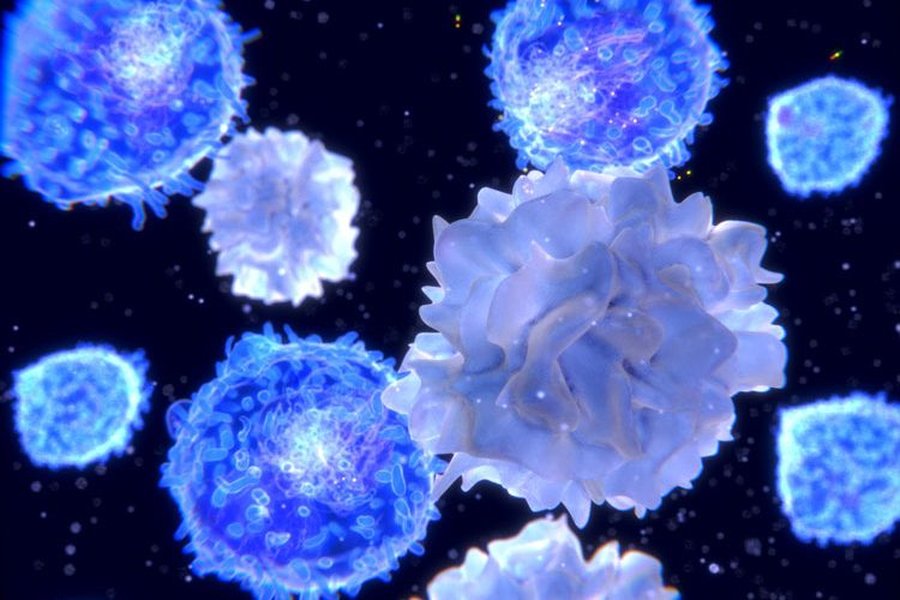
T cells (green) interacting with other cells, illustrating the cellular basis of immune responses relevant in MS.
Specific T Cell Subtypes and Lesion Development
Different subtypes of T cells play distinct roles. Effector CD4+ T cells, particularly Th1 (T helper 1) and Th17 (T helper 17) cells, are major culprits. Th1 cells produce pro-inflammatory cytokines like interferon-gamma (IFN-γ) and tumor necrosis factor-alpha (TNF-α), while Th17 cells release IL-17 and IL-6. These cytokines amplify inflammation, recruit other immune cells, and contribute to the breakdown of the blood-brain barrier (BBB), allowing more immune cells to enter the CNS. For example, increased T cell reactivity to PLP residues 184-209 in MS patients shows a robust correlation with lesion development in the brainstem and cerebellum. CD8+ T cells (cytotoxic T lymphocytes) are also heavily implicated and are often the predominant T cell type found within MS lesions, directly damaging myelin and axons.
Migration and CNS Inflammation
Activated myelin-reactive T cells gain the ability to cross the normally restrictive BBB. Once inside the CNS, they are reactivated by local antigen-presenting cells (APCs) displaying myelin fragments. This leads to localized inflammation, secretion of damaging molecules, and the recruitment of other immune cells, including B cells and macrophages, further exacerbating demyelination and axonal injury.
Visualizing T Cell Roles in MS
To better understand the multifaceted involvement of T cells in MS, the following diagram illustrates key aspects of their contribution to the disease process, including their activation, differentiation, and impact on the central nervous system.
This mindmap highlights how reactive T cells are central to MS, from their initial misdirected recognition of myelin to their role in orchestrating the inflammatory attack within the CNS, and how these aspects inform therapeutic strategies and ongoing research.
T Cell Subtype Contributions and Therapeutic Considerations
The diverse roles of T cell subtypes in MS pathogenesis present both opportunities and challenges for therapeutic intervention. The radar chart below provides a conceptual comparison of key T cell subtypes based on their general characteristics and impact in the context of MS. This is an illustrative representation based on current understanding, not precise quantitative data.
This chart illustrates that pro-inflammatory cells like Th1 and Th17 generally score high in pathogenic activities, while Tregs are crucial for suppression. Therapeutic strategies often aim to dampen the activity of Th1, Th17, and CD8+ cells or boost Treg function.
Pros and Cons of the T Cell-MS Activity Correlation
The strong correlation between reactive T cells and MS activity has significant implications for understanding the disease and developing treatments. However, it also presents challenges.
Pros: Leveraging the Correlation
- Mechanistic Insight: The correlation solidifies the autoimmune basis of MS and identifies specific cellular players (Th1, Th17, CD8+ T cells) and pathways that drive pathology. This deepens our understanding of immune dysregulation in MS.
- Therapeutic Targets: Reactive T cells and their activation/migration pathways are prime targets for DMTs. Drugs like natalizumab (prevents T cell entry into CNS), fingolimod (sequesters T cells in lymph nodes), and alemtuzumab (depletes T and B cells) demonstrate the efficacy of T cell-focused approaches in reducing relapses and lesion activity.
- Biomarker Potential: Levels of activated T cells, specific T cell subsets, or their cytokine products in blood or CSF can serve as potential biomarkers to monitor disease activity, predict relapses, or assess treatment responses.
- Guiding Research: This understanding fuels research into more specific therapies, such as those promoting regulatory T cell (Treg) function or targeting specific pathogenic T cell clones, aiming for greater efficacy with fewer side effects.
Cons and Challenges
- Specificity Issues: Myelin-reactive T cells are also found in healthy individuals, albeit typically in a less activated or well-regulated state. Their mere presence is not sufficient to cause disease, indicating other factors (genetic, environmental, regulatory defects) are involved.
- Functional Heterogeneity: Not all T cells recognizing myelin are pathogenic. Some autoreactive T cells may even have regulatory or benign roles. The balance between pathogenic effector T cells and protective regulatory T cells is crucial and complex.
- Low Frequency and Dynamic Nature: Autoreactive T cells can exist at very low frequencies in peripheral blood, making them technically challenging to isolate and study. T cell activation and phenotypes can also fluctuate rapidly, requiring frequent monitoring for accurate correlation with disease activity.
- Complexity of MS Pathogenesis: MS is a multifactorial disease. While T cells are central, other immune cells (B cells, macrophages, microglia, innate immune cells) and non-immune factors (CNS-resident cells, genetic predisposition, environmental triggers like viral infections) also play significant roles. Targeting T cells alone may not address all aspects of the disease, particularly progressive MS.
- Risks of Broad Immunosuppression: Many T cell-targeting therapies can lead to generalized immunosuppression, increasing the risk of infections (e.g., progressive multifocal leukoencephalopathy - PML) and potentially other side effects by disrupting normal immune surveillance.
- Epitope Spreading: Over time, the immune response can diversify to target new myelin epitopes (epitope spreading), complicating efforts to target specific T cell clones or antigens.
- Blood-Brain Barrier Dynamics: The entry of T cells into the CNS is a critical step, but peripheral T cell activity doesn't always perfectly mirror CNS inflammation due to the complex regulation of BBB permeability and the CNS immune environment.
Focus on T Cell Research in MS
The following video provides insights into research on autoreactive T-cell responses in multiple sclerosis, highlighting the ongoing efforts to understand and target these cells.
This video discusses research into autoantigens and autoreactive T-cell responses in patients with multiple sclerosis, reflecting the scientific community's focus on this critical aspect of the disease.
Summary Table: T Cell Correlation in MS
This table summarizes the key advantages and disadvantages associated with the established correlation between reactive T cells and MS activity.
| Aspect | Pros (Advantages/Support) | Cons (Limitations/Challenges) |
|---|---|---|
| Understanding MS Pathogenesis | Confirms autoimmune nature; identifies key cellular drivers (e.g., Th1, Th17, CD8+ T cells). | Disease is multifactorial, involving B cells, innate immunity, and CNS-specific factors. Myelin-reactive T cells also exist in healthy individuals. |
| Therapeutic Development | Provides clear targets for immunomodulatory and immunosuppressive therapies, leading to effective DMTs. | Risk of broad immunosuppression, infections, and side effects. Difficulty in specific targeting without affecting beneficial T cells. |
| Diagnostic/Prognostic Markers | T cell activation markers and cytokine profiles can potentially serve as biomarkers for disease activity and treatment response. | Dynamic nature of T cell activation requires frequent sampling. Low frequency of specific autoreactive cells makes detection hard. Heterogeneity in responses across patients. |
| Research Focus | Directs research towards understanding T cell regulation, trafficking, and interaction with other immune cells. | Complexity of T cell subsets (pathogenic vs. regulatory). Unclear initial triggers for T cell activation and epitope spreading complicates research. |
Frequently Asked Questions (FAQ)
What are reactive T cells in the context of MS?
How do reactive T cells contribute to MS activity?
Are all T cells harmful in MS?
If myelin-reactive T cells are found in healthy people, why don't they get MS?
How do MS therapies target reactive T cells?
Conclusion
The direct correlation between reactive T cell activity and MS disease manifestations is a cornerstone of our current understanding of this complex neurological condition. Myelin-reactive T cells, particularly pathogenic CD4+ Th1/Th17 subsets and CD8+ cytotoxic T cells, are undeniably key drivers of the inflammatory demyelination that characterizes MS. This understanding has paved the way for numerous effective disease-modifying therapies that target T cell activation, proliferation, or trafficking.
However, the picture is far from simple. The presence of autoreactive T cells in healthy individuals, the functional heterogeneity of T cell populations (including protective regulatory subsets), the dynamic nature of immune responses, and the multifactorial etiology of MS—involving other immune cells, genetic predispositions, and environmental factors—all add layers of complexity. While targeting T cells has brought significant advances, challenges remain in achieving highly specific immunotherapies that can restore immune tolerance without causing broad immunosuppression, especially in the context of progressive MS where neurodegenerative mechanisms become more prominent.
Future research will continue to unravel the precise mechanisms by which T cells contribute to MS, aiming to develop more refined and personalized therapeutic strategies that can effectively halt disease activity and promote repair, ultimately improving the lives of individuals living with MS.
Recommended Further Exploration
- Investigate the critical interplay between B cells and T cells in driving Multiple Sclerosis.
- Explore how reactive T cells cross the blood-brain barrier to enter the central nervous system in MS.
- Understand the role of regulatory T cells (Tregs) in MS and their potential as therapeutic targets.
- Discover emerging T-cell targeted therapies for MS that aim for higher specificity and efficacy.
References
Last updated May 22, 2025