
T Cell or T-Cell? Unraveling the Hyphen Mystery in Medical Terminology
Discover the simple rule that determines whether you need a hyphen when writing about these vital immune cells.
When discussing the crucial components of our immune system, precision in language is key. A common point of confusion arises with the spelling of "T cell" – should it include a hyphen or not? The answer isn't arbitrary; it depends entirely on how the term functions within a sentence. Understanding this distinction is vital for clear communication, especially in scientific and medical contexts.
Quick Guide: Key Spelling Insights
- As a Noun: Spell it as "T cell" (two words, no hyphen) when referring directly to the cell type itself. Example: "The body produces many T cells."
- As an Adjective: Spell it as "T-cell" (hyphenated) when the term modifies another noun. Example: "Researchers studied the T-cell receptor."
- Capitalization: Always capitalize the "T," as it stands for "thymus," the organ where these cells mature.
Understanding T Cells: The Foundation
What Are T Cells?
T cells, also known as T lymphocytes, are a type of white blood cell that plays a central role in the adaptive immune system. Originating from bone marrow stem cells, they mature in the thymus gland (hence the "T"). Their primary functions include directly killing infected host cells, activating other immune cells, producing cytokines, and regulating the immune response. They are essential for protecting the body against pathogens like viruses and bacteria, and they also play a role in fighting cancer.
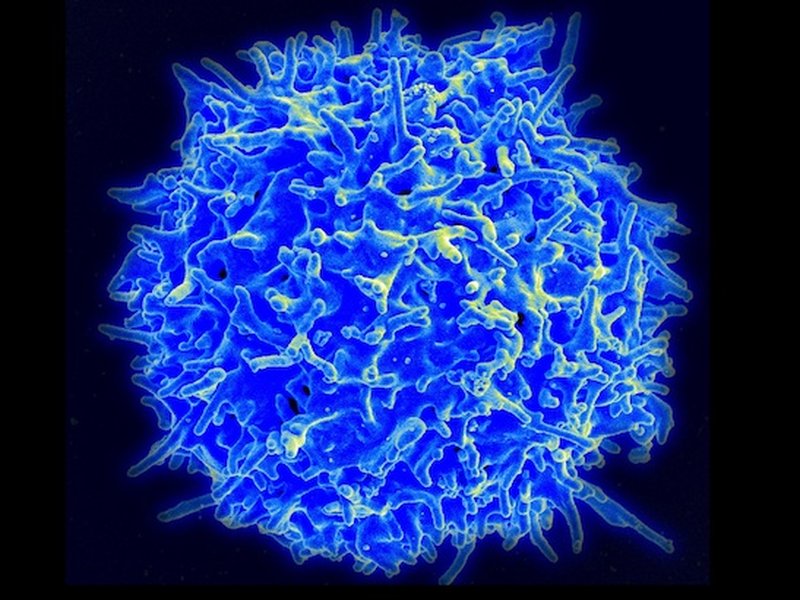
A healthy human T cell, a key player in the immune system.
Why Correct Spelling Matters
In scientific and medical writing, accuracy is paramount. Using the correct form – "T cell" or "T-cell" – ensures clarity and adheres to established grammatical and stylistic conventions. Misuse can lead to ambiguity, particularly in complex descriptions of biological processes or treatments.
The Core Rule: Noun vs. Adjective
The decision to hyphenate hinges on whether "T cell" is functioning as a noun (the thing itself) or an adjective (describing another noun).
When to Use "T cell" (Noun Form)
Definition and Usage
Use "T cell" without a hyphen when you are referring directly to the lymphocyte type. In this case, "T cell" acts as a compound noun.
Examples:
- "Each T cell recognizes a specific antigen."
- "The immune response involves both B cells and T cells."
- "Cytotoxic T cells can eliminate infected cells."
Style Guide Support
Major style guides and dictionaries generally support this usage. For instance, the UCSF Brand Identity Editorial Style Guide and the Kirk Kerkorian School of Medicine at UNLV Editorial Style Guide explicitly state that the noun form is unhyphenated. Dictionaries like Merriam-Webster also list "T cell" as the primary noun entry.
When to Use "T-cell" (Adjective Form)
Definition and Usage
Use "T-cell" with a hyphen when the term functions as part of a compound modifier, describing a subsequent noun. The hyphen connects "T" and "cell" to show they work together as a single descriptive unit.
Examples:
- "The study focused on the T-cell receptor." (Describes "receptor")
- "CAR T-cell therapy is a promising cancer treatment." (Describes "therapy")
- "Scientists analyzed the T-cell response to the vaccine." (Describes "response")
- "Certain viruses can cause T-cell depletion." (Describes "depletion")
Style Guide Support
This follows standard English grammar rules for compound adjectives preceding a noun. Style guides like those mentioned above (UCSF, UNLV) recommend hyphenation in these adjectival contexts. Discussions on platforms like Wikipedia and Reddit (r/labrats) also confirm this grammatical distinction is preferred for clarity.
Visualizing the Usage: Summary Table
This table summarizes the core distinction and provides clear examples for both forms:
| Form | Grammatical Function | Rule | Example Sentence |
|---|---|---|---|
| T cell | Noun | Use when referring directly to the cell type. | "Memory T cells provide long-term immunity." |
| T-cell | Adjective | Use when modifying another noun. | "The patient received T-cell immunotherapy." |
| T cell | Noun | Part of the immune system. | "A specific T cell was isolated for study." |
| T-cell | Adjective | Describing a characteristic or relation. | "Analysis revealed abnormal T-cell activity." |
Usage Adherence Across Contexts
While the noun/adjective rule is the standard guideline, actual usage can sometimes vary. This chart provides an estimated view of how consistently the "T cell" (noun) vs. "T-cell" (adjective) rule is typically followed in different types of publications and resources. Higher scores indicate stronger adherence to the grammatical distinction.
As illustrated, formal scientific and medical contexts show the highest consistency in applying the hyphenation rule correctly, while general usage might be less strict. Always consult the specific style guide relevant to your work for definitive guidance.
Mapping the Concept: T Cell Spelling
This mind map visually summarizes the core concepts related to T cell spelling based on grammatical function:
This structure helps clarify that the primary determinant for hyphenation is whether the term is naming the cell or describing something related to it.
T-Cells in Action: Therapeutic Applications
Understanding the correct terminology is particularly relevant when discussing advanced medical treatments like CAR T-cell therapy. In this context, "T-cell" functions as an adjective modifying "therapy." This groundbreaking immunotherapy involves genetically modifying a patient's own T cells to recognize and attack cancer cells.
The video below shows CAR T-cells (Chimeric Antigen Receptor T-cells) actively destroying glioblastoma cells, illustrating the powerful application of engineered T cells in oncology. Notice how the term "CAR T-cell" uses the hyphenated form when describing the type of cell therapy.
CAR T-cells attacking glioblastoma (brain cancer) cells. Video courtesy of City of Hope.
This example highlights how T cells are not just subjects of study but also tools in developing innovative treatments, making precise language crucial.
Frequently Asked Questions (FAQ)
Why is there a difference in spelling based on grammar?
This distinction follows standard English grammar rules for compound words. When two words act together as a single adjective before a noun (like "T-cell therapy"), they are often hyphenated to improve clarity and readability. It signals that "T" and "cell" form one descriptive unit. When "T cell" is simply the name of the thing (a noun), the hyphen is unnecessary.
Are there exceptions or variations?
While the noun/adjective rule is the most widely accepted standard, especially in formal scientific writing, you might occasionally encounter inconsistencies. Some older texts or less formal writing might use the forms interchangeably. However, major style guides (like AMA, APA) and prominent medical journals generally adhere to the noun ("T cell") versus adjective ("T-cell") distinction. Always check the specific style guide required for your context if you're unsure.
Does this rule apply to other similar terms, like B cell?
Yes, the same principle generally applies to "B cell" (derived from Bursa of Fabricius in birds, or bone marrow in mammals). Use "B cell" as the noun (e.g., "B cells produce antibodies") and "B-cell" as the adjective (e.g., "B-cell lymphoma"). Consistency in applying these rules helps maintain clarity across immunological terminology.
What if I see "T cell" used as an adjective without a hyphen?
While less common in rigorously edited scientific text, you might sometimes see the unhyphenated form used adjectivally (e.g., "T cell receptor"). This is often considered less standard or potentially ambiguous compared to the hyphenated form ("T-cell receptor"). For maximum clarity and adherence to common style conventions, using the hyphenated form for adjectives is recommended.
Recommended Further Reading
- What are the different types of T cells and their functions?
- How does CAR T-cell therapy work?
- What is the role of the thymus in T cell development?
- Compare T cells and B cells in the adaptive immune response.
References
Last updated April 29, 2025