
Regional Inflation Comparisons Over Recent Years
An in-depth analysis of inflation trends across major economies
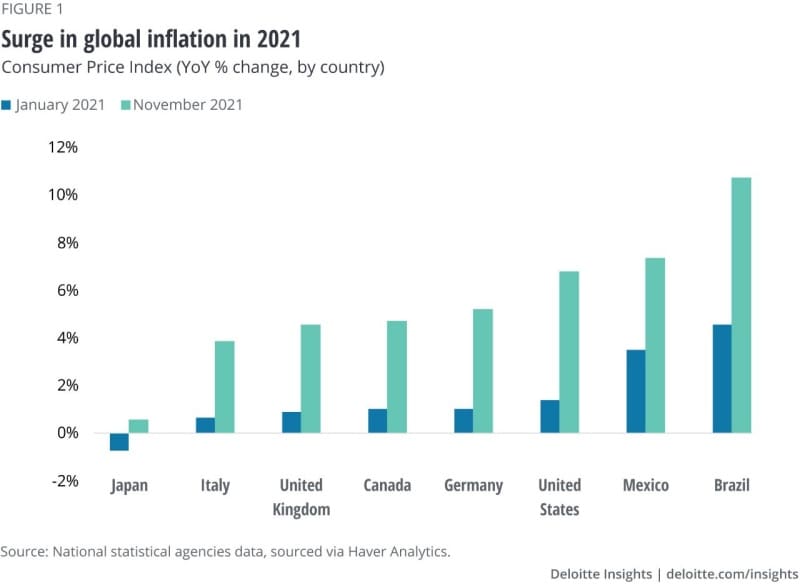
Key Highlights
- Consistent Trend Oversight: Analysis from multiple regions showing shifting inflation patterns from recent peaks to stabilization.
- Regional Dynamics: Eurozone, UK, Canada, Australia, and the US have each experienced unique inflation trajectories influenced by global factors.
- Annual Progression: Data reflects inflation surges during global disruptions with gradual declines as policies take effect.
Understanding Inflation Across Regions
Inflation represents the rate at which the general price levels for goods and services rise, eroding purchasing power over time. It is a key economic indicator tracked by nations using measures like the Consumer Price Index (CPI) or the Harmonized Index of Consumer Prices (HICP). This analysis compares inflation trends on an annual basis across the Eurozone, United Kingdom (UK), Canada, Australia, and the United States (US). Each region’s inflation profile provides insights into both domestic monetary policies and the influence of global economic dynamics.
Overview by Region
It is helpful to first summarize the overall trends observed over recent years, particularly highlights from 2022 through early 2025. Global factors, including supply chain disruptions, energy price increases, and post-pandemic economic recovery, have all influenced these trends. Below, we break down the changes, key economic conditions, and impacts on each region’s inflation.
Eurozone
The Eurozone has experienced a measured approach to controlling inflation. In 2022, the region saw inflation soar, driven by energy costs and supply chain issues that heightened price pressures. However, moving into late 2024 and early 2025, the inflation rate moderated, reaching levels around 2.4% to 2.5%. For example, in January 2025, the inflation rate edged slightly up from 2.4% (December 2024) to about 2.5%, before easing in February 2025.
These relatively low and stable rates reflect the region’s commitment to achieving a target inflation rate around 2%, a challenging target that necessitates careful policy adjustments in the face of external economic shocks.
United Kingdom (UK)
The UK's inflation narrative has been markedly dynamic. Initially impacted by rising energy costs, transportation fares, and daily consumer goods, the inflation rate in January 2025 was reported at approximately 3.0%. The UK had experienced significantly higher peaks in preceding years, and by early 2024, some reports indicated slightly differing figures. However, the recent data pointing to 3.0% during January indicates that the UK saw inflation surge to a 10-month high at that point, reflecting ongoing challenges in stabilizing price increases.
Prior spikes, notably in 2022 when inflation exceeded 10% due to acute post-pandemic and energy cost pressures, have led policymakers to adopt tighter fiscal measures. The recovery from such spikes has been gradual, and varied consumer price dynamics continue to influence the UK's economic landscape.
Canada
Canada presents a slightly different picture. While experiencing significant inflation in the earlier parts of the global crisis, the nation's inflation rate has been steadily declining since its peak. In January 2025, the rate was around 1.9%, slightly increasing from 1.8% in December 2024, reflecting incremental changes driven by temporary measures such as GST/HST adjustments.
Historically, Canadian inflation has been influenced by both domestic policies and external economic conditions. It has maintained a lower rate compared to some regions like the UK and the US, owing to effective monetary policy responses that have tackled inflationary pressures and guided the economy towards stabilization.
Australia
Australia's inflation trajectory has shown a notable pattern of peaking and then easing off as policymakers implement strategic interventions. In early 2025, the inflation rate was around 3.2%, which was reported as the lowest in three years. The easing reflects effective monetary adjustments intended to slowly bring down the inflationary pressures that had built up from previous global supply chain disturbances and domestic factors such as housing costs.
This moderation is a welcome sign for Australia, although inflation remains an area under careful observation to ensure that consumer prices do not again spike unpredictably.
United States (US)
The United States has been contending with relatively higher inflation rates compared to some of its global peers. In January 2025, inflation was reported at approximately 3.0%, albeit with core consumer prices slightly higher at around 3.3%. The persistent inflation in the US is partly attributed to rising accommodative pressures in sectors such as groceries, gas, and the used car market.
Historically, the US experienced a dramatic inflation spike in 2022, reaching nearly 9.1% at one point due to a combination of supply chain disturbances and elevated energy costs. Since then, the Federal Reserve’s rigorous approach to adjusting interest rates has sought to bring these rates down, though inflation remains a challenging issue that continues to require vigilant management.
Annual Comparison and Trends Detail
An annual look at the inflation trends provides important context on how current rates compare to previous years:
Historical Context and 2022 Inflation Surge
Across the board, 2022 was a breakout year when inflation surged significantly across regions. The economic landscape was starkly affected by disruptions in global supply chains, rapidly rising energy prices, and the aftereffects of the pandemic. During this period:
- Eurozone: Faced elevated inflation primarily driven by input cost increases and robust energy price hikes.
- UK: Saw inflation rates exceed moderate levels, with some months recording rates above 10% driven by soaring commodity and energy prices.
- Canada: Witnessed higher inflation, although subsequent policy interventions began mitigating the impacts later.
- Australia: Experienced significant inflation pressures, particularly in areas affected by global supply constraints and domestic demand surges, registering close to 7.8% at its peak.
- US: Recorded one of its highest inflation levels in decades, with peaks around 9.1%, strongly influenced by disrupted supply chains and drastic energy cost increases.
The response during and after 2022 has been critical for all economies. To combat these inflationary pressures, central banks in these regions engaged in tightening monetary policies, raising interest rates, and implementing measures aimed at curbing consumer price inflation, thereby setting the stage for gradual stabilization.
Transformation in 2023 and 2024
In 2023, inflation remained a dominant economic narrative, though signs of stabilization began emerging as governments and central banks adjusted monetary policies. For instance:
- In the Eurozone, inflation began easing from its previous highs, as the region aimed to achieve its 2% target. Improvements in supply chain conditions and energy market stabilization contributed to this trend.
- The UK started reducing its peak inflation rates through aggressive policy measures that targeted energy pricing and improved consumer confidence, although occasional spikes persisted due to external market fluctuations.
- Canada experienced moderate inflation throughout much of the year, with gradual improvement reflecting effective fiscal measures and the natural easing of post-peak pressures.
- In Australia, inflation showed a downward trend supported by government interventions and a generally more stable housing market after the acute peaks witnessed in 2022.
- The US also saw easing trends as the Federal Reserve’s policy adjustments began to take effect, although the rates remained sufficiently above target levels, indicating a slow but steady recovery path.
By 2024 and early 2025, each region manifested its own path towards economic normalization. While some regions like the Eurozone and Canada reached more stabilized inflation rates, other regions, particularly the UK and the US, continued grappling with relatively higher consumer price pressures.
Yearly Inflation Data Comparison Table
The following table offers a concise annual comparison, synthesizing data from several credible sources. It summarizes key inflation estimates and peaks for each region over recent years alongside early 2025 data:
| Region | 2022 (Peak Inflation) | 2023 (Trend) | 2024 (Stabilizing Phase) | Early 2025 (Recent Data) |
|---|---|---|---|---|
| Eurozone | High, driven by energy and supply chain issues | Gradually easing | Approximately 2.4% | 2.4% - 2.5% |
| United Kingdom | Exceeded 10% during some months | Downward trend but volatile | Moderate inflation aims | ~3.0% (10-month high) |
| Canada | Significant surges amid global pressures | Gradual decrease | Approaching target levels | 1.8% - 1.9% |
| Australia | 7.8% at a peak driven by housing and supply issues | Noticeable easing | Sustained moderate rates | Approximately 3.2% |
| United States | Near 9.1% due to supply chain and energy costs | Slow decline after peaks | Above historical targets | Around 3.0% with core rates near 3.3% |
Analyzing Contributing Factors and Policy Responses
External Influences
Inflation across these regions has been driven by global disruptions including:
- Supply Chain Issues: Interrupted supply chains due to geopolitical tensions and pandemic aftershocks led to considerable upward pressure on prices.
- Energy Costs: Rapid increases in energy prices, particularly in 2022, created substantial cost-push inflation scenarios.
- Residual Pandemic Effects: Changing demand patterns and labor market adjustments have also contributed to inflation.
Domestic Policies and Stabilizing Measures
In response to rising inflation, several policy measures have been implemented:
- Monetary Policy Adjustments: Central banks have raised interest rates and adjusted monetary policies to rein in inflation, notably in the US and UK.
- Targeted Fiscal Interventions: Government measures, including temporary tax reliefs (such as Canada’s GST/HST break), have been used to ease consumer costs.
- Supply and Demand Management: Initiatives to streamline supply chains and moderate demand spikes have helped stabilize prices, notably in the Eurozone and Australia.
Each region’s unique macroeconomic conditions and policy responses highlight the complex interplay between global trends and domestic strategies. While central banks remain vigilant about inflation, the varied pace of stabilization offers insights into localized economic resilience and policy effectiveness.
Mathematical Insight: Inflation Rate Change
One way to conceptualize the dynamic is computing the simple percentage change:
For example, if one considers a hypothetical scenario where the inflation rate increases from \( \text{\( \text{I}_\text{prev} \)} \) to \( \text{\( \text{I}_\text{new} \)} \), then the percentage change \( \Delta \) is computed as:
\( \displaystyle \Delta = \frac{\text{\( \text{I}_\text{new} \)} - \text{\( \text{I}_\text{prev} \)}}{\text{\( \text{I}_\text{prev} \)}} \times 100\% \)
Such calculations help assess how current data points reflect the magnitude and pace of inflationary changes in each region over time.
Comparative Analysis Reflection
Evaluating the annual inflation rates among these regions highlights several important insights:
Long-Term Economic Impacts
Sustained periods of inflation, particularly when compounded by external shocks, have long-term economic consequences. For instance, when inflation persists above targeted levels, it can erode savings, alter consumer behavior, and necessitate further monetary tightening. The persistence of elevated inflation in the US and episodic spikes in the UK underscore the importance of vigilant policy adjustments to maintain economic stability.
Regional Variations and Convergence
Despite the differences, many regions show signs of convergence towards more moderate inflation figures. The Eurozone’s consistent rates near its target and Canada’s lower inflation suggest that disciplined monetary policy can gradually restore equilibrium even after extreme conditions. Australia’s measured decline and the progressive easing in the US further show that while recovery paths differ, the overarching goal remains achieving sustainable price stability.
Future Policy Landscape
The outlook moving forward involves creative and responsive fiscal and monetary measures. Policymakers remain optimistic that by integrating lessons learned over the turbulent years, a balanced approach will continue to guide each economy through possible future disruptions while mitigating the adverse impacts of inflation.
References
- Economic Outlook - Atradius
- UK Inflation Comparisons - BBC
- Inflation by Country - Statista
- Euro Area Inflation - Trading Economics
- Bank of Canada Projections
- US CPI Details - CNN
- Australia Inflation Update - MSN
- Eurozone Inflation Trends - Euronews
Recommended Further Research
 assets.kpmg.com
Last updated March 6, 2025