
Unlocking Research Success: Your Definitive Guide to Design, Methods, and Critical Insights
Master the art of research by understanding its foundational blueprint, essential features, and the distinct worlds of qualitative and quantitative approaches.
Knowledge cutoff: 2025-05-12
Key Insights at a Glance
- Research design serves as the essential strategic framework or blueprint that guides the entire research process, from formulating questions to analyzing data, ensuring that study objectives are systematically achieved.
- A robust research design is paramount for producing high-quality, credible results; its key features include clarity of objectives, validity (measuring what's intended), reliability (consistency of results), neutrality (minimizing bias), and feasibility within given constraints.
- Understanding the distinction between qualitative research (exploring in-depth meanings, experiences, and the "why" through non-numerical data) and quantitative research (measuring variables and testing hypotheses with numerical data for generalizable findings) is crucial for selecting appropriate methodologies.
Unveiling the Blueprint: The Concept of Research Design
Research design is the comprehensive master plan or architectural blueprint that meticulously outlines the strategy and methodology for conducting a research study. It functions as a coherent and logical framework that connects all components of the research in a structured manner to effectively address the central research question(s) or test hypotheses. Think of it as the researcher's roadmap, detailing every crucial step from the initial conceptualization of the research problem to the final analysis and interpretation of data.
At its core, research design involves making critical decisions about:
- The type of data required to answer the research questions.
- The sources from which this data will be obtained.
- The specific methods and procedures for collecting the data (e.g., surveys, interviews, experiments).
- The techniques for analyzing the collected data.
- The timeline for the research project.
- The resources (financial, human, material) available and how they will be utilized.
As William Zikmund articulated, "Research design is defined as a master plan specifying the methods and procedures for collection and analyzing the needed information." Similarly, Kerlinger defined it as "the plan, structure, and strategy of investigation conceived so as to obtain answer to research questions and to control variance." Essentially, a well-thought-out research design provides a systematic approach to investigation, ensuring that the study is organized, focused, and capable of yielding meaningful and trustworthy results.
Why a Solid Research Design is Non-Negotiable
The importance of a meticulously crafted research design cannot be overstated; it is the bedrock upon which credible and impactful research is built. A robust design serves multiple critical functions:
- Ensures Clarity and Structure: It provides a clear roadmap, guiding the researcher through each phase of the study and preventing deviations from the core objectives. This structural integrity ensures that all components of the study are logically interconnected and contribute cohesively to answering the research question.
- Guarantees Quality, Reliability, and Validity: A well-executed design is fundamental to producing high-quality data. It enhances the reliability of the findings (consistency of results if the study were repeated) and their validity (accuracy in measuring what the study intends to measure).
- Minimizes Inaccuracy and Bias: By establishing clear procedures, sampling strategies, and controls, a good research design helps to minimize systematic errors and potential biases (e.g., selection bias, observer bias) that could distort the results and compromise the study's integrity.
- Maximizes Efficiency and Resource Management: A planned approach facilitates the optimal use of valuable resources, including time, budget, and personnel. It helps avoid wasted effort and ensures that the research is conducted in the most economical way possible.
- Facilitates Reproducibility and Understanding: A clearly documented research design allows other researchers to understand the methodology, replicate the study to verify findings, or build upon the existing work. This transparency is vital for the advancement of scientific knowledge.
- Supports Ethical Conduct: Incorporating ethical considerations from the outset, such as ensuring participant protection and data confidentiality, is an integral part of a sound research design.
- Enables Control of Variables: Particularly in experimental and quasi-experimental research, the design specifies how variables will be manipulated and controlled, allowing researchers to make more confident causal inferences.
Without a coherent research design, studies risk being unsystematic, leading to ambiguous, unreliable, or irrelevant findings, ultimately undermining the research effort.
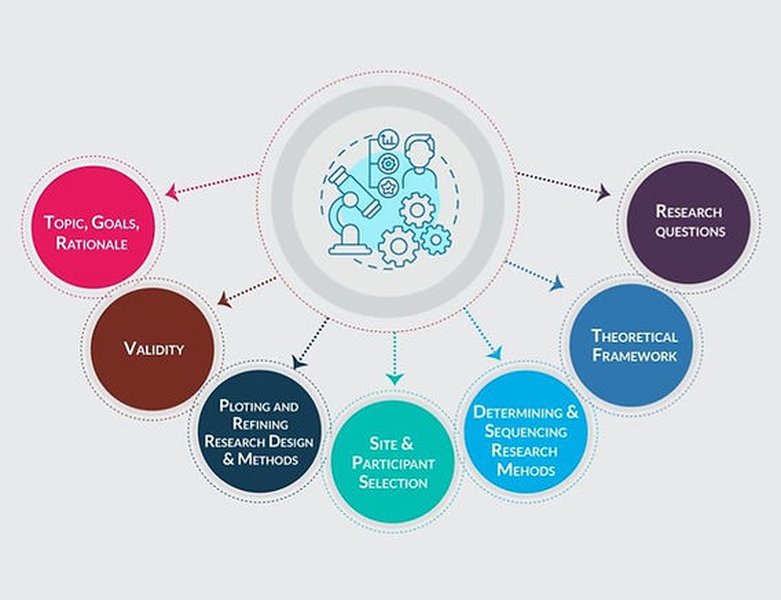
A flowchart illustrating the typical steps involved in the research design process.
Hallmarks of an Effective Research Design
An effective research design is not merely a procedural outline; it is a strategic framework characterized by several key features that collectively contribute to the rigor and credibility of the study. These hallmarks ensure that the research is methodologically sound, ethically responsible, and capable of producing trustworthy and actionable insights.
- Clarity of Objectives and Research Questions: The design must originate from well-defined, specific, and unambiguous research aims, questions, or hypotheses. These form the guiding principles for all subsequent methodological choices.
- Reliability: The design should be structured to yield consistent and stable results if the research were to be replicated under similar conditions. This involves using dependable measurement instruments and standardized procedures.
- Validity: This is crucial. The research design must ensure that the study accurately measures what it purports to measure (internal validity) and that its findings can be truthfully applied to the broader population or context it claims to represent (external validity).
- Neutrality/Objectivity: The design should strive to minimize researcher bias and subjective influences at all stages, from sample selection to data interpretation, ensuring that the findings authentically reflect the phenomenon under investigation.
- Generalizability: Where appropriate (especially for quantitative studies), the design should facilitate the extension of findings from the study sample to a larger population or different settings. This often depends on the sampling strategy and the representativeness of the sample.
- Feasibility: A practical design takes into account the available resources, including time, budget, expertise, and access to participants or data. It must be realistic and achievable within these constraints.
- Flexibility: While providing structure, a good design should also allow for a degree of adaptability to accommodate unforeseen circumstances or emergent insights, particularly in qualitative or exploratory research, without compromising the study's integrity.
- Ethical Propriety: The design must meticulously incorporate ethical principles, ensuring informed consent, confidentiality, anonymity, and the well-being of participants, as well as responsible data handling and reporting.
- Appropriate Methodological Choices: The selected data collection methods (e.g., surveys, interviews, experiments) and data analysis techniques must be suitable for answering the research questions and align with the overall research paradigm (qualitative, quantitative, or mixed-methods).
- Control of Extraneous Variables: In studies aiming to establish cause-and-effect relationships, the design must include mechanisms to control for variables that are not of primary interest but could confound the results.
- Minimization of Error: The design should actively seek to reduce various types of errors, including sampling error, measurement error, and processing error, to enhance the accuracy of the findings.
Visualizing Key Design Attributes
The following chart provides an illustrative assessment of several key attributes of a good research design, rated on their perceived criticality for research success and the typical level of challenge in achieving them effectively in practice. These are generalized perspectives and can vary based on specific research contexts.
This chart illustrates that while attributes like Validity and Ethical Soundness are highly critical, achieving high levels of Generalizability or maintaining perfect Neutrality can be particularly challenging depending on the research context and methods employed.
Navigating the Research Landscape: Qualitative vs. Quantitative Approaches
Research methodologies are broadly categorized into two primary paradigms: qualitative and quantitative research. Each approach has distinct philosophies, aims, methods, and data types, catering to different kinds of research questions and objectives. Understanding their fundamental differences is essential for selecting the most appropriate design for a study.
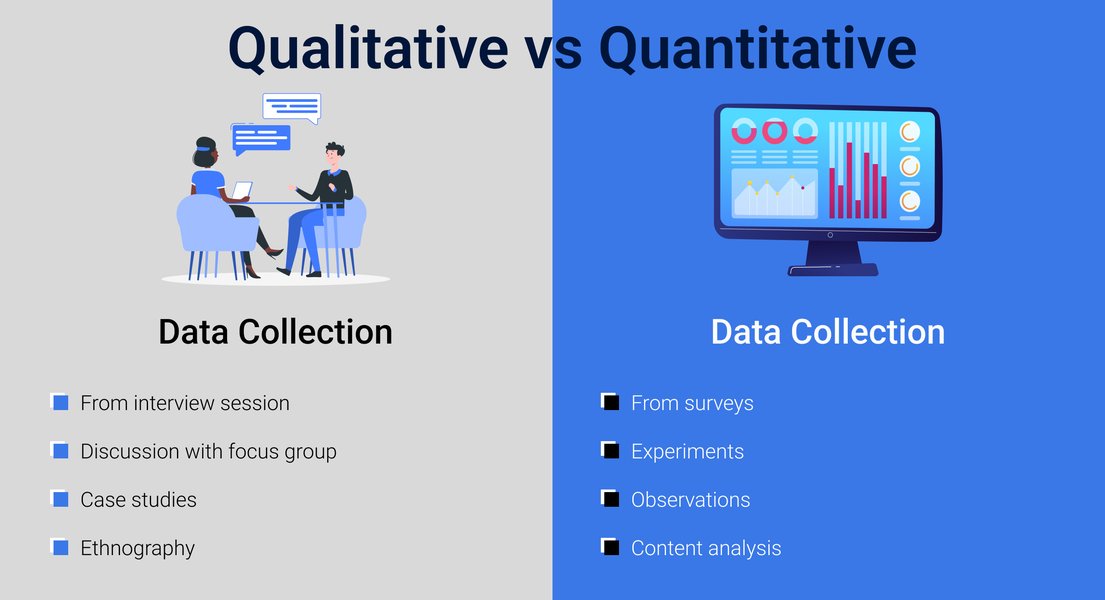
Visual distinction between qualitative (exploring ideas, formulating hypotheses) and quantitative (testing hypotheses, establishing facts) research.
Qualitative Research: Exploring the 'Why' and 'How'
Qualitative research is an exploratory approach focused on gaining an in-depth understanding of underlying reasons, opinions, motivations, experiences, and meanings. It delves into the complexity and richness of human behavior and social phenomena, often seeking to answer "why?" and "how?" questions.
Key Characteristics:
- Focus: Explores concepts, meanings, interpretations, and experiences from the participants' perspectives.
- Data Type: Collects non-numerical data, such as text (interview transcripts, documents), audio recordings, images, or observational notes. The data is descriptive and rich in detail.
- Approach: Often inductive, meaning themes and theories emerge from the data rather than being predetermined. It is flexible and can adapt as the research progresses.
- Sample Size: Typically involves smaller, purposefully selected samples to allow for deep exploration.
Common Methods:
- In-depth Interviews: Open-ended, conversational interviews to explore individual perspectives in detail.
- Focus Groups: Group discussions facilitated by a moderator to gather diverse opinions and interactions on a specific topic.
- Observation (Ethnography): Immersing in a natural setting to observe and understand behaviors, interactions, and culture.
- Case Studies: Intensive investigation of a single individual, group, organization, or event.
- Content/Document Analysis: Systematic examination of texts, media, or documents to identify patterns and themes.
- Narrative Inquiry: Exploring experiences through stories and personal accounts.
Strengths and Limitations:
- Strengths: Provides rich, nuanced, and contextualized insights; explores complex phenomena in depth; flexible and adaptable; valuable for generating hypotheses and understanding lived experiences.
- Limitations: Findings are often not generalizable to larger populations due to small sample sizes and specific contexts; analysis can be subjective and time-consuming; potential for researcher bias to influence interpretations.
Quantitative Research: Measuring the 'What' and 'How Much'
Quantitative research focuses on numerical data and statistical analysis to measure variables, test hypotheses, establish relationships between variables, and make predictions. It aims for objectivity and generalizability of findings, typically answering questions like "what?", "how many?", "how much?", or "how often?".
Key Characteristics:
- Focus: Measures objective facts, tests pre-defined hypotheses, and examines relationships between variables.
- Data Type: Collects numerical data that can be counted, measured, or categorized (e.g., frequencies, scores, ratings, percentages).
- Approach: Often deductive, starting with a theory or hypothesis and collecting data to test it. It employs structured and standardized procedures.
- Sample Size: Typically involves larger, randomly selected samples to ensure representativeness and allow for generalization of findings to the target population.
Common Methods:
- Surveys: Collecting data from a sample using questionnaires with closed-ended or scaled questions.
- Experiments: Manipulating one or more independent variables to determine their effect on a dependent variable, often with control groups.
- Structured Observations: Systematically observing and recording predefined behaviors or events using a coding scheme.
- Analysis of Existing Numerical Data: Using statistical techniques to analyze secondary data sets (e.g., government statistics, company records).
Strengths and Limitations:
- Strengths: Allows for statistical analysis, leading to objective and quantifiable results; findings can often be generalized to larger populations if sampling is appropriate; good for testing hypotheses and establishing cause-and-effect relationships (in experiments); high reliability.
- Limitations: May overlook contextual details and the richness of human experience; can be less flexible; may not capture the "why" behind observed phenomena; potential for biases like sampling bias or omitted variable bias.
This video provides a foundational overview of the key differences between qualitative and quantitative research approaches, highlighting their respective methodologies and applications.
Qualitative vs. Quantitative: A Comparative Glance
While distinct, qualitative and quantitative research are not mutually exclusive and can often be used complementarily in a mixed-methods approach. Quantitative research can identify patterns and trends, while qualitative research can delve deeper to understand the reasons and context behind those trends. The table below summarizes their key differences:
| Feature | Qualitative Research | Quantitative Research |
|---|---|---|
| Primary Focus | Understanding meanings, experiences, concepts, context, the "why" and "how" | Measuring variables, testing hypotheses, identifying patterns, relationships, the "what," "how much/many" |
| Type of Questions | Exploratory, open-ended (e.g., "How do users experience...?", "What are the perceptions of...?") | Specific, confirmatory (e.g., "What is the effect of X on Y?", "Is there a significant difference between Group A and B?") |
| Data Type | Non-numerical (text, audio, images, observations) | Numerical (counts, measurements, ratings, scores) |
| Data Collection Methods | Interviews, focus groups, observations, case studies, ethnography, document analysis | Surveys (closed-ended), experiments, structured observations, analysis of statistical data |
| Sampling | Smaller, purposeful, non-probability sampling | Larger, often random, probability sampling for generalizability |
| Data Analysis | Interpretation of themes, patterns, narratives; inductive | Statistical analysis, mathematical modeling; deductive |
| Researcher's Role | Often deeply involved, part of the instrument | More detached, objective observer |
| Strengths | In-depth understanding, rich insights, flexibility, context-sensitive | Objectivity, generalizability, statistical power, replicability, hypothesis testing |
| Limitations | Subjectivity, limited generalizability, time-intensive, potential for researcher bias | May miss context/nuance, less depth on "why," can be restrictive |
Choosing between qualitative, quantitative, or a mixed-methods approach depends heavily on the research question, the objectives of the study, the nature of the phenomenon being investigated, and practical considerations like resources and time.
Mapping the Domain: A Mindmap of Research Design
To provide a holistic overview, the following mindmap illustrates the core components of research design and its interconnected concepts, including its fundamental nature, critical importance, the hallmarks of a superior design, and the two major methodological approaches—qualitative and quantitative research.
& Analysis"] id1c["Answers Research Questions"] id2["Importance"] id2a["Ensures Validity & Reliability"] id2b["Provides Structure"] id2c["Maximizes Efficiency"] id2d["Minimizes Bias"] id2e["Enhances Reproducibility"] id3["Features of Good Design"] id3a["Clarity of Objectives"] id3b["Validity & Reliability"] id3c["Neutrality/Objectivity"] id3d["Generalizability"] id3e["Feasibility"] id3f["Ethical Soundness"] id3g["Flexibility"] id4["Methodological Approaches"] id4A["Qualitative Research"] id4A1["Focus: Understanding 'Why' & 'How'"] id4A2["Data: Non-numerical (text, images)"] id4A3["Methods: Interviews, Focus Groups, Observation"] id4A4["Analysis: Thematic, Interpretive"] id4B["Quantitative Research"] id4B1["Focus: Measuring 'What' & 'How Much'"] id4B2["Data: Numerical (statistics)"] id4B3["Methods: Surveys, Experiments, Structured Observation"] id4B4["Analysis: Statistical"] id4C["Mixed Methods"] id4C1["Combines Qualitative &
Quantitative"] id4C2["Provides Comprehensive Understanding"]
This visual map helps to contextualize how these different facets of research design interrelate to form a comprehensive strategy for scholarly inquiry.
Frequently Asked Questions (FAQ)
What is the primary goal of a research design? +
The primary goal of a research design is to provide a structured and systematic plan that enables researchers to effectively answer their research questions or test their hypotheses. It aims to ensure that the evidence obtained is relevant, reliable, and valid, thereby maximizing the credibility and utility of the research findings.
Can a study use both qualitative and quantitative methods? +
Yes, absolutely. This is known as a mixed-methods research design. It involves collecting and analyzing both qualitative (non-numerical) and quantitative (numerical) data within a single study. This approach can provide a more comprehensive understanding of a research problem by leveraging the strengths of both methodologies, allowing for both broad statistical insights and deep contextual understanding.
Why is neutrality important in research design? +
Neutrality, or objectivity, is important in research design because it helps to minimize researcher bias that could influence the study's procedures, data collection, analysis, or interpretation of results. A neutral design aims to ensure that the findings are a genuine reflection of the phenomenon being studied rather than the researcher's preconceived notions, assumptions, or preferences, thereby enhancing the trustworthiness and credibility of the research.
How does research design impact the credibility of findings? +
Research design directly impacts the credibility of findings by determining the rigor and appropriateness of the methods used. A well-thought-out design that addresses potential biases, ensures valid and reliable measurements, employs suitable sampling techniques, and uses appropriate analytical procedures will produce findings that are more believable, trustworthy, and defensible. Conversely, a flawed design can lead to erroneous conclusions, undermining the entire research effort.
Recommended Further Exploration
- What are the specific types of research designs available, like experimental, correlational, and descriptive, and when is each most appropriately used?
- How can qualitative and quantitative approaches be effectively integrated into a mixed-methods research design to gain richer insights?
- What are the key ethical considerations that researchers must address at each stage of the research design process?
- What common challenges do researchers face when implementing their research designs, and what strategies can be used to overcome them?
References
Last updated May 12, 2025