
Literature Review: Risk and Return Analysis
Exploring The Dynamics of Investment Strategies and Portfolio Performance
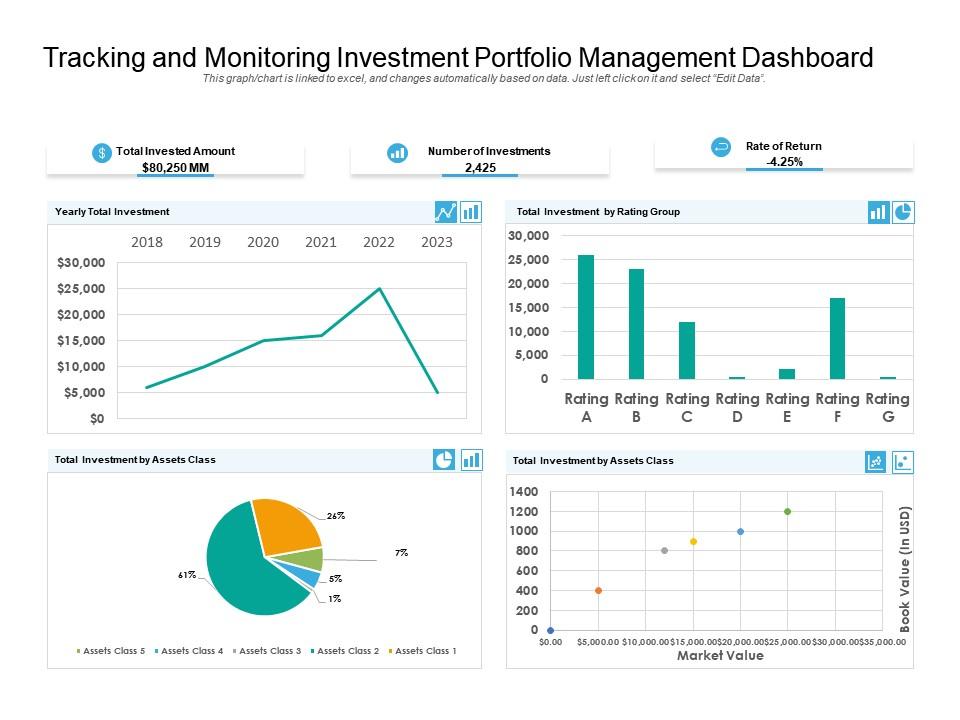
Key Highlights
- Risk-Return Relationship: Understand the fundamental principle that higher risk typically offers the potential for higher returns while also carrying greater potential losses.
- Mean-Variance and Beyond: Embrace core models like Markowitz’s mean-variance analysis along with modern risk measures such as VaR and CVaR for optimal portfolio construction.
- Performance Metrics and Empirical Evidence: Evaluate portfolios using Sharpe ratio, Treynor ratio, and Jensen’s Alpha while drawing insights from extensive empirical research across different market conditions.
Introduction
The analysis of risk and return is central to portfolio management and investment decision-making. For a research paper addressing this subject, a comprehensive review of the literature must consider the interplay between various types of risk, the expected returns from investment portfolios, and the evaluation metrics that reconcile these two elements. This review synthesizes insights from seminal theories such as the Capital Asset Pricing Model (CAPM) and Harry Markowitz’s modern portfolio theory, along with contemporary research findings that enhance our understanding of risk adjustments and empirical performance measures.
Core Concepts in Risk and Return Analysis
Risk-Return Relationship
At the foundation of investment theory lies the well-established risk-return relationship. The premise is simple: to compensate for taking on additional risk, investors expect a proportionate higher return. This notion is formalized in models such as the Capital Asset Pricing Model (CAPM), which posits that an asset’s expected return should equal the risk-free rate plus a risk premium proportional to the asset’s systematic risk. Empirical studies across various asset classes have validated, albeit with complexities, this positive correlation between risk and reward.
Mean-Variance Analysis and Portfolio Optimization
Introduced by Harry Markowitz in the early 1950s, mean-variance analysis has profoundly influenced modern portfolio theory. This method seeks to identify an efficient portfolio that minimizes risk (quantified as variance) for a given level of return or, alternatively, maximizes return for a specified level of risk. The efficient frontier concept derived from this analysis guides investors in selecting portfolios that best match their risk tolerance and return objectives. Despite its simplicity and elegance, researchers have noted limitations, prompting the development of alternative measures and multi-factor models that better capture market realities.
Advanced Risk Measures
While variance and standard deviation have been the traditional metrics to capture portfolio risk, they do not always reflect the full spectrum of potential market scenarios, particularly the probability of extreme losses. Modern risk assessments incorporate measures such as:
Value at Risk (VaR) and Conditional Value at Risk (CVaR)
VaR estimates the maximum expected loss over a specific period at a given confidence level, whereas CVaR provides the expected loss exceeding the VaR threshold. These metrics help investors grasp the tail risks which are otherwise not apparent in variance-based analyses.
Semi-Deviation and Downside Risk Metrics
These measures focus on the downside volatility of returns – that is, the risk associated with returns falling below a target or expected level. They are particularly useful for understanding the performance in adverse market conditions, ensuring that risk assessments are aligned with investor concerns.
Evaluation Metrics and Portfolio Performance
Performance Metrics
Robust evaluation of investment portfolios requires techniques that not only assess returns but also adjust for the risks taken to achieve these returns. Key performance metrics include:
Sharpe Ratio
The Sharpe ratio measures excess return per unit of volatility (or total risk) and is widely used due to its simplicity. It helps in comparing the risk-adjusted performance of different portfolios.
Treynor Ratio
This ratio, similar to the Sharpe ratio, adjusts returns, but in relation to systematic risk (beta) rather than total risk. It provides a nuanced view particularly useful when comparing portfolios with different levels of market exposure.
Jensen’s Alpha
Jensen’s Alpha quantifies the excess return of a portfolio over the expected return predicted by CAPM. This metric is key in evaluating the skill of portfolio managers beyond the mere acceptance of market risk.
Empirical Studies and Sectoral Analyses
A growing body of empirical literature supports the fundamental concept of a positive risk-return trade-off, yet it also highlights the complexities introduced by various market conditions, asset classes, and macroeconomic variables. Studies validate that while higher risk tends to generate higher returns on average, the relationship is not strictly linear or invariant across different market environments.
Sectoral analysis further refines our understanding by examining risk and return dynamics in specific investment sectors, such as technology, healthcare, or consumer goods. This detailed analysis allows investors to tailor their investment strategies by identifying unique sector-specific opportunities and risks, hence enabling better diversification.
Integrative Analysis: Combining Theory with Practice
Investor Risk Tolerance and Behavioral Considerations
It is critical to consider that the risk-return analysis is not only a mathematical exercise but also a behavioral phenomenon. Individual investor risk tolerance varies widely, dictated by factors such as market sentiment, financial goals, and psychological biases. Research in behavioral finance has highlighted inconsistencies between the rational expectations from models like CAPM and real-world investor behavior. Understanding risk preferences and incorporating them into portfolio construction can lead to more personalized and effective investment strategies.
Combining Quantitative and Qualitative Analyses
For a holistic review, modern literature advocates for bridging quantitative approaches (like mean-variance optimization) with qualitative factors including geopolitical events, regulatory changes, and market sentiment fluctuations. This integrated approach not only fortifies portfolio resilience but also allows for adaptive strategies that respond to unexpected market conditions.
Comparative Overview of Investment Portfolios
Comparative Table of Risk and Return Metrics
| Metric/Method | Purpose | Key Insights |
|---|---|---|
| CAPM | Estimate expected return based on systematic risk | Links risk premium to market beta |
| Mean-Variance Analysis | Portfolio optimization through variance minimization | Defines the efficient frontier |
| Sharpe Ratio | Risk-adjusted return based on total risk | Compares excess return per unit volatility |
| Treynor Ratio | Risk-adjusted return considering systematic risk | Isolates market risk impact |
| Jensen’s Alpha | Measures investment performance over CAPM predictions | Assess portfolio manager effectiveness |
| VaR and CVaR | Quantify potential losses under extreme conditions | Identify tail risk exposure |
| Sectoral Analysis | Analyze specific industry risks and returns | Facilitates refined diversification |
Contributions of the Literature
Foundation and Evolution
Foundational research, beginning with Markowitz’s efficient frontier and extending through the development of the CAPM, has established a well-defined framework for assessing risk and return. Over time, studies have critiqued and enhanced these early models to incorporate additional dimensions of risk—such as liquidity and operational risk—that provide a more complete picture of the investment landscape.
Empirical Evidence and Market Dynamics
Empirical research has played a crucial role in validating theoretical models and highlighting their limitations. In varying economic climates—ranging from periods of bull market exuberance to times of financial crisis—studies have demonstrated that the relationship between risk and return is dynamic. The literature emphasizes that while traditional risk measures remain relevant, dynamic models that adjust to evolving market conditions perform better in real-world scenarios.
Guidance for Future Research
Ongoing developments in data analysis and computational finance continue to push the envelope in risk-return studies. Future research is expected to explore multi-dimensional models which incorporate macroeconomic variables, investor sentiments, and other qualitative factors, further refining our understanding of portfolio performance in diverse market scenarios.
Integration of Quantitative Tools and Risk Management Strategies
Practical Applications in Portfolio Construction
For practitioners, the literature provides both a theoretical framework and tangible tools to design and manage portfolios effectively. Investment strategies based on quantitative analyses are often enhanced by risk management techniques that include continuous portfolio rebalancing, diversification, and scenario analysis. By combining optimization models with modern risk measures, investors are better equipped to navigate market volatility.
Expansion Beyond Traditional Models
In addition to relying solely on traditional metrics, modern studies advocate integrating alternative risk measures and machine learning techniques to capture non-linear market behaviors. This approach not only improves forecasting accuracy but also provides a more robust foundation for making investment decisions under uncertainty.
Caveats and Considerations
It is important to recognize that while substantial progress has been made in modeling the risk-return trade-off, researchers and practitioners alike must remain cautious. Market anomalies, unanticipated macroeconomic shocks, and behavioral biases can all challenge the assumptions behind quantitative models. Thus, an iterative approach that combines quantitative analysis with qualitative judgment is essential to adapt to the ever-changing financial landscape.
References
- Risk and Return - How to Analyze Risks and Returns in Investing - WallStreetOasis
- Portfolio Performance Evaluation | CFA Institute - CFA Institute
- Portfolio Performance - Financial Edge - FE Training
- Risk-Return Analysis: The Theory and Practice of Rational Investing - CFA Institute
-
Assessing the risk-return trade-off in loan portfolios - ScienceDirect
Recommended Further Queries

Last updated March 22, 2025