
The Marvel of Modern Rocketry: Powering Exploration
Understanding How Rockets Work and Their Role in Space Exploration
Rockets are incredible feats of engineering that enable humanity to venture beyond Earth's atmosphere. They operate on fundamental principles of physics to generate the immense force needed to overcome gravity and reach the vacuum of space. This exploration has unveiled countless mysteries of the cosmos and continues to push the boundaries of our knowledge.
Key Insights into Rocketry and Space Exploration
- Rockets utilize Newton's third law of motion: By expelling hot gas at high velocity in one direction, a rocket is propelled in the opposite direction. This action-reaction principle allows them to function even in the vacuum of space where there is no air to push against.
- Rocket engines carry their own oxidizer: Unlike jet engines that use atmospheric oxygen for combustion, rockets must carry their own oxygen supply (an oxidizer) to burn their fuel. This is crucial for operation outside of Earth's atmosphere.
- Space exploration has a rich history: From the launch of the first artificial satellite, Sputnik 1, to the first human steps on the Moon during the Apollo 11 mission, space exploration has achieved significant milestones driven by international collaboration and technological advancements.
The Fundamental Principles of Rocket Propulsion
At its core, a rocket is a vehicle that uses jet propulsion to accelerate. This process relies on a controlled explosion or rapid chemical reaction within a combustion chamber. Fuel and an oxidizer are mixed and ignited, producing hot, expanding gases. These gases are then expelled at high speed through a nozzle at the rear of the rocket.
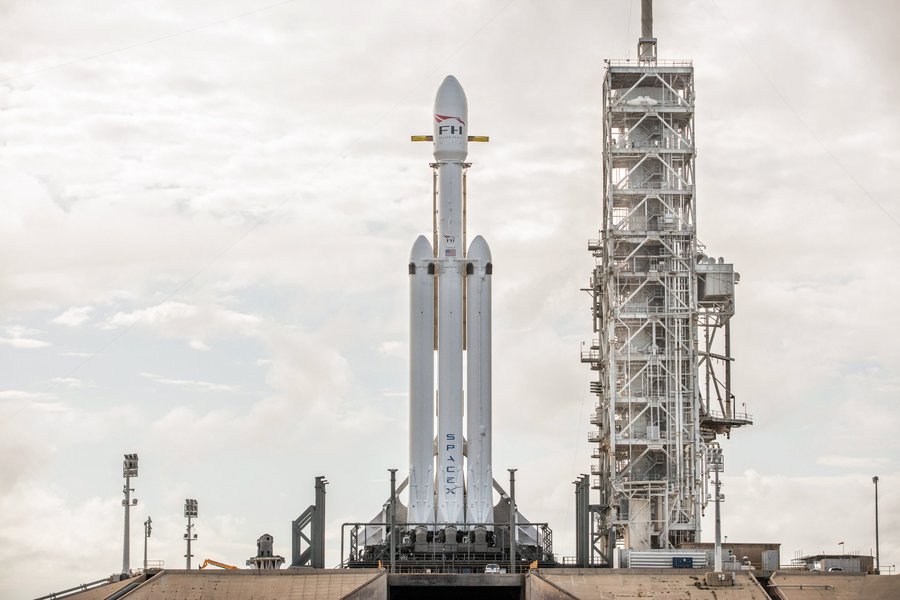
A powerful rocket poised for launch.
The force generated by expelling these gases is known as thrust. According to Newton's third law of motion, for every action, there is an equal and opposite reaction. The action is the expulsion of hot gas backward, and the reaction is the force pushing the rocket forward. This principle is beautifully illustrated by imagining yourself on a skateboard throwing a heavy ball forward; you would move backward in response.
It's a common misconception that rockets need something to push against, like air. However, rockets work most efficiently in the vacuum of space because there is no atmospheric pressure to impede the exhaust gases. The force comes solely from the momentum change of the expelled mass.
Fuel and Oxidizer: The Power Behind the Thrust
The propellants used in rockets are typically a combination of fuel and an oxidizer. Common fuels include liquid hydrogen or kerosene, while oxidizers can be liquid oxygen or nitrogen tetroxide. The specific combination depends on the rocket's design and mission requirements. The chemical reaction between the fuel and oxidizer releases a tremendous amount of energy, heating the gases to extremely high temperatures and causing them to expand rapidly.
The Combustion Process
Within the combustion chamber, the fuel and oxidizer are precisely mixed and ignited. This creates a controlled, high-pressure environment. The resulting hot gases are then directed through a convergent-divergent nozzle. The nozzle's shape is critical; it accelerates the gases to supersonic speeds, maximizing the thrust produced.
Staging: Reaching Higher Velocities
To reach orbital velocities or travel to other celestial bodies, rockets often employ multiple stages. Each stage contains its own engines and propellant supply. As a stage expends its fuel, it is jettisoned, reducing the overall mass of the rocket. This allows the subsequent stages to accelerate the remaining mass more efficiently, ultimately enabling the payload to reach its desired trajectory.
The Historical Journey of Space Exploration
Humanity's fascination with the cosmos is ancient, but the era of practical space exploration began in the 20th century. The development of powerful rockets was the key enabler. The Space Race between the United States and the Soviet Union spurred rapid advancements in rocket technology and led to several historic firsts.
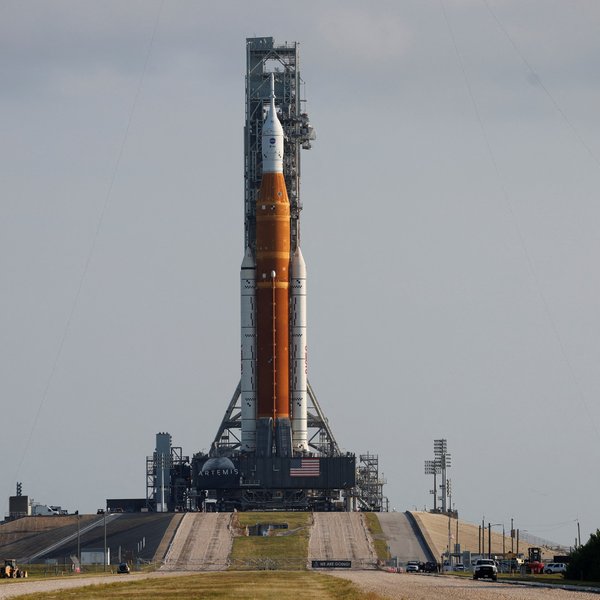
NASA's Space Launch System (SLS) rocket.
Early Milestones
The launch of the Soviet Union's Sputnik 1 in 1957 marked the beginning of the Space Age. This small satellite, the first artificial object to orbit Earth, demonstrated the feasibility of reaching space. This was followed by another monumental achievement by the Soviet Union: the first human in space, Yuri Gagarin, in 1961.
The Moon Landing and Beyond
The United States' Apollo program aimed to land humans on the Moon. This ambitious goal was realized with the Apollo 11 mission in 1969, when Neil Armstrong became the first person to walk on the lunar surface. This event was a defining moment in human history and a testament to what is possible with dedicated scientific and engineering effort.
International Collaboration
Following the intense competition of the Space Race, there has been a growing trend towards international collaboration in space exploration. The International Space Station (ISS), a habitable artificial satellite in low Earth orbit, is a prime example of this cooperation, involving multiple countries working together on scientific research and technological development.
Robotic Exploration
While human spaceflight captures significant attention, robotic missions have played a crucial role in exploring our solar system. Probes and rovers have visited planets, moons, asteroids, and comets, sending back invaluable data and images that have transformed our understanding of these celestial bodies. Missions like the Mars rovers (e.g., Curiosity) have searched for signs of past or present life and analyzed the Martian environment.
The Future of Space Exploration
The future of space exploration is filled with exciting possibilities. Plans include returning humans to the Moon with programs like Artemis, and eventually sending crewed missions to Mars. Private companies are also playing an increasingly significant role, developing new rockets and spacecraft and aiming to make space access more affordable and frequent. Asteroid mining and further exploration of the outer solar system are also on the horizon.
Where to Witness a Rocket Launch
For those interested in experiencing the power and spectacle of a rocket launch firsthand, there are several active launch sites around the world. These sites are carefully chosen based on factors such as proximity to the equator (which can provide a boost from Earth's rotation) and safety considerations.
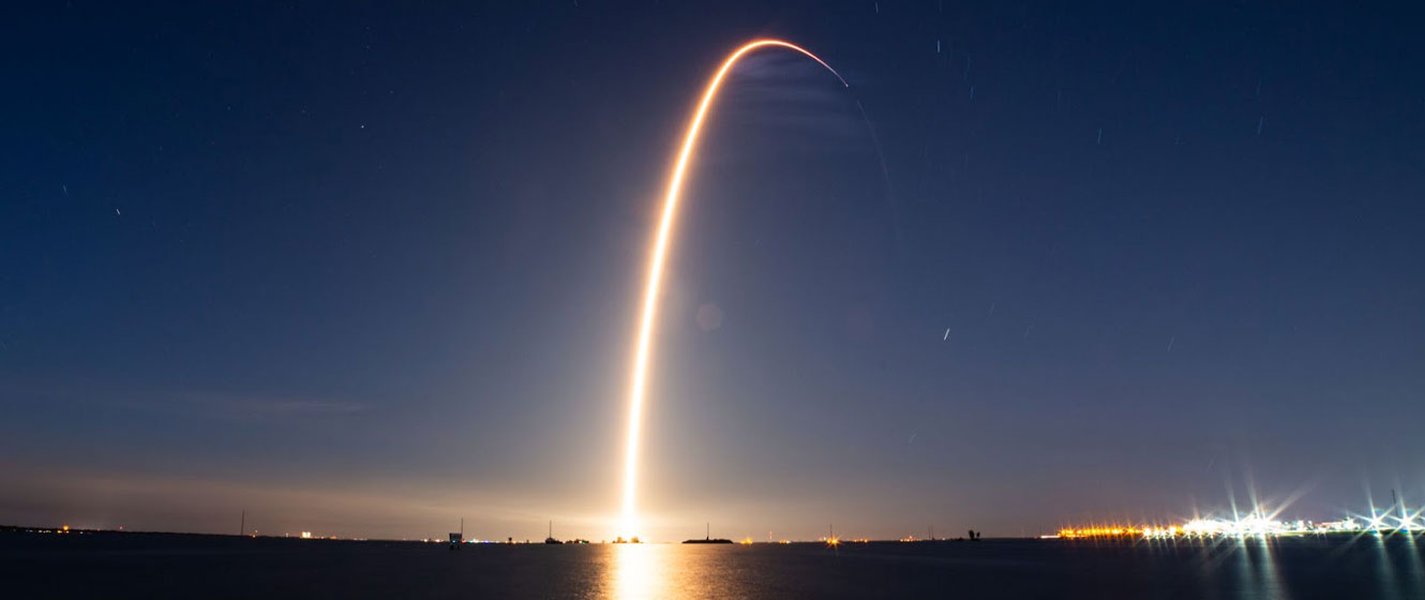
The impressive sight of a rocket launch.
Notable Launch Sites
Some of the most well-known launch sites include:
-
Kennedy Space Center, Florida, USA: A historic site for NASA missions, including the Apollo program and Space Shuttle launches. It remains a major hub for launches, including those by SpaceX and ULA.
-
Vandenberg Space Force Base, California, USA: Primarily used for launching satellites into polar orbits.
-
Baikonur Cosmodrome, Kazakhstan: The world's oldest and largest operational space launch facility, historically used by the Soviet Union and now by Russia.
-
Guiana Space Centre, French Guiana: Operated by the European Space Agency (ESA), its equatorial location makes it advantageous for certain types of launches.
-
Jiuquan Satellite Launch Center, China: One of China's primary launch sites.
Staying Informed About Launches
Several resources provide up-to-date schedules and information on upcoming rocket launches. Websites and apps dedicated to spaceflight tracking offer details on launch dates, times, mission objectives, and launch providers.
Frequently Asked Questions About Rockets and Space Exploration
How are rockets different from airplanes?
The primary difference lies in how they generate thrust. Airplanes use air-breathing engines (like jet engines) that rely on drawing in atmospheric oxygen for combustion. Rockets, on the other hand, carry their own oxidizer, allowing them to operate in the vacuum of space where there is no air.
Can rockets work in space where there is no air?
Yes, rockets work very effectively in space. They do not need air to push against. Their propulsion is based on the principle of action and reaction, expelling mass in one direction to move in the opposite direction.
What is the purpose of space exploration?
Space exploration serves multiple purposes, including increasing our scientific knowledge of the universe, inspiring future generations, developing new technologies with applications on Earth, and potentially finding resources and habitats beyond our planet.
What are some notable achievements in space exploration?
Key achievements include the first artificial satellite (Sputnik 1), the first human in space (Yuri Gagarin), the first human landing on the Moon (Apollo 11), the deployment of space telescopes (like the Hubble Space Telescope), and the operation of the International Space Station.
Are private companies involved in space exploration?
Yes, private companies like SpaceX and Blue Origin are increasingly active in space exploration. They are developing reusable rockets, launching satellites, and aiming to provide commercial spaceflight services.
Learn More About Rocket Launches
For those interested in watching a rocket launch, several resources provide live coverage and information. Here is an example of a recent launch:
This video shows a SpaceX Falcon 9 rocket launching from Cape Canaveral, carrying Starlink satellites. It provides a visual representation of the powerful thrust and rapid ascent of a modern rocket as it begins its journey to orbit.
References
Last updated April 20, 2025