
Unveiling the Hurdles: What Currently Restrains Solar Power in the Final Frontier?
An in-depth look at the technological, economic, and environmental challenges limiting the full potential of space-based solar panels today.
Solar panels in space, a concept that promises abundant and continuous energy, are pivotal for powering satellites, space stations, and future deep-space missions. Furthermore, the ambitious idea of Space-Based Solar Power (SBSP) envisions vast solar arrays in orbit, collecting sunlight and beaming it down to Earth. However, despite the constant and more intense sunlight available beyond our atmosphere, several significant limitations currently curtail their widespread application and efficiency as of May 2025. These challenges span from the harsh realities of the space environment to the colossal costs and engineering feats required.
Key Takeaways: The Core Constraints
- The Gauntlet of Space: Solar panels face relentless bombardment from radiation and micrometeoroids, alongside extreme temperature shifts, leading to accelerated degradation compared to their terrestrial counterparts.
- The Cost of Ascent: Launching materials into orbit is extraordinarily expensive, making the deployment of large-scale solar arrays, especially for SBSP, economically challenging.
- Bridging the Cosmic Divide: For Space-Based Solar Power, efficiently and safely transmitting vast amounts of energy from orbit to Earth across thousands of kilometers remains a formidable technological barrier.
The Unforgiving Space Environment: A Trial by Fire (and Ice, and Radiation)
One of the most significant sets of limitations stems directly from the hostile conditions prevalent in space. Unlike on Earth, where the atmosphere provides a protective blanket, solar panels in orbit are exposed to the raw, unfiltered harshness of space.
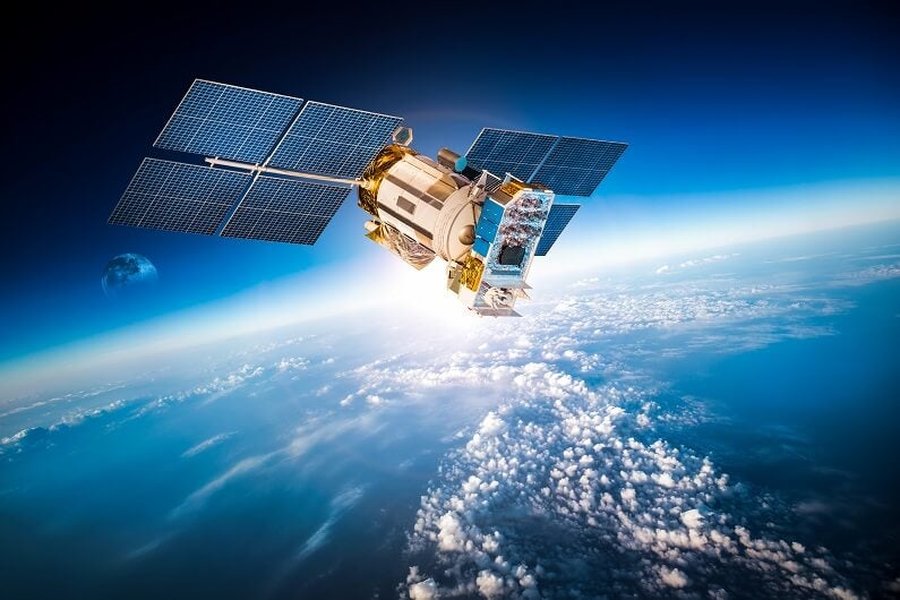
An artist's depiction of a satellite equipped with solar arrays orbiting the Earth, highlighting the direct exposure to space.
Radiation Ravages
The Invisible Wear and Tear
Space is permeated by various forms of radiation, including intense solar radiation (UV, X-rays), charged particles from the solar wind (protons, electrons), and galactic cosmic rays. This constant bombardment degrades the photovoltaic materials within solar cells over time. The cumulative damage reduces their efficiency in converting sunlight to electricity and shortens their operational lifespan. Some estimates suggest that space solar panels can degrade up to 8 times faster than those on Earth.
Micrometeoroids and Orbital Debris (MMOD)
Tiny Projectiles, Big Problems
Spacecraft and their solar arrays are under constant threat from tiny particles of rock, dust (micrometeoroids), and man-made orbital debris traveling at hypervelocities (tens of thousands of kilometers per hour). Even small impacts can cause significant damage, creating craters on the panel surface, severing electrical connections, or, in rarer cases, leading to more substantial failures. Protecting against this threat adds weight and complexity to panel design.
Extreme Thermal Cycling
The Hot and Cold Reality
As a spacecraft orbits, it can rapidly transition from direct, intense sunlight to the cold shadow of a celestial body (like Earth or the Moon). This results in extreme temperature fluctuations, potentially ranging from over +100°C to below -150°C within short periods. Such thermal cycling induces mechanical stress in the solar panel materials due to expansion and contraction, which can lead to fatigue, warping, delamination of layers, and failure of solder joints over time.
Economic and Logistical Nightmares: The Price of Power from Above
Beyond the environmental challenges, the economic and logistical hurdles associated with deploying and operating solar panels in space are immense, particularly for ambitious projects like Space-Based Solar Power.
The Sky-High Cost of Launch
Weighty Matters
Currently, launching mass into orbit is exceptionally expensive. Costs can run into thousands, if not tens of thousands, of dollars per kilogram. Since solar arrays, especially those capable of generating substantial power, are inherently massive, the launch costs become a primary economic barrier. For instance, a single SBSP satellite capable of powering a city could weigh many thousands of tonnes, potentially requiring an order of magnitude more launches than the International Space Station. Some analyses suggest that launching SBSP systems is about 100 times more expensive than competitive terrestrial solar alternatives.
Manufacturing, Assembly, and Deployment Complexity
Building in the Void
Manufacturing space-grade solar cells, which need to be highly efficient and durable, is a costly process. Materials must withstand the harsh space environment, adding to the expense. For large-scale systems like SBSP, which could span kilometers, in-orbit assembly is a necessity. This involves complex robotic operations or astronaut-led extravehicular activities (EVAs), both of which are technologically demanding, inherently risky, and add significantly to the overall project cost and timeline. The precision required for deploying and maintaining these vast structures is also a major engineering challenge.
Maintenance and Repair Challenges
Out of Reach, Out of Luck?
Once deployed, especially in higher orbits or deep space, maintaining and repairing solar arrays is incredibly difficult and often prohibitively expensive. While robotic servicing capabilities are advancing, they are not yet mature enough for complex, routine maintenance of vast solar farms in space. This means that any degradation or damage often leads to a permanent loss of performance.
Technical Performance and Transmission Hurdles
Even if panels are successfully deployed, inherent technological limitations affect their performance and, in the case of SBSP, the ability to get power back to Earth.
Solar Cell Conversion Efficiency
Not All Sunlight Turns to Power
While advanced multi-junction solar cells used in space applications can achieve efficiencies of around 30% (compared to about 22-23% for high-end terrestrial panels), a significant portion of solar energy is still lost as heat and unconverted light. This inherent inefficiency means that larger surface areas are required to generate a given amount of power, exacerbating the mass, launch cost, and deployment complexity issues.
Surface Area and Mass Constraints
The Spacecraft Diet
Spacecraft are always on a "mass budget." Every kilogram launched into space costs a premium. To generate sufficient power, especially for energy-intensive missions or for SBSP, very large solar panel surface areas are needed. Balancing the need for power with the strict mass and volume constraints of launch vehicles is a constant design challenge. This also impacts the specific power (watts generated per kilogram of the array), a key metric for space power systems.
The Challenge of Wireless Power Transmission (for SBSP)
Beaming Energy Across the Cosmos
For Space-Based Solar Power to be viable, the energy collected in orbit must be transmitted wirelessly to receiving stations (rectennas) on Earth. This is typically envisioned using microwaves or lasers.
- Efficiency Losses: Significant energy losses can occur during the conversion of DC electricity to microwaves/lasers, during transmission through the atmosphere (though less than sunlight absorption by the atmosphere for ground panels), and during reconversion to electricity at the rectenna.
- Atmospheric Interference: While microwaves can penetrate clouds, factors like heavy rain can still cause some attenuation.
- Antenna Size and Pointing: The transmitting antenna in space would need to be very large (potentially kilometers in diameter for microwaves) to form a focused beam. The receiving rectenna on Earth would also be vast, covering many square kilometers. Maintaining precise pointing of the energy beam across distances of 36,000 km (for geostationary orbit) is a non-trivial engineering feat.
- Safety and Environmental Concerns: The potential biological and environmental effects of beaming high-intensity microwaves or lasers through the atmosphere and near the Earth's surface require extensive research and mitigation strategies to ensure safety.
Distance from the Sun: A Fading Resource
Beyond Jupiter's Realm
The intensity of sunlight decreases with the square of the distance from the Sun. For missions venturing into the outer solar system, beyond the orbit of Jupiter, solar radiation becomes too weak for current solar panel technology and spacecraft mass limitations to produce sufficient power. Such missions typically rely on alternative power sources like Radioisotope Thermoelectric Generators (RTGs).
Visualizing the Limitations: A Comparative Look
The following chart provides an opinionated analysis comparing several key limiting factors for space solar panels, particularly in the context of large-scale deployment or SBSP. On this scale, a higher score (towards 10) indicates a more severe limitation, while a lower score (towards the minimum of 2) suggests it is less of a constraint or more manageable with current/near-future technology.
This chart visually underscores that while panel efficiency itself is a moderate concern, the costs associated with launch, the challenges of power transmission for SBSP, and the complexities of assembling large structures in space currently pose the most significant barriers.
A Tangled Web of Challenges: Mindmap Overview
The limitations facing space solar panels are interconnected. This mindmap provides a holistic view of these challenges, branching out from the core problem to illustrate the various facets involved:
Space Solar Panels"] id1["Environmental Factors"] id1a["Radiation Damage (Solar & Cosmic Rays)"] id1b["Micrometeoroids & Orbital Debris Impacts"] id1c["Extreme Thermal Cycling (Temperature Swings)"] id1d["Faster Degradation Rate (vs. Terrestrial)"] id1e["Atomic Oxygen Erosion (LEO)"] id2["Economic & Logistical Hurdles"] id2a["Prohibitively High Launch Costs"] id2b["Complex & Costly In-Orbit Manufacturing & Assembly"] id2c["Massive Scale for SBSP (Kilometer-sized structures)"] id2d["Difficult & Expensive Maintenance & Repair"] id2e["High Cost of Space-Grade Materials"] id3["Technical & Performance Constraints"] id3a["Solar Cell Conversion Efficiency Limits (not 100%)"] id3b["Wireless Power Transmission (SBSP Challenges)"] id3b1["Efficiency Losses (Conversion & Atmospheric)"] id3b2["Large Antenna Sizes (Space & Ground)"] id3b3["Beam Pointing Accuracy & Stability"] id3b4["Safety & Environmental Impact of Beam"] id3c["Large Surface Area & Mass Requirements"] id3d["Weak Solar Intensity in Deep Space (Beyond Jupiter)"] id3e["Energy Storage Needs (for eclipses/dark periods)"] id4["Operational & Regulatory Issues"] id4a["Limited Operational Lifespan"] id4b["Space Debris Risk Amplification (Large Structures)"] id4c["Frequency Allocation for SBSP Transmission (International Agreements)"] id4d["Need for International Collaboration & Investment"]
This mindmap illustrates how diverse factors, from the physical environment of space to the practicalities of engineering and economics, collectively constrain the current capabilities and deployment of space solar technology.
Space vs. Earth: A Comparative Glance at Solar Panel Limitations
Understanding the limitations of space solar panels is often clearer when compared to their terrestrial counterparts. The following table highlights key differences in the challenges they face:
| Feature | Space Solar Panels | Terrestrial Solar Panels |
|---|---|---|
| Sunlight Exposure | Potentially continuous and more intense (no atmospheric absorption, no night in some orbits) | Intermittent (day/night cycles, weather dependent, atmospheric filtering) |
| Primary Degradation Factors | High-energy radiation, micrometeoroids, orbital debris, extreme thermal cycling, atomic oxygen (LEO) | Weathering (rain, hail, wind, snow), dust/soiling, humidity, temperature fluctuations (less extreme), UV degradation |
| Typical Cell Efficiency (Production) | ~28-32% (multi-junction III-V cells); ~20-24% for other types. | ~17-23% (common silicon-based crystalline cells) |
| Installation Complexity & Cost | Extremely high (launch costs, in-orbit deployment/assembly, specialized materials) | Moderate to high (site preparation, mounting, grid connection), significantly lower than space. |
| Maintenance & Repair | Very difficult, costly, often impossible or reliant on complex robotics. | Relatively accessible for cleaning, inspection, and component replacement. |
| Lifespan | Shorter due to harsh environment; degradation can be 1-10% per year or more. Design life often 5-15 years, varies by mission. | Typically 25-30 years (with gradual efficiency decline). |
| Output Usage | Powering spacecraft/satellites; potential for beaming power to Earth (SBSP). | Direct use, grid supply, battery storage. |
| Scale for Significant Power (e.g., city) | Kilometer-scale structures in space (for SBSP), plus large ground rectennas. | Large land areas for solar farms, extensive grid infrastructure. |
This comparison reveals that while space offers advantages in sunlight availability, these are currently overshadowed by severe environmental, cost, and logistical challenges not faced by terrestrial systems to the same degree.
Perspectives on the Path Forward
The journey to overcome these limitations is ongoing. Researchers and engineers worldwide are working on lighter, more efficient, and more durable solar cells, as well as more cost-effective launch solutions and advanced concepts for in-space assembly and power transmission. The video below features former NASA physicist John Mankins discussing the vision and challenges of space-based solar power, offering insights into its future prospects.
Insights from experts like John Mankins highlight that while the technical and economic mountains are steep, the potential rewards of tapping into nearly limitless solar energy from space continue to drive innovation. Addressing these current limitations is key to unlocking that future.
Frequently Asked Questions (FAQ)
1. Why are launch costs such a big limitation for space solar panels?
Launching anything into space is incredibly energy-intensive and therefore expensive. Solar panels, especially those needed for substantial power generation (like for Space-Based Solar Power concepts), are large and have significant mass. Current rocket technology means every kilogram sent to orbit costs thousands of dollars. For a multi-thousand-tonne SBSP satellite, the launch costs alone can run into tens or hundreds of billions of dollars, making it economically uncompetitive with Earth-based energy sources.
2. How does the space environment damage solar panels?
The space environment is hostile. Key damaging factors include:
- Radiation: Unfiltered solar radiation (UV, X-rays) and charged particles (protons, electrons from solar wind and cosmic rays) degrade the semiconductor materials in solar cells, reducing their efficiency over time.
- Micrometeoroids and Orbital Debris (MMOD): Tiny particles traveling at extreme speeds can impact panels, causing physical damage like craters or even puncturing cells.
- Thermal Cycling: Extreme temperature swings between direct sunlight and shadow cause materials to expand and contract, leading to mechanical stress, fatigue, and potential delamination or cracking.
- Atomic Oxygen: In Low Earth Orbit (LEO), highly reactive atomic oxygen can erode the surfaces of solar panels and their protective coatings.
These factors combined lead to a much faster degradation rate and shorter operational lifespan compared to terrestrial solar panels.
3. Are space solar panels more efficient than those on Earth?
Individually, the solar cells used in space (often multi-junction cells made from materials like Gallium Arsenide) can be more efficient at converting sunlight into electricity (around 30% or slightly higher) than typical silicon-based cells used on Earth (around 15-23%). However, the "limitation" isn't just cell efficiency. The overall system efficiency, cost, and the sheer size required to generate significant power are major factors. Even with higher cell efficiency, the need for very large arrays to collect enough sunlight still leads to massive, costly systems. Plus, for SBSP, transmission losses back to Earth further reduce overall system efficiency.
4. What are the main challenges for transmitting power from space to Earth (SBSP)?
Transmitting gigawatts of power wirelessly over tens of thousands of kilometers presents several major challenges:
- Efficiency: Energy is lost at each conversion step (DC to microwave/laser, transmission, microwave/laser back to DC on Earth). Minimizing these losses is crucial for economic viability.
- Antenna Size: Both the transmitting antenna in space and the receiving rectenna on Earth would need to be enormous (kilometers in scale) to achieve a focused beam and efficient energy capture.
- Pointing Accuracy: Maintaining a precise lock on the rectenna from a satellite in geostationary orbit is a complex engineering task.
- Safety: Ensuring the energy beam is safe for aircraft, wildlife, and humans, and doesn't cause unintended environmental effects, is paramount.
- Cost: Developing, building, and deploying such massive and sophisticated transmission systems is extremely expensive.
- Frequency Allocation: Obtaining globally agreed-upon radio frequencies for power transmission is a complex regulatory hurdle.
Recommended Further Exploration
To delve deeper into related topics, consider exploring these queries:
- What advancements are being made to reduce the cost of launching materials into space?
- Are there new materials that could make space solar panels more resistant to radiation and debris?
- What is the latest progress in wireless power transmission technology for potential space-to-Earth applications?
- How do recent economic viability studies compare space-based solar power with terrestrial renewable energy sources?
References
Last updated May 10, 2025