
From Ancient Moons to Future Minds: Unveiling the Link Between Rosh Chodesh, Quantum Computing, and AI
Discover the surprising conceptual thread connecting a lunar tradition, the quantum realm, and intelligent machines.
At first glance, Rosh Chodesh (the celebration of the new moon in the Hebrew calendar), Quantum Computing (computation based on quantum mechanics), and Artificial Neural Networks (AI models inspired by the brain) seem worlds apart. However, a fascinating logical connection can be traced through concepts like cycles, computation, and modeling complexity, bridging ancient observation with cutting-edge technology. Let's explore this connection step by step.
Highlights of the Connection
Key Insights into the Interwoven Concepts
- Cyclical Foundations: Rosh Chodesh's grounding in lunar cycles mirrors the importance of cycles and oscillations in both quantum mechanics (underpinning quantum computing) and the processing of sequential data in certain neural networks.
- Nature as Inspiration: Both Quantum Computing, which harnesses fundamental physical laws, and Artificial Neural Networks, inspired by biological brain structures, draw heavily from observing and modeling natural phenomena.
- Computational Convergence: The emerging field of Quantum Neural Networks (QNNs) represents a direct fusion, seeking to leverage quantum phenomena to enhance the capabilities of artificial neural networks, connecting all three concepts technologically.
Tracing the Thread: A Six-Step Journey
Building the Bridge from Lunar Cycles to Advanced Computation
We can forge a logical path from the ancient practice of observing Rosh Chodesh to the futuristic realms of Quantum Computing and Artificial Intelligence in six distinct steps.
1. Rosh Chodesh: Marking Time Through Natural Cycles
Rosh Chodesh signifies the beginning of a new month in the Hebrew calendar, a lunisolar system intrinsically tied to the precise observation of the Moon's phases. It's a recurring event, emphasizing themes of renewal, the passage of time, and the importance of understanding natural, astronomical cycles. Historically, determining the exact moment of the new moon required careful observation and calculation, highlighting an early human endeavor to synchronize life with cosmic rhythms.
2. The Power of Cycles: From Moons to Models
The regular, predictable cycles observed in nature, like the lunar cycle marked by Rosh Chodesh, are fundamental to how we model the world. These natural rhythms provide a basis for understanding time-dependent phenomena and developing mathematical or computational models. Recognizing and predicting patterns within these cycles is crucial across various fields, from ancient astronomy to modern data science. Cyclic patterns are not just about timekeeping; they represent recurring information and processes that systems, both natural and artificial, can learn from and adapt to.
3. Quantum Computing: Harnessing Nature's Subatomic Rhythms
Quantum Computing operates on the principles of quantum mechanics, the laws governing nature at the smallest scales. It uses quantum bits, or qubits, which can exist in multiple states simultaneously (superposition) and be linked together in intricate ways (entanglement). These quantum phenomena themselves involve inherent oscillations and probabilistic cycles. Quantum computers aim to harness these subtle, natural quantum states and dynamics to perform calculations far beyond the reach of classical computers, particularly for complex problems involving optimization, simulation of quantum systems, or factoring large numbers. It represents a computational paradigm deeply rooted in the fundamental, cyclical, and often counter-intuitive behavior of the universe.
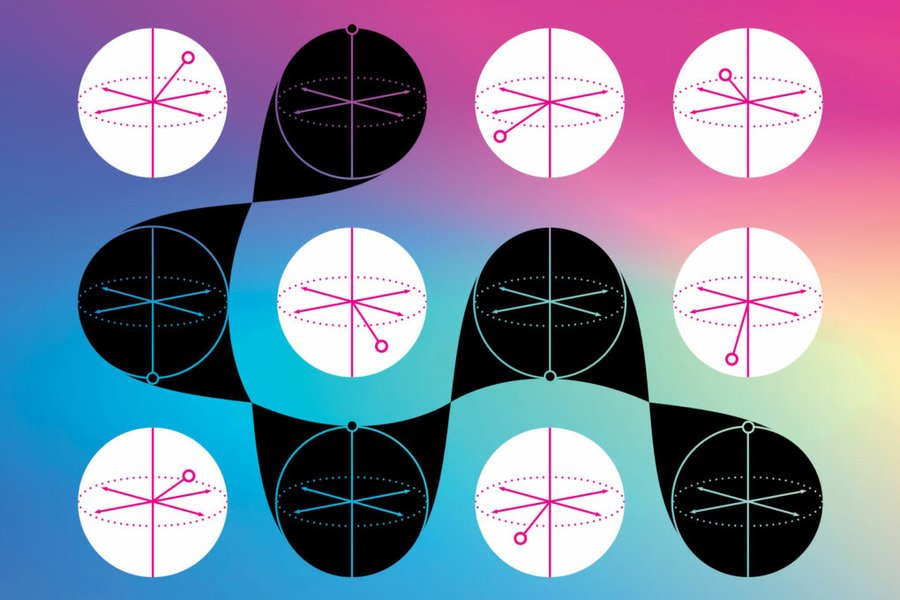
Conceptual representation of quantum entanglement, a key principle in quantum computing.
4. Artificial Neural Networks: Learning from Biological Complexity
Artificial Neural Networks (ANNs) are computational models inspired by the structure and function of the biological brain. They consist of interconnected nodes (neurons) organized in layers (input, hidden, output). ANNs "learn" by adjusting the connections between these neurons based on data, enabling them to recognize complex patterns, make predictions, and classify information. Some types, like Recurrent Neural Networks (RNNs), are specifically designed to handle sequential or time-dependent data, effectively modeling processes that unfold over time, akin to recognizing patterns in cycles. ANNs are a cornerstone of modern Artificial Intelligence and Machine Learning.
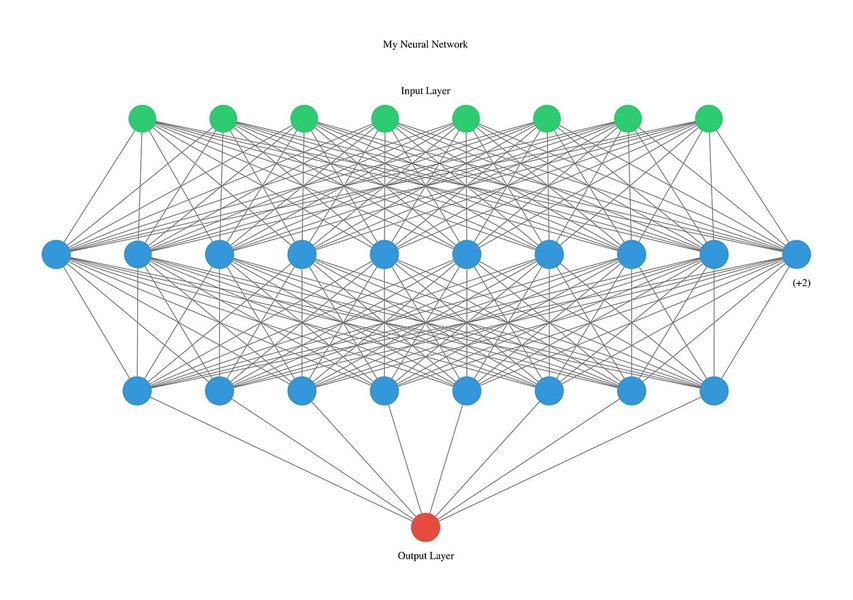
Visualizing the layered structure of an Artificial Neural Network.
5. The Convergence: Quantum Neural Networks (QNNs)
The most direct link emerges in the field of Quantum Machine Learning, specifically with Quantum Neural Networks (QNNs). This cutting-edge area explores how to combine the principles of quantum computing with the architecture of neural networks. QNNs aim to use quantum phenomena like superposition and entanglement to potentially perform certain computations within a neural network framework more efficiently or powerfully than classical ANNs. For example, quantum computers could accelerate the training of large AI models or solve optimization problems embedded within machine learning tasks. This represents a fusion where the quantum realm's computational power meets the brain-inspired learning models of AI.
6. Synthesis: Ancient Rhythms Meet Future Computation
The connection completes: Rosh Chodesh, rooted in observing natural lunar cycles, embodies the human quest to understand and synchronize with natural patterns. This focus on cycles and patterns is fundamental to modeling complex systems. Quantum Computing leverages the cyclical and probabilistic nature of quantum mechanics, nature's most fundamental operating system, for computation. Artificial Neural Networks, inspired by biology, excel at learning patterns, including time-dependent or cyclical ones. Quantum Neural Networks explicitly merge these latter two fields, creating advanced computational models. Thus, a conceptual line can be drawn from the cyclical awareness embedded in Rosh Chodesh to the sophisticated, nature-inspired computational paradigms of Quantum Computing and Artificial Intelligence.
Comparing Computational Paradigms
A Visual Look at Key Characteristics
To better understand the relationships and distinctions between classical computing, quantum computing, and artificial neural networks, the following chart provides a comparative overview based on several key characteristics. Note that these are qualitative assessments reflecting general strengths and challenges.
This chart highlights the distinct profiles: Quantum Computing offers immense theoretical power but faces significant scalability and error correction hurdles. ANNs excel in biological inspiration and pattern recognition but have their own scaling and computational intensity considerations. Classical computing remains the established baseline, highly versatile but potentially limited for certain complex problems optimally suited for quantum or AI approaches.
Conceptual Map of Connections
Visualizing the Links
This mind map illustrates the key concepts and how they interconnect, starting from Rosh Chodesh and branching out through natural cycles to Quantum Computing, ANNs, and their convergence in QNNs.
Exploring the Intersection of Tradition and Science
Kabbalah, Quantum Physics, and Computation
Interestingly, some philosophical and speculative discussions explore parallels between concepts in Jewish mysticism (Kabbalah) and modern physics, including quantum mechanics. While not a direct scientific link in the chain connecting Rosh Chodesh to QNNs, these explorations touch upon themes of interconnectedness, hidden realities, and the nature of observation, which resonate conceptually with both ancient traditions and quantum physics. The following video delves into some of these ideas, offering a perspective on how different ways of understanding the universe might conceptually overlap.
This intersection highlights how humanity seeks understanding through various lenses – religious, philosophical, and scientific – sometimes finding surprising conceptual resonances across seemingly disparate domains. The link from Rosh Chodesh (a tradition tied to natural observation) to Quantum Computing (based on fundamental physics) and ANNs (inspired by biology) exemplifies this cross-pollination of ideas rooted in understanding the natural world.
Summarizing Key Characteristics and Links
A Comparative Overview
The following table summarizes the core concepts and highlights the primary way they connect within our six-step logical chain:
| Concept | Description | Key Link / Role in Connection |
|---|---|---|
| Rosh Chodesh | Beginning of the Hebrew month, tied to the new moon. | Embodies observation of natural, astronomical cycles and themes of renewal. (Step 1) |
| Natural Cycles & Patterns | Recurring phenomena in nature (lunar, biological, physical). | Serve as a basis for modeling time-dependent processes and pattern recognition. (Step 2) |
| Quantum Computing (QC) | Computation using quantum mechanical principles (qubits, superposition, entanglement). | Harnesses fundamental quantum cycles/states; offers potential for complex calculations. (Step 3) |
| Artificial Neural Networks (ANNs) | AI models inspired by brain structure, learning through data. | Mimic biological complexity; excel at pattern recognition, including sequential/cyclical data. (Step 4) |
| Quantum Neural Networks (QNNs) | Hybrid models combining QC principles with ANN architectures. | Represent the direct technological convergence point, integrating quantum computation with AI learning. (Step 5) |
| Synthesis | Overall connection pathway. | Demonstrates a conceptual flow from observing natural rhythms (Rosh Chodesh) to harnessing nature's laws (QC) and mimicking biology (ANNs) for advanced computation (QNNs). (Step 6) |
Frequently Asked Questions (FAQ)
Clarifying Key Concepts
+ What exactly is Rosh Chodesh?
Rosh Chodesh translates to "Head of the Month" and is a minor Jewish holiday marking the start of each month in the Hebrew calendar. Its timing is determined by the appearance of the new moon. It's a time associated with renewal, specific prayers, and sometimes special gatherings, reflecting the cyclical nature of the lunar calendar.
+ How is Quantum Computing different from regular computing?
Classical computers use bits, which can be either 0 or 1. Quantum computers use qubits, which can be 0, 1, or a combination (superposition) of both simultaneously. Additionally, qubits can be entangled, meaning their fates are linked even when separated. These quantum properties allow quantum computers to explore a vast number of possibilities at once, potentially solving certain types of complex problems (like factorization or simulating quantum systems) much faster than classical computers.
+ What are Artificial Neural Networks actually modelling?
ANNs are inspired by the interconnected neurons in the biological brain. They model the way brains process information, learn from experience, and recognize patterns. While simplified compared to actual brains, they capture the essence of parallel processing and learning by adjusting connection strengths (weights) between artificial neurons based on input data and desired outputs. They are powerful tools for tasks involving complex pattern recognition, prediction, and classification.
+ What are Quantum Neural Networks and why are they significant?
Quantum Neural Networks (QNNs) are hybrid models that integrate principles of quantum computing into neural network architectures. They aim to leverage quantum phenomena like superposition and entanglement to potentially enhance the learning process, increase computational capacity for certain tasks, or improve the efficiency of training AI models. They are significant because they represent a frontier in both AI and quantum computing, potentially unlocking new capabilities by combining the strengths of both fields.
+ Is there a direct practical link between Rosh Chodesh rituals and these technologies?
No, there isn't a direct practical or operational link. The connection established here is conceptual and logical, based on underlying themes: the importance of natural cycles (Rosh Chodesh), harnessing natural laws for computation (Quantum Computing), modeling complex systems inspired by nature (ANNs), and the integration of these concepts (QNNs). It's about tracing a thread of ideas related to observation, cycles, patterns, and computation, not about using quantum computers for Rosh Chodesh observance.
Recommended Reading
Explore Further Connections
- How do quantum computers use qubits and superposition to perform calculations?
- What are the different types of artificial neural networks and their applications?
- Explore the relationship between the Hebrew calendar, astronomy, and lunar cycles.
- What are the latest developments and challenges in Quantum Machine Learning?
References
Sources Used in This Analysis
 aws.amazon.com
 anuradhasrinivas.files.wordpress.com
Last updated April 28, 2025