
Rust and RTIC vs. C++ in Embedded Systems
A comprehensive analysis of safety, concurrency, and modern embedded systems development
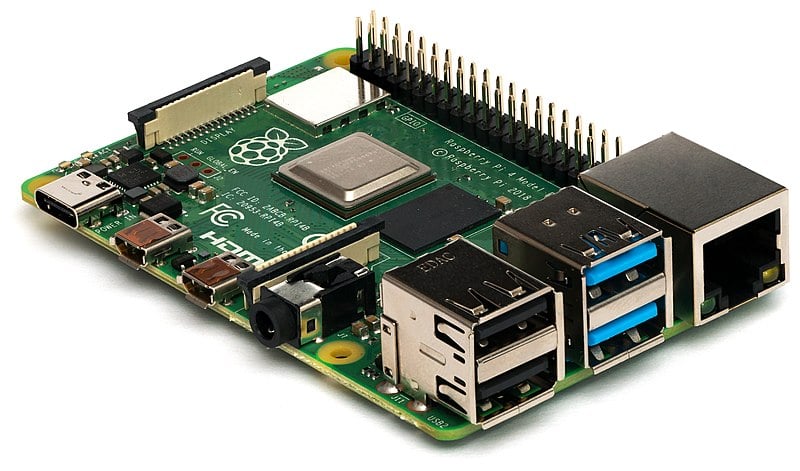
Highlights
- Memory Safety: Rust’s compile-time ownership and borrowing system prevents common memory bugs inherent in C++.
- Real-Time Concurrency: RTIC leverages Rust’s safety guarantees to deliver deadlock-free, zero-cost abstractions for real-time interrupt-driven applications.
- Modern Ecosystem: The robust tooling of Rust, including Cargo and a growing embedded community, streamlines development and enhances code reliability.
Introduction to the Comparison
Choosing the right programming language and framework for embedded systems is a critical decision that can affect the overall reliability, performance, and maintainability of your projects. Rust, known for its strong safety and modern language features, together with the Real-Time Interrupt-driven Concurrency (RTIC) framework, offers a compelling alternative to traditional C++ development. In this analysis, we examine several aspects including memory safety, concurrency handling, performance, and ecosystem capabilities to highlight why Rust and RTIC may be the superior choice over C++ for development in embedded systems.
Key Advantages of Using Rust and RTIC
1. Memory Safety
Elimination of Common Memory Bugs
Rust’s fundamental promise lies in its ownership model coupled with a rigorous compile-time borrow checker. This system enforces strict rules on how memory is accessed and mutated, effectively preventing common memory-related issues such as:
- Buffer overflows
- Null pointer dereferences
- Dangling pointers
- Memory leaks
C++ has evolved over the years, introducing features like smart pointers and RAII (Resource Acquisition Is Initialization) to tame some of these bugs. However, Rust natively shifts many potential runtime errors into compile-time guarantees. This means that a large class of vulnerabilities is ironed out during development rather than manifesting later in production, which is essential for systems that require utmost reliability and minimal downtime.
2. Concurrency and Real-Time Capabilities
RTIC: A Structured Approach
Concurrency represents one of the more challenging aspects of embedded systems design. Traditional C++ concurrency typically relies on manual threading control and synchronization primitives such as locks and mutexes. While these tools can be powerful, they also give rise to complex issues like race conditions and deadlocks. In contrast, Rust’s design inherently avoids data races via its borrowing and ownership rules, ensuring that only one mutable reference exists to a given piece of data at a time.
Building on these inherent safety features, RTIC (Real-Time Interrupt-driven Concurrency) is specifically designed for embedded and real-time applications. RTIC helps by:
- Providing zero-cost abstractions, where the abstractions have no additional runtime cost.
- Guaranteeing deadlock-free operation by enforcing strict compile-time rules.
- Facilitating task prioritization and resource sharing with a static model that maps well to the underlying hardware.
The union of Rust's safe concurrency model with RTIC's real-time framework minimizes the complexities typically associated with concurrent programming. This is particularly valuable in environments that require a deterministic level of responsiveness and reliability, such as automotive or industrial control systems.
3. Performance
Zero-Cost Abstractions and Efficient Execution
There is a common perception that safety features come at a performance cost; however, Rust defies that assumption by providing zero-cost abstractions. These abstractions enable developers to write high-level code while still compiling down to highly efficient machine-level instructions. This means that:
- Rust achieves performance that is on par with or even exceeds that of C++ in many benchmarks.
- RTIC ensures that concurrent and interrupt-driven tasks incur minimal overhead, which is crucial in time-sensitive, real-time applications.
- The compile-time safety guarantees, which in other languages might necessitate runtime checks, are handled at compile time, thus reducing the runtime burden.
Embedded systems often operate under strict performance constraints. In these scenarios, it is important not only to write safe code but also code that performs predictably under all conditions. Rust and RTIC combine these needs, allowing developers to manage memory safely without sacrificing speed.
4. Modern Language Features and Expressive Syntax
Enhanced Developer Experience
Beyond safety and concurrency, Rust offers several modern language features that can lead to improved code readability, maintainability, and robustness:
- Strong Type System: Rust’s type system helps catch many programming mistakes at compile time, reducing runtime errors.
- Error Handling: Through the use of \(Result\) and \(Option\) types, Rust encourages developers to handle potential errors explicitly rather than relying on exceptions.
- Pattern Matching: Flexible pattern matching aids in writing clear and concise code for edge cases.
- Modern Syntax: With a focus on clarity and expressiveness, Rust’s syntax is often easier to read and maintain compared to legacy C++ codebases.
The modern design of Rust reduces the cognitive load on developers while also enforcing good programming practices. This in turn helps create robust systems that are easier to troubleshoot, extend, and maintain over time.
5. Ecosystem and Tooling
Streamlined Development and Community Support
One of the standout benefits of adopting Rust is its modern development ecosystem. The Cargo package manager and build system is central to the developer experience, offering seamless dependency management and streamlined project builds. This modern toolchain speeds up the time to market by automating many of the overhead tasks that are typically manual in C++ development environments.
Additionally, Rust’s growing community, particularly in the embedded sector, has produced numerous libraries and frameworks directly aimed at microcontroller and hardware-level interaction. For example:
- Embedded-HAL: A set of standardized traits for hardware abstraction across a variety of microcontrollers.
- SVD2Rust: Tools that automatically generate safe peripheral access code for embedded hardware.
The consistent evolution of this ecosystem means that developers have access to a wealth of resources, libraries, and community support as they work on modern embedded projects.
Comparing Key Attributes: Rust with RTIC vs. C++ in Embedded Development
Summary Table
| Attribute | Rust with RTIC | C++ |
|---|---|---|
| Memory Management | Ownership model and borrow checker ensure memory safety at compile-time without garbage collection. | Manual memory management prone to errors; smart pointers and RAII help but do not eliminate issues completely. |
| Concurrency | RTIC offers structured, deadlock-free concurrency with compile-time safety assurances. | Concurrency is more manual, often requiring careful use of locks and threads to avoid race conditions and deadlocks. |
| Performance | Zero-cost abstractions enable high-level code to achieve machine-level efficiency comparable to C++. | Can be highly efficient but often sacrifices safety and maintainability for raw speed in complex scenarios. |
| Modern Features | Strong type system, pattern matching, and explicit error handling contribute to more robust code. | Rich features and templates available, but legacy patterns and undefined behavior can complicate development. |
| Tooling and Ecosystem | Cargo package manager, growing libraries for embedded systems, and active community support. | Extensive libraries and community, though dependency management can be more complex. |
Deep Dive: Why Rust and RTIC Offer a Superior Approach
Enhanced Safety and Reliability
When developing for embedded systems, reliability and safety are paramount. Rust’s compile-time checks drastically reduce the risk of runtime failures stemming from memory mismanagement. In industries such as automotive, aerospace, and medical devices, where malfunction can have catastrophic results, these guarantees are invaluable. The elimination of memory leaks, buffer overflows, and use-after-free vulnerabilities positions Rust as a language dedicated to robustness.
Furthermore, RTIC builds on these strengths by creating an environment where the timing and coordination of concurrent tasks are predetermined by the compiler. This deterministic scheduling ensures that system health is not compromised, and that real-time constraints are consistently met. As a result, developers can focus on the core functionality of their systems, confident that the underlying concurrency model is safe and optimized.
Practical Benefits for the Development Process
Transitioning to Rust and RTIC doesn’t simply mean a change in language—it represents a significant upgrade in the entire development process. Developers can iteratively build and test their embedded applications with Cargo, simplifying project management and dependency tracking. Unlike C++ where the build and debugging cycles may be prolonged by manual memory management issues, Rust streamlines these processes through its modern tooling.
Additionally, the learning curve imposed by Rust’s unique ownership system may require some initial adjustment. However, many teams find that the investment in learning these paradigms pays dividends in long-term code quality and fewer runtime issues. The explicitness of error handling in Rust, via the \(Result\) and \(Option\) types, mandates developers to consider and manage failure states up front—leading to more resilient code outcomes.
Longevity and Maintainability
One of the major hurdles with legacy systems or even newer C++ projects is long-term maintainability. As systems evolve and new features are added, unaddressed bugs or poorly structured concurrency flows can lead to substantial technical debt. Rust’s philosophy is to catch errors early during compilation, and its emphasis on explicit, predictable behavior means that as projects scale, the code base remains clean, modular, and easier to reason about.
The structural benefits introduced by RTIC also contribute greatly to long-term maintainability. By providing a transparent model for event handling and resource management, RTIC simplifies the task of tracing logic through complex multitasking scenarios. This transparency ensures that even as intricacies in hardware interactions increase, developers have a clear framework to base modifications and enhancements upon.
Industry Adoption and Future-Proofing
While C++ has a well-established legacy, the modern demands of embedded and real-time systems increasingly favor tools that prioritize safety without a significant performance penalty. Rust, paired with innovative frameworks like RTIC, is gaining traction as industries recognize the potential for reduced debugging times, enhanced safety, and lower maintenance costs. This shift is evidenced by a growing number of projects and communities advocating for the use of Rust in critical systems.
The strong interoperability features of Rust further facilitate the transition from legacy C++ systems. Developers can integrate Rust modules into existing C/C++ projects incrementally, reducing the risks associated with wholesale transitions to a new programming model. This flexibility allows teams to future-proof their systems while still maintaining backward compatibility where necessary.
Practical Implementation Considerations
Development Environment and Toolchains
A modern development environment is essential for rapid prototyping and efficient debugging. Rust’s ecosystem, particularly the Cargo package manager, has been described as one of the best in the industry. Cargo not only manages dependencies but also streamlines integration with testing frameworks, continuous integration pipelines, and documentation generators. For embedded systems, where hardware interactions can be intricate, these integrated tools provide a substantial edge.
RTIC is designed to work seamlessly with the Rust toolchain, enhancing the development workflow. With compile-time guarantees and static task scheduling, developers gain instant feedback on potential concurrency issues. These features make it easier to iterate on designs, refactor code safely, and ensure that performance constraints are met prior to deployment.
Comparison with Traditional C++ Approaches
Traditional C++ development for embedded systems typically relies on manual resource management and low-level hardware control. While this can yield high performance, it often involves complex setups to achieve similar levels of safety and maintainability as Rust provides by default. For instance, achieving thread safety in C++ requires meticulous implementation of synchronization primitives, whereas Rust’s type system automatically enforces safe concurrency with minimal additional scaffolding.
Moreover, the evolution of C++ standards, while progressive in many areas, still requires developers to be vigilant about undefined behavior—an area where Rust offers clear guidelines and safety guarantees. This difference often translates into longer debugging sessions and the potential for latent bugs in C++ codebases. For embedded systems that need to operate continuously and reliably, the trade-offs in developer time and system safety are a persuasive argument in favor of Rust and RTIC.
Conclusion and Final Thoughts
In summary, the choice between Rust with RTIC and C++ for embedded systems development boils down to a trade-off between modern safety, concurrency assurances, ease of maintenance, and a robust development ecosystem versus traditional raw performance and legacy support. Rust’s comprehensive compile-time guarantees regarding memory safety and concurrency, along with its expressive and modern language features, allow developers to create more reliable and maintainable systems. RTIC further augments these benefits by providing a structured framework for handling real-time events with no additional runtime cost.
For teams and projects where safety, predictable behavior, and long-term maintainability are paramount, Rust and RTIC present a compelling alternative to C++—especially in environments where debugging and runtime issues can have severe consequences. The modern tooling, supported by a vibrant and growing community, ensures continued innovation and improvement in the embedded systems space.
Ultimately, while C++ still holds significant value in terms of raw performance gains in certain scenarios, the overall benefits of adopting Rust with RTIC—ranging from enhanced memory safety to robust concurrency handling—create an environment where system reliability and developer productivity take center stage. As embedded systems continue to evolve, the shift towards languages and frameworks that minimize human error and promote fault tolerance becomes ever more critical, positioning Rust and RTIC as forward-thinking choices for next-generation development.
References
- Rust: The Embedded Language That's Outperforming C - Nirma University
- Running Rust on Microcontrollers - Mbedded Ninja
- RTIC vs. the World - RTIC Documentation
- Benefits of Rust vs. C++ - Quora Discussion
- Rust vs. C++ in Embedded Systems - TechTarget
Recommended Further Reading
Last updated February 23, 2025