
Unveiling Sabre's Secrets: How Are Ticketing Deadlines Actually Determined?
Delve into the complex interplay of airline rules, agent actions, and system automation that dictates when a flight ticket must be issued.
Understanding how Sabre, a leading Global Distribution System (GDS), calculates ticketing deadlines is crucial for travel professionals. These deadlines are not arbitrary; they are the result of a sophisticated process involving multiple data points and rules. Getting this right ensures reservations are secured and complies with airline policies, preventing potential cancellations or penalties.
Highlights: Key Insights into Sabre Ticketing Deadlines
- Airline Fare Rules are Paramount: The primary driver for ticketing deadlines are the rules set by airlines, including advance purchase requirements and specific time limits for fare classes.
- Agent Input is Critical: Travel agents often manually enter or adjust deadlines in the Passenger Name Record (PNR) using specific Sabre commands, particularly through the TAW (Ticketing Arrangement) field.
- System Automation Enforces Compliance: Sabre utilizes automated processes, including queuing systems and auto-cancellation features, to monitor and enforce these deadlines effectively.
The Intricacies of Sabre's Ticketing Deadline Calculation
Sabre's method for determining ticketing deadlines is a multi-faceted process. It doesn't rely on a single algorithm but rather integrates information from various sources to establish the critical cut-off point for ticket issuance. This ensures that bookings adhere to the complex web of airline regulations and fare conditions.
The Foundation: Airline Fare Rules
At the core of ticketing deadline calculation lie the fare rules stipulated by the airlines. These rules are comprehensive and can vary significantly based on the fare type, route, and carrier.

A visual representation emphasizing the importance of time limits in airline ticketing.
Advance Purchase Requirements
Many fares require tickets to be purchased a certain number of days before departure. For example, a promotional fare might stipulate that ticketing must occur at least 14 days prior to the flight. Sabre ingests these rules and applies them to the booking. If a booking is made on May 7, 2025, for a flight on June 1, 2025, and the fare has a 7-day advance purchase rule, the ticketing deadline would typically be set no later than May 25, 2025.
Sales and Ticketing Restrictions
Airlines often impose sales restrictions that dictate when a ticket can be sold and issued. This can include specific dates by which ticketing must be completed, irrespective of the booking date. These restrictions are encoded into the fare data that Sabre accesses.
Group Booking Stipulations
For group bookings, airlines usually have distinct policies. These often involve deposit deadlines and final payment/ticketing deadlines. For instance, an airline like Aeroflot might require a deposit for group confirmations made more than 14 days before departure, with a subsequent deadline for full ticketing.
The "Most Restrictive" Principle
When an itinerary involves multiple fare components, each potentially with its own ticketing deadline, Sabre generally applies the most restrictive (i.e., the earliest) deadline to the entire PNR or pricing unit. This ensures compliance across all segments of the journey.
The Human Element: Agent Intervention and Manual Inputs
While airline rules provide the framework, travel agents play a vital role in setting and managing ticketing deadlines within Sabre.
The Crucial TAW Field
The Ticketing Arrangement (TAW) field in the Passenger Name Record (PNR) is central to deadline management. Agents often manually input the ticketing deadline into this field based on their understanding of the fare rules, airline instructions, or agency policies. An entry in Sabre might look like 1.TAWK49I09FEB009/0400A/, indicating a ticketing deadline of February 9th at 4:00 AM. The ticketingDate information shown in various Sabre displays and API responses is typically derived from this TAW field.
Sabre Commands for Deadline Management
Agents use specific Sabre commands to add, modify, or display ticketing deadlines. For example, 7TAW[Date] (e.g., 7TAW22JAN) is used to add a ticketing deadline. Another command, 86P/[Date], can set a time limit that, if not met, triggers an automatic cancellation of the reservation segments.
System-Level Processing and Enforcement
Sabre incorporates system-level logic and automation to manage and enforce the established ticketing deadlines effectively.
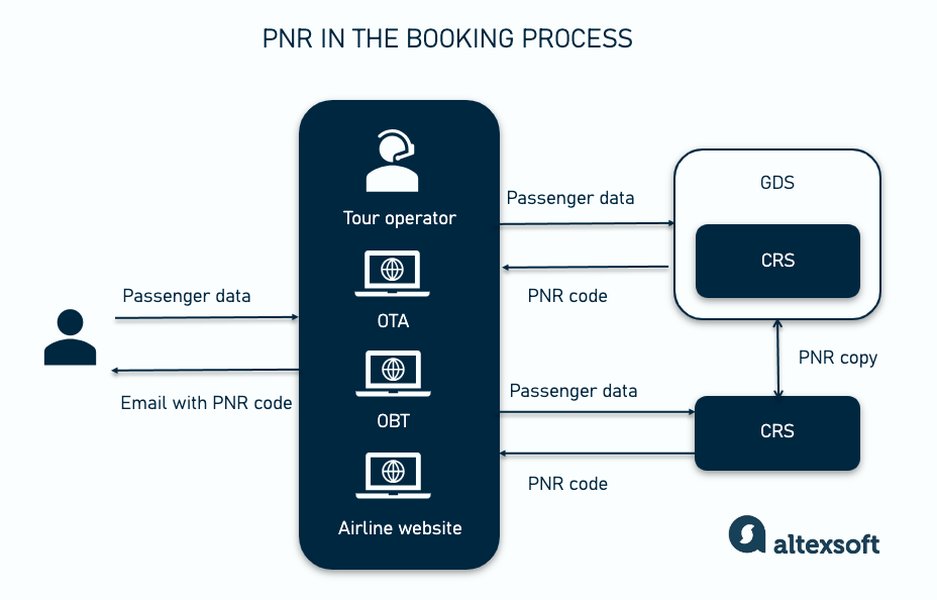
A conceptual diagram illustrating typical data elements within a PNR, where ticketing deadlines are stored.
Automated Queues and Notifications
PNRs with impending ticketing deadlines can be automatically placed onto specific queues. This alerts travel agents to take necessary action before the deadline expires. Sabre's Automation Hub, for example, offers features like ticketing deadline notifications to streamline this process and reduce manual oversight.
Auto-Cancellation Safeguards
In many cases, if a ticket is not issued by the specified deadline, Sabre can automatically cancel the associated flight segments. This is a critical revenue protection mechanism for airlines and ensures that seats are not held indefinitely without payment.
Date Range Limitations
Sabre's system architecture has inherent date range capabilities. Generally, Sabre can manage schedules and bookings up to 331 days from the current date (e.g., from May 7, 2025, up to approximately March 5, 2026). Ticketing deadlines must fall within these system-supported ranges. Some carriers might limit schedule displays to a shorter timeframe, such as 180 days.
Impact of Ticketing Actions
Actions such as voiding, exchanging, or refunding tickets can necessitate updates to ticketing deadlines. If an e-ticket is voided, for example, any associated ticketing deadline might need to be reassessed or a new one set if the reservation is to be kept active.
Visualizing the Factors: Deadline Determination Influencers
The stringency and specific timing of a ticketing deadline in Sabre are influenced by a dynamic interplay of several factors. The radar chart below illustrates how different elements can contribute to the characteristics of a given deadline scenario. A higher score (out of 10) indicates a stronger influence or a more critical role for that factor. For instance, "Airline Rule Dominance" scoring high means airline policies are the primary driver, while high "Agent Input Flexibility" suggests more room for manual adjustments.
This chart helps to conceptualize how varying weights of these core components shape the final ticketing deadline enforced within the Sabre system. Understanding these dynamics allows for more proactive management of bookings.
The Workflow of Ticketing Deadlines in Sabre
The calculation and enforcement of ticketing deadlines in Sabre follow a structured workflow, from initial booking creation to the final outcome of either ticket issuance or reservation cancellation. This mindmap illustrates the key stages and influencing factors involved in this critical process.
(e.g., 7TAW, 86P/)"] id1c["Booking Context"] id1c1["Date of Booking"] id1c2["Time to Departure"] id1c3["Itinerary Complexity"] id2["Sabre System Processing"] id2a["Rule Interpretation & Application"] id2a1["Most Restrictive Deadline Applied
for multi-fare PNRs"] id2b["PNR Update & Storage"] id2b1["Deadline Recorded in TAW Field"] id2b2["Accessible via PNR Display"] id2c["System Constraints"] id2c1["Maximum Future Date Limits (e.g., 331 days)"] id3["Deadline Management & Enforcement"] id3a["Automated Queuing System"] id3a1["PNRs Placed on Ticketing Queues"] id3a2["Alerts for Travel Agents"] id3b["Notifications & Alerts"] id3b1["Automation Hub Features"] id3c["Auto-Cancellation Logic"] id3c1["Segments Cancelled if Deadline is Missed
(if configured)"] id4["Outcome"] id4a["Ticket Successfully Issued by Deadline"] id4b["Reservation Automatically Cancelled"] id4c["Potential for Penalty Fees or Fare Changes"]
This mindmap highlights the journey of a ticketing deadline within Sabre, emphasizing the integration of airline policies, agent actions, and system automation to ensure timely ticketing and compliance.
Sabre Command Insights: Managing Time Limits
Travel agents interact with Sabre using specific commands to manage various aspects of a booking, including ticketing deadlines. Understanding these commands is essential for efficient PNR handling. Below is a table summarizing some key Sabre commands related to setting and viewing ticketing time limits.
| Command Example | Description |
|---|---|
7TAWDDMON |
Adds a general ticketing deadline. 'DD' is the day and 'MON' is the three-letter month abbreviation (e.g., 7TAW22JAN for January 22nd). |
7TAWDDMON/TIME |
Adds a ticketing deadline with a specific time (e.g., 7TAW15MAR/1700 for March 15th at 5:00 PM). |
86P/DDMON |
Adds a time limit field that will automatically cancel the PNR segments if a ticket is not issued by the specified date. (e.g., 86P/10APR). This is often referred to as a "purge" date. |
*T |
Displays the ticketing arrangement (TAW) field and other ticketing-related information from the PNR. |
‡TAW (followed by line number and new data) |
Used in a change context to modify an existing TAW line in the PNR. For example, ‡TAW1/NEWDEADLINE might be used after displaying the PNR and identifying line 1 as the TAW field. |
W¥TA* or W¥TA*ALL |
Displays ticketing data, often used in conjunction with Sabre Automated Ticketing to review stored fare and ticketing instructions. |
These commands are fundamental tools for agents to ensure that ticketing deadlines are correctly recorded and adhered to, thereby preventing issues like unintended cancellations or fare expirations.
The Importance of Adherence: Why Deadlines Matter
Adhering to ticketing deadlines is not just an administrative task; it has significant implications for both travelers and travel agencies. Failure to issue a ticket by the specified deadline can lead to several negative consequences:
- Automatic Cancellation: Airlines often configure their systems, and Sabre facilitates this, to automatically cancel PNRs that have passed their ticketing deadline without a ticket being issued. This means the traveler loses their confirmed seat.
- Fare Expiration: The fare quoted at the time of booking is usually tied to the ticketing deadline. If missed, the original fare may no longer be available, potentially leading to higher costs.
- Loss of Availability: Especially on popular routes or during peak seasons, seat availability can change rapidly. A cancelled booking means the agent has to start the search anew, with no guarantee of finding a comparable flight or fare.
- Service Impact: Missed deadlines can lead to frustrated customers and damage the reputation of the travel agency for reliability.
- Penalty Fees: In some cases, particularly with certain fare types or group bookings, missing a deadline could incur financial penalties.
Therefore, diligent management of ticketing deadlines using Sabre's tools and features is essential for smooth operations and customer satisfaction.
Enhancing Understanding: Sabre Ticketing Deadline Management
For a practical demonstration of how time limits are managed within the Sabre system, including entering and modifying them in a PNR, the following video provides valuable insights. It covers the commands and considerations agents need to be aware of when handling ticketing deadlines.
This video, "How To Enter Time Limit in Sabre | Modification Of Time Limit," explains the process of inputting and adjusting ticketing deadlines. Such visual guides can complement textual understanding by showing the Sabre interface and command application in a more dynamic way, reinforcing the concepts discussed about the TAW field and deadline enforcement.
Frequently Asked Questions (FAQ)
What is the TAW field in a Sabre PNR?
The TAW (Ticketing Arrangement) field in a Sabre Passenger Name Record (PNR) is a specific data element where travel agents record the ticketing deadline. It essentially serves as a reminder and an instruction for when the ticket for that reservation must be issued. The information in this field is often manually entered by the agent based on airline fare rules or can sometimes be populated by automated airline responses. It typically includes the date and sometimes the time by which ticketing must be completed.
What happens if a ticketing deadline is missed?
If a ticketing deadline is missed, several consequences can occur. Most commonly, the airline may automatically cancel the reservation, and the booked seats will be released back into inventory. The original fare quoted may also expire, meaning if the traveler still wishes to book, they might have to pay a higher price or select different flights. In some instances, especially for specific fare types or group bookings, missing a deadline could also lead to penalties.
Can ticketing deadlines be changed in Sabre?
Yes, ticketing deadlines can often be changed in Sabre by a travel agent, provided the fare rules and airline policies allow for such modifications. Agents can use specific Sabre commands to update the TAW field with a new date or time. However, any change must still comply with the underlying fare rules (e.g., advance purchase requirements). Arbitrarily extending a deadline without airline approval or fare rule compliance might still lead to the PNR being cancelled by the airline.
Do all fares have the same ticketing deadline rules?
No, not all fares have the same ticketing deadline rules. Deadlines vary widely depending on the airline, the specific fare purchased (e.g., promotional, restricted, flexible), the route, and the time of booking relative to departure. Highly discounted fares often have stricter and earlier ticketing deadlines compared to more expensive, flexible fares. It is crucial to always check the specific fare rules associated with a booking to determine the accurate ticketing deadline.
How does Sabre handle multiple fares with different deadlines in one booking?
When a single booking (PNR) contains multiple fare components, each potentially having a different ticketing deadline (e.g., different advance purchase rules for outbound and inbound flights), Sabre will generally apply or highlight the most restrictive (earliest) deadline for the entire pricing unit or PNR. This ensures that all segments comply with their respective rules. Agents must be aware of this and ensure ticketing is completed by this earliest deadline to secure all parts of the itinerary.
Recommended Queries
- How do airline fare rules impact ticket prices and restrictions in Sabre?
- What are the best practices for managing PNRs in the Sabre GDS?
- Can you explain the process of voiding and reissuing tickets in Sabre?
- What automation tools does Sabre offer for travel agencies beyond ticketing deadlines?
References
 gdshelp.blogspot.com

Last updated May 7, 2025