
Unveiling SAE/EIA-649C: The Cornerstone of Configuration Management Excellence
Explore the foundational standard shaping consistency across industries, from defense to commercial enterprises.
Key Insights into SAE/EIA-649C
- Comprehensive Framework: SAE/EIA-649C is the authoritative standard for Configuration Management (CM), providing principles and guidance applicable across commercial, government, and industrial sectors.
- Five Core Functions: The standard defines five essential CM functions: CM Planning, Configuration Identification, Change Management, Status Accounting, and Verification & Audit, forming the bedrock of effective CM systems.
- Broad Applicability & DoD Adoption: Originally developed by the Electronic Industries Alliance (EIA) and now maintained by SAE International, this standard is non-mandatory but widely adopted, notably by the U.S. Department of Defense, making it a critical reference in defense contracts.
Defining the Essence of SAE/EIA-649C
SAE/EIA-649C, formally known as the Configuration Management Standard, is a globally recognized industry standard that provides a comprehensive framework for configuration management (CM). Published on February 7, 2019, it serves as the latest iteration, refining the principles and best practices for establishing and maintaining consistency among product requirements, the actual product, and all associated configuration information. This standard is not prescriptive in terms of specific tools or terminology but rather outlines the foundational principles and functions necessary for robust CM implementation across diverse organizational and product lifecycles. Its adaptability makes it invaluable for managing complex systems, whether hardware, software, IT infrastructure, or services.
The standard's primary objective is to enhance product quality, reduce risks associated with uncontrolled changes, and improve traceability throughout a product's lifecycle. It achieves this by providing a structured approach to identify, control, and track configuration items, ensuring that all modifications are systematically managed and documented. The widespread acceptance of SAE/EIA-649C, particularly its adoption by the U.S. Department of Defense in September 2019, underscores its significance as a benchmark for ensuring reliability and consistency in mission-critical applications.
The Five Pillars of Configuration Management
At the heart of SAE/EIA-649C are five fundamental functions that collectively form the comprehensive framework for effective configuration management. These functions are designed to work in synergy, ensuring that configuration integrity is maintained from conception through to disposal.
CM Planning: Setting the Strategic Course
CM Planning involves the systematic development of a strategic approach for configuration management throughout the entire product lifecycle. This includes defining policies, processes, resources, and responsibilities. A well-crafted CM Plan specifies the scope of CM activities, identifies the configuration items, and details how changes, audits, and verifications will be handled. It's the blueprint for how CM will be applied within an organization or project, ensuring alignment with overall business objectives and risk mitigation strategies.
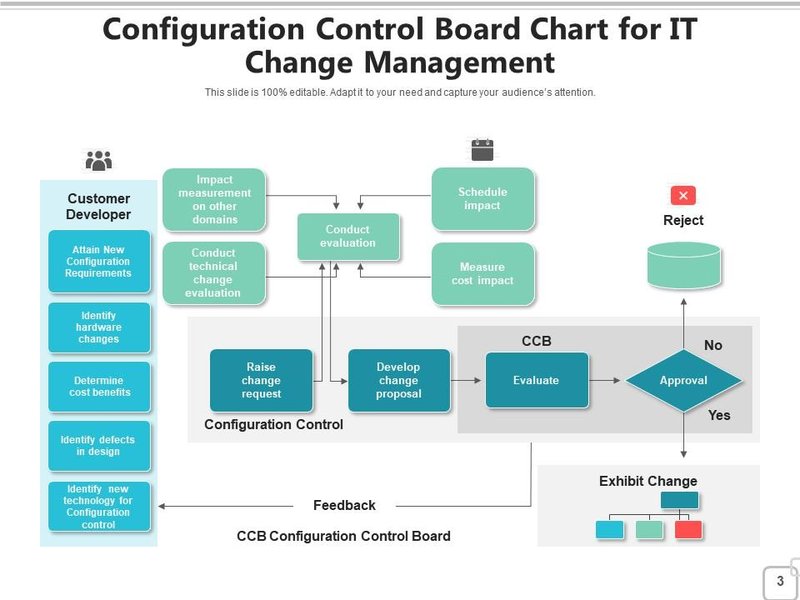
A structured approach to configuration management planning.
Configuration Identification: Defining What Matters
Configuration Identification focuses on precisely identifying and documenting all configuration items (CIs) and their attributes. This involves establishing baselines for products, components, software modules, and documentation, ensuring each CI has a unique identifier and defined characteristics. This function is critical for traceability, allowing organizations to understand the relationships between different parts of a system and track their evolution through various lifecycle stages.
Change Management: Guiding the Evolution
Change Management, also known as Configuration Control, is arguably the most critical function. It governs the process of controlling changes to configuration items through formal change control processes. This includes comprehensive impact analysis, formal approval mechanisms, meticulous implementation, and thorough documentation of all changes. The goal is to prevent unauthorized modifications, mitigate risks, and ensure that all stakeholders are aware of and agree to modifications before they are implemented, thereby maintaining product integrity and consistency.
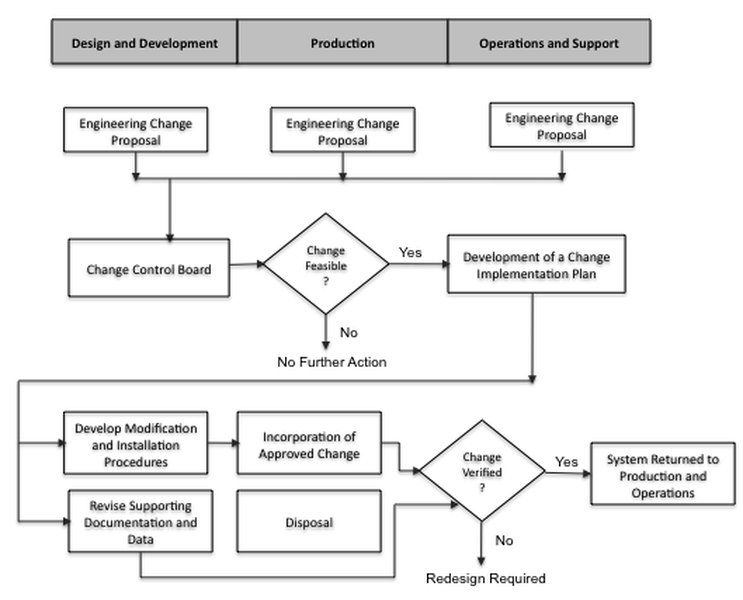
A visual representation of the rigorous change control process in CM.
Status Accounting: The Chronicle of Configurations
Configuration Status Accounting involves recording and reporting configuration information, including the status of proposed changes, approved changes, and their implementation progress. This function provides a historical record of all configuration items and their modifications, offering transparency and enabling stakeholders to access reliable and up-to-date configuration data. It supports informed decision-making and accountability by providing a clear audit trail of the product's evolution.
Verification & Audit: Ensuring Conformance and Compliance
Configuration Verification and Audit validate that configuration items conform to their specified requirements and that CM activities are properly executed. This includes conducting functional configuration audits (FCA), physical configuration audits (PCA), and documentation audits to ensure integrity, completeness, and compliance with baselines and internal processes. This critical function provides assurance that the product meets its intended design and performance specifications and that CM processes are being followed effectively.
A Deeper Dive into CM Functions
To further illustrate the multifaceted nature of these five core functions, the following radar chart provides a conceptual comparison of their perceived impact and complexity within a typical project environment. This chart reflects an opinionated analysis rather than empirical data, highlighting areas where each function might demand more resources or strategic attention.
This radar chart visualizes the relative strategic importance and operational complexity of each of the five core CM functions. "Strategic Importance" reflects how critical each function is for long-term project success and integrity, while "Operational Complexity" indicates the level of effort, resources, and coordination typically required for effective implementation. As seen, Change Management often ranks highest in both, underscoring its pivotal role in maintaining product consistency.
Evolution and Adoption: A Standard for All Seasons
The SAE/EIA-649C standard has a rich history, evolving from its initial development by the Electronic Industries Alliance (EIA) in 1994. The G-33 Committee on Data and Configuration Management spearheaded the creation of the ANSI/EIA-649, aiming to establish a national consensus standard for CM. Subsequent revisions, including ANSI/EIA-649-A and SAE/EIA-649-B, have led to the current C version, published on February 7, 2019. This evolution reflects a continuous effort to refine the principles and functions to address modern challenges and complexities in configuration management, incorporating feedback from a wide array of industry and government users.
A significant milestone in the standard's journey was its official adoption by the U.S. Department of Defense (DoD) on September 10, 2019. This adoption designates SAE/EIA-649C as a foundational guideline for CM processes within defense contracts, emphasizing its role in ensuring the reliability and consistency of complex systems crucial for national security. While non-mandatory, its frequent inclusion in contracts and statements of work across defense, aerospace, automotive, and other highly regulated industries signifies its critical importance and widespread acceptance as a best practice.
The standard's flexibility is one of its greatest strengths. It provides guidance without mandating specific terminology or implementation methods, allowing organizations to tailor its application to their specific contexts, whether small-scale projects or large, complex enterprise systems. This adaptability ensures that the core principles of CM can be effectively applied across diverse environments, from traditional hardware manufacturing to modern software development and IT service management.
Illustrating CM Concepts: A Mindmap Overview
The following mindmap visually represents the core elements of SAE/EIA-649C, showing its foundational nature and how its principles radiate into various aspects of configuration management.
Processes
Resources"] id2_1_2["Scope & Roles"] id2_2["Configuration Identification"] id2_2_1["Item Baselines"] id2_2_2["Unique Identifiers"] id2_3["Change Management"] id2_3_1["Impact Analysis"] id2_3_2["Approval & Implementation"] id2_3_3["Risk Mitigation"] id2_4["Status Accounting"] id2_4_1["Record Keeping"] id2_4_2["Reporting Progress"] id2_4_3["Historical Data"] id2_5["Verification & Audit"] id2_5_1["Conformance Checks"] id2_5_2["Process Compliance"] id2_5_3["Physical & Functional Audits"] id3["Applicability"] id3_1["Commercial Sector"] id3_2["Government/DoD"] id3_3["Hardware & Software"] id3_4["IT & Services"] id4["Benefits"] id4_1["Reduced Costs"] id4_2["Improved Quality"] id4_3["Enhanced Traceability"] id4_4["Compliance"] id5["Evolution"] id5_1["EIA G-33 Committee"] id5_2["Published Feb 2019"] id5_3["DoD Adopted Sep 2019"]
This mindmap illustrates the central role of SAE/EIA-649C as the root, branching out into its core purpose, key functions, broad applicability across various sectors and product types, and the significant benefits derived from its implementation. It also highlights the standard's historical evolution and its key adoption milestones.
Implementing and Leveraging the Standard
Organizations implementing SAE/EIA-649C often integrate it with other complementary guidelines, such as SAE EIA-649-1A, which provides specific requirements for defense applications, or aligns with standards like ISO 10007, ITIL CM, and AS9100. This synergy ensures a holistic approach to configuration management that can meet diverse regulatory and contractual obligations.
Practical application of SAE/EIA-649C extends to various scenarios, from managing supply chain disruptions to ensuring product consistency during software updates or hardware modifications. The standard provides a structured framework that helps organizations proactively manage configurations, reducing risks, improving product quality, and maximizing return on investment by ensuring well-managed product configurations across the entire supply chain and enterprise.
Deep Dive: Understanding the Standard's Context
To provide further context on the importance and application of Configuration Management standards, the following video offers an insightful discussion. While the standard itself is comprehensive, understanding its real-world implications and the nuances of its implementation can be greatly enhanced through expert commentary.
This video provides an overview of the EIA-649C standard from SAE, offering valuable insights into its practical application and significance in the field of Configuration Management.
Comparing Configuration Management Standards
While SAE/EIA-649C is a cornerstone, it operates within a broader ecosystem of CM-related standards. The table below highlights how SAE/EIA-649C compares to other prominent standards, focusing on their scope and emphasis.
| Standard | Primary Focus/Scope | Relationship to SAE/EIA-649C |
|---|---|---|
| SAE/EIA-649C | Fundamental principles and functions of Configuration Management applicable across all industries (hardware, software, IT, services). Defines "what to do" in CM. | The authoritative, foundational standard for CM processes and principles. |
| ISO 10007 | Guidance on the use of configuration management in support of products, including hardware, software, materials, processes, and services. Part of the ISO 9000 family. | Complements SAE/EIA-649C by providing a quality management system perspective on CM. Principles are largely aligned. |
| ITIL CM | Focuses on Configuration Management within IT Service Management (ITSM) frameworks, managing configuration items in an IT environment. | Specialized application of CM principles for IT services. Shares core concepts but tailored for ITSM. |
| AS9100 | Quality Management Systems - Requirements for Aviation, Space, and Defense Organizations. Includes CM requirements as part of overall quality control. | Integrates CM principles within broader aerospace and defense quality management systems. Requires CM but doesn't define the processes at the level of SAE/EIA-649C. |
| SAE EIA-649-1A | Specific Configuration Management requirements for defense contracts, implementing the principles of SAE/EIA-649C for military applications. | A companion standard that provides the "how to" for contractually obligating suppliers to the principles of SAE/EIA-649C in defense contexts. |
This table outlines the distinct focuses of various configuration management standards and their relationship to SAE/EIA-649C. It demonstrates how SAE/EIA-649C serves as a fundamental guideline that informs and underpins many other industry-specific or specialized CM standards.
Frequently Asked Questions About SAE/EIA-649C
What is the main purpose of SAE/EIA-649C?
Is SAE/EIA-649C mandatory for all organizations?
How does SAE/EIA-649C relate to the U.S. Department of Defense (DoD)?
What are the five core functions defined by SAE/EIA-649C?
Does SAE/EIA-649C provide specific tools or software recommendations for CM?
Conclusion
SAE/EIA-649C stands as a pivotal standard in the realm of Configuration Management. Its comprehensive framework, built upon five foundational functions—CM Planning, Configuration Identification, Change Management, Status Accounting, and Verification & Audit—provides clear guidance for organizations seeking to establish and maintain product integrity and consistency. From its origins with the Electronic Industries Alliance to its current custodianship by SAE International and its widespread adoption, notably by the U.S. Department of Defense, the standard has proven its adaptability and enduring relevance across diverse industries. By adhering to its principles, organizations can mitigate risks, enhance product quality, streamline processes, and ultimately achieve a greater return on investment through robust and disciplined configuration management practices.
Recommended Further Exploration
- How is configuration management implemented in agile environments?
- What are the best practices for configuration item identification and baselining?
- What is the role of configuration management in Product Lifecycle Management (PLM)?
- What are the challenges of adopting SAE/EIA-649C in a highly regulated industry?