
Arnold Schoenberg: A Composer's Odyssey Through Faith and Conviction
Unveiling the intricate spiritual journey and profound worldview of a musical revolutionary, expressed through life, letters, and groundbreaking compositions.
Arnold Schoenberg, a towering figure in 20th-century music, experienced a profound and evolving spiritual journey that significantly shaped his worldview and artistic output. Born into a Jewish family, his path included a conversion to Protestantism before a deeply significant reconversion to Judaism, particularly in response to the rising tide of antisemitism in Europe. His faith was not merely a private matter but a powerful force that found expression in his writings and, most notably, in his transformative musical compositions.
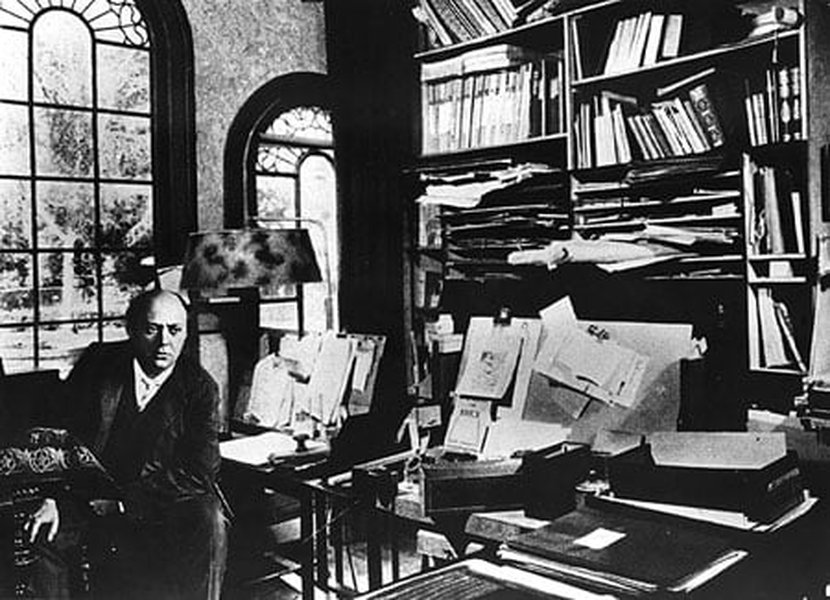
Arnold Schoenberg, whose life and work were deeply intertwined with his spiritual explorations.
Key Insights: Schoenberg's Spiritual Landscape
- Dynamic Faith Journey: Schoenberg's religious life was characterized by significant transitions, moving from his Jewish birth to Lutheranism, and ultimately a profound reconversion to Judaism, reflecting a continuous spiritual and intellectual quest.
- Faith as Resilience: His reconversion to Judaism in 1933 was a powerful political and personal statement against Nazism, with his faith becoming a "mental sanctuary" and a source of resistance.
- Artistic Expression of Belief: Schoenberg's compositions and writings became primary vehicles for his religious and philosophical ideas, exploring themes of the ineffable God, divine law, human suffering, and redemption.
The Evolution of a Worldview: From Vienna to Exile
Arnold Schoenberg's faith and worldview were not static; they evolved dynamically throughout his life, influenced by personal experiences, intellectual currents, and the tumultuous socio-political landscape of his time. Understanding this evolution is key to appreciating the depth of his artistic and philosophical contributions.
Early Life and Initial Religious Transitions
Jewish Roots and Lutheran Conversion
Born in Vienna in 1874 into a lower-middle-class Jewish family, Schoenberg's initial religious upbringing was more cultural than devoutly observant. In 1898, at the age of 24, he converted to Protestantism (Lutheranism). This decision was multifaceted, driven by a desire to assimilate into Western European cultural traditions and as a pragmatic response to the pervasive antisemitism in Austria. However, this conversion did not sever his intrinsic connection to his Jewish heritage, which remained a significant undercurrent in his life. He would later state, "I was always a Jew at heart."
The Pivotal Reconversion to Judaism
A Stand Against Persecution
The rise of Nazism in the 1930s marked a critical turning point. In 1933, Schoenberg formally reconverted to Judaism in a Paris synagogue. This act was a profound personal and political statement, an assertion of his "inescapable" racial and religious heritage and a direct stand against the Nazi regime. This reconversion wasn't merely a return to ancestral roots but a deeply considered culmination of his spiritual development and a response to the intensifying persecution of Jews. It solidified his identity and provided what he termed his "only support" in a world descending into chaos.
Schoenberg's Personal Theology and Worldview
The Ineffable God and Dualistic Outlook
Schoenberg's faith was highly personal and intellectual, rather than strictly orthodox or ritualistic. He grappled with a "dualistic outlook," seeking to reconcile the abstract and concrete, the spiritual and the structured aspects of existence, often perceiving them as an "irresolvable conflict." He viewed the act of musical creation as almost divine, a means of expressing the infinite or God. His concept of God was often abstract and ineffable, a theme explored powerfully in his opera Moses und Aron, where the impossibility of adequately representing the divine is central. He sought a faith "freed from all 'institutional fetters'," emphasizing a direct, personal connection to the spiritual.
Articulating Faith: Schoenberg's Writings and Compositions
Schoenberg did not practice his faith in a conventional, observant manner. Instead, his profound religious convictions and worldview found their most potent expression in his extensive writings and, most significantly, his musical compositions. These works serve as enduring testaments to his spiritual journey.
Literary Expressions of Conviction
Essays, Letters, and Dramatic Works
Schoenberg was a prolific writer, and his essays, letters, and theoretical works offer invaluable insights into his religious thought. In his writings, he often discussed music as an expression of God or the infinite. His correspondence, particularly letters written during and after World War I, and during the rise of Nazism, reveals the depth of his spiritual searching and his increasing identification with Jewish destiny.
A key literary work is the drama Der Biblische Weg (The Biblical Way, 1923–1927). This play advocated for a Jewish homeland, reflecting his growing concern for Jewish national identity and survival. It explores themes of leadership, faith, and the challenges of forging a modern Jewish identity, predating his formal reconversion but clearly signaling his spiritual trajectory.
Musical Testaments: Compositions Steeped in Faith
Schoenberg's musical output, particularly from the 1920s onwards, increasingly engaged with religious and philosophical themes. His innovative twelve-tone technique, far from being a purely intellectual exercise, became a tool for expressing profound spiritual concepts.
Major Religious and Philosophical Works
Several compositions stand out as direct expressions of his faith and worldview:
- Die Jakobsleiter (Jacob's Ladder, 1917–1922): This unfinished oratorio explores themes of spiritual searching, prayer, and the journey of the soul towards God. It represents an early, significant engagement with large-scale religious themes.
- Moses und Aron (1930–1932): Perhaps his most direct and profound exploration of religious ideas, this unfinished opera centers on the conflict between Moses, who can grasp the idea of the one, indivisible, unimaginable God, and Aron, who seeks to make God comprehensible to the people through images. The famous line, "Thou shalt not make an image! For an image restricts, limits, grasps what should remain unlimited and unimaginable," encapsulates a core tenet of Schoenberg's religious thought.
- Kol Nidre, Op. 39 (1938): Composed in the shadow of the Kristallnacht pogroms, this powerful setting of the Yom Kippur prayer for speaker, chorus, and orchestra is a statement of Jewish identity, atonement, and defiance. Schoenberg saw it as a cancellation of oaths made under duress, allowing those who had feigned conversion to return to Judaism.
- A Survivor from Warsaw, Op. 46 (1947): This searingly dramatic cantata for narrator, men's chorus, and orchestra recounts the horrors of the Warsaw Ghetto. It culminates in the chorus singing the Shema Yisrael, the central Jewish affirmation of faith, making it a profound testament to Jewish suffering, resilience, and abiding faith in the face of unimaginable atrocity.
- Psalm 130, Op. 50B (De Profundis, 1950): A setting of the psalm in the original Hebrew, this late work was dedicated to the State of Israel, affirming his connection to his Jewish heritage and the nascent Jewish state.
- Vier Stücke, Op. 27 (Four Pieces for Mixed Chorus, 1925): Some of these pieces incorporate religious texts and mark an early integration of Jewish themes within his twelve-tone compositions.
Visualizing Schoenberg's Faith Expression
The following chart provides an analytical perspective on the intensity and nature of Arnold Schoenberg's faith expression across various dimensions. These are interpretative assessments based on his life and works, rather than empirical data, illustrating the multifaceted ways his worldview manifested.
This chart suggests that while Schoenberg's traditional religious practice was low, his faith found powerful and intense expression through his musical compositions, his exploration of Jewish identity, his personal conviction (especially after reconverting), his public stance against oppression, and its pervasive influence on his overall worldview and philosophical writings.
Schoenberg's Worldview: A Mindmap of Influences and Expressions
Arnold Schoenberg's worldview was a complex tapestry woven from his personal history, religious journey, and artistic innovations. The following mindmap illustrates the interconnectedness of these elements, showing how his experiences and beliefs converged to shape his unique perspective and creative output.
Cultural Assimilation
Defense against Antisemitism"] id1c["Reconversion to Judaism (1933)
Profound Spiritual/Political Statement
Response to Nazism"] id1d["Exile to USA (1933)"] id2["Core Beliefs & Worldview"] id2a["Dualistic Outlook
Abstract vs. Concrete
Spiritual vs. Structured"] id2b["Music as Divine Expression
Creator mirroring God"] id2c["The Ineffable God
Unrepresentable Divinity"] id2d["Faith as Support & Resistance
'Mental Sanctuary'"] id2e["Personal, Intellectual Faith
Not Strictly Orthodox"] id3["Expression in Writings"] id3a["Essays & Letters
Music and the Infinite
Jewish Destiny"] id3b["Der Biblische Weg (Drama)
Jewish Homeland & Identity"] id4["Expression in Musical Compositions"] id4a["Moses und Aron
Inconceivable God, Limits of Representation"] id4b["Die Jakobsleiter
Spiritual Aspiration, Prayer"] id4c["Kol Nidre
Atonement, Jewish Identity, Defiance"] id4d["A Survivor from Warsaw
Holocaust Trauma, Faith, Shema Yisrael"] id4e["Psalm 130 (De Profundis)
Affirmation of Jewish Heritage"] id4f["Twelve-Tone Technique
A means for spiritual expression"] id5["Socio-Political Context"] id5a["Rising Antisemitism"] id5b["World War I"] id5c["Rise of Nazism"] id5d["The Holocaust"]
This mindmap highlights how Schoenberg's life events, particularly his encounters with antisemitism and the rise of Nazism, profoundly influenced his religious reconversion and solidified a worldview where faith served as both a personal anchor and a form of cultural and political resistance. This, in turn, permeated his writings and found its most potent voice in his groundbreaking musical compositions.
Table of Key Compositions Reflecting Faith and Worldview
The following table summarizes some of Arnold Schoenberg's most significant compositions that provide evidence of his evolving faith and worldview, highlighting their thematic concerns and the period of their creation.
| Composition Title (Opus) | Years Composed | Primary Religious/Worldview Themes | Significance |
|---|---|---|---|
| Die Jakobsleiter (Jacob's Ladder) | 1917–1922 (unfinished) | Spiritual quest, prayer, ascent of the soul, philosophical contemplation | Early large-scale exploration of spiritual themes, blending skepticism and faith. |
| Vier Stücke (Four Pieces for Mixed Chorus), Op. 27 | 1925 | Incorporation of religious texts, questioning divine justice, Jewish themes | Early use of twelve-tone technique for religious expression; includes "Du sollst nicht, du mußt." |
| Moses und Aron (Moses and Aaron) | 1930–1932 (unfinished) | The nature of God, ineffability, limits of representation, faith vs. image, divine law | Pinnacle of his religious-philosophical questioning; central to understanding his theology. |
| Kol Nidre, Op. 39 | 1938 | Atonement, Jewish identity, return to faith, solidarity, resistance to persecution | Composed after reconversion and immigration; a direct address to Jewish tradition. |
| A Survivor from Warsaw, Op. 46 | 1947 | Holocaust trauma, Jewish suffering, ultimate faith (Shema Yisrael), memory, resistance | Most explicit musical statement on the Holocaust and Jewish perseverance. |
| Psalm 130 (De Profundis), Op. 50B | 1950 | Supplication, hope, divine mercy, affirmation of Jewish heritage | Late work in Hebrew, dedicated to the State of Israel, showing enduring commitment. |
| Modern Psalm, Op. 50C | 1950 (unfinished) | Personal prayer, relationship with God, contemplation on modern spirituality | Schoenberg's final, deeply personal religious musical statement. |
Schoenberg's "Moses und Aron": A Musical Theodrama
One of Schoenberg's most profound explorations of faith is his opera Moses und Aron. The work dramatizes the biblical story, focusing on the tension between Moses, who has a pure, abstract understanding of God, and his brother Aron, who attempts to communicate this understanding to the Israelites through tangible miracles and images, like the Golden Calf. The video below offers a glimpse into this monumental work, which Schoenberg himself considered a dramatization of his religious beliefs.
Excerpt or discussion related to Schoenberg's opera "Moses und Aron."
This opera, even in its unfinished state (Act III was never set to music, though the libretto exists), stands as a powerful testament to Schoenberg's engagement with the core tenets of monotheistic faith, particularly the challenge of representing the unrepresentable. It reflects his deep contemplation on the nature of divine law, revelation, and the human struggle to comprehend the infinite. The music itself, employing his rigorous twelve-tone system, mirrors the austerity and intellectual depth of its subject matter.
Frequently Asked Questions (FAQ)
Was Arnold Schoenberg religiously observant?
How did antisemitism affect Schoenberg's faith?
Did Schoenberg believe his twelve-tone system had religious significance?
What does "Der Biblische Weg" reveal about Schoenberg's worldview before his formal reconversion?
Conclusion: A Legacy of Faith and Innovation
Arnold Schoenberg's faith and worldview were integral to his identity as a man and an artist. His journey through different religious affiliations culminated in a profound reaffirmation of his Jewish heritage, a decision deeply influenced by personal conviction and the stark realities of his time. Far from being a peripheral aspect of his life, Schoenberg's spiritual and philosophical concerns were a driving force behind some of his most powerful and enduring compositions. His writings and music offer rich evidence of a complex, evolving faith—one that grappled with the ineffable, championed ethical commitment, and found ultimate expression in the revolutionary soundscapes he created. His legacy is not only that of a musical innovator but also of a profound thinker whose art continues to resonate with spiritual depth and intellectual rigor.
Recommended Further Exploration
- What are the central themes in Arnold Schoenberg's opera Moses und Aron?
- How did the twelve-tone technique influence 20th-century music?
- Explore the impact of exile on the works of artists and composers during the Nazi era.
- Compare Arnold Schoenberg's religious expression with that of other 20th-century composers like Igor Stravinsky or Leonard Bernstein.
References

Last updated May 21, 2025