
Unlocking Focus: The Compelling Case for Regulating Cell Phone Use in Schools
Exploring how limiting smartphone access, except for essential entry and exit communication, can revolutionize the learning environment.
The debate around cell phones in schools is intensifying, with a growing body of evidence and expert opinion suggesting that their unrestricted use can be detrimental to academic achievement, student well-being, and the overall school climate. This comprehensive guide explores the rationale behind prohibiting cell phone use during school hours—allowing communication only upon arrival and departure—and provides insights for crafting a persuasive argument in favor of such policies. As of May 21, 2025, this issue remains at the forefront of educational discourse.
Highlights: The Core Arguments
- Enhanced Academic Performance: Restricting cell phone access during the school day is linked to improved student focus, better retention of information, and higher test scores by minimizing digital distractions.
- Improved Student Well-being: Limiting exposure to social media and potential cyberbullying during school hours can positively impact students' mental health, reducing anxiety and stress, and fostering healthier social interactions.
- Growing National Consensus: A significant number of U.S. states and individual school districts are successfully implementing policies that restrict cell phone use, reflecting a broader understanding of the benefits for the educational environment.
The Rising Tide: Why Schools Are Reconsidering Cell Phone Access
The ubiquitous nature of smartphones has brought undeniable benefits to modern life, yet their presence in educational settings presents a complex challenge. Schools across the nation are grappling with the constant battle for students' attention, as notifications, social media, and games compete with lessons. This has led to a significant shift in perspective, with many educators and policymakers advocating for stricter cell phone policies to create more conducive learning environments. The core idea is not to demonize technology, but to strategically manage its presence to maximize educational outcomes and student welfare.
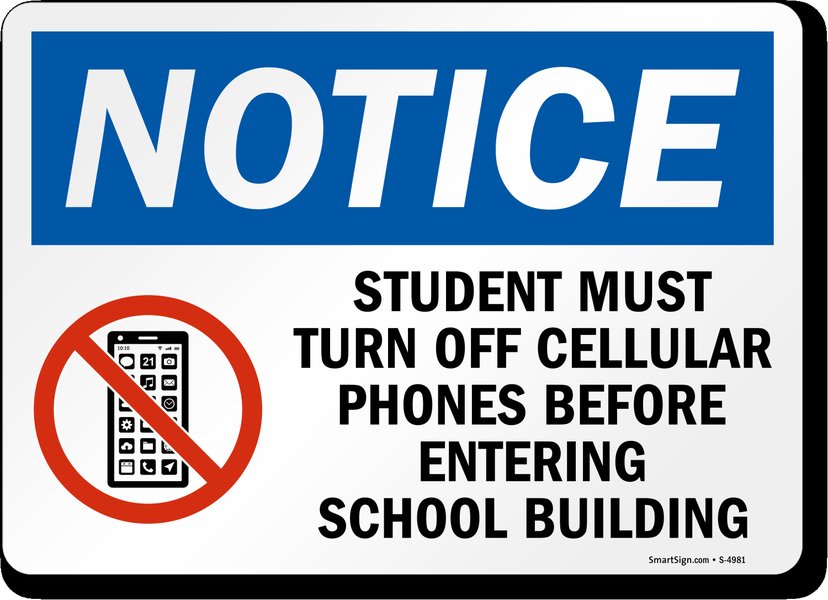
A common sign indicating policies restricting cell phone use in designated areas.
Sharpening Minds: Academic Advantages of Phone-Free Learning Zones
One of the most compelling arguments for limiting cell phone use in schools revolves around academic improvement. The constant barrage of notifications and the allure of digital content significantly fragment students' attention.
Enhanced Focus and Concentration
When cell phones are not readily accessible, students are better able to concentrate on lectures, classroom activities, and independent work. As the National Center for Education Statistics (NCES) Commissioner Peggy Carr noted, "With 53 percent of school leaders reporting negative impacts of cell phone use on academic performance, and even more citing negative impacts on students’ mental health and attention spans, schools are facing a critical issue." (Source: NCES). This reduction in multitasking allows for deeper cognitive processing and engagement with educational material.
Improved Learning Retention and Test Scores
Research supports the notion that cell phone restrictions can lead to tangible academic gains. Dylan Lukes from the Harvard Graduate School of Education states, "Studies consistently show that allowing phones in the classroom negatively impacts test scores and long-term learning retention." (Source: Harvard Graduate School of Education). For instance, a study in English cities found that test scores for 11-16 year olds increased by 6.4% after cell phone bans were introduced, with the impact being even more pronounced for low-achieving students. Removing the phone distraction allows students to better encode and recall information.
Fostering Well-being: The Mental and Social Upsides
Beyond academics, limiting cell phone use during school hours can have profound positive effects on students' mental and social well-being.
Alleviating Mental Health Pressures
The school day can offer a respite from the often-overwhelming pressures of social media and constant connectivity. As Education Week reported, "Minimizing distractions from phones can ease students' stress and anxiety, contributing to a healthier school environment." (Source: Education Week). By creating a phone-free zone, schools can help reduce issues like social comparison, fear of missing out (FOMO), and the anxiety associated with maintaining an online persona.
Curbing Cyberbullying and Promoting Positive Social Interactions
Cell phones can unfortunately be tools for cyberbullying, which can escalate quickly within a school environment. A study of Norwegian middle schools, cited by GovTech, "concluded that smartphone bans reduced bullying rates in boys and girls." (Source: GovTech). Furthermore, when students are not engrossed in their screens, they are more likely to engage in face-to-face conversations, collaborate on projects, and develop crucial interpersonal skills. Orange County Public Schools in Florida, for example, observed "significant improvements in student engagement, social interactions, and a decline in discipline issues" after implementing a full-day phone ban. (Source: Ethics & Public Policy Center).

A classroom environment fostering engagement without the distraction of personal cell phones.
Increased Physical Activity
An often-overlooked benefit is the potential for increased physical activity. The Digital Wellness Lab highlights a Danish study where "a smartphone ban significantly increased the level of physical activity of students during indoor and..." breaks. (Source: Digital Wellness Lab). Less screen time can translate to more movement and active play during recess and lunch periods.
The National Landscape: A Wave of Supportive Policies
The movement to restrict cell phone use in schools is not an isolated phenomenon. It's a growing trend supported by educators, policymakers, and a significant portion of the public, reflecting a collective concern over the impact of these devices on young people.
State-Level Initiatives
As of May 2025, the momentum is undeniable. According to NBC News, "half of U.S. states have passed laws banning or regulating cell phone use in schools." (Source: NBC News). This bipartisan effort signifies a broad recognition of the issue's importance. Below is a table summarizing policies in a few key states:
| State | Policy Type | Key Features | Status/Effective Date |
|---|---|---|---|
| Florida | Legislative Ban | Bans cell phone use during instructional time; blocks social media on district Wi-Fi. | Effective May 2023 |
| New York | Mandated District Plans | Requires districts to implement "bell-to-bell" restrictions on cell phone use. | Plans by 2025-2026 academic year |
| Louisiana | Statewide Ban | Prohibits use and possession during school day; devices off and stored. Exceptions for accommodations. | Effective 2024-2025 academic year |
| California | Mandated District Policies | Requires districts to develop policies limiting/prohibiting smartphone use, with exceptions. | Policies by July 2026 |
| Arizona | Mandated School Limits | Instructs schools to limit student cell phone use during the school day, including non-instructional time. | Effective April 2025 |
This table provides a snapshot of how different states are approaching cell phone regulation in schools, illustrating the national trend towards greater restriction.
Educator and Expert Endorsements
Educators are often at the forefront of advocating for these changes. The National Education Association (NEA) reports, "Take Cellphones Out of the Classroom, Educators Say... As of September 2024, 15 states have passed laws or enacted policies that ban or restrict students' use of cellphones in schools statewide." (Source: NEA Today). Experts from institutions like Johns Hopkins University also explain the research-backed rationale for such restrictions. (Source: Johns Hopkins Hub).
Visualizing the Impact: Factors Influencing School Cell Phone Policies
The decision to implement a cell phone policy involves balancing various factors. The radar chart below offers an opinionated visualization of how different policy approaches might score on key considerations. A "Bell-to-Bell Ban with Entry/Exit Exception" (as proposed in the user's query) aims to maximize academic and well-being benefits while still addressing safety communication needs.
This chart subjectively compares potential outcomes of different cell phone policies. The "Bell-to-Bell Ban with Entry/Exit Exception" is depicted as offering strong benefits across multiple domains, particularly in academic and mental health aspects.
Balancing Act: Addressing Concerns and Practical Implementation
Implementing any new school policy requires careful consideration of potential concerns and practical strategies for enforcement.
The Entry/Exit Communication Compromise
A primary concern for parents is the ability to contact their children, especially for coordination or in emergencies. Allowing cell phone use strictly for communication upon arrival at school and before departure from school premises directly addresses this concern. As the National Parents Union suggests, "Except for communication at entry and exit, restricting phone use helps maintain safety while limiting distractions." (Source: National Parents Union). This balanced approach ensures students are reachable at key transition times without allowing phones to become a constant interruption during learning hours. For urgent matters during the school day, established school office communication channels remain the primary contact point.
Effective Enforcement Strategies
Successful implementation hinges on clear, consistent, and well-communicated policies. Some schools employ strategies such as:
- Magnetic Locking Pouches: Students place their phones in special pouches (e.g., Yondr) upon entering school, which are unlocked at dismissal. This method is used in various schools, including some in Virginia and New York City.
- Designated Storage: "Cell phone jails" or designated lockers where phones must be stored during the school day.
- Clear Consequences: Well-defined consequences for policy violations.

Phone pouches are one strategy schools use to manage cell phone access during the day.
Connecting the Dots: Key Factors in School Cell Phone Policies
The decision-making process around school cell phone policies is multifaceted. The mindmap below illustrates the interconnected elements involved, from the intended benefits and potential challenges to the various stakeholders whose perspectives are crucial.
(Focus, Grades)"] id1b["Enhanced Mental Health
(Reduced Stress, Anxiety)"] id1c["Improved Social Skills
(Face-to-face Interaction)"] id1d["Reduced Cyberbullying"] id1e["Increased Physical Activity"] id2["Challenges"] id2a["Parental Concerns
(Emergencies, Communication)"] id2b["Enforcement Difficulties"] id2c["Student Resistance"] id2d["Defining 'Emergency'"] id3["Strategies & Solutions"] id3a["Bell-to-Bell Ban
with Entry/Exit Exception"] id3b["Magnetic Locking Pouches
(e.g., Yondr)"] id3c["Clear Communication of Policy"] id3d["Designated School Contact
for Emergencies"] id3e["Phased Implementation"] id4["Stakeholders"] id4a["Students"] id4b["Parents & Guardians"] id4c["Teachers & Educators"] id4d["School Administrators"] id4e["Policymakers"]
This mindmap visualizes the complex interplay of factors surrounding the implementation of cell phone policies in educational institutions.
Expert Insights: Understanding the Drive for Cell Phone Restrictions
Many experts and educators are vocal about the need for effective cell phone policies in schools. The following video provides an overview of what makes such policies effective, touching upon various considerations discussed.
This video, "What Makes an Effective School Cellphone Policy? An Overview" by Education Week, delves into the considerations for creating and implementing successful cell phone policies in K-12 schools.
Crafting Your Persuasive Message: A Speech Outline
To effectively advocate for a policy prohibiting cell phone use during school hours (except for entry/exit communication), a well-structured speech is essential. Here's a suggested outline:
I. Introduction
A. Hook
Start with a compelling statistic (e.g., "Did you know that 72% of high school teachers view cell phone distraction as a major classroom problem?") or a brief, relatable anecdote about classroom distraction.
B. Thesis Statement
Clearly state your position: "Implementing a school-wide prohibition on cell phone use from the first bell to the last, with the sensible exception for communication only during entry and exit, is crucial for enhancing academic focus, promoting student well-being, and fostering a more positive and engaged learning community."
C. Roadmap
Briefly outline the key arguments you will present (e.g., academic benefits, mental and social health improvements, national trends, and how the entry/exit rule addresses concerns).
II. Body Paragraph 1: The Academic Imperative – Reclaiming Focus
A. Topic Sentence
Unrestricted cell phone access during school hours directly undermines academic performance by creating persistent distractions.
B. Evidence & Elaboration
- Cite studies showing reduced attention spans and lower test scores (e.g., Harvard GSE, English study improving scores by 6.4%).
- Quote educators on the challenge of phone distractions (e.g., NCES data on school leaders' reports).
- Explain how the proposed policy, even with entry/exit use, frees up instructional time for learning.
III. Body Paragraph 2: Nurturing Well-being in a Focused Environment
A. Topic Sentence
Removing the constant presence of personal cell phones during the school day is a vital step in supporting student mental health and positive social development.
B. Evidence & Elaboration
- Discuss links between constant connectivity/social media and increased student anxiety, stress, and cyberbullying (cite EdWeek, GovTech on reduced bullying).
- Highlight how phone-free time encourages face-to-face interaction and reduces social pressures (cite Orange County schools' experience).
- Mention increased physical activity as a co-benefit.
IV. Body Paragraph 3: Practicality and Growing Support – A Balanced Approach
A. Topic Sentence
The proposed policy is not only beneficial but also practical and aligns with a growing national consensus on managing technology in schools.
B. Evidence & Elaboration
- Address parental concerns about safety and communication by emphasizing the entry/exit allowance (cite National Parents Union). Explain that school offices remain points of contact for emergencies.
- Highlight the widespread adoption of similar policies across many states (cite NBC News on half of U.S. states) and support from educators (NEA).
- Briefly mention successful enforcement strategies (e.g., Yondr pouches) to demonstrate feasibility.
V. Conclusion
A. Restate Thesis
Reiterate the core argument for the "entry-to-exit communication only" cell phone policy.
B. Summarize Main Points
Briefly recap the academic, mental health, and social benefits.
C. Call to Action
Urge the audience (e.g., school board, parents, fellow students) to support and advocate for the implementation of this balanced and beneficial cell phone policy.
D. Final Thought
End with a powerful statement about prioritizing a focused, healthy, and engaging learning environment for all students.
Titillating Titles: 10 Options for Your Speech
- "Phones at the Gate: Unlocking Learning by Locking Up Distractions"
- "Focus Forward: Why an Entry-to-Exit Phone Policy Benefits Every Student"
- "Bell to Bell, Screen-Free: The Case for Smarter School Phone Rules"
- "Beyond the Buzz: Creating Healthier, More Engaged Schools"
- "Silent Classrooms, Thriving Minds: Advocating for Limited Phone Access"
- "The Entry/Exit Advantage: Balancing Safety with Scholastic Success"
- "Disconnect to Reconnect: Why Our Students Need Phone-Free School Days"
- "Smart Policy for Smartphones: A Call for School-Day Restrictions"
- "Protecting Our Students: The Urgency of Cell Phone Limits in Education"
- "From Distraction to Distinction: How Regulated Phone Use Elevates Schools"
Elevating Your Speech: Essential Tips for Impact
- Use Vivid Language and Storytelling: Share relatable anecdotes (hypothetical or based on reports) of how phone distractions impact learning or how bans have improved school life.
- Incorporate Strong Data and Quotations: Weave in statistics (e.g., "72% of teachers find phones a major distraction") and expert quotes from sources like Harvard, NCES, or NEA.
- Address Counterarguments Proactively: Directly acknowledge concerns about safety and parental communication, then clearly explain how the "entry/exit only" rule and school office protocols mitigate these.
- Maintain a Positive Frame: Focus on the benefits for students and the school community (improved focus, better mental health, stronger relationships) rather than solely on restriction.
- Visual Aids (If Applicable): If the setting allows, a simple slide with a key statistic, a quote, or an image of phone pouches can enhance your message.
- Practice Your Delivery: Rehearse your speech to ensure smooth flow, confident delivery, and appropriate timing. Pay attention to tone and emphasis.
- End with a Clear Call to Action: Be specific about what you want your audience to do (e.g., support a policy proposal, talk to school administrators, sign a petition).
- Connect Emotionally: While data is important, appealing to the audience's desire for their children's success and well-being can be very persuasive.
Frequently Asked Questions (FAQ)
Why is a policy allowing cell phone use only at entry and exit points better than a total ban or no restrictions at all?
How can schools effectively enforce such a cell phone policy?
What about genuine emergencies that might occur during the school day?
Are there any exceptions for students who might need their phones for medical reasons or specific learning accommodations?
What are the main arguments against widespread cell phone bans in schools?
Conclusion: Embracing a Focused Future for Students
Prohibiting cell phone use in schools, with the practical exception for communication at entry and exit, offers a powerful strategy to enhance academic achievement, foster positive mental health, and cultivate a more engaged and interactive school environment. While challenges in implementation exist, the growing body of evidence and the increasing adoption of such policies across the nation underscore their significant benefits. By thoughtfully crafting and consistently enforcing these rules, schools can help students disconnect from digital distractions and reconnect with their learning, their peers, and their overall well-being, ultimately preparing them for a more focused and successful future.
Recommended Further Exploration
- What are the long-term impacts of reduced cell phone use during school on student development?
- How do different enforcement methods for school cell phone policies compare in effectiveness?
- What role does parental involvement play in the success of school cell phone restriction policies?
- Are there studies comparing student academic performance in schools with and without strict cell phone bans?
References
Last updated May 21, 2025