
Mastering the Art of Setting Effective Boundaries
Navigating relationships and protecting your well-being through clear limits.
Setting effective boundaries is a fundamental skill for fostering healthy relationships and safeguarding your personal well-being. It's not about building walls, but rather creating guidelines that define how you wish to be treated and what you are willing and able to give in different interactions. Boundaries are essential for maintaining your identity, preventing burnout, reducing resentment, and empowering you to live a life aligned with your values and needs.
Key Insights into Effective Boundary Setting
- Self-Reflection is the Foundation: Understanding your own needs, values, and limits is the crucial first step before you can effectively communicate them to others.
- Clarity and Directness are Paramount: When stating your boundaries, be honest, open, and unambiguous. Avoid hints or passive-aggressive behavior.
- Consistency and Follow-Through are Essential: Setting a boundary is just the beginning; you must consistently uphold it and be prepared to enforce consequences if it is crossed.
Understanding What Healthy Boundaries Entail
Healthy boundaries are the personal limits you establish to protect your physical, emotional, and mental space. They serve as a roadmap for appropriate behavior in your relationships, ensuring that you are treated with respect and that your needs are met. Think of them as stop signs in your life, where you determine what is acceptable and what is not based on your beliefs, values, and personal history.
Without healthy boundaries, you risk feeling depleted, resentful, and overwhelmed. You might find yourself consistently overextending yourself, allowing others to take advantage, or sacrificing your own well-being for the sake of others. Conversely, overly rigid boundaries can lead to isolation and prevent meaningful connection.
Boundaries can vary depending on the type of relationship, whether it's with family, friends, romantic partners, colleagues, or even in your relationship with technology. They can encompass various aspects of your life, including:
- Time Boundaries: Setting limits on your availability and commitments.
- Energy Boundaries: Recognizing your capacity and not overcommitting your emotional or mental energy.
- Emotional Boundaries: Protecting your emotional space and not taking on the feelings or problems of others unnecessarily.
- Physical Boundaries: Defining your personal space and comfort level with physical touch or proximity.
- Material Boundaries: Setting limits on lending or giving away your possessions or money.
The Process of Setting Effective Boundaries
Step-by-Step Guidance for Establishing Your Limits
Setting effective boundaries is a process that requires introspection, clear communication, and consistent reinforcement. Here's a breakdown of key steps:
1. Engage in Self-Reflection and Identify Your Needs
Before you can articulate your boundaries to others, you need to understand them yourself. This involves reflecting on situations where you felt uncomfortable, resentful, or taken advantage of. Ask yourself:
- What behaviors or requests from others leave you feeling drained or violated?
- What are your core values and priorities in life and relationships?
- What do you need to feel safe, respected, and comfortable?
- Where are you currently overextending yourself or sacrificing your well-being?
Determining your top priorities in both work and life can provide a strong foundation for identifying where boundaries are most needed. Knowing yourself and understanding why you need certain boundaries is crucial for the motivation to set and maintain them.

Reflecting on personal needs is the first step in setting boundaries.
2. Start Small and Be Specific
If setting boundaries feels daunting, begin with one or two areas where you feel the most impact. Choose situations or relationships where establishing a boundary would significantly improve your well-being. When you're ready to communicate a boundary, be as clear and straightforward as possible. Avoid vague language or passive hints. State your need or request directly.
3. Communicate Your Boundaries Clearly and Respectfully
Once you've identified your boundaries, it's time to communicate them to the relevant people. Choose an appropriate time and place for this conversation. Be assertive but respectful. You are simply stating your needs and limits, not making demands or blaming the other person.
A helpful template for communicating boundaries is: "This is my boundary, and here's why it's important to me." You can also use phrases like, "I'd prefer if..." or "I need to limit my availability for..."
It's important to be honest and open about your needs. Telling people point blank if how they treat you isn't okay is necessary for healthy interaction. Avoid letting resentment build up by addressing issues directly and early on.
4. Be Prepared for Pushback and Stay Consistent
Setting boundaries, especially in pre-existing relationships, can sometimes be met with resistance or misunderstanding. People may be accustomed to the old dynamic and might not immediately respect your new limits. It's crucial to anticipate this and be prepared to gently but firmly reiterate your boundaries.
Consistency is key to reinforcing your boundaries. If you set a limit but then back down when it's challenged, you teach others that your boundaries are not firm. This doesn't mean you need to be rigid in every situation; some boundaries can be flexible depending on the context and relationship. However, for your core boundaries, consistency is vital.
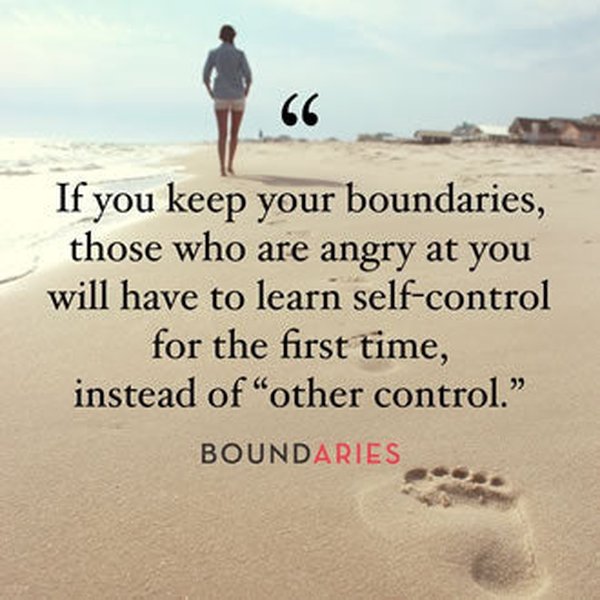
Pushback is possible when setting boundaries, requiring consistent reinforcement.
5. Understand and Enforce Consequences
For boundaries to be effective, there need to be consequences if they are crossed. These consequences are not punishments, but rather actions you take to protect yourself and reinforce your limits. Clearly stating the consequence when you set the boundary can be helpful, but it's not always necessary initially. The crucial part is following through if the boundary is violated.
Consequences can range from ending a conversation, limiting the time spent with that person, or in more serious situations, taking a break from communication. The consequence should be proportionate to the boundary violation.
6. Learn to Say No Graciously (When Needed)
Saying "no" is an integral part of setting boundaries. You don't need to over-explain or apologize excessively. A simple, clear "no" is sufficient. If appropriate, you can offer an alternative or suggest other resources, but you are not obligated to do so.
Declining invitations tactfully with deflection can be a useful technique, especially in professional settings or with acquaintances, to maintain positive relationships while still honoring your limits.
7. Practice Self-Care and Seek Support if Necessary
Setting and maintaining boundaries can be emotionally challenging. It's essential to prioritize self-care and have a support system in place. This could involve talking to a trusted friend, family member, or seeking professional help from a therapist or counselor.
A mental health professional can provide guidance, strategies, and support as you navigate the process of establishing healthier boundaries. If you find that people are consistently crossing your boundaries, or if you struggle with feelings of guilt or worthlessness when setting limits, professional support can be particularly beneficial.

Self-care is vital when establishing and maintaining boundaries.
Types of Boundaries and Examples
Understanding the different types of boundaries can help you identify the specific areas in your life where you need to establish clearer limits. Here's a table outlining common types of boundaries and illustrative examples:
| Type of Boundary | Description | Examples |
|---|---|---|
| Physical Boundaries | Limits regarding personal space, physical touch, and privacy. | Asking someone not to stand too close, requesting privacy for your belongings, stating your comfort level with hugs. |
| Emotional Boundaries | Protecting your feelings and not being responsible for the emotions of others; limiting emotional dumping. | Saying you are not in a place to hear about someone's problems right now, not taking on blame for things you didn't do, expressing your feelings without expecting others to fix them. |
| Time Boundaries | Setting limits on your availability for others and managing your time effectively. | Committing to work hours, stating when you are available for calls or meetings, limiting the duration of visits. |
| Mental Boundaries | Respecting your own thoughts and opinions and allowing others to have theirs without feeling the need to change them; protecting your mental energy. | Agreeing to disagree on a topic, choosing not to engage in arguments that drain you, setting aside time for quiet reflection. |
| Material Boundaries | Setting limits on lending or giving away your possessions or money. | Declining requests to borrow money, setting rules about using your personal items, not feeling obligated to share everything. |
| Sexual Boundaries | Defining your comfort level and limits regarding sexual interaction. | Clearly communicating what you are and are not comfortable with sexually. |
Why Setting Boundaries is Crucial for Well-being and Relationships
Setting healthy boundaries is not a selfish act; it is an essential component of self-care and a foundation for healthy, fulfilling relationships. When you have clear boundaries, you:
-
Maintain Your Identity: Boundaries help you differentiate yourself from others and maintain your sense of self, preventing enmeshment or losing yourself in relationships.
-
Prevent Resentment: By expressing your needs and limits, you prevent the buildup of frustration and resentment that can occur when your boundaries are repeatedly crossed.
-
Empower Yourself: Setting boundaries gives you a sense of control and agency over your life and interactions.
-
Improve Communication: Establishing boundaries requires clear and honest communication, which can strengthen relationships.
-
Foster Mutual Respect: When you respect your own needs and communicate them clearly, you teach others how to respect you. Healthy relationships are built on mutual respect for each other's boundaries.
-
Reduce Burnout: By setting limits on your time and energy, you protect yourself from taking on too much and burning out.
-
Promote Healthy Relationships: Boundaries create a framework for healthy interactions, preventing unhealthy dynamics like codependency or manipulation.
Boundaries are not barriers to connection; they are bridges to more sustainable and authentic relationships. By defining what is and isn't acceptable, you create space for healthier interactions based on respect and understanding.
This video discusses how setting boundaries can be an act of kindness, both to yourself and others.
Navigating Challenges in Setting Boundaries
Setting boundaries can be challenging, especially if you are not used to asserting your needs or if you have a history of people-pleasing. Here are some common challenges and how to address them:
Fear of Conflict or Rejection
Many people avoid setting boundaries because they are afraid of upsetting others or being rejected. It's important to remember that your worth is not tied to whether or not someone approves of your boundaries. Healthy relationships involve respecting each other's limits. If someone consistently reacts negatively to your boundaries, it may be a sign of an unhealthy dynamic.
Feeling Guilty or Selfish
You might feel guilty or selfish when you start prioritizing your own needs. This is a common feeling, particularly if you have been conditioned to always put others first. Remind yourself that setting boundaries is an act of self-respect and is necessary for your well-being. You are not responsible for the feelings or reactions of others.
Inconsistency in Enforcement
It can be difficult to consistently enforce boundaries, especially when you are tired or feeling vulnerable. However, inconsistency can undermine your efforts. Practice sticking to your limits, and remember that it's okay to course-correct if you slip up. Each instance of enforcing your boundary reinforces its importance.
Dealing with Difficult People
Setting boundaries with individuals who are manipulative, narcissistic, or consistently disrespectful can be particularly challenging. In such cases, you may need to set more rigid boundaries or consider limiting contact if the behavior persists despite your efforts. Seeking professional guidance is highly recommended when dealing with such dynamics.
Frequently Asked Questions About Setting Boundaries
What is the difference between a boundary and a rule?
A boundary is about establishing your personal limits and what you will accept, whereas a rule is typically an attempt to control the behavior of another person. Boundaries focus on your actions and responses if your limits are not respected, while rules often dictate what others can or cannot do.
How do I set boundaries without feeling mean?
Setting boundaries with kindness and respect is possible. Focus on expressing your needs and feelings using "I" statements, rather than blaming or criticizing the other person. Explain the reason behind your boundary if you feel comfortable doing so. Remember that setting a boundary is an act of self-respect, not aggression.
Can I set boundaries in all types of relationships?
Yes, healthy boundaries are essential in all relationships, including with family, friends, romantic partners, colleagues, and even with yourself. The specific boundaries may vary depending on the nature of the relationship.
What if someone doesn't respect my boundaries?
If someone consistently disrespects your boundaries after you have clearly communicated them, you may need to enforce the consequences you've established. This could involve limiting contact, changing the nature of the relationship, or in severe cases, ending the relationship. Their reaction is not a reflection of your worth or the validity of your boundaries.
Is it ever too late to set boundaries?
It's never too late to start setting healthy boundaries. While it can be more challenging in pre-existing relationships where certain dynamics are established, it is still possible and beneficial to begin asserting your needs and limits at any time.
References
Last updated April 26, 2025