
Smart Farming and Agriculture with Python
Exploring Code, Automation, and Data-Driven Decisions in Modern Agriculture
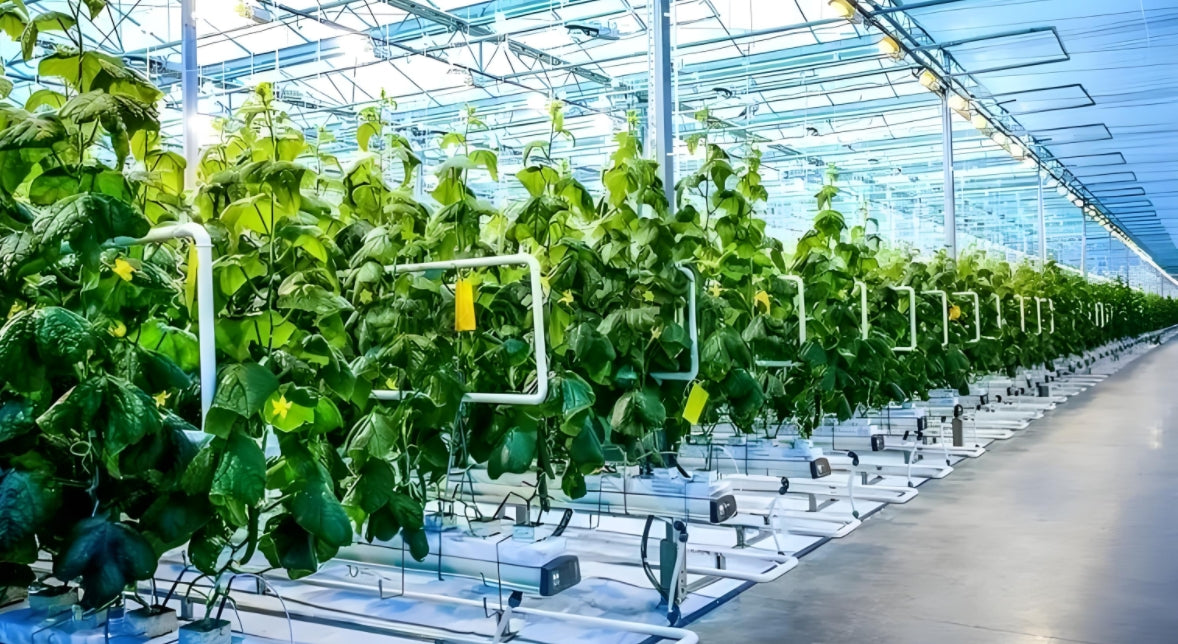
Key Highlights
- Automation and IoT Integration: Leverage Python to interface with sensors, control actuators, and manage real-time data for automated irrigation and environmental control.
- Data Analytics and Predictive Modeling: Use powerful libraries for processing historical and real-time data to optimize crop yield, disease prediction, and resource management.
- Computer Vision and Smart Diagnostics: Employ image processing and machine learning to detect crop diseases, monitor plant health, and improve precision agriculture.
Introduction
In recent years, the agriculture industry has experienced a radical transformation powered by emerging technologies. Python has emerged as an invaluable tool in smart farming and agriculture due to its simplicity, rich ecosystem of libraries, and robust community support. Not only does Python provide an efficient method for integrating IoT sensors and actuators in a physical environment, but it also enables advanced data analytics and predictive modeling capabilities.
This comprehensive guide explores how Python can be used in smart farming and agriculture. We will delve into various applications ranging from automated irrigation systems to crop disease detection using machine learning. The discussion will include detailed code examples, practical project ideas, and technical insights into system architecture. Whether you are a hobbyist, a researcher, or an industry professional, you will find valuable information on leveraging Python to modernize traditional agricultural practices.
Applications of Python in Smart Farming and Agriculture
Automation and IoT Integration
One of the primary applications of Python in agriculture is the automation of routine tasks. From controlling irrigation systems to monitoring weather conditions, Python enables seamless communication between hardware devices and the management software. Using libraries like GPIO and pySerial, Python scripts can read real-time sensor data—such as soil moisture, temperature, and humidity—and activate actuators like water pumps and cooling systems accordingly.
Sensor Integration and Actuator Control
By interfacing with sensors, Python allows farmers to collect data from the field continuously. When this data exceeds certain thresholds (for example, low soil moisture), the program can trigger an irrigation cycle automatically. Here’s a simplified example to demonstrate this logic:
# Example: Automated Irrigation Based on Soil Moisture
import random
import time

# Define sensor thresholds
SOIL_MOISTURE_THRESHOLD = 40  # below this value, irrigation is activated
TEMPERATURE_THRESHOLD = 35    # measure in Celsius
HUMIDITY_THRESHOLD = 30       # percentage

def read_soil_moisture():
    # Simulate a sensor reading, replace this logic with actual sensor integration code.
    return random.randint(20, 80)

def read_temperature():
    return round(random.uniform(15, 40), 1)

def read_humidity():
    return random.randint(20, 90)

def activate_irrigation(duration=5):
    print("Irrigation system activated...")
    time.sleep(duration)
    print("Irrigation system deactivated.")

def log_data(soil, temp, humidity):
    print(f"Sensor Readings -> Soil Moisture: {soil}%, Temperature: {temp}°C, Humidity: {humidity}%")

def smart_farming_cycle():
    soil_moisture = read_soil_moisture()
    temperature = read_temperature()
    humidity = read_humidity()

    log_data(soil_moisture, temperature, humidity)

    if soil_moisture < SOIL_MOISTURE_THRESHOLD:
        print("Soil moisture below threshold. Activating irrigation...")
        activate_irrigation()
    else:
        print("Soil moisture adequate. Irrigation not needed.")

    if temperature > TEMPERATURE_THRESHOLD:
        print("Warning: High temperature detected, consider cooling measures.")
    if humidity < HUMIDITY_THRESHOLD:
        print("Warning: Low humidity levels detected, monitor conditions closely.")

    print("-" * 50)

def main():
    cycles = 5  # Define number of cycles for simulation
    for i in range(cycles):
        print(f"Cycle {i+1}:")
        smart_farming_cycle()
        time.sleep(2)

if __name__ == "__main__":
    main()
This code simulates a basic smart farming system. In a production scenario, rather than generating random sensor values, you would interact with actual sensor APIs or hardware libraries to gather real-time data. In addition, the irrigation activation may incorporate more sophisticated control systems and safety checks.
Predictive Analytics and Machine Learning
Another vital application is leveraging Python for data analysis and predictive modeling in agriculture. With libraries such as Pandas, NumPy, Scikit-learn, and TensorFlow, farmers and researchers can analyze historical data to predict crop yields, forecast weather patterns, and optimize planting schedules. Predictive models can also assist in detecting potential diseases by analyzing factors such as soil health, moisture levels, and historical pest outbreaks.
Crop Yield Prediction
Crop yield prediction is an essential element of precision agriculture that involves creating machine learning models to estimate the expected yield based on various environmental parameters. The following code snippet demonstrates a basic approach using a Random Forest Regressor:
import pandas as pd
from sklearn.model_selection import train_test_split
from sklearn.ensemble import RandomForestRegressor
from sklearn.metrics import mean_squared_error

# Load dataset with features and target yield value
data = pd.read_csv('crop_data.csv')

# Splitting the dataset into features and target variable
X = data.drop('yield', axis=1)
y = data['yield']

# Split data into training and testing sets
X_train, X_test, y_train, y_test = train_test_split(X, y, test_size=0.2, random_state=42)

# Train a Random Forest model
model = RandomForestRegressor()
model.fit(X_train, y_train)

# Predict on testing set
y_pred = model.predict(X_test)

# Evaluate the model performance with Mean Squared Error
mse = mean_squared_error(y_test, y_pred)
print(f"Mean Squared Error: {mse}")
In a real-world scenario, the dataset could include multifaceted data such as weather information, soil nutrients, irrigation records, and other agronomic factors. Enhancing the accuracy of such predictions directly translates to optimized resource allocation and better planning in farming operations.
Computer Vision for Crop Diagnostics
Recent advancements in computer vision and deep learning offer robust methodologies for crop health assessment. By using Python libraries like OpenCV and TensorFlow, smart farming systems can detect pests, diseases, or nutrient deficiencies by analyzing images of leaves and crops captured by drones or stationary cameras.
Crop Disease Detection Example
A machine learning model can be trained on images of healthy and diseased crops, enabling automated diagnostics. Consider the following example:
import cv2
import numpy as np
from tensorflow.keras.models import load_model

# Load a pre-trained disease detection model
model = load_model('disease_detection_model.h5')

# Function to preprocess the image
def preprocess_image(image_path):
    image = cv2.imread(image_path)
    image = cv2.resize(image, (256, 256))
    image = image / 255.0  # Normalize pixel values
    return image

# Process a sample image and predict
image = preprocess_image('leaf_image.jpg')
predictions = model.predict(np.expand_dims(image, axis=0))
predicted_class = np.argmax(predictions)
print(f"Detected disease class: {predicted_class}")
This code demonstrates reading an image, resizing it to match the input size of a trained model, normalizing it, and then running a prediction. The outcome, represented as a numerical class, would correspond to a particular disease or indicate healthy crop status. Such systems can be developed further and integrated with real-time monitoring systems, greatly reducing the time to detect and address crop health issues.
Smart Greenhouse Management
Python not only facilitates outdoor farming but is also vital for indoor agriculture settings such as greenhouses. Automated control systems can optimize temperature, humidity, lighting, and irrigation, ensuring the growth environment remains ideal for crop development. These systems rely on continuous feedback loops powered by sensor data and control algorithms.
Greenhouse Environment Control
An interactive Python script can read environmental data and adjust conditions accordingly. For example, employing GPIO libraries on devices like the Raspberry Pi, a script can monitor a digital sensor setup and activate heating or cooling elements. Below is a simplified demonstration of managing greenhouse temperature:
import time
import Adafruit_DHT
import RPi.GPIO as GPIO

# Initialize GPIO pins and sensor type
GPIO.setmode(GPIO.BCM)
temp_pin = 17
sensor = Adafruit_DHT.DHT11

while True:
    # Read temperature and humidity from the DHT11 sensor
    humidity, temperature = Adafruit_DHT.read(sensor, temp_pin)

    if temperature is not None:
        if temperature > 25:
            print("Temperature high: Activating cooling system.")
        elif temperature < 18:
            print("Temperature low: Activating heating system.")
        else:
            print("Temperature within range: No action needed.")
    else:
        print("Sensor error: Unable to read temperature.")

    time.sleep(60)  # Pause for one minute before the next reading
This example, though simplified, reflects the modular nature of Python-based smart farming systems that can be expanded with more functionalities like logging data to a database, sending alerts via SMS or email, and even interfacing with cloud-based control systems for remote monitoring.
Integration Overview and Architectural Considerations
When developing smart farming solutions with Python, it is crucial to consider the architecture and integration of various subsystems. Below is an overview table summarizing different applications, the main Python libraries involved, and the key functionalities.
| Application | Key Python Libraries | Functionality |
|---|---|---|
| Automated Irrigation | GPIO, pySerial, time | Read sensor data; activate/deactivate water pumps |
| Predictive Analytics | Pandas, NumPy, Scikit-learn, TensorFlow | Data modeling; crop yield forecasting; resource optimization |
| Crop Disease Detection | OpenCV, TensorFlow/Keras | Image processing; diagnosis via deep learning models |
| Greenhouse Automation | Adafruit_DHT, RPi.GPIO | Environment monitoring; temperature/humidity regulation |
Designing a holistic smart agricultural system involves combining these separate modules into a unified platform. Utilizing cloud services can facilitate data aggregation from multiple devices across different farm zones. Moreover, the development of a user-friendly dashboard can assist farmers with real-time insights and historical analysis, enabling data-driven decisions that optimize efficiency and productivity.
Robust Development and Practical Considerations
While the examples provided lay the groundwork for understanding smart farming with Python, implementing these solutions in the real world requires attention to several practical aspects:
Hardware Integration
The effectiveness of a Python-based smart farming system depends on the integration with robust hardware. Sensors must be calibrated, and actuators require proper fail-safes to ensure reliability under various operational conditions. Consider:
- Robust Communication: Use wireless protocols (e.g., Wi-Fi, ZigBee, LoRa) to ensure consistent data transmission across different parts of a farm.
- Error-Handling: Implement error-checking routines within your code to handle sensor failures, unexpected device disconnections, or data anomalies.
- Power Management: In remote or off-grid agricultural setups, efficient power utilization and backup solutions are essential.
Scalability and Data Management
As smart farming initiatives often involve collecting large amounts of data, scalable storage and processing solutions become important. Integrating Python with cloud computing platforms such as AWS, Azure, or Google Cloud can facilitate the management of big data while allowing real-time analytics and machine learning operations:
- Database Integration: Leverage databases like PostgreSQL, MySQL, or NoSQL solutions such as MongoDB for structured data storage.
- Stream Processing: Consider using streaming data pipelines like Apache Kafka along with Python consumers to process sensor data in real-time.
- Visualization: Integration with libraries like Matplotlib or Plotly helps in creating dashboards that visualize critical metrics for decision making.
Security and Reliability
Security is a paramount concern when deploying IoT devices in agricultural environments. Data breaches or unauthorized control over irrigation systems and other hardware components can have significant consequences:
- Authentication and Encryption: Secure communication channels using TLS/SSL and robust authentication mechanisms help protect the integrity of your system.
- Redundancy: Implement redundant systems where critical functions (like irrigation control or environmental monitoring) have backups in place to avoid total system failure.
- Regular Updates: Maintain your Python software and libraries to address vulnerabilities and improve performance.
Conclusion
Python is redefining the realm of modern agriculture through its ease of integration with hardware, powerful analytical libraries, and the flexibility to evolve with cutting-edge technologies like machine learning and computer vision. From automating irrigation systems and greenhouse management to predicting crop yields and diagnosing diseases through image analytics, Python-based solutions are delivering tangible benefits for efficiency, cost reduction, and informed decision-making in agriculture.
The examples and code snippets provided in this guide serve as a foundation from which more elaborate systems can be developed. As farms and agricultural systems continue to become more data-driven, the potential for Python to shape the future of sustainable agriculture is immense. Whether scaling sensor networks in vast farmlands or integrating advanced analytics, Python’s versatility makes it an essential tool in the smart farming toolkit.
References
- 300 Agriculture Projects based on Python - Research1.fun
- Smart Agricultural System on GitHub - omkarbuchade
- 125 AI in Agriculture: Predictive Analytics with Python - Medium
- 09 Smart Agriculture IoT System | Python Programming - DF Robot
-
Smart Farming on Kaggle - Kaggle
- Agriculture Automation with Crop Yield Prediction - GitHub
- Python Within Agriculture on Reddit - Reddit
- Python: The Secret Ingredient for Efficient Farming - Medium
- Python Code.py for Smart Agriculture - GitHub
Recommended Queries
Last updated February 20, 2025