
Unlocking the Future of Comfort: Your Blueprint for a Smart Air Conditioning Empire
A deep dive into developing your ESP32-powered smart AC system, app, fan control, and strategic business growth.
Key Insights for Your Smart AC Venture
- Comprehensive App is Key: Your detailed app feature list forms a strong foundation for a user-centric smart air conditioning system, addressing modern demands for control, monitoring, and efficiency.
- ESP32 as a Powerful Core: Leveraging the ESP32 microcontroller is a strategic choice, offering robust Wi-Fi/Bluetooth connectivity, sensor integration, and flexible control capabilities essential for your smart AC and "fanzine" (fan/zone) management.
- Strategic Business Planning is Crucial: Success hinges on a meticulous business plan encompassing in-depth market analysis, a phased product development roadmap, diverse monetization strategies, and robust operational setup.
Decoding Your Vision: The "Smart Air" Ecosystem
Your ambition to create a company centered around Smart Air Conditioning, complete with a feature-rich mobile application and ESP32-based controllers, positions you at the forefront of the burgeoning smart home technology market. This market is witnessing significant growth, indicating a strong consumer appetite for intelligent climate control solutions.
The Ambitious "Smart Air" App
The "Smart Air" app, as you've envisioned, aims to be a comprehensive command center for users. Its functionalities span from basic remote operations to sophisticated monitoring and maintenance features. These include:
- Remote control (on/off, temperature adjustments)
- Scheduling capabilities
- Connectivity via Wi-Fi or Bluetooth
- Geo-tagging of installations and location tracking
- Real-time operational monitoring and problem notifications
- Direct line to repair centers
- Device management (adding new units)
- Detailed power consumption tracking with historical data
- User registration via phone number
- Temperature and humidity monitoring
- Proactive maintenance reminders
- A centralized user dashboard
The ESP32 Heartbeat
Your choice of the ESP32 microcontroller is astute. Its integrated Wi-Fi and Bluetooth capabilities, coupled with its processing power and versatility in interfacing with sensors and actuators, make it an ideal candidate for controlling the air conditioning units and enabling the smart features you've planned. This aligns perfectly with the IoT-driven nature of your proposed system.
Clarifying "Condition Fanzines": Mastering Fan Control
The term "condition fanzines" is understood to refer to the fans within the air conditioning system or, more broadly, to distinct fan zones (e.g., different rooms or areas) that require individualized control. Managing these effectively is key to optimizing comfort and energy efficiency. This involves not just turning fans on or off, but potentially adjusting speeds, directing airflow, and integrating fan operation with the overall climate control strategy. Your system can be designed to offer granular control over these "fanzines," enhancing the user experience and the system's performance.
Bringing "Smart Air" to Life: Technology and Features
Developing your smart air conditioning system involves a synergistic blend of hardware engineering, focused on the ESP32 controller, and software development for the "Smart Air" mobile application. Below, we explore how these components come together to deliver the functionalities you've outlined.
Harnessing the ESP32 for Smart Control
The ESP32 will serve as the central nervous system of your smart AC units. Its capabilities allow for:
Connectivity and Core Processing
The ESP32's built-in Wi-Fi and Bluetooth Low Energy (BLE) modules provide the necessary pathways for communication with the user's smartphone app, home network, and potentially cloud services for remote access and data storage.
Sensor Integration (Temperature, Humidity, Power)
It can interface with a variety of sensors, such as DHT22 for temperature and humidity readings, and current sensors (e.g., ACS712) for monitoring power consumption. This data is crucial for automated adjustments, user feedback, and energy analytics.
Interfacing with AC Units (IR, Relays)
To control existing or new AC units, the ESP32 can:
- Emit Infrared (IR) signals to mimic traditional remote controls, allowing compatibility with a wide range of AC models.
- Control relays to directly switch AC components (compressor, fans) on or off, or to manage different operational modes. This is particularly useful for custom-built units or deeper integration.
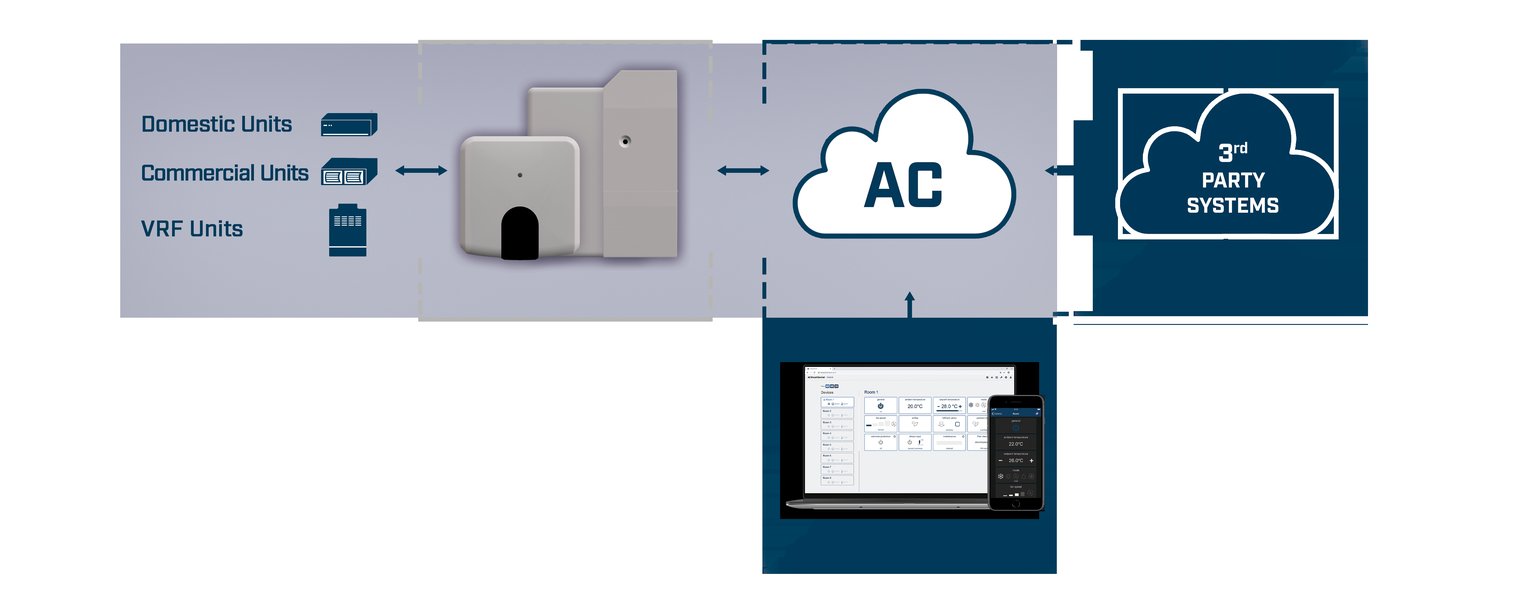
Conceptual diagram illustrating how a smart AC controller connects to the cloud and local devices.
Crafting the "Smart Air" App: Feature by Feature
The "Smart Air" app will be the primary interface for users. Below is a breakdown of your proposed features and considerations for their implementation:
| Ref | Feature Description | Key Implementation Considerations with ESP32 & App | Potential User Benefit |
|---|---|---|---|
| a | Remote control | App sends commands (Wi-Fi/Bluetooth) to ESP32; ESP32 actuates AC via IR/relays. | Control AC from anywhere. |
| b | Schedule on/off and temperature | App stores schedules, sends timed commands, or ESP32 stores schedules locally. | Automated comfort and energy savings. |
| c | Control via Wi-Fi or Bluetooth | ESP32 supports both; app logic for seamless switching or user selection. | Flexible connectivity options. |
| d | Mark map location of installation | App uses device GPS to tag location; useful for multi-unit management. | Easy management of multiple ACs in different locations. |
| e | Monitor working of air condition | ESP32 sends status data (on/off, mode, temp) from sensors to app. | Real-time operational awareness. |
| f | Notification to user when problem accrued | ESP32 detects anomalies (e.g., sensor errors, unusual power draw), signals app for push notifications. | Proactive alerts for potential issues. |
| g | User can contact online with repair center | In-app chat, call, or ticket submission feature connecting to support. | Convenient access to technical assistance. |
| h | Can add device | App facilitates pairing new ESP32-controlled AC units via Wi-Fi/Bluetooth setup. | Easy system expansion. |
| i | Monitor power consumption (day, month, year graph) | ESP32 with current sensor collects data; app visualizes it in graphs. Cloud storage for historical data. | Insight into energy usage patterns and costs. |
| j | Track location and monitor working air condition | Combines feature 'd' and 'e' for multi-unit oversight, possibly with geofencing. | Enhanced remote management, especially for property managers. |
| k | Register user via phone number | Secure backend authentication using phone number and OTP verification. | Secure and personalized user accounts. |
| l | User ESP32 for controller | Core hardware choice, enabling all smart functionalities. | Cost-effective and powerful control hub. |
| m | Monitor temperature and humidity | ESP32 reads from DHT-series or similar sensors, data displayed in-app. | Precise environmental condition monitoring for optimal comfort. |
| n | Maintenance reminder | App tracks usage hours or calendar time, triggers reminders for filter cleaning, servicing. | Prolongs AC lifespan and maintains efficiency. |
| o | Dashboard | Central app screen summarizing key info: current status, upcoming schedules, energy use, alerts. | At-a-glance overview of the entire smart AC system. |
Mastering Airflow: Controlling Fans and Zones ("Fanzines")
Effective fan control is paramount for achieving superior comfort and energy efficiency. This involves managing fan speed, direction (if applicable), and coordinating fan operation across different zones.
Hardware for Fan Control
- Relays: ESP32 can use relays to switch fans on/off or select different speed settings if the AC unit supports this through discrete electrical connections.
- Motorized Dampers: For true zonal control in ducted systems, ESP32 can manage motorized dampers to open or close airflow to specific areas.
- PWM Control: For variable speed fans, ESP32 can generate Pulse Width Modulation (PWM) signals, often via a motor driver, to precisely control fan speed.
- IR Signals: Many AC units allow fan speed and mode control via their IR remote, which the ESP32 can emulate.
Software and Logic
The "Smart Air" app, in conjunction with the ESP32 firmware, will house the logic for:
- Individual Zone Settings: Allowing users to define desired temperatures and fan behaviors for each "fanzine."
- Scheduled Fan Operations: Automating fan adjustments based on time of day or occupancy patterns.
- Sensor-Based Feedback Loops: Using temperature and humidity data from each zone to dynamically adjust fan speed and AC output to maintain setpoints efficiently.
Energy Efficiency through Smart Fan Management
Intelligent fan control can significantly reduce energy consumption by ensuring air is conditioned and distributed only where and when needed, and at optimal speeds. For example, reducing fan speed when a room is unoccupied or has reached its target temperature saves energy.
Strategic Blueprint: Building Your Smart AC Business
Transforming your innovative idea into a thriving business requires a robust strategic plan. This plan should navigate market dynamics, product development, operational setup, and financial management.
Understanding the Market Landscape
Market Size and Growth Projections
The global smart air conditioner market is experiencing rapid expansion. Reports indicate market valuations in the tens of billions of USD, with projections for continued strong growth (e.g., a CAGR often cited above 10%). For instance, some analyses project the market to reach over USD 50 billion by the early 2030s. This growth is fueled by increasing consumer demand for energy efficiency, convenience, and integration with smart home ecosystems.
Target Audience Identification
Your target audience could include:
- Residential Users: Tech-savvy homeowners seeking comfort, energy savings, and remote control.
- Property Managers: Individuals or companies managing multiple rental units or commercial spaces, valuing centralized control and monitoring.
- Small to Medium Businesses: Offices, retail stores, or restaurants looking to optimize climate control and reduce operational costs.
Competitive Analysis
The market includes established HVAC manufacturers (e.g., LG, Hitachi) offering smart ACs, as well as companies specializing in smart thermostats or retrofit controllers (e.g., Sensibo, Tado). Your competitive edge will lie in the comprehensiveness of your app features, the flexibility of the ESP32-based system, innovative fan/zone control, and potentially a more accessible price point or unique service model.
Product Development and Launch Strategy
Minimum Viable Product (MVP) Approach
Begin by developing an MVP that includes core functionalities: remote control, basic scheduling, temperature/humidity monitoring, and ESP32 controller integration. This allows for quicker market entry, gathering user feedback, and iterative improvements.
Hardware Sourcing and Manufacturing
Establish relationships with suppliers for ESP32 modules, sensors, relays, and other electronic components. For larger scale, consider contract manufacturers. If you plan to offer complete AC units, partnerships with HVAC manufacturers might be explored.
Software Development Lifecycle
Adopt an agile development methodology for both the ESP32 firmware and the mobile app. This involves cycles of planning, coding, testing, and deployment. Consider cross-platform app development (e.g., using React Native or Flutter) to reach both iOS and Android users efficiently.
Beta Testing and Iteration
Engage a group of beta testers (e.g., local homeowners, friendly businesses) to test the system in real-world conditions. Use their feedback to refine features, fix bugs, and improve user experience before a full commercial launch.
Crafting a Sustainable Business Model
Revenue Streams
Diversify your income through:
- Hardware Sales: Selling standalone ESP32-based smart controllers (for retrofitting existing ACs) or complete smart air conditioning units.
- Subscription Services: Offering premium app features, such as extended historical data storage, advanced analytics, AI-driven energy optimization, or priority support, for a recurring fee.
- B2B Solutions: Providing white-label solutions or tailored systems for property developers, HVAC installers, or businesses.
- Partnerships: Collaborating with repair centers for referral fees or integrated service packages.
Pricing Strategy
Determine pricing based on hardware costs, software development investment, perceived value, competitor pricing, and target audience willingness to pay. Consider tiered subscription plans.
Marketing and Sales Channels
Digital Presence and Online Marketing
Develop a professional website showcasing your product's benefits. Utilize SEO, content marketing (blogs, videos), social media marketing, and targeted online advertising to reach potential customers.
Partnerships (HVAC Installers, Retailers)
Collaborate with HVAC installation and repair companies who can recommend and install your system. Explore distribution through electronics retailers or smart home specialty stores.
Industry Presence (Trade Shows, Expos)
Participate in smart home technology, IoT, or HVAC industry trade shows to build brand awareness, network, and generate leads.

User-friendly app interfaces are crucial for a positive customer experience in smart AC systems.
Operational Excellence
Supply Chain Management
Ensure a reliable supply chain for hardware components to avoid production delays. Manage inventory effectively.
Customer Support Infrastructure
Establish a responsive customer support system. This should include in-app help (FAQs, troubleshooting guides, direct contact with support), as well as potentially phone or email support. Train support staff on both the hardware and software aspects of your system.
Scalability Planning
Design your backend infrastructure (cloud services for data storage, device management, and app communication) to be scalable, accommodating a growing user base and number of connected devices. Implement Over-The-Air (OTA) firmware updates for ESP32 controllers to deploy new features and bug fixes remotely.
Navigating Legal and Regulatory Waters
Safety Certifications and Standards
Ensure your hardware products comply with relevant electrical safety standards (e.g., CE, UL, FCC) in your target markets. This is crucial for user safety and market access.
Data Privacy and Security Compliance
Given the collection of user data (location, usage patterns, personal information for registration), adhere strictly to data privacy regulations like GDPR or CCPA. Implement robust security measures to protect user data and prevent unauthorized access to devices.
Financial Planning and Projections
Startup Costs and Funding
Estimate initial costs for research and development, hardware prototyping and manufacturing, software development, marketing, legal fees, and operational setup. Explore funding options, which could range from bootstrapping and angel investors to venture capital, depending on your scale and ambition.
Revenue Forecasts and Profitability
Develop detailed financial projections, including revenue forecasts based on sales targets and pricing, cost of goods sold (COGS), operating expenses, and profitability analysis over a 3-5 year horizon. Regularly review and adjust these projections based on actual performance.
Visualizing Success: Key Business Components
To better understand the interconnected elements of your smart air conditioning venture, the following mindmap outlines the core pillars of your business, from product development to market strategy. This visual representation helps in grasping the overall architecture and ensuring all critical aspects are considered.
Comparative Analysis: Smart AC Business Focus Areas
The success of your "Smart Air" system will depend on how it performs across several key dimensions compared to existing solutions. The radar chart below offers a visual comparison of your proposed system against typical smart AC retrofit kits and integrated smart AC units. This analysis considers factors like feature richness, user experience, energy efficiency, and innovation in fan control. Your system, with its comprehensive feature set and focus on ESP32-driven customization, has the potential to excel in several areas.
Learning from the Field: Smart HVAC Insights
Understanding the journey of establishing a business in the HVAC sector can provide valuable lessons. While your focus is on smart technology, the fundamentals of business creation, customer service, and market navigation remain relevant. The following video offers insights into starting an air conditioning business, which can complement your tech-focused approach by highlighting broader entrepreneurial considerations.
This video discusses general aspects of starting an air conditioning business, offering foundational knowledge.
Frequently Asked Questions (FAQ)
What are the biggest challenges in developing a smart AC system?
Key challenges include ensuring compatibility with a wide range of AC models (if retrofitting), robust hardware and software reliability, seamless user experience across the app and device, data security and privacy, and managing the complexities of OTA firmware updates for the ESP32 controllers. Scaling the cloud infrastructure to support many users and devices reliably is also a significant undertaking.
How important is the ESP32 selection for this project?
The ESP32 is an excellent choice due to its cost-effectiveness, dual-core processing power, integrated Wi-Fi and Bluetooth, ample GPIO pins for sensors and actuators, and a large community support base. These features make it highly suitable for IoT applications like your smart AC controller, enabling the diverse functionalities you've planned.
What are the first steps to take when starting this business?
1. Conduct thorough market research. 2. Develop a detailed business plan. 3. Create a prototype of your ESP32 controller and a basic version of the "Smart Air" app (MVP). 4. Secure initial funding if needed. 5. Define your legal structure and address initial regulatory compliance.
How can I ensure my app is user-friendly?
Focus on intuitive navigation, clear visual design, and straightforward controls. Conduct user testing throughout the development process, starting with wireframes and prototypes, and gather feedback to iterate on the design. Prioritize simplicity for common tasks while making advanced features accessible but not overwhelming.
What are the key legal considerations for a smart AC business?
Key legal considerations include intellectual property protection (patents for novel technology, trademarks for your brand), product liability (ensuring your device is safe and doesn't cause damage), data privacy and security compliance (e.g., GDPR, CCPA), and obtaining necessary electrical safety certifications for your hardware.
Recommended Next Steps
To further deepen your understanding and refine your business strategy, consider exploring these related queries:
- How can I develop robust ESP32 firmware for reliable IoT climate control applications?
- What are the best practices for designing an intuitive and engaging mobile app for smart home device management?
- What are effective monetization strategies for IoT products that combine hardware sales with subscription services in the smart home sector?
- How do I navigate the complex landscape of regulatory compliance and safety certifications for smart electronic devices intended for international markets?
References
Last updated May 12, 2025