
Foreign Direct Investment in the Solomon Islands, with a Focus on the Mining Sector
Exploring Investment Opportunities and Challenges in a Resource-Rich Nation
Key Highlights
- Mining is a significant sector for foreign investment in the Solomon Islands, offering potential as the logging industry declines.
- The Solomon Islands government is actively seeking to attract and regulate foreign investment, particularly in mining, through policy reforms and transparency initiatives.
- Despite the potential, the mining sector faces significant challenges including governance issues, environmental concerns, and disputes over royalties and land ownership.
The Solomon Islands, a nation endowed with natural resources, views foreign direct investment (FDI) as a crucial engine for economic growth and development. Among the key sectors targeted for foreign investment, mining stands out due to the country's known mineral deposits, including gold, bauxite, nickel, copper, and silver. While the logging industry has historically been a major revenue earner, its projected decline is leading the government to increasingly look towards mining as a potential alternative for sustainable revenue.
The Landscape of Foreign Investment
The Solomon Islands government recognizes the vital role of foreign investment in driving private sector growth and achieving economic independence. Efforts are underway to attract foreign investors across various sectors, including agriculture, fisheries, tourism, and other services, in addition to mining. The Foreign Investment Division, now known as InvestSolomons, under the Ministry of Commerce, Industries, Labour and Immigration (MCILI), is responsible for promoting and facilitating FDI, ensuring that applications meet standard requirements and comply with the country's foreign investment legislation.
Government Initiatives and Policies
The government has put in place policies and frameworks to guide foreign investment. The Foreign Investment Act 2005 and its subsidiary legislations are central to regulating foreign business activities. InvestSolomons maintains the Foreign Investment Registry, which officially records all non-sensitive foreign investments and details of investors operating in the country. The Ministry of Mines, Energy and Rural Electrification also provides information and guidance to potential foreign investors interested in the mines and minerals sector, outlining legal and policy frameworks, as well as application processes for mineral rights.
Promoting Transparency and Efficiency
Initiatives like the launch of Revenue Development Fund (RDF) systems for the mining sector aim to enhance transparency and efficiency in managing mining licenses. This is expected to attract new investment into the sector by providing a clearer and more reliable regulatory environment.
The Mining Sector: Potential and Challenges
The mining sector in the Solomon Islands holds significant potential for economic contribution. The country's mineral resources include bauxite, copper, gold, nickel, and silver. Historical operations like the Gold Ridge mine have demonstrated the sector's capacity to contribute substantially to the national GDP. At its peak, the Gold Ridge mine accounted for a significant portion of the country's economic output.
Key Mineral Resources and Projects
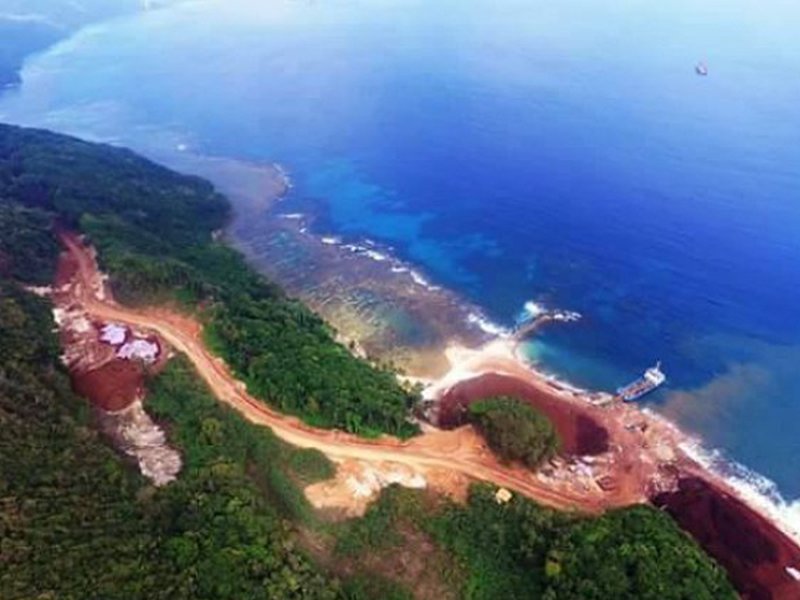
While mineral resources are present, they are considered limited in variety. Bauxite mining has been particularly notable on Rennell Island. The Kolosori nickel project is another significant development, with operations expected to commence, signaling continued interest in exploiting nickel deposits.
The Gold Ridge mine, located on Guadalcanal, has a long and turbulent history, marked by civil unrest and changes in ownership. Despite challenges, it remains a key mining asset and is currently operated by a Chinese firm, Wnguo Mining International. This operation is expected to generate substantial revenue.
Mining on West Rennell, Renbel province.
Challenges in the Mining Sector
Despite the potential, the mining sector in the Solomon Islands is plagued by significant challenges. Governance issues are a major concern, with instances of alleged unpaid taxes and royalties by mining companies. Reports have indicated inconsistencies in revenue received compared to the volume of exports. The hasty process of land acquisition and the granting of mining leases in the past have also led to disputes and social upheaval.
Environmental and Social Impacts
Environmental degradation is another critical issue associated with mining operations, particularly bauxite mining on Rennell Island. There have been concerns raised about the failure of companies to rehabilitate land affected by mining. The dependency of local communities on soil pockets for their livelihood means that extensive mining can have severe social consequences. The unknown environmental effects of potential deep-sea mining also warrant a precautionary approach, given the country's reliance on fish stock.
Governance and Regulatory Reforms
The Solomon Islands government is aware of these challenges and is undertaking mining sector reforms. The National Mining Policy of 2017 aimed to improve the management of the sector for sustainable development. A Mining Sector Master plan is also being developed to guide the management of mineral resources. The World Bank has provided support for these reforms, focusing on improving regulation, transparency, and the implementation of key laws for better oversight of mining operations.
Here is a video discussing some of the issues surrounding the mining sector in the Solomon Islands, including the proposed new minerals resources law and challenges in West Rennell:
This video provides context on the government's efforts to address long-standing issues within the mining sector through legislative reforms, highlighting the ongoing discussions and the need for wider consultation on the proposed Mineral Resources Bill 2023.
Investment Environment and Future Outlook
While FDI inflows into the Solomon Islands have been relatively low compared to some other nations, there is an expectation for this to rise, particularly in the mining, tourism, fisheries, and manufacturing sectors. The government actively seeks foreign investors with the capacity and resources to engage in productive economic activities that benefit both the investors and the citizens.
Attracting and Retaining Investment
To attract and retain desired FDI, the Solomon Islands could benefit from clearer and more actionable FDI expectations and goals. A detailed investment promotion strategy would help translate high-level outcomes into practical steps for attracting and keeping investors. The implementation of the Extractive Industries Transparency Initiative (EITI) is also expected to improve the investment climate by increasing transparency in the extractives sector.
Economic Contribution of Mining
Mining has been a significant, albeit sometimes volatile, contributor to the Solomon Islands' economy. While recent figures show the mineral sector contributing a smaller percentage to GDP growth, projects like the Gold Ridge mine are anticipated to generate substantial revenue. The sector's potential remains high, with estimations of significant mineral wealth yet to be exploited.
Balancing Economic Benefits with Sustainability
The story of mining in the Solomon Islands is one of balancing economic potential with the need to address corruption, environmental degradation, and social impacts. For the industry to truly benefit the nation sustainably, addressing these challenges through proper governance, consultation with communities, and responsible practices is crucial.
Summary of Key Investment Aspects
The following table provides a summary of key aspects related to foreign investment and the mining sector in the Solomon Islands:
| Aspect | Details |
|---|---|
| Key Investment Sectors | Agriculture, Mining, Fisheries, Tourism, Other Services |
| Responsible Government Body for FDI | InvestSolomons (formerly Foreign Investment Division) under MCILI |
| Key Mineral Resources | Bauxite, Copper, Gold, Nickel, Silver |
| Major Mining Projects | Gold Ridge Mine (Gold), Kolosori (Nickel) |
| Key Challenges in Mining | Governance issues, Unpaid royalties/taxes, Environmental degradation, Land ownership disputes, Social impacts |
| Government Reforms | National Mining Policy 2017, Mining Sector Master plan, Revenue Development Fund systems, Collaboration with World Bank for technical assistance |
| Transparency Initiatives | Extractive Industries Transparency Initiative (EITI) candidacy |
Frequently Asked Questions about FDI and Mining in Solomon Islands
What are the main minerals found in the Solomon Islands?
The main minerals found in the Solomon Islands include bauxite, copper, gold, nickel, and silver.
Which government body is responsible for foreign investment in the Solomon Islands?
InvestSolomons, a division of the Ministry of Commerce, Industries, Labour and Immigration (MCILI), is responsible for promoting and facilitating foreign direct investment.
What is the significance of the Gold Ridge mine?
The Gold Ridge mine is historically the main economic asset in the Solomon Islands and has contributed significantly to the national GDP at its peak. It remains the largest mining operation in the country.
What are the main challenges facing the mining sector in the Solomon Islands?
The main challenges include governance issues, allegations of unpaid taxes and royalties, environmental degradation, land ownership disputes, and social impacts on local communities.
How is the Solomon Islands government addressing challenges in the mining sector?
The government is implementing reforms through policies like the National Mining Policy 2017, developing a Mining Sector Master plan, improving transparency with systems like RDF, and seeking technical assistance from partners like the World Bank.
Recommended Further Exploration
- Explore the legal framework governing mining in the Solomon Islands.
- Investigate the environmental consequences of mining operations in the country.
- Understand the effects of mining on local communities and land ownership issues.
- Learn more about the Solomon Islands' efforts towards transparency in the extractives sector.
References
Last updated May 19, 2025