
Unlocking Relief: Exploring Soundwave Therapy for Pseudogout
A Comprehensive Look at Non-Invasive Approaches to Managing Joint Pain
Key Insights into Pseudogout and Soundwave Therapy
- Pseudogout Management: While there is no cure for pseudogout, various treatments focus on managing pain, reducing inflammation, and preventing future flare-ups.
- Soundwave Therapy Potential: Soundwave therapy, also known as Extracorporeal Shockwave Therapy (ESWT), is emerging as a promising non-invasive treatment for musculoskeletal conditions, including crystal-induced arthropathies like pseudogout, by stimulating natural healing processes.
- Integrated Approach: Effective pseudogout management often involves a multi-faceted approach, combining pharmacological treatments, physical therapy, and innovative modalities like soundwave therapy to improve joint function and quality of life.
Pseudogout, formally known as calcium pyrophosphate dihydrate (CPPD) deposition disease, is a form of arthritis characterized by the sudden, painful accumulation of calcium pyrophosphate crystals within joint cartilage and synovial fluid. This condition often mimics gout but is distinct in its crystalline origin. While there is currently no definitive cure for pseudogout, a combination of therapeutic strategies aims to alleviate symptoms, reduce inflammation, and enhance joint function. One such emerging non-invasive modality gaining attention is soundwave therapy, also known as Extracorporeal Shockwave Therapy (ESWT).
Understanding Pseudogout: The Crystal Culprit
Deciphering the Mechanisms of Joint Inflammation
Pseudogout causes sudden, intense joint pain, swelling, stiffness, and warmth. The most commonly affected joints include the knees, but it can also impact the elbows, ankles, wrists, shoulders, and hands. These acute attacks, often called flares, can last from a few days to several weeks. The underlying cause of CPPD crystal formation is often unknown, though it is more prevalent in individuals over 60 and can be associated with certain metabolic conditions like hyperparathyroidism, hemochromatosis, and hypothyroidism.
The diagnosis of pseudogout typically involves a physical examination, imaging tests (such as X-rays, CT scans, MRI, or ultrasound) to identify chondrocalcinosis (calcium crystal buildup), and crucially, joint fluid aspiration. This procedure involves withdrawing a sample of fluid from the affected joint with a needle and examining it under a microscope for the presence of rhomboid-shaped CPPD crystals, which exhibit positive birefringence. This diagnostic step is vital to differentiate pseudogout from other forms of arthritis, such as gout or septic arthritis, which require different treatment approaches.
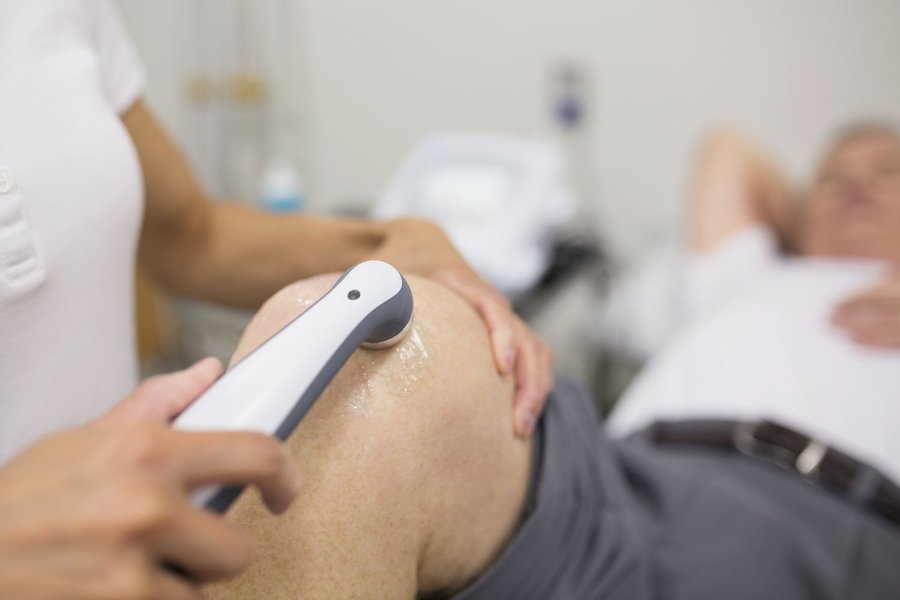
An ultrasound therapy session being administered to a patient's knee.
Traditional and Modern Treatment Approaches for Pseudogout
A Spectrum of Interventions for Pain and Inflammation
While there is no treatment that can directly dissolve the calcium pyrophosphate crystals, current therapies for pseudogout focus on managing acute attacks, preventing recurrent flares, and preserving joint function. A multi-modal approach is often most effective.
Pharmacological Interventions
Medications are the cornerstone of pseudogout management, primarily aiming to reduce inflammation and pain:
- Nonsteroidal Anti-Inflammatory Drugs (NSAIDs): Over-the-counter NSAIDs like ibuprofen (Advil, Motrin IB) and naproxen sodium (Aleve) are commonly used for pain and inflammation relief during acute attacks. However, their use in older populations needs careful consideration due to risks of gastrointestinal hemorrhage and renal impairment.
- Corticosteroids: Steroids are highly effective in controlling inflammation. They can be administered orally for milder attacks or injected directly into the affected joint (intra-articular injection) for more severe or localized inflammation. Joint aspiration, which removes excess fluid and crystals, often precedes steroid injection to relieve pressure and pain.
- Colchicine: Often used in gout treatment, colchicine is also beneficial for pseudogout. It can reduce inflammation during an acute attack and may be prescribed at low doses as a prophylactic measure to prevent frequent attacks by slowing the production of CPP crystals.
- Interleukin-1 Beta Antagonists: Medications like anakinra, though not FDA-approved specifically for pseudogout, may be considered for severe or refractory cases, particularly when other treatments are contraindicated. These target inflammatory pathways.
Non-Pharmacological Strategies and Physical Therapy
Complementary approaches play a crucial role in symptom management and joint health:
- Rest and Ice: During an acute flare-up, resting the affected joint and applying ice compresses can significantly reduce swelling and pain.
- Physical Therapy: A physical therapist can design a personalized program to improve joint flexibility, mobility, and strength. Exercises such as range of motion (stretching) exercises help maintain joint movement and reduce stiffness. Physical therapists can also guide patients on assistive devices, proper postures, and movement techniques to minimize joint strain.
- Electrotherapy Modalities: Symptomatic pain-relieving modalities like Interferential Therapy (IFT), Transcutaneous Electrical Nerve Stimulation (TENS), Ultrasound Therapy, and Short Wave Diathermy (SWD) are used to relieve pain and inflammation.
For individuals with chronic pseudogout, continuous physical therapy and a focus on maintaining joint function are essential. While medication can help resolve acute flares faster, non-pharmacological methods contribute significantly to long-term well-being.
The Role of Soundwave Therapy in Pseudogout Management
A Novel Approach to Pain Relief and Tissue Regeneration
Soundwave therapy, often referred to as Extracorporeal Shockwave Therapy (ESWT), is a non-invasive treatment that uses high-energy acoustic sound waves to stimulate the body's natural healing processes. Initially used for musculoskeletal injuries, ESWT has shown promise in various conditions, including chronic pain, tissue repair, and even some forms of arthritis. For pseudogout, specifically, it's gaining attention as a potential option.
How Soundwave Therapy Works
Fundamentally, soundwave therapy works by delivering targeted acoustic waves to the affected area. These waves create a mechanical and chemical response at the cellular level, leading to several therapeutic effects:
- Pain Relief (Analgesic Effect): ESWT can help alleviate pain by overstimulating nerve endings and potentially influencing pain perception.
- Increased Blood Vessel Formation (Angiogenesis): The acoustic waves promote the formation of new blood vessels, which is crucial for delivering nutrients and oxygen to damaged tissues, thereby accelerating healing.
- Reduced Inflammation: Soundwave therapy can help reduce inflammation, which is a key symptom of pseudogout.
- Stimulation of Tissue Repair: By inducing controlled microtrauma, ESWT triggers the body's innate healing response, leading to the regeneration of tissue.
- Breaking Down Calcifications: While not directly dissolving CPPD crystals, ESWT has shown efficacy in breaking down other types of calcifications in soft tissues, which might suggest a beneficial effect on crystal deposits in pseudogout, particularly in high-dose regimes.
Studies suggest that ESWT, particularly focused shockwave therapy, can be effective in reducing pain and inflammation in affected joints and is generally well-tolerated. It offers a non-surgical alternative for pain management and tissue regeneration, potentially diminishing recovery time and reducing reliance on painkillers.
This radar chart provides an opinion-based comparison of various pseudogout treatments across key effectiveness parameters. Soundwave therapy (ESWT) demonstrates strong potential in pain reduction, inflammation control, and accelerating healing, positioning it as a valuable adjunct. Traditional pharmacological treatments excel in immediate pain and inflammation relief, while physical therapy is crucial for long-term joint mobility and prevention. Crystal load reduction remains a challenge across all modalities, highlighting the need for continued research.
Comparing Treatment Modalities for Pseudogout
A Holistic View of Therapeutic Options
To further contextualize soundwave therapy within the broader landscape of pseudogout management, it's helpful to compare its characteristics with other common treatment modalities.
| Treatment Modality | Primary Mechanism of Action | Benefits | Considerations/Limitations |
|---|---|---|---|
| NSAIDs (e.g., Ibuprofen, Naproxen) | Reduce inflammation and pain by inhibiting prostaglandin synthesis. | Readily available, effective for acute pain and inflammation. | Potential gastrointestinal side effects, renal impairment, not suitable for long-term high-dose use in older adults. |
| Corticosteroids (Oral/Injected) | Potent anti-inflammatory and immunosuppressive effects. | Rapid and strong relief of pain and inflammation, especially via intra-articular injection. | Systemic side effects with oral use (e.g., increased blood sugar, bone density loss), risk of infection with injections. |
| Colchicine | Disrupts cellular functions involved in inflammation, particularly crystal-induced inflammation. | Effective for acute attacks and as prophylaxis to prevent flares. | Narrow therapeutic index, gastrointestinal side effects (nausea, diarrhea), renal excretion considerations. |
| Physical Therapy | Exercises to improve joint flexibility, strength, and range of motion; use of modalities (e.g., ice, heat, electrotherapy). | Improves joint function, reduces stiffness, long-term management of chronic pain, non-pharmacological. | Does not directly address crystal deposition, pain may limit activity during acute flares. |
| Joint Aspiration | Removes excess synovial fluid and crystals from the joint. | Provides immediate pain and pressure relief. | Invasive procedure, risk of infection, often followed by steroid injection. |
| Soundwave Therapy (ESWT) | Stimulates tissue repair, reduces pain and inflammation via acoustic waves, promotes angiogenesis. | Non-invasive, accelerates natural healing, effective for pain and inflammation, potential for breaking down calcifications. | May cause mild discomfort during treatment, not a direct crystal-dissolving agent, effectiveness on CPPD crystals is an area of ongoing research. |
The table illustrates that soundwave therapy complements existing treatments by offering a non-invasive method that targets pain relief, inflammation, and tissue healing. It is particularly relevant for those seeking alternatives or adjuncts to medication, especially given the side effect profiles of some pharmacological agents.
Integration of Soundwave Therapy into Pseudogout Management
A Promising Adjunct in a Holistic Treatment Plan
While soundwave therapy is not a primary treatment for pseudogout in the same way that NSAIDs or corticosteroids are for acute attacks, its documented efficacy in addressing pain, inflammation, and tissue regeneration in other musculoskeletal conditions suggests its potential as a valuable adjunct. Several sources indicate that shockwave therapy is an option for pseudogout, specifically where calcium crystals are involved in joint inflammation.
This modality could be particularly useful for:
- Chronic Pain Management: For individuals experiencing persistent pain despite conventional treatments, ESWT's ability to stimulate healing and provide long-lasting pain relief could be beneficial.
- Reducing Reliance on Medication: As a non-pharmacological option, it can help reduce the frequency or dosage of medications that may have side effects, especially in older patients with multiple comorbidities.
- Complementing Physical Therapy: ESWT can potentially enhance the benefits of physical therapy by accelerating tissue repair and reducing pain, making it easier for patients to participate in strengthening and mobility exercises.
This video provides an in-depth lesson on Pseudogout, covering its pathophysiology, symptoms, and treatment options. It offers a comprehensive overview that can help patients and caregivers understand the condition better and explore various management strategies.
Considerations and Future Outlook
Navigating the Path Forward for Pseudogout Treatment
While soundwave therapy presents a promising avenue for pseudogout management, it's important to approach its integration with a clear understanding of its current standing and ongoing research. The term "soundwave therapy" often encompasses various modalities, including extracorporeal shockwave therapy (ESWT) and focused ultrasound. ESWT specifically has been noted for its application in musculoskeletal conditions. The mechanism by which it might directly affect calcium pyrophosphate crystals is not fully elucidated, but its benefits on pain and inflammation are well-documented in other crystal-induced conditions like gout.
Patients considering soundwave therapy for pseudogout should consult with their healthcare provider, preferably a rheumatologist or an orthopedic specialist, to determine if it is an appropriate part of their individualized treatment plan. The decision should factor in the severity of symptoms, the affected joints, co-existing medical conditions, and response to previous treatments.
Further research, particularly large-scale clinical trials specifically on ESWT for pseudogout, would provide more definitive evidence regarding its efficacy and optimal application protocols. The goal remains to find effective treatments that not only alleviate symptoms but also address the underlying crystal deposition or prevent its inflammatory consequences, ultimately improving the quality of life for those living with pseudogout.
Frequently Asked Questions (FAQ)
What causes pseudogout?
Is pseudogout curable?
How is pseudogout diagnosed?
What are the main treatments for an acute pseudogout attack?
Can physical therapy help with pseudogout?
Is soundwave therapy FDA-approved for pseudogout?
Conclusion
Pseudogout, or CPPD deposition disease, presents a significant challenge due to its painful acute flares and potential for chronic joint damage. While no direct cure exists, a multifaceted approach combining pharmacological interventions, physical therapy, and emerging non-invasive modalities like soundwave therapy offers comprehensive management. Soundwave therapy, by promoting tissue healing, reducing pain, and combating inflammation, holds promise as a valuable adjunct, especially for patients seeking to minimize medication use or enhance recovery. As research continues to advance, the integration of such innovative treatments will further refine pseudogout management, ultimately improving the quality of life for those affected.
Recommended Further Exploration
- Understanding Calcium Pyrophosphate Dihydrate Deposition Disease
- Non-pharmacological management strategies for chronic joint pain
- Latest advancements in extracorporeal shockwave therapy for arthritis
- Distinguishing pseudogout from gout and other crystalline arthropathies
References
Last updated May 21, 2025