
Unmasking the Pages: Which Comics Forged the Legend of Spider-Man 2 (2004)?
Discover the iconic Marvel storylines that director Sam Raimi masterfully wove into one of the most beloved superhero films ever made.
Sam Raimi's Spider-Man 2 (2004) isn't just a cinematic triumph; it's a love letter to the rich history of Spider-Man comics. While telling its own powerful story, the film masterfully adapts and integrates key themes, characters, and moments from the pages of Marvel Comics, creating a narrative deeply rooted in the source material. Understanding these comic book origins reveals the depth and care taken in bringing Peter Parker's struggles and triumphs to the big screen.
Essential Insights: The Comic DNA of Spider-Man 2
- "Spider-Man No More!": The film's emotional core, Peter Parker's crisis of identity and temporary abandonment of his superhero mantle, is directly lifted from the seminal Amazing Spider-Man #50.
- Doctor Octopus's Debut: The tragic origin and formidable presence of Dr. Otto Octavius are heavily inspired by his first appearance in Amazing Spider-Man #3, establishing him as a complex and compelling antagonist.
- Silver Age Soul: The film captures the spirit of the early Stan Lee and Steve Ditko era, balancing high-stakes action with Peter Parker's relatable everyday struggles involving responsibility, relationships, and personal sacrifice.
The Blueprint: Key Comic Book Inspirations
Several specific comic book issues and broader eras served as foundational blueprints for Spider-Man 2. Let's delve into the most significant influences:
The Heart of the Struggle: Amazing Spider-Man #50 - "Spider-Man No More!" (1967)
Giving Up the Mask
Perhaps the most crucial single-issue influence on Spider-Man 2 is Stan Lee and John Romita Sr.'s legendary "Spider-Man No More!". Published in 1967, this story explores Peter Parker's profound disillusionment with his life as Spider-Man. Burdened by the constant sacrifices, the lack of appreciation, and the toll his double life takes on his personal relationships and responsibilities (including his studies and health), Peter makes the shocking decision to abandon his superhero identity.
The film mirrors this internal conflict almost perfectly. Tobey Maguire's Peter Parker faces mounting pressures: his powers are failing, his friendships with Mary Jane and Harry are strained, he struggles financially, and Aunt May faces eviction. The weight becomes unbearable, leading him to discard his suit in an alleyway garbage can – a scene visually echoing the iconic cover and panels of Amazing Spider-Man #50. This storyline provides the film's central emotional arc, exploring the theme of responsibility and whether Peter can truly walk away from the power he possesses.
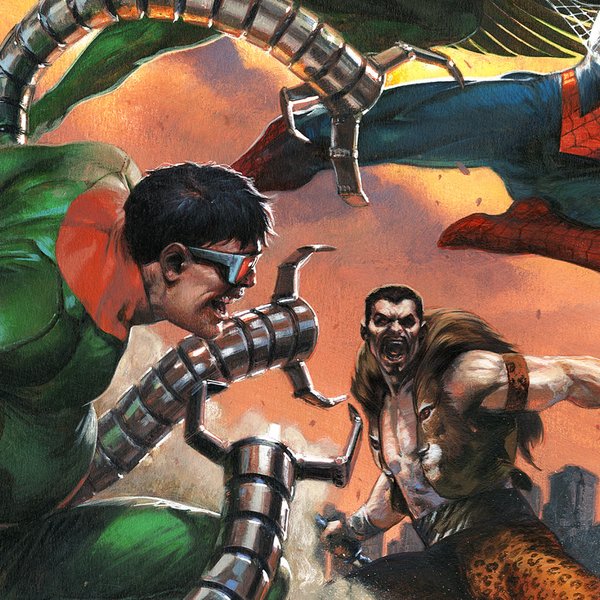
Artwork featuring Spider-Man facing several villains, including Doctor Octopus (center), whose comic origins heavily influenced his portrayal in the 2004 film.
Forging a Foe: Doctor Octopus's Comic Origins
Amazing Spider-Man #3 (1963): The Birth of Doc Ock
The film's primary antagonist, Dr. Otto Octavius / Doctor Octopus, owes his existence to Amazing Spider-Man #3 (1963) by Stan Lee and Steve Ditko. This issue details the origin of the brilliant scientist whose life takes a tragic turn. In the comic, Dr. Octavius is a respected nuclear physicist who creates a set of highly advanced mechanical arms to handle radioactive materials. A laboratory accident causes an explosion, fusing the apparatus to his body and damaging his brain, transforming him into the criminally insane Doctor Octopus.
Spider-Man 2 adapts this origin closely, portraying Otto Octavius (Alfred Molina) as a brilliant, initially well-intentioned scientist working on a revolutionary fusion power project. The film depicts the catastrophic failure of his experiment, leading to the death of his wife Rosie and the permanent bonding of the intelligent, tentacled harness to his nervous system. While the movie introduces the concept of an "inhibitor chip" meant to control the arms' AI (a detail not present in the original comic origin), the core elements – the well-meaning scientist, the lab accident, the fusion with the arms, and the subsequent descent into villainy driven by his creation – are directly inspired by his comic debut. The film emphasizes the tragic aspect of his transformation, presenting him as a man corrupted by his own genius and loss, much like his early comic appearances.
Ultimate Spider-Man #14 & #15 (2001): A Modern Aesthetic
While the core origin comes from the Silver Age, some sources suggest the visual representation and potentially more menacing feel of Doc Ock's mechanical arms in the film drew inspiration from the character's portrayal in the *Ultimate Spider-Man* comics, specifically issues #14 and #15 (written by Brian Michael Bendis, art by Mark Bagley). The Ultimate universe reimagined classic characters for a modern audience, and its depiction of Doc Ock featured formidable, visually striking tentacles that align well with the powerful cinematic version seen in Raimi's film.
Visualizing the Inspirations
Relative Influence of Comic Sources
To better understand how different comic sources contributed to Spider-Man 2, the following chart provides an estimated breakdown of their relative influence on the film's plot, themes, and characters. This is an interpretative analysis based on the consensus points discussed.
As the chart suggests, Amazing Spider-Man #50 provided the primary narrative and emotional thrust, followed closely by the foundational elements established in Doctor Octopus's origin story and the general tone set by the Silver Age comics. The influence of *Ultimate Spider-Man* on Doc Ock's visuals and specific character moments like those involving J. Jonah Jameson, while notable, are generally considered supporting contributions to the overall tapestry.
Mapping the Comic Connections
This mindmap provides a visual overview of the key comic book inspirations branching out from the central subject, the Spider-Man 2 film:
(Peter Quits)"] id1a["Amazing Spider-Man #50
('Spider-Man No More!')"] id1a1["Iconic Suit Disposal Scene"] id1a2["Themes of Burden & Responsibility"] id2["Main Antagonist
(Doctor Octopus)"] id2a["Origin Story & Character"] id2a1["Amazing Spider-Man #3"] id2a1a["Lab Accident"] id2a1b["Arms Fused to Body"] id2a1c["Tragic Scientist"] id2b["Visual Design / Tentacles"] id2b1["Ultimate Spider-Man #14-15"] id3["Overall Tone & Themes"] id3a["Silver Age Spider-Man (Lee/Ditko)"] id3a1["Balancing Personal Life & Heroism"] id3a2["Supporting Character Dynamics
(MJ, Harry, Aunt May)"] id3a3["'Great Power...' Responsibility Theme"] id4["Specific Character Moments"] id4a["J. Jonah Jameson"] id4a1["Amazing Spider-Man #32"] id4a1a["Rejecting Peter's Photos"] id4a1b["Characteristic Contempt"]
The mindmap illustrates how distinct elements of the film – its central conflict, main villain, overall feeling, and specific character beats – can be traced back to specific issues or eras in Spider-Man's comic book history.
Capturing the Spirit: Silver Age Sensibilities
The Lee/Ditko Foundation
Beyond specific issues, Spider-Man 2 deeply embodies the spirit of the original Spider-Man comics created by Stan Lee and Steve Ditko in the 1960s (the Silver Age of Comics). This era established the core tenets of the character: the witty, relatable teenager struggling under the immense weight of his powers and responsibilities. The film captures this blend of thrilling superhero action and grounded human drama, focusing on Peter's everyday problems – relationship woes, financial instability, academic pressures – making his heroic sacrifices feel more impactful. The portrayals of Aunt May's unwavering support (and sometimes pointed advice), Mary Jane Watson's complex relationship with Peter, and Harry Osborn's descent into bitterness all have strong roots in these early comics.
J. Jonah Jameson: Straight from the Page
The film's depiction of J. Jonah Jameson, played brilliantly by J.K. Simmons, is remarkably faithful to his comic book counterpart. His relentless P.R. campaign against Spider-Man, his tight-fisted approach to paying Peter Parker for photos, and his bombastic personality are staples established early in the comics. One specific example often cited is a scene mirroring a panel from Amazing Spider-Man Vol 1 #32 (1966), where Jameson dismisses Peter's photos because they don't feature Spider-Man prominently enough, showcasing his singular obsession. This faithfulness to supporting characters helps ground the fantastical elements of the story.
Video Exploration: Diving Deeper into the Inspirations
For a visual breakdown and further discussion on the comics that influenced Sam Raimi's Spider-Man 2, the following video offers valuable insights:
This video explores the direct connections between specific comic book issues, like "Spider-Man No More!", and their adaptation in the film. It highlights how Raimi translated key thematic elements and visual moments from the page to the screen, providing a deeper appreciation for the filmmaking process and its respect for the source material.
Summary Table: Comic Inspirations at a Glance
This table summarizes the key comic book sources and their specific contributions to the Spider-Man 2 (2004) film:
| Comic Title / Issue(s) | Key Creators | Publication Year(s) | Contribution to Spider-Man 2 (2004) |
|---|---|---|---|
| Amazing Spider-Man #50 ("Spider-Man No More!") | Stan Lee, John Romita Sr. | 1967 | Central theme of Peter quitting Spider-Man; emotional core; iconic suit disposal scene imagery. |
| Amazing Spider-Man #3 | Stan Lee, Steve Ditko | 1963 | Origin story of Doctor Octopus (Otto Octavius); lab accident; fusion with mechanical arms; tragic villain concept. |
| General Silver Age Amazing Spider-Man stories | Stan Lee, Steve Ditko | 1960s | Overall tone; balance of superhero action and personal drama; themes of responsibility; core characterizations of Peter, Aunt May, MJ, Harry, JJJ. |
| Amazing Spider-Man Vol. 1 #32 ("Man on a Rampage!") | Stan Lee, Steve Ditko | 1966 | Specific J. Jonah Jameson character moments, such as rejecting Peter's non-Spider-Man photos. |
| Ultimate Spider-Man #14 & #15 | Brian Michael Bendis, Mark Bagley | 2001 | Influenced the modern visual design and potentially more menacing portrayal of Doctor Octopus's mechanical arms. |
By drawing from these foundational comics, Spider-Man 2 successfully crafted a story that resonated with both long-time comic fans and general audiences, solidifying its place as a benchmark in superhero cinema.
Frequently Asked Questions (FAQ)
Was Spider-Man 2 a direct adaptation of one comic story?
No, while Spider-Man 2 borrows heavily from specific storylines like "Spider-Man No More!" (Amazing Spider-Man #50) for its central theme, it is not a direct panel-by-panel adaptation of any single comic. Instead, it intelligently synthesizes elements from multiple sources – primarily ASM #50, ASM #3 (Doc Ock's origin), and the general tone/themes of the Silver Age comics – to create its own unique narrative.
How accurate was the film's portrayal of Doctor Octopus to the comics?
The film's portrayal is largely faithful to the spirit and origin presented in Amazing Spider-Man #3. It captures Otto Octavius as a brilliant scientist turned tragic villain following a lab accident that fuses his mechanical arms to him. Key differences include the addition of the inhibitor chip subplot and making the arms sentient with AI, which heightens the internal conflict but deviates slightly from the original comics where Otto was immediately in control (though corrupted) after the accident.
Did any other comics influence the movie?
While the ones listed are the most significant and frequently cited influences, the film also draws broadly from decades of Spider-Man lore regarding character relationships and dynamics. The portrayal of Peter's struggles balancing his life, his relationship complexities with Mary Jane, his friendship and rivalry with Harry Osborn, and Aunt May's wisdom are all reflective of character arcs developed over many years in the comics, primarily rooted in the Stan Lee/Steve Ditko and Stan Lee/John Romita Sr. eras.
Is the official movie comic adaptation a good source?
Yes, the official comic book adaptation of Spider-Man 2 (often titled *Spider-Man 2: The Movie*) retells the film's story. Some editions explicitly included reprints or references to *Amazing Spider-Man* #50 and *Ultimate Spider-Man* issues featuring Doc Ock, directly highlighting their connection and relevance as inspirations for the film's plot and characters.
Recommended Reading & Viewing
- Explore the full storyline of Amazing Spider-Man #50 'Spider-Man No More!'
- How did Sam Raimi interpret Doctor Octopus compared to the comics?
- What are the core themes explored in Spider-Man 2 (2004)?
- Compare the Silver Age Spider-Man comics to the Ultimate Spider-Man series.
References
 amazon.com
Last updated May 5, 2025