
Designing a Stealth Unmanned Surface Vehicle (USV) for Explosive Payload Delivery
A comprehensive guide to the design, technology, and operational considerations of a weaponized stealth USV.
Key Design Takeaways
- Stealth is Paramount: The design must prioritize minimizing radar, visual, acoustic, and thermal signatures.
- Autonomous Capabilities: Advanced autonomous navigation and control systems are crucial for mission success.
- Modular Payload: Flexibility in payload integration allows for a range of explosive options and delivery methods.
Introduction: The Strategic Imperative of Stealth USVs
Unmanned Surface Vehicles (USVs) represent a significant shift in naval warfare, offering the potential for reduced risk to personnel and increased operational flexibility. When combined with stealth technology and an offensive capability, such as the delivery of explosive payloads, the strategic implications become even more profound. This document explores the multifaceted design considerations involved in creating a stealth USV intended for offensive operations.
Stealth Design: Minimizing Detectability
The core principle of a stealth USV is to minimize its detectability across all relevant sensor spectra. This involves a holistic approach, addressing radar, visual, acoustic, and thermal signatures.
Radar Cross-Section (RCS) Reduction
Radar is a primary means of detecting surface vessels. Therefore, minimizing the USV's radar cross-section (RCS) is critical. Several techniques are employed:
Shape Optimization
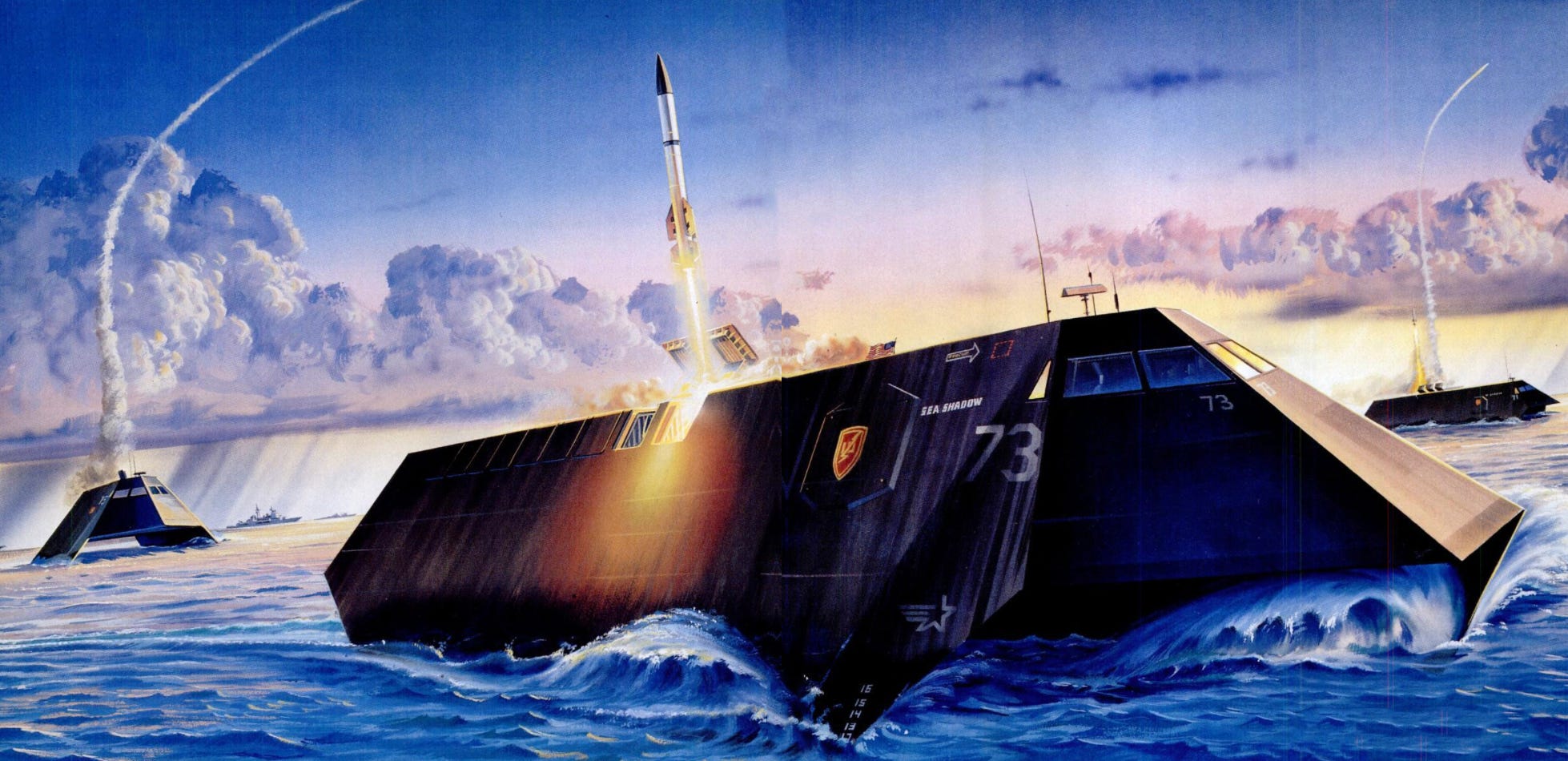
Geometric shaping is the first line of defense. Avoid flat, vertical surfaces, which act as excellent radar reflectors. Instead, utilize a faceted design approach, similar to that employed on stealth aircraft like the F-117 Nighthawk. These angled surfaces deflect radar waves away from the source, reducing the intensity of the reflected signal. A trimaran hull design, with its multiple angled surfaces and reduced water plane area, is particularly well-suited for this purpose.
Radar-Absorbent Materials (RAM)
Beyond shaping, the use of radar-absorbent materials (RAM) is crucial. RAM coatings and structural components are designed to absorb radar energy, converting it into heat, rather than reflecting it back to the source. Several types of RAM exist, including:
- Iron Ball Paint: Contains microscopic spheres coated with carbonyl iron or ferrite. These spheres resonate with incoming radar waves, dissipating their energy as heat.
- Foam Absorbers: Made from open-cell foam impregnated with carbon or ferrite. These materials are lightweight and can be effective over a broad range of radar frequencies.
- Jaumann Absorbers: Consisting of multiple layers of dielectric material separated by specific distances. These absorbers are tuned to specific radar frequencies and can be highly effective, but are more complex to design and manufacture.
- Metamaterials: An emerging area of research, metamaterials are artificially engineered materials with electromagnetic properties not found in nature. They offer the potential for highly customized radar absorption characteristics.
Active Cancellation
Active cancellation techniques, although more complex, offer the potential for even greater RCS reduction. These systems detect incoming radar waves and generate an out-of-phase signal that cancels out the reflection. However, active cancellation requires significant processing power and precise calibration.
Visual Stealth
Reducing visual detectability is also important, especially for operations close to shore or within visual range of other vessels. Several factors contribute to the ship's total visiblity.
Low Profile Design
A low profile, minimizing the height of the USV above the waterline, makes it harder to spot visually, especially at a distance or in choppy seas.
Camouflage
Camouflage paint schemes, designed to blend with the background environment, can further reduce visual detectability. The specific camouflage pattern should be tailored to the expected operating environment (e.g., gray for open ocean, blue/green for littoral waters).
Active Camouflage
Emerging technologies, such as adaptive camouflage systems that use cameras and projectors to match the USV's appearance to its surroundings, offer the potential for even greater visual concealment. These systems are still in development but hold promise for future stealth applications.
Acoustic Stealth
Underwater sound travels much further than sound in air, making acoustic stealth crucial for avoiding detection by submarines and underwater sensors.
Quiet Propulsion
The primary source of underwater noise from a vessel is its propulsion system. Electric propulsion, using batteries or fuel cells, is inherently quieter than traditional diesel or gas turbine engines. Further noise reduction can be achieved through:
- Propeller Design: Optimize propeller blade shape and rotation speed to minimize cavitation (the formation of vapor bubbles), a major source of noise.
- Sound Damping: Use sound-damping materials and structures to isolate and absorb vibrations from the propulsion system and other onboard machinery.
- Pump-Jet Propulsion: This system encloses the propeller within a nozzle, reducing cavitation and directing the water flow, resulting in a quieter and more efficient propulsion system.
Thermal Stealth
Infrared sensors can detect the heat signature of a vessel, particularly its exhaust plume. Minimizing this thermal signature is important for avoiding detection by heat-seeking missiles and infrared cameras.
Exhaust Cooling
If using combustion engines, cooling the exhaust gases before they are released into the environment is crucial. This can be achieved by mixing the exhaust with cooler ambient air or seawater.
Thermal Insulation
Insulating hot components, such as engines and electronics, can reduce the overall thermal signature of the USV.
Low-Emission Power Systems
Electric propulsion systems, powered by batteries or fuel cells, generate significantly less heat than combustion engines, contributing to a reduced thermal signature.
Propulsion and Maneuverability: Balancing Speed, Efficiency, and Stealth
The propulsion system of a stealth USV must balance competing requirements: speed, range, efficiency, and stealth. A variety of options exist, each with its own advantages and disadvantages.
Electric Propulsion
Electric propulsion, as mentioned earlier, offers significant advantages in terms of acoustic and thermal stealth. However, the energy density of batteries is currently lower than that of fossil fuels, limiting the range of purely electric USVs. Hybrid systems, combining electric propulsion with a diesel or gas turbine generator, offer a compromise, allowing for quiet operation when stealth is paramount and extended range when needed.
Dual-Mode Propulsion
A dual-mode propulsion system, combining a diesel-electric setup with a direct mechanical drive, offers further flexibility. The diesel-electric mode can be used for low-speed, stealthy operations, while the direct mechanical drive can be engaged for high-speed transits or maneuvers.
Trimaran Hull Form
The trimaran hull form, with its three slender hulls, offers several advantages for a stealth USV:
- Reduced Wave Resistance: The slender hulls generate less wave resistance than a conventional monohull, improving fuel efficiency and speed.
- Enhanced Stability: The wide beam provides excellent stability, even in rough seas, making it a more stable platform for weapons and sensors.
- Reduced Draft: The shallow draft allows the USV to operate in shallower waters, increasing its operational flexibility.
- RCS Reduction: The multiple angled surfaces of a trimaran hull contribute to radar cross-section reduction.
Sensors and Surveillance: Maintaining Situational Awareness
While stealth is crucial, a USV must also be able to detect and track targets effectively. This requires a suite of sophisticated sensors, carefully integrated to minimize their impact on the USV's stealth characteristics.
Advanced Radar Systems
Despite the need for stealth, radar remains an essential sensor for detecting and tracking targets. To minimize the risk of detection, the USV should utilize a low-probability-of-intercept (LPI) radar. LPI radars employ techniques such as:
- Low Power Output: Reducing the power of the radar signal makes it harder to detect.
- Frequency Hopping: Rapidly changing the radar frequency makes it difficult for intercept receivers to lock onto the signal.
- Pulse Compression: Using complex waveforms that are difficult to detect and analyze.
- Active Electronically Scanned Array (AESA) Radar: AESA radars, with their ability to steer the radar beam electronically without physically moving the antenna, offer superior performance and reduced detectability compared to traditional mechanically scanned radars. Combining S-band and X-band capabilities provides both long-range search and high-resolution tracking.
Infrared and Electro-Optical Sensors
Infrared (IR) and electro-optical (EO) sensors provide passive (non-emitting) means of detecting and tracking targets. These sensors are particularly useful for identifying targets at close range and in low-visibility conditions.
- Infrared Cameras: Detect the heat signature of targets, allowing for detection even in darkness or fog.
- Electro-Optical Cameras: Provide high-resolution imagery in visible light, allowing for target identification and assessment.
These sensors must be mounted in a way that minimizes their impact on the USV's RCS. This may involve using retractable housings or conformal antennas that are integrated into the hull structure.
Electronic Support Measures (ESM)
An ESM system is a passive sensor that detects and analyzes electromagnetic emissions from other platforms, such as radars and communication systems. This provides valuable situational awareness and can help the USV avoid detection.
Explosive Payload and Delivery: Offensive Capabilities
The core offensive capability of the USV lies in its ability to deliver an explosive payload to a target. The specific type of payload and delivery method will depend on the intended target and mission requirements.
Modular Payload Design
A modular payload design allows for flexibility in the type of explosive payload carried. This could include:
- Shaped Charges: Designed to penetrate armor plating, suitable for attacking naval vessels or fortified structures.
- High-Explosive Anti-Ship Warheads: Designed to inflict damage through blast and fragmentation, effective against a wider range of targets.
- Mines: Can be deployed to create a minefield, denying access to an area or channeling enemy vessels into a specific location.
- Specialized Payloads: For example, electronic warfare (EW) jammers or cyber warfare tools.
Delivery Methods
Direct Ramming
The simplest delivery method is for the USV to ram the target directly, detonating its explosive payload on impact. This approach is suitable for attacking stationary or slow-moving targets.
Vertical Launch System (VLS)
A Vertical Launch System (VLS) allows the USV to launch missiles or other projectiles at a distance. This offers greater standoff range and allows the USV to engage targets from a safer position. A VLS can accommodate a variety of munitions, including anti-ship missiles, surface-to-air missiles, and land-attack missiles.
Torpedo Tubes
Torpedo tubes provide the capability to launch torpedoes, which are self-propelled underwater weapons. Torpedoes are particularly effective against submarines and surface ships.
Deployable Mines
The USV can be equipped with a mechanism to deploy mines, either on the surface or underwater. This capability is useful for creating defensive barriers or attacking enemy vessels in confined waterways.
Autonomy and Control: Enabling Unmanned Operations
A key feature of a USV is its ability to operate autonomously, without direct human control. This requires sophisticated navigation, guidance, and control systems.
Autonomous Navigation
Autonomous navigation involves the ability of the USV to plan and execute a route to a designated target, avoiding obstacles and adapting to changing conditions. This requires:
- Global Positioning System (GPS): Provides precise location information.
- Inertial Navigation System (INS): Measures the USV's acceleration and rotation, allowing it to track its position even when GPS signals are unavailable.
- Obstacle Avoidance System: Uses sensors such as radar, lidar, and sonar to detect and avoid obstacles, such as other vessels, landmasses, and floating debris.
- Path Planning Algorithm: Uses algorithms, such as A* or Dijkstra's algorithm, to determine the optimal route to the target, taking into account obstacles, currents, and other factors.
Communication Systems
While the USV is designed for autonomous operation, it may still require communication with a remote control station for mission updates, retargeting, or abort commands. This communication must be secure and reliable, using:
- Low-Probability-of-Intercept (LPI) Communication: Employs techniques similar to those used for LPI radar, such as frequency hopping and spread-spectrum modulation, to minimize the risk of detection and jamming.
- Satellite Communication (SATCOM): Provides beyond-line-of-sight communication capabilities, allowing the USV to be controlled from anywhere in the world.
- Redundant Communication Systems: Multiple communication links, using different frequencies and technologies, ensure that communication can be maintained even if one link is disrupted.
Command and Control (C2) System
The C2 system is the brain of the USV, responsible for integrating sensor data, making decisions, and controlling the USV's actions. This system must be robust, reliable, and capable of operating in a complex and dynamic environment.
- Artificial Intelligence (AI): AI algorithms can be used to enhance the USV's decision-making capabilities, allowing it to adapt to unexpected situations and make more informed choices.
- Machine Learning (ML): ML techniques can be used to train the USV to recognize different types of targets, predict enemy behavior, and optimize its own performance.
- Fault Tolerance: The C2 system must be designed to be fault-tolerant, meaning that it can continue to operate even if some of its components fail. This may involve using redundant hardware and software, as well as implementing error detection and correction mechanisms.
Operational Strategy: Maximizing Effectiveness
Covert Deployment
The stealth USV's effectiveness is maximized when it can be deployed covertly, approaching the target undetected. This can be achieved by:
-
Launch from a Larger Vessel: The USV can be launched from a mother ship, such as a destroyer or amphibious assault ship, outside the range of enemy sensors.
-
Submersible Deployment: A more advanced concept involves deploying the USV from a submarine, allowing for even greater stealth.
-
Shore Launch: Launching from a concealed location on the shore, such as a hidden cove or river mouth.
Swarm Tactics
Deploying multiple USVs in a coordinated swarm can overwhelm enemy defenses. The swarm can attack from multiple directions simultaneously, saturating the target's sensors and defensive systems. The swarm can also be used to create a diversion, drawing enemy fire away from other assets.
Exploiting Environmental Conditions
Operating under cover of darkness, in fog, or during heavy seas can further reduce the USV's detectability. The USV's sensors and navigation systems must be capable of operating effectively in these challenging conditions.
Electronic Warfare (EW) Support
Electronic warfare (EW) can be used to jam enemy radars and communication systems, creating a window of opportunity for the USV to approach the target undetected. The USV can be equipped with its own EW jammers, or it can coordinate with other platforms providing EW support.
Example: Autonomous Navigation Code
Below is a simplified Python code example illustrating the basic principles of autonomous navigation for a USV. This is a highly simplified example and does not include obstacle avoidance, sensor integration, or other complexities of a real-world system.
import numpy as np

class AutonomousUSV:
    def __init__(self, target_coordinates):
        self.target_coordinates = target_coordinates
        self.current_position = (0, 0)  # Initial position

    def navigate_to_target(self):
        # Calculate direction vector to target
        direction_vector = np.array(self.target_coordinates) - np.array(self.current_position)

        # Calculate distance to target
        distance = np.linalg.norm(direction_vector)

        # Normalize direction vector
        if distance > 0:
             direction_vector = direction_vector / distance

        # Update current position based on direction vector and speed
        speed = 1  # Example speed (units per time step)

        if distance < speed:
             self.current_position = self.target_coordinates # Close enough to target
        else:
            self.current_position = tuple(np.array(self.current_position) + direction_vector * speed)
        # Check if target is reached

        if distance < 1e-6:  # Tolerance for reaching target
            print("Target reached.")
            # Deploy explosive payload here (implementation omitted)
        else:
            print(f"Navigating to target... Current position: {self.current_position}")
            # Continue navigating

# Example usage
target_coords = (10, 5) # Example
usv = AutonomousUSV(target_coords)
while usv.current_position != target_coords: #Simplified, in reality, it could be a timer
    usv.navigate_to_target()
Material Properties Table
The table below demonstrates different materials and their properties relevant to USV construction, with a focus on radar absorption, strength, and weight.
| Material | Radar Absorption | Tensile Strength (MPa) | Density (g/cm³) | Notes |
|---|---|---|---|---|
| Carbon Fiber Composite | Moderate (with RAM coating) | 700-3500 | 1.5-1.8 | High strength-to-weight ratio, can be combined with RAM coatings. |
| Kevlar Composite | Low | 3620 | 1.44 | High impact resistance, often used in ballistic protection. |
| Aluminum Alloy (5083) | Low (without coating) | 305 | 2.66 | Good corrosion resistance, commonly used in marine applications. |
| Glass Fiber Composite (GRP) | Moderate | 345-500 | 1.8-2.0 | Good electrical insulator, good in salt water. |
| Ferrite-Based RAM Coating | High | N/A (Coating) | Variable | Applied as a paint or coating to other materials. |
| Carbon Nanotube Composite | High | 62000 | 1.3 | Excellent strength and radar absorption properties, but expensive. |
Conclusion: A Complex and Evolving Field
Designing a stealth USV for explosive payload delivery is a complex undertaking, requiring the integration of numerous advanced technologies and careful consideration of operational requirements. The principles of stealth design, autonomous navigation, and payload delivery must be carefully balanced to create an effective and survivable platform. As technology continues to evolve, we can expect to see even more sophisticated and capable stealth USVs in the future, playing an increasingly important role in naval warfare.
References
 spenderaedsystems.blogspot.com
Last updated February 13, 2025