
Unlocking Multiplayer Freedom: Developing Steam Games Beyond the API
Explore the surprising flexibility Steam offers for self-hosted, API-independent multiplayer experiences.

- 1.Highlights of Self-Hosted Steam Multiplayer
- 2.The Core Principle: Steam's API as an Optional Layer
- 3.Navigating the Trade-offs and Benefits
- 4.The Spectrum of Integration: From Full Independence to Hybrid Models
- 5.Practical Implementations and Community Insights
- 6.Summary of Multiplayer Networking Options on Steam
- 7.Developer Considerations for Choosing a Path
- 8.FAQ
- 9.Conclusion
- 10.Recommended Further Exploration
- 11.Referenced Search Results
Highlights of Self-Hosted Steam Multiplayer
- Steam's Flexibility: Steam explicitly permits multiplayer games to operate without direct reliance on its networking APIs for core gameplay.
- Self-Hosting is Supported: Developers and even the community can host dedicated servers, providing a high degree of control over the game's infrastructure.
- Optional Steam Integration: While core networking can be independent, Steam's rich ecosystem of features like matchmaking, lobbies, and server listings remain accessible for integration as desired.
The notion that developing a multiplayer game for Steam necessitates full integration with the Steam API for all networking functionalities is a common misconception. In reality, Steam offers developers considerable flexibility, allowing for the creation of multiplayer experiences that leverage self-hosted servers and custom networking solutions, often completely independent of Steam's core multiplayer APIs. This approach provides developers with greater control, can reduce reliance on third-party services, and opens doors for community-driven server management.
The Core Principle: Steam's API as an Optional Layer
The fundamental takeaway is that Steam does not enforce the use of its API for all aspects of multiplayer networking. While the Steamworks SDK provides powerful tools for matchmaking, lobbies, and dedicated server management, these are largely optional. Developers can choose to integrate specific Steam features that add value (like player invites or friend lists) while implementing their own networking layer for the actual game communication.
Independent Networking: P2P and Client-Server Models
Developers are free to implement their networking using various architectures. A common approach involves either peer-to-peer (P2P) connections, where players connect directly to each other, or a traditional client-server model, where a central server facilitates communication between players. In both scenarios, the underlying network code can be entirely custom-built or utilize third-party networking solutions (like Mirror or Fishnet for Unity), with Steam serving primarily as a distribution platform and an optional gateway to social features.
For a pure self-hosted networking model without any Steam features, developers would implement their own client-server or P2P networking, and host their servers as they see fit. This means that features like Steam's matchmaking, lobby, or server browser functionalities would simply not be used unless specific Steam APIs are integrated.
Self-Hosted Dedicated Servers: A Viable Strategy
Self-hosting dedicated servers is a fully supported and recognized practice within the Steam ecosystem. This allows developers to manage their own server infrastructure, giving them complete control over server performance, game updates, and community engagement. Furthermore, Steam explicitly supports community-hosted dedicated servers, empowering players to run their own servers. This model fosters a vibrant community, extends the lifespan of games, and can reduce operational costs for developers.
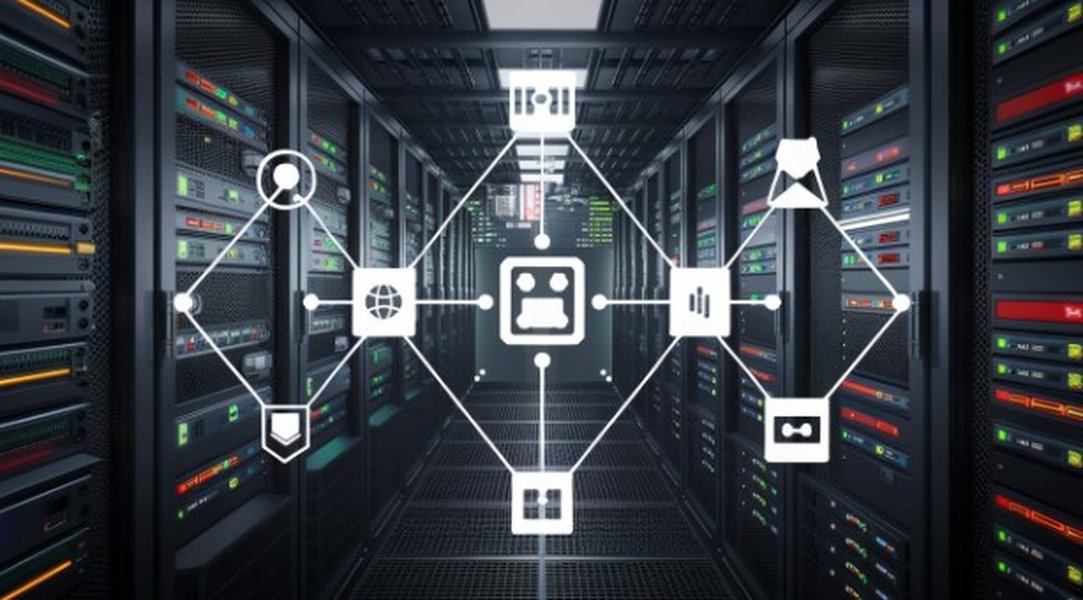
Figure 1: Illustration of a server room, symbolizing the infrastructure behind self-hosted game servers.
Even when opting for self-hosted servers, developers can still choose to integrate certain Steam features. For example, the Steam Game Servers API can be used to list dedicated servers within the Steam client, making them discoverable by players, even if the actual network communication happens via a custom solution.
Navigating the Trade-offs and Benefits
While the freedom to bypass Steam's core networking APIs offers significant advantages, it also comes with a set of trade-offs that developers must consider.
Advantages of Independent Networking and Self-Hosting
Full Control Over Infrastructure
By hosting their own servers, developers maintain complete control over the server environment, including hardware specifications, operating systems, and network configurations. This can be crucial for optimizing performance, implementing custom game logic, and ensuring data privacy.
Reduced Reliance on Steam Backend
Less reliance on Steam's networking APIs means less dependency on Valve's infrastructure. This can lead to greater stability and resilience, as developers are not subject to potential outages or changes in Steam's backend services for core gameplay. It also means potentially bypassing any associated costs or limitations of Steam's backend services.
Flexibility for Cross-Platform Play
A custom networking solution can make it easier to support cross-platform play, allowing players on Steam to connect with players on other platforms (e.g., direct downloads, other PC launchers) without Steamworks acting as a gatekeeper for networking.
Community Engagement
Allowing community-hosted servers can significantly boost player engagement and loyalty. Players often appreciate the ability to customize their gameplay experience, host private matches, and foster their own communities around specific servers.
Potential Disadvantages and Considerations
Lack of Built-in Convenience Features
Bypassing Steam's networking means foregoing its convenient in-client features such as integrated matchmaking, quick invites via the Steam friends list, and cloud-based statistics without additional implementation. Developers would need to build these functionalities from scratch or use third-party alternatives.
Discovery Challenges
Without Steam's built-in server browser or matchmaking, players might need to rely on external means (like Discord servers, forums, or direct IP entry) to find and join games. This can impact discoverability, especially for new players.
Development Complexity
Implementing a robust and secure networking solution from scratch or integrating a third-party alternative can be complex and time-consuming. Developers need to account for aspects like latency, packet loss, security, and scalability.
AppID Requirement
Even with independent networking, a game distributed on Steam will still require its own AppID if any Steam features (even non-networking ones) are to be integrated, or simply for the game to be available on the platform. For testing purposes, the "Spacewar" Steam ID can often be used to test Steam API integrations without a dedicated AppID.
The Spectrum of Integration: From Full Independence to Hybrid Models
The decision of how deeply to integrate with Steam's multiplayer APIs often lies on a spectrum. Developers can choose complete independence, a hybrid approach, or full Steamworks utilization.
Pure Self-Hosted Model
In this model, the game client connects directly to self-hosted servers, potentially via IP addresses or through an external server browser. Steam is used solely for game distribution and authentication (to launch the game). All networking, lobby management, and session handling are custom-built.
Hybrid Approach: Leveraging Key Steam Features
Many developers opt for a hybrid model. They might use Steam's matchmaking and lobby features to help players find each other and organize games, but then transition to their own custom networking solution for the actual in-game communication. This allows them to benefit from Steam's social connectivity while retaining control over the core gameplay networking.
Figure 2: This radar chart illustrates the strengths and weaknesses of different Steam multiplayer integration approaches, from fully independent self-hosting to full Steamworks integration. It highlights trade-offs in control, ease of use, and development complexity across various aspects.
Practical Implementations and Community Insights
Many games successfully employ self-hosted server models or custom networking solutions on Steam. The existence of Steam curator pages dedicated to "Self-Hosted Games" and extensive discussions on forums like Reddit and GameDev.net attest to the prevalence and viability of this approach.
Popular Third-Party Networking Solutions
Game engines like Unity and Unreal Engine offer flexible frameworks that allow for easy integration of third-party networking solutions. Developers often use libraries such as Mirror, Fishnet, or custom socket implementations to handle their game's networking layer. These solutions provide the tools needed to build robust multiplayer functionality without relying on Steam's specific networking services.
Figure 3: This mindmap illustrates the various pathways and considerations for implementing multiplayer networking for Steam games, highlighting the options for self-hosting, Steamworks integration, and hybrid models.
The Role of the AppID
Regardless of the networking approach, if a game is intended to be on Steam and leverage any Steam features (even non-networking ones like achievements or statistics), it will require an official Steam AppID. This ID is essential for Steam to recognize and categorize the game within its platform. However, the AppID does not inherently force the use of Steam's multiplayer networking APIs.
Video 1: This tutorial by CodeMonkey demonstrates a quick setup for Steam Multiplayer in Unity, utilizing the Steamworks relay solution. It provides a practical example of how developers can integrate Steam's connectivity features without necessarily building a complete networking stack from scratch, often serving as a starting point for more customized solutions.
Summary of Multiplayer Networking Options on Steam
Here's a concise overview of the different approaches to multiplayer networking for Steam games, emphasizing the role of self-hosting and API independence:
| Networking Approach | Steam API Reliance for Networking | Server Hosting | Pros | Cons | Best For |
|---|---|---|---|---|---|
| Pure Self-Hosted (Custom Netcode) | None (or minimal for game launch) | Developer/Community Self-Hosted | Max control, cross-platform potential, lower Steam backend costs. | Higher development complexity, limited Steam social features, discoverability challenges. | Developers prioritizing full control, unique networking needs, or strong community server support. |
| Hybrid (Steam Lobbies + Custom Netcode) | Partial (for matchmaking/lobbies) | Developer/Community Self-Hosted | Leverages Steam's social features, retains core networking control. | Some development complexity, potential limitations with Steam lobby system. | Games wanting Steam's social integration for player finding but custom control over gameplay networking. |
| Full Steamworks Integration | High (for matchmaking, lobbies, P2P/relay) | Steam-managed (P2P/Relay) or Steam Game Servers API | Easy integration, robust social features, Steam's global network. | Less control over networking, reliance on Steam infrastructure, potential usage costs. | Developers prioritizing ease of integration and full use of Steam's ecosystem for smaller to medium-scale games. |
Table 1: A comparative analysis of various multiplayer networking strategies for Steam games, outlining the extent of Steam API reliance, server hosting models, and their respective advantages and disadvantages.
Developer Considerations for Choosing a Path
The choice between leveraging Steam's networking APIs, going completely independent, or adopting a hybrid model depends heavily on several factors unique to each game and development team.
Scale and Complexity of Multiplayer
For games with a small player count or those designed for dedicated groups, a pure self-hosted solution might be simpler and more cost-effective. Larger-scale games requiring robust matchmaking and global reach might find certain Steam API features beneficial, even if the core networking is custom.
Development Resources and Expertise
Building a custom networking stack requires significant expertise in network programming, server management, and security. Teams with limited resources might opt for Steam's solutions or established third-party networking engines to reduce development overhead.
Target Audience and Community Expectations
If the game's community values self-hosting or modding, providing tools for dedicated servers can be a strong selling point. Conversely, if players expect seamless in-game matchmaking and invites, Steam's features become more appealing.
Figure 4: This bar chart compares different multiplayer networking strategies across key development considerations such as implementation ease, server cost control, and player discovery. It provides a visual overview of how each approach performs in these areas.
FAQ
Can I use Steam for distribution but my own servers for multiplayer?
Do I need a Steam AppID if I'm not using Steam's multiplayer APIs?
What are the main benefits of self-hosting multiplayer servers for a Steam game?
What are the downsides of not using Steam's multiplayer APIs?
Conclusion
Steam provides a flexible platform for multiplayer game development, far beyond a rigid requirement for its own networking APIs. Developers have the freedom to implement their own networking solutions, ranging from entirely custom client-server or peer-to-peer models to hybrid approaches that selectively leverage Steam's social and discovery features. Self-hosting servers is not only permitted but actively supported, enabling developers and communities to maintain greater control over their game's multiplayer infrastructure. While choosing independence requires careful consideration of development complexity and feature trade-offs, it ultimately offers a powerful path for creating unique, community-driven, and highly customized multiplayer experiences on Steam.
Recommended Further Exploration
- How to implement custom networking for Unity games on Steam
- Benefits of community-hosted dedicated servers for PC games
- Integrating Steam matchmaking with independent game servers
- Challenges and solutions for cross-platform multiplayer without Steamworks