
Unlock Semester Success: Master Math, Code Like a Pro, and Ace Your Exams
Your comprehensive roadmap to conquering Linear Algebra, Real Analysis, C++, Node.js/Express, and Python fluency.
Essential Insights for Your Success
- Embrace Active Learning: Move beyond passive reading. Actively solve problems, write code daily, and strive to explain concepts in your own words to solidify understanding across all subjects.
- Integrate Theory and Practice: Bridge the gap between abstract mathematical concepts (Linear Algebra, Real Analysis) and practical application by implementing algorithms or building small projects using C++, Python, and Node.js/Express.
- Strategic Scheduling is Key: Balance the diverse demands of theoretical math and hands-on programming by creating a realistic study schedule, allocating dedicated time blocks for each subject, and incorporating regular review sessions.
Crafting Your Winning Semester Strategy
Laying the Foundation for Success Across Disciplines
Navigating a semester packed with challenging subjects like Linear Algebra, Real Analysis, C++, backend development with Node.js/Express, and achieving Python fluency requires more than just hard work; it demands smart work. A cohesive strategy, consistent effort, and the right techniques are paramount. Waiting until the last minute is ineffective; focus on understanding the *why* behind concepts, not just memorizing procedures.
Time Management and Scheduling
Create a realistic weekly schedule. Allocate specific time blocks for each subject, considering exam dates, project deadlines, and perceived difficulty. Use techniques like the Pomodoro method (e.g., 25 minutes study, 5 minutes break) to maintain focus and prevent burnout. Consistency is key – even an hour per subject daily is more effective than marathon cramming sessions.
Active Learning Techniques
Engage actively with the material:
- Mathematics (Linear Algebra & Real Analysis): Don't just read proofs or watch examples. Work through problems and proofs yourself, by hand. Try to replicate theorems and explain the logic aloud. Break complex problems into smaller, manageable steps.
- Programming (C++, Node.js/Express, Python): Write code frequently. Start with small exercises reinforcing specific concepts, then build small projects. Debugging is a critical skill – embrace it. Explain your code logic as if teaching someone else.
Leveraging Resources Effectively
Utilize all available resources: lecture notes, textbooks, online tutorials (like Khan Academy, W3Schools, official documentation), video lectures, and past exams/assignments (especially from sources like MIT OpenCourseWare). Supplement primary materials with quality online courses or books if needed.
Regular Review and Self-Assessment
Incorporate regular review sessions into your schedule to combat the forgetting curve. Use flashcards (physical or digital like Anki), mind maps, or concept summaries. Test yourself frequently by attempting problems or coding tasks from memory before checking solutions.
Subject-Specific Study Tactics
Conquering Linear Algebra
Linear Algebra combines computational skills with abstract theoretical concepts. It's foundational for many STEM fields.
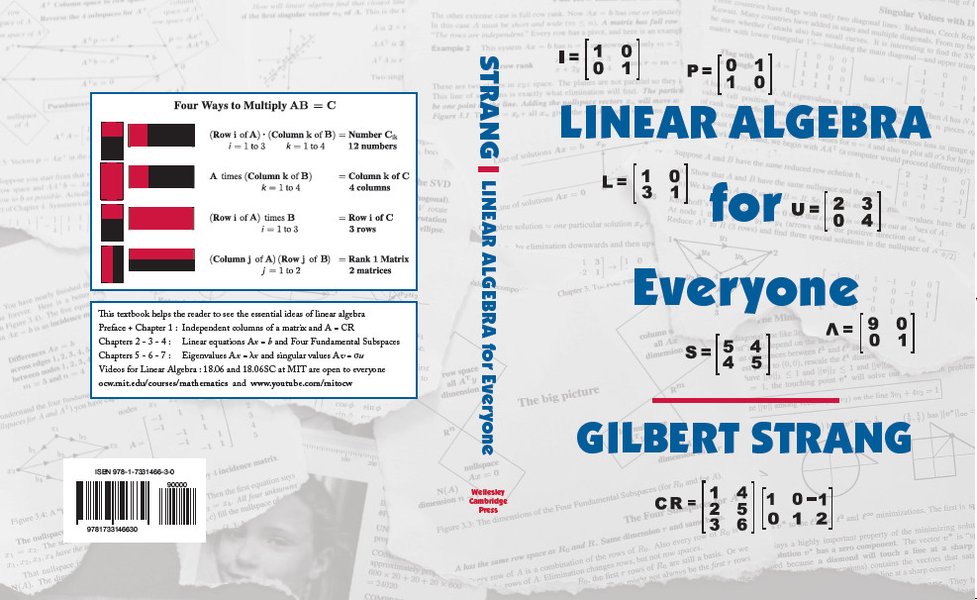
Leverage acclaimed resources like those by Gilbert Strang for deep understanding.
Master the Fundamentals and Notation
Ensure a rock-solid understanding of core concepts: vectors, matrices, vector spaces, linear transformations, determinants, eigenvalues, and eigenvectors. Familiarize yourself with the specific mathematical notation used in your course. Basic computational skills (like row reduction/Gaussian elimination) are often tested.
Prioritize Problem Solving Practice
Actively solve numerous exercises. Don't just passively watch solutions. Work through homework problems multiple times, perhaps varying the numbers in matrices to test your understanding. Try additional problems from your textbook or online resources. Practice matrix manipulations carefully, as transcription errors are common pitfalls.
Understand Definitions and Proofs
While computation is vital, theoretical understanding is also crucial. Study definitions thoroughly. Understand, and for key results, try to memorize the main ideas of important proofs, as they often illuminate critical techniques and connections between concepts.
Utilize Visualization Tools
Linear algebra concepts can be abstract. Use resources that provide visual intuition, such as Khan Academy's linear algebra section or 3Blue1Brown's "Essence of linear algebra" series, to build a geometric understanding alongside the algebraic formalism.
Navigating the Rigors of Real Analysis
Real Analysis is a proof-intensive subject that builds the theoretical foundations of calculus. Precision and logical reasoning are paramount.
Focus Intensely on Proofs
Success in Real Analysis hinges on your ability to understand, replicate, and eventually construct mathematical proofs. Study the proofs of key theorems covered in class meticulously. Many exam problems require techniques embedded within these proofs. Understand the *idea* behind each proof, not just the steps.
Master Definitions and Theorems
Maintain a running list or glossary of precise definitions (e.g., limit of a sequence, continuity, compactness) and major theorems (e.g., Bolzano-Weierstrass, Intermediate Value Theorem, Mean Value Theorem). Understanding these is the first step to solving problems.
Practice with Rigorous Problems
Work through problem sets consistently. Use resources like MIT OpenCourseWare, which offers assignments and exams (often with solutions) that provide excellent practice for the types of rigorous problems you'll encounter. Start assignments early to allow time for deep thought.
Build from Foundational Concepts
Ensure you have a strong grasp of foundational topics: properties of real numbers, sequences and series, limits, continuity, differentiability, and basic integration theory (like Riemann integration). Each concept builds upon the previous ones.
Developing Proficiency in C++
C++ is a powerful, versatile language often used for performance-critical applications, systems programming, and game development.
A dedicated workspace can enhance focus for coding practice.
Solidify Core Concepts
Build a strong foundation in C++ syntax, data types, control structures, functions, pointers and memory management, object-oriented programming (classes, inheritance, polymorphism), and the Standard Template Library (STL).
Practice Consistently
Write C++ code regularly. Start with small programs to reinforce individual concepts. Practice debugging your code systematically. Use online platforms like LeetCode or Codeforces for algorithmic challenges specifically in C++.
#include <iostream>
#include <vector>
#include <numeric>
#include <string>

// Simple C++ example demonstrating vector usage
int main() {
    std::vector<int> numbers = {1, 2, 3, 4, 5};
    int sum = std::accumulate(numbers.begin(), numbers.end(), 0);

    std::cout << "Vector elements: ";
    for (int num : numbers) {
        std::cout << num << " ";
    }
    std::cout << std::endl;

    std::cout << "Sum of elements: " << sum << std::endl;

    // Practice implementing concepts from Linear Algebra or algorithms here

    return 0;
}
Explore Applications
Consider using C++ to implement algorithms learned in other courses (like data structures or numerical methods from analysis/linear algebra). Building small, tangible projects helps solidify learning.
Mastering Backend Development with Node.js and Express
Node.js allows you to run JavaScript on the server-side, and Express is a popular framework for building web applications and APIs with Node.js.

Backend development involves server-side logic and database interactions.
Grasp Node.js Fundamentals
Start with JavaScript basics if needed. Understand Node.js core concepts: its event-driven, non-blocking I/O model, modules, npm (Node Package Manager), and asynchronous programming (callbacks, Promises, async/await).
Learn the Express Framework
Understand Express architecture: routing (defining URL endpoints), middleware (functions that execute during the request-response cycle), request and response objects, and template engines (optional). Practice building simple REST APIs that handle GET, POST, PUT, DELETE requests and work with JSON data.
const express = require('express');
const app = express();
const port = 3000;

// Middleware to parse JSON bodies
app.use(express.json());

// Sample GET route
app.get('/api/greeting', (req, res) => {
  res.json({ message: 'Hello from the backend!' });
});

// Sample POST route
app.post('/api/data', (req, res) => {
  console.log('Received data:', req.body);
  // Here you could interact with a database or perform other logic
  res.status(201).json({ status: 'success', data: req.body });
});

// Start the server
app.listen(port, () => {
  console.log(`Server listening at http://localhost:${port}`);
});

// Consider building endpoints related to your math studies, e.g., a simple matrix operation API
Build Practical Projects
The best way to learn backend development is by building. Start with a simple CRUD (Create, Read, Update, Delete) application. Integrate with a database (like MongoDB or PostgreSQL). Explore concepts like authentication and error handling.
Leverage Your C++ Background
While Node.js uses JavaScript, understanding systems concepts from C++ can be beneficial. Node.js itself has C++ components. You might even explore Node.js C++ addons later, though focus on JS/Express first.
Achieving Python Fluency
Python is renowned for its readability and extensive libraries, making it popular for scripting, web development, data science, and more.

Consistent practice is crucial for gaining fluency in Python.
Focus on Syntax and Idiomatic Code
Master Python's clean syntax. Learn to write "Pythonic" code – code that follows common Python conventions and leverages built-in features effectively.
Daily Coding Practice
Code in Python every day, even if it's just for a short time. Start with basic scripts and gradually tackle more complex problems or mini-projects. Use interactive environments like Jupyter Notebooks for exploration.
import numpy as np

# Example using NumPy (popular Python library for numerical operations)
def create_and_manipulate_matrix():
    # Create a 2x3 matrix (list of lists)
    matrix_a = [[1, 2, 3], [4, 5, 6]]

    # Convert to a NumPy array for efficient operations
    np_matrix = np.array(matrix_a)

    print("Original Matrix (NumPy array):")
    print(np_matrix)

    # Transpose the matrix
    transposed_matrix = np_matrix.transpose()
    print("\nTransposed Matrix:")
    print(transposed_matrix)

    # Perform element-wise multiplication (requires another matrix of same shape)
    # matrix_b = np.array([[2, 2, 2], [3, 3, 3]])
    # product = np_matrix * matrix_b
    # print("\nElement-wise product:")
    # print(product)

    # Connect to Linear Algebra: Implement matrix multiplication, inversion, etc.
    # Example: Identity matrix
    identity = np.identity(3)
    print("\n3x3 Identity Matrix:")
    print(identity)

create_and_manipulate_matrix()
Work on Projects and Explore Libraries
Apply Python to tasks that interest you: automate a repetitive task, build a simple web scraper, analyze some data. Explore key libraries relevant to your interests or other studies, such as NumPy and SciPy for numerical/scientific computing (connecting to Linear Algebra/Analysis), Pandas for data manipulation, or Flask/Django for web development.
Visualizing Your Study Landscape
Comparing Subject Demands
Understanding the relative demands of each subject can help you allocate your time and mental energy effectively. This radar chart provides a visual comparison across key dimensions based on typical course structures. Note that 'Coding Practice' refers to writing code, while 'Project Focus' relates more to building larger applications or systems.
Structuring Your Study Plan: A Mindmap
Connecting the Dots for Semester Success
This mindmap provides a visual overview of how different study components connect to achieve your overall goal of passing the semester and gaining proficiency.
Visual Learning: Understanding Linear Algebra
Grasping the Essence with 3Blue1Brown
Visualizations can significantly aid in understanding the often abstract concepts of Linear Algebra. The "Essence of linear algebra" series by 3Blue1Brown is highly recommended for building intuition about topics like vectors, transformations, determinants, and eigenvalues from a geometric perspective. Watching these videos can complement your theoretical study and make the subject feel more tangible and less daunting. This preview introduces the series' approach.
Balancing Your Workload: Sample Weekly Schedule
A Framework for Allocating Your Time
This table provides a sample structure for allocating study time across your subjects. Adjust it based on your specific course schedule, deadlines, and personal energy levels. The key is consistency and ensuring dedicated focus time for both theoretical understanding and practical application.
| Time Block | Monday | Tuesday | Wednesday | Thursday | Friday | Weekend |
|---|---|---|---|---|---|---|
| Morning (e.g., 9-12) | Real Analysis (Proofs/Theory) | Linear Algebra (Problems/Theory) | Real Analysis (Problems) | Linear Algebra (Proofs/Review) | Math Review / Problem Sets | Project Work / Catch-up |
| Afternoon (e.g., 1-4) | C++ (Concepts/Practice) | Python (Practice/Project) | Node.js/Express (Tutorials/Coding) | C++ (Project/Debugging) | Python (Library Exploration) | Longer Coding Sessions / Relax |
| Evening (e.g., 7-9) | Node.js/Express (Project) | Review Notes (All Subjects) | C++ / Python Practice | Math Concept Review | Plan Next Week / Light Review | Relax / Review |
Remember to schedule breaks and time for rest and exercise to maintain optimal performance.
Frequently Asked Questions (FAQ)
How much time should I realistically dedicate to studying each week?
This heavily depends on course intensity and your background. A common guideline for challenging university courses is 2-3 hours of study time per credit hour per week. Given your load:
- Linear Algebra & Real Analysis: Often demanding, potentially 10-15 hours per week each, especially when focusing on proofs and complex problem sets.
- C++, Node.js/Express, Python: Aim for consistent daily practice. Depending on project requirements, allocate 8-12 hours per week for each programming area, focusing on coding, debugging, and project building.
This suggests a significant time commitment (potentially 40+ hours outside of class). Prioritize based on deadlines and difficulty, and adjust as needed. Use the sample schedule as a starting point.
What's the most effective way to tackle proofs in Real Analysis?
Proofs are central to Real Analysis. Effective strategies include:
- Understand Definitions First: You cannot prove theorems if you don't know the precise definitions of the terms involved (e.g., convergence, continuity).
- Study Textbook/Lecture Proofs: Don't just read them; actively engage. Try to understand the *motivation* behind each step. Why was this technique used? What's the overall strategy?
- Attempt Proofs Yourself: Before looking at a solution, try to prove theorems or solve proof-based problems on your own. Even if you get stuck, the attempt helps learning.
- Identify Common Techniques: Recognize patterns like proof by contradiction, induction, using the triangle inequality, or constructing specific examples/counterexamples.
- Practice, Practice, Practice: Work through as many proof exercises as possible. Start with simpler ones and gradually increase difficulty.
- Explain Proofs: Try explaining a proof to a classmate or even just articulating it clearly to yourself.
How can I balance learning theory (Math) with practical coding (Programming)?
This is a common challenge. Balance requires integration and smart scheduling:
- Scheduled Blocks: Dedicate specific time slots for math (theory, proofs, problems) and coding (practice, projects), as shown in the sample schedule. Respect these blocks.
- Integrate Concepts: Actively look for ways to connect your learning. Implement linear algebra algorithms (like matrix multiplication or solving systems) in C++ or Python. Build a simple backend API with Node.js that performs a calculation related to analysis. This reinforces both theoretical understanding and practical skills.
- Project-Based Learning: Use programming projects as a way to apply mathematical concepts. For example, visualize a concept from analysis using Python's Matplotlib library.
- Vary Your Focus: Alternate between theoretical study sessions and hands-on coding sessions to keep things fresh and leverage different parts of your brain. A morning session on proofs might be followed by an afternoon coding session.
What are the best resources for getting 'fluent' in Python quickly?
Fluency comes from consistent practice and application. Focus on:
- Daily Practice: Write Python code every day. Platforms like HackerRank, LeetCode (filter for Python), or Codewars offer daily challenges.
- Build Projects: Apply Python to solve real problems or build things you find interesting. This forces you to learn libraries and handle practical challenges.
- Read Quality Code: Explore open-source Python projects on GitHub. Pay attention to structure, style, and common idioms.
- Focus on 'Pythonic' Style: Learn the common conventions and best practices of the Python community (e.g., list comprehensions, generators, context managers). Resources like "Fluent Python" (book) or style guides (PEP 8) are helpful.
- Explore Core Libraries: Depending on your goals, dive into standard libraries (like `collections`, `itertools`, `os`) and popular third-party ones (NumPy, Pandas, Requests, Flask/Django).
- Interactive Learning: Use tools like Jupyter Notebooks for experimentation and data exploration.
While speed varies, consistent effort over weeks and months is necessary for true fluency.
References
- How do you study for a real analysis exam? - Reddit
- Assignments and Exams | Real Analysis | MIT OpenCourseWare - MIT OpenCourseWare
- Exams | Real Analysis | MIT OpenCourseWare - MIT OpenCourseWare
- Linear Algebra - Khan Academy
- 12 tips when facing a Linear Algebra exam - Nibcode
- Node.js Tutorial - W3Schools
- NodeJS + Express for C++ Programmers — Part 1 - Medium
- Essence of linear algebra preview - YouTube (3Blue1Brown)
Recommended Further Exploration
Last updated April 19, 2025