
Unraveling Sudden Memory Loss & Headaches: A Deep Dive into Potential Causes and Next Steps
Exploring the complex interplay of symptoms in a 47-year-old female with newly uncontrolled hypertension.
The sudden onset of memory loss, brain fog, severe headaches, alongside previously controlled hypertension now becoming uncontrolled, warrants a careful and comprehensive medical investigation. For a 47-year-old female with a known history of hypertension, hypertensive heart disease (with normal function), chronic venous insufficiency, and uterine fibroids, these new symptoms signal a potentially significant change in health status. This response aims to outline potential underlying causes (differential diagnoses) and suggest a structured approach to investigation (workup advice).
Key Insights: Navigating a Complex Clinical Picture
- Sudden neurological symptoms (memory loss, severe headaches, brain fog) combined with a sudden loss of blood pressure control are red flags that demand prompt and thorough medical evaluation.
- The differential diagnosis is broad, encompassing vascular events (like TIA or stroke), hypertensive emergencies, complicated migraines, and other neurological or systemic conditions.
- A systematic workup, including detailed neurological assessment, advanced neuroimaging, comprehensive blood tests, and cardiovascular evaluation, is paramount to pinpoint the exact cause and guide appropriate management.
Potential Underlying Causes (Differential Diagnoses)
Given the patient's presentation – a 47-year-old female with a history of hypertension, now experiencing sudden memory loss (short and long term), brain fog, intermittent severe right-sided headaches, and uncontrolled hypertension despite medication compliance for three weeks – several conditions need to be considered. The interplay between neurological symptoms and uncontrolled hypertension is a central theme.
1. Cerebrovascular Events
Transient Ischemic Attack (TIA) or Stroke
Sudden neurological deficits, including memory loss and severe headaches, are hallmark signs of a TIA or an acute ischemic stroke. Uncontrolled hypertension is a major risk factor. Even "silent strokes" in critical brain areas can manifest with cognitive changes. The right-sided headache could correlate with vascular involvement on that side of the brain.
Hypertensive Encephalopathy
This is a serious condition caused by severely elevated blood pressure leading to brain swelling. Symptoms include headache, confusion, visual disturbances, and memory loss. It's a medical emergency requiring immediate blood pressure reduction. The patient's uncontrolled hypertension makes this a significant concern.
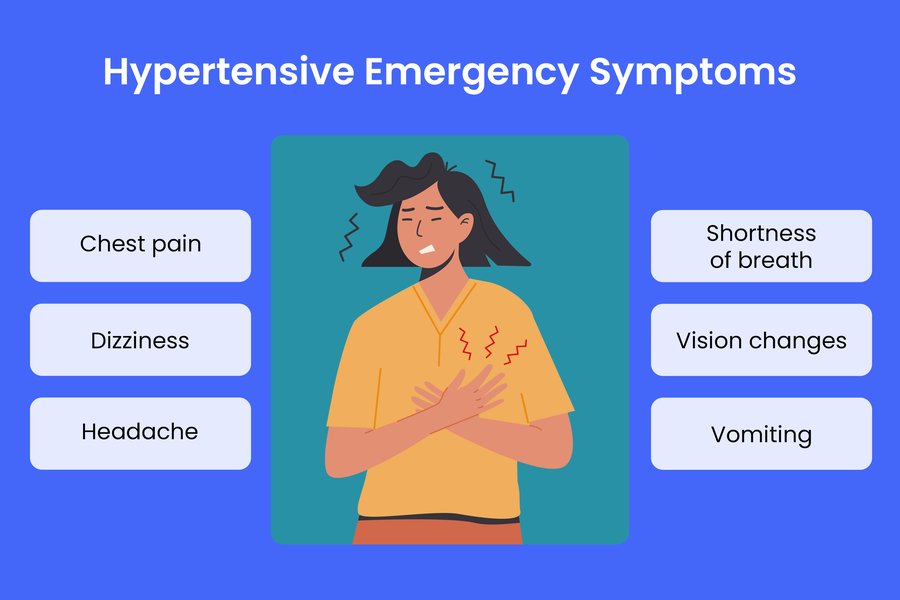
Visual representation of factors related to a hypertensive crisis, which can impact brain function.
2. Migraine and Related Syndromes
Migraine with Aura or Complicated Migraine
Severe, unilateral headaches are characteristic of migraines. Some migraine variants, particularly those with aura, can present with transient neurological symptoms, including memory disturbances, confusion (brain fog), and even sensory or motor deficits. The described right-sided headache and cognitive symptoms fit this pattern. Moreover, migraine sufferers sometimes report cognitive difficulties even between attacks.
3. Transient Neurological Conditions
Transient Global Amnesia (TGA)
TGA is characterized by a sudden, temporary episode of memory loss, particularly for recent events, and an inability to form new memories. The individual remains alert and aware of their identity but may be confused and ask repetitive questions. While typically resolving within 24 hours, the acute onset of memory loss makes TGA a consideration. It is more common in individuals over 50 but can occur earlier, sometimes triggered by stress or exertion.
4. Issues Related to Blood Pressure Control
Secondary or Resistant Hypertension
The fact that hypertension is uncontrolled despite reported compliance with usual therapies raises suspicion for secondary hypertension (high blood pressure caused by an underlying condition) or resistant hypertension. Conditions like renal artery stenosis, primary aldosteronism, or obstructive sleep apnea could be responsible. The uncontrolled blood pressure itself can contribute to headaches and cognitive symptoms through various mechanisms, including impaired cerebral blood flow.
A cardiologist explains resistant hypertension, a condition where blood pressure remains high despite treatment, which is relevant to the patient's uncontrolled hypertension.
5. Other Potential Neurological or Systemic Causes
Epileptic Syndromes
Certain types of seizures, such as transient epileptic amnesia, can cause episodes of memory loss. While not always accompanied by classic convulsive activity, an underlying seizure disorder should be considered if episodes are recurrent or have other suggestive features.
Medication Side Effects or Interactions
A thorough review of all current medications, including those for fibroids and chronic venous insufficiency, is essential. Some drugs or their interactions can lead to cognitive side effects like memory loss or brain fog, although sudden onset after a period of stable use is less common unless there has been a recent change in dosage or addition of a new medication.
Nutritional Deficiencies or Metabolic Disorders
Deficiencies in vitamins like B12 or D, or thyroid dysfunction (e.g., hypothyroidism), can manifest with cognitive impairment, fatigue, and sometimes headaches. These are generally more gradual but acute worsening can occur.
Inflammatory or Autoimmune Conditions
Rarely, autoimmune conditions affecting the brain's blood vessels or tissues (e.g., Susac's syndrome, CNS vasculitis) can cause headaches, cognitive dysfunction, and other neurological symptoms. These often have other systemic signs but should be kept in mind if more common causes are excluded.
Visualizing Symptom Impact and Diagnostic Priorities
The following chart offers a conceptual representation of the potential impact of various factors on the patient's current condition and the urgency of investigating them. The values are illustrative, reflecting a qualitative assessment rather than precise quantitative data, to highlight areas of significant concern.
This radar chart visualizes two aspects: the perceived severity and impact of different contributing elements to the patient's current state (e.g., high impact from hypertensive effects and vascular risk) and the corresponding priority for diagnostic investigation. For example, "Vascular Event Risk" scores high on both severity and diagnostic priority, indicating it's a critical area to address urgently.
Mapping the Diagnostic Journey
Understanding the connections between symptoms, medical history, and potential diagnoses can be complex. The mindmap below illustrates a simplified overview of how the patient's primary presenting issues branch out into key areas for consideration and investigation.
47 y.o. Female
Sudden Memory Loss, Headache, Uncontrolled HTN"] id1["Key Symptoms"] id1a["Sudden Memory Loss
(Short & Long Term)"] id1a1["Differential: TIA/Stroke"] id1a2["Differential: TGA"] id1a3["Differential: Hypertensive Encephalopathy"] id1a4["Differential: Complicated Migraine"] id1b["Brain Fog"] id1c["Intermittent Severe
Right-Sided Headache"] id1c1["Differential: Migraine"] id1c2["Differential: Vascular Origin"] id1c3["Differential: Symptom of HTN Crisis"] id2["Critical Clinical Finding"] id2a["Uncontrolled Hypertension
(Despite Compliance)"] id2a1["Consider: Secondary Hypertension"] id2a2["Consider: Resistant Hypertension"] id2a3["Workup: BP Monitoring, Renal/Endocrine Evaluation"] id3["Relevant Medical History"] id3a["Hypertension (Previously Controlled)"] id3b["Hypertensive Heart Disease (Normal Function)"] id3c["Chronic Venous Insufficiency"] id3d["Uterine Fibroids"] id4["Broad Diagnostic Categories"] id4a["Vascular Disorders"] id4b["Neurological Disorders"] id4c["Systemic Conditions with Neurological Impact"]
This mindmap centralizes the patient's core presentation and branches into the main symptoms, the critical finding of uncontrolled hypertension, relevant past medical history, and the broad categories of diseases that need to be explored. It helps visualize the interconnectedness of these factors in forming a differential diagnosis.
Recommended Workup Strategy
A systematic and timely diagnostic approach is crucial. The workup should aim to quickly identify or rule out life-threatening conditions and establish a definitive diagnosis.
1. Immediate Evaluation and Stabilization
Detailed History and Physical Examination
A thorough medical history focusing on the timeline and characteristics of memory loss, headache patterns (triggers, duration, associated symptoms like visual changes or weakness), review of systems, and current medications is essential. A comprehensive neurological examination must be performed to assess cognitive function (e.g., using tools like MoCA or MMSE), cranial nerves, motor strength, sensation, coordination, and reflexes. Blood pressure should be measured in both arms, and orthostatic vitals checked.
Vital Signs Monitoring
Close monitoring of blood pressure is paramount. If severely elevated, immediate management in an appropriate setting (possibly emergency department) may be needed.
2. Laboratory Investigations
A panel of blood tests is necessary to assess overall health and screen for specific conditions:
- Complete Blood Count (CBC): To check for infection or anemia.
- Comprehensive Metabolic Panel (CMP): To evaluate electrolytes, kidney function (BUN, creatinine), and liver function. Abnormalities here could point to secondary causes of hypertension or contribute to symptoms.
- Thyroid Function Tests (TSH, free T4): To rule out thyroid dysfunction, a potential cause of cognitive changes and impacting blood pressure.
- HbA1c: To assess for undiagnosed diabetes or poor glucose control, a cardiovascular risk factor.
- Inflammatory Markers (ESR, CRP): If an inflammatory or autoimmune condition is suspected.
- Vitamin B12 and Vitamin D levels: Deficiencies can contribute to cognitive symptoms.
- Toxicology Screen: If substance use is a remote possibility contributing to acute changes.
Tests for Secondary Hypertension
Given the uncontrolled hypertension despite compliance, screening for secondary causes is vital:
- Serum aldosterone and plasma renin activity (to screen for primary hyperaldosteronism).
- Urinary or plasma metanephrines (if pheochromocytoma is suspected, though less likely without paroxysmal symptoms).
- Assessment of renal arteries (e.g., renal Doppler ultrasound, MRA, or CTA) if renal artery stenosis is suspected.

Understanding the diverse signs and symptoms associated with hypertension is crucial for early detection and management.
3. Neuroimaging
MRI of the Brain
Magnetic Resonance Imaging (MRI) of the brain, with and without contrast, is the preferred initial neuroimaging study. It is highly sensitive for detecting acute ischemic stroke, hemorrhage, tumors, inflammation, white matter changes suggestive of small vessel disease, or structural abnormalities that could explain the symptoms. Diffusion-Weighted Imaging (DWI) sequence is particularly crucial for acute stroke.
MRA/CTV of Cerebral Vessels
Magnetic Resonance Angiography (MRA) or Computed Tomography Angiography (CTA) of the head and neck can be performed to evaluate the cerebral and carotid arteries for stenosis, dissection, aneurysm, or other vascular pathologies.
EEG (Electroencephalogram)
If there is any suspicion of seizure activity contributing to the memory loss or altered mental status (e.g., transient epileptic amnesia), an EEG may be indicated.
4. Cardiovascular Evaluation
Electrocardiogram (ECG)
An ECG to assess heart rhythm and look for signs of cardiac strain or ischemia due to hypertension.
Echocardiogram
While her hypertensive heart disease is noted as having normal function, a repeat echocardiogram might be considered to reassess cardiac structure and function, especially given the uncontrolled hypertension, and to rule out cardioembolic sources if stroke is suspected.
Ambulatory Blood Pressure Monitoring (ABPM)
ABPM over 24 hours can provide a more accurate assessment of blood pressure control patterns and confirm resistant or poorly controlled hypertension.
5. Specialized Consultations and Further Testing
Neurology Consultation
Consultation with a neurologist is highly recommended for expert assessment of the neurological symptoms, interpretation of neuroimaging, and guidance on further specialized tests or management, particularly for complex headaches and memory loss.
Cardiology Consultation
Given the uncontrolled hypertension and history of hypertensive heart disease, a cardiology consultation is important for optimizing blood pressure management and evaluating for secondary causes of hypertension or cardiac complications.
Lumbar Puncture (Spinal Tap)
If there is suspicion of central nervous system infection (e.g., encephalitis) or an inflammatory condition, a lumbar puncture to analyze cerebrospinal fluid (CSF) may be necessary, though this is typically considered after initial imaging.
Sleep Study (Polysomnography)
If obstructive sleep apnea (OSA) is suspected as a contributor to resistant hypertension or daytime fatigue/brain fog, a sleep study should be considered.
Summary Table: Key Differential Diagnoses and Initial Pointers
The following table provides a concise overview of some primary differential diagnoses, their key features relevant to this specific case, and initial diagnostic considerations.
| Differential Diagnosis | Key Features in This Case | Initial Diagnostic Pointers |
|---|---|---|
| Cerebrovascular Event (TIA/Stroke) | Sudden onset memory loss, severe headache, uncontrolled hypertension (major risk factor), brain fog. | Urgent Brain MRI (especially DWI), Neurological examination, MRA/CTA of head and neck, ECG. |
| Hypertensive Encephalopathy | Sudden memory loss, brain fog, severe headache, significantly uncontrolled hypertension. | Markedly elevated blood pressure, Brain MRI (to look for posterior reversible encephalopathy syndrome - PRES), response to BP reduction. |
| Complicated Migraine / Migraine with Aura | Intermittent severe right-sided headache, brain fog, transient memory disturbances. | Detailed headache history, neurological exam during/between episodes, neuroimaging to rule out mimics. |
| Transient Global Amnesia (TGA) | Sudden, profound anterograde amnesia (difficulty forming new memories) and some retrograde amnesia; often resolves within hours. | Clinical diagnosis based on characteristic presentation; MRI to exclude stroke. |
| Secondary/Resistant Hypertension with Neurological Manifestations | Uncontrolled hypertension despite compliance; headache, memory loss, brain fog as potential consequences. | Ambulatory BP monitoring, lab tests for secondary causes (renal, endocrine), imaging of renal arteries if indicated. |
| Medication Side Effects / Interactions | Cognitive changes like memory loss or brain fog potentially linked to a medication. | Thorough medication review; consider temporal relationship to any medication changes. |
Frequently Asked Questions (FAQ)
What are the most urgent concerns with sudden memory loss, headache, and high blood pressure?
The most urgent concerns are conditions that can cause permanent brain damage or be life-threatening. These include:
- Stroke or Transient Ischemic Attack (TIA): These involve disruption of blood flow to the brain.
- Hypertensive Encephalopathy: Extremely high blood pressure can cause brain swelling.
- Brain Hemorrhage: Bleeding in or around the brain, which can be a complication of uncontrolled hypertension.
Why is uncontrolled hypertension a particular worry with these neurological symptoms?
Uncontrolled hypertension is a major risk factor for several serious conditions that can cause neurological symptoms:
- It damages blood vessels, increasing the risk of stroke (both ischemic and hemorrhagic).
- It can lead to hypertensive encephalopathy if blood pressure becomes severely elevated.
- Chronically, it contributes to small vessel disease in the brain, which can impair cognitive function over time (vascular dementia).
- It can exacerbate conditions like migraines.
How can migraines cause memory loss or brain fog?
Migraines are complex neurological events. "Brain fog" is a common complaint among migraine sufferers and can manifest as difficulty concentrating, word-finding problems, and short-term memory issues. This can occur before (prodrome), during, or after (postdrome) the headache phase.
In migraines with aura, transient neurological symptoms occur, which can sometimes include temporary memory disturbances. The exact mechanisms are not fully understood but may involve temporary changes in brain activity, blood flow, or neurotransmitter levels. While usually temporary, these cognitive symptoms can be distressing and impact daily functioning.
What does "secondary hypertension" mean?
Secondary hypertension means that the high blood pressure is caused by another medical condition. This is different from primary (or essential) hypertension, where the cause is often unknown and thought to be related to genetics, lifestyle, and aging.
Common causes of secondary hypertension include:
- Kidney disease (e.g., chronic kidney disease, renal artery stenosis)
- Endocrine disorders (e.g., primary aldosteronism, Cushing's syndrome, thyroid problems, pheochromocytoma)
- Obstructive sleep apnea
- Certain medications (e.g., NSAIDs, decongestants, oral contraceptives)
- Coarctation of the aorta
Recommended Further Exploration
To gain deeper insights into related topics, you might find the following queries helpful:
- What are the urgent neurological symptoms associated with hypertensive crisis?
- How is resistant hypertension diagnosed and managed differently from primary hypertension?
- Can migraine with aura mimic stroke symptoms and how are they differentiated?
- What are the common reversible causes of sudden memory loss in middle-aged adults?
References
The information synthesized in this response is based on established medical knowledge and draws upon insights from resources similar to the following:
Last updated May 12, 2025