
Unraveling Sensorineural Hearing Loss: A Deep Dive into Inner Ear Health
Understanding the most common form of hearing impairment, its origins, symptoms, and cutting-edge treatments.
Key Insights into Sensorineural Hearing Loss
- Prevalence and Nature: Sensorineural Hearing Loss (SNHL) is the most common type of permanent hearing loss, accounting for over 90% of adult cases. It arises from damage to the inner ear's delicate hair cells or the auditory nerve.
- Multifactorial Causes: SNHL is influenced by a diverse range of factors, including the natural aging process (presbycusis), prolonged exposure to loud noise, genetic predispositions, and various infections or medical conditions.
- Advanced Management Strategies: While often irreversible, modern advancements like hearing aids and cochlear implants offer significant improvements in quality of life. Emerging research into hair cell regeneration also presents future therapeutic possibilities.
What is Sensorineural Hearing Loss (SNHL)?
Sensorineural Hearing Loss (SNHL) is a prevalent condition characterized by impaired hearing due to damage within the inner ear or the auditory nerve. This damage disrupts the critical pathway responsible for converting sound vibrations into neural signals and transmitting them to the brain. Unlike conductive hearing loss, which involves issues in the outer or middle ear, SNHL targets the sensory organs of the inner ear, primarily the tiny hair cells within the cochlea, or the nerve fibers that carry auditory information to the brain. This form of hearing loss can develop gradually over time or manifest suddenly, affecting one ear (unilateral) or both (bilateral), and it represents the vast majority of hearing impairment cases globally.
The Core Mechanism of SNHL
At the heart of SNHL lies the cochlea, a snail-shaped organ in the inner ear filled with fluid and thousands of microscopic hair cells. These hair cells act as transducers, converting the mechanical vibrations of sound into electrical impulses. The auditory nerve then transmits these impulses to the brain, where they are interpreted as sound. In SNHL, damage to these hair cells or the auditory nerve prevents these electrical signals from being generated or properly conveyed, leading to a diminished ability to hear or understand sounds.
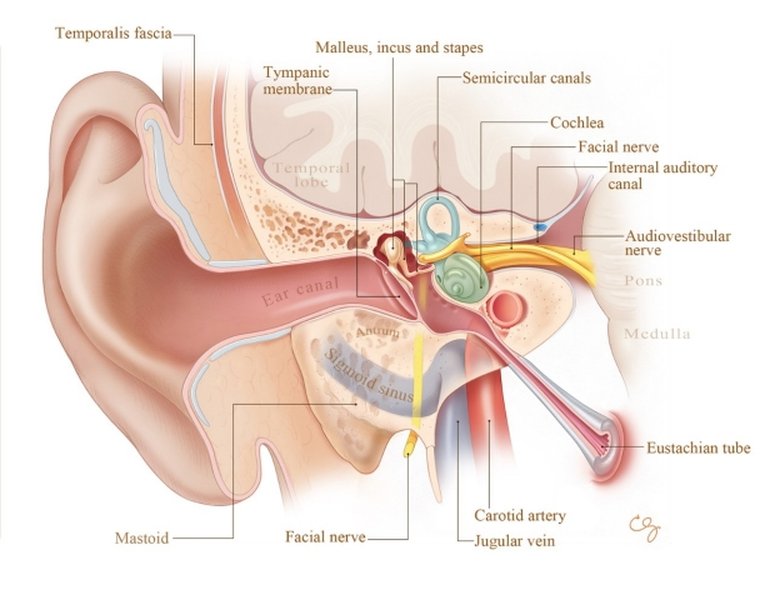
An illustration of the human ear, highlighting the inner ear structures involved in sensorineural hearing loss.
Decoding the Diverse Causes of SNHL
The origins of SNHL are multifaceted, ranging from natural biological processes to environmental exposures and genetic predispositions. Understanding these causes is crucial for prevention, early diagnosis, and targeted management.
Age-Related Hearing Loss (Presbycusis)
Presbycusis is the most common cause of SNHL in industrialized societies and a natural part of the aging process. It typically develops gradually, affecting high-frequency sounds first, often beginning as early as 18 years of age but becoming more noticeable between 50 and 70. Over half of individuals over 75 years old experience some degree of age-related hearing loss.
Noise-Induced Hearing Loss (NIHL)
Exposure to excessively loud noises, whether sudden and intense (acoustic trauma) or prolonged over time, can cause irreversible damage to the delicate hair cells in the cochlea. This is a significant preventable cause of SNHL, particularly in adults, with occupational noise exposure contributing to an estimated 16% of disabling hearing loss worldwide. Sounds above 85 decibels are considered potentially damaging.
Genetic Factors and Congenital SNHL
Genetic predispositions play a substantial role, with over 40 genes implicated in inherited SNHL. This can lead to hearing loss present at birth (congenital) or developing later in life. Genetic variations are among the most common causes of congenital SNHL in children.
Infections and Illnesses
Various infections can lead to SNHL. Viral infections contracted by the mother during pregnancy, such as cytomegalovirus (CMV) or rubella, are common causes of progressive SNHL in children. Postnatal infections like meningitis, mumps, scarlet fever, and measles can also cause damage to the inner ear or auditory nerve. Bacterial infections can also precipitate sudden SNHL.
Ototoxic Medications
Certain drugs are known to be toxic to the inner ear, causing permanent damage to hearing structures. These "ototoxic" medications include some antibiotics (e.g., aminoglycosides), chemotherapy agents (e.g., cisplatin), and loop diuretics. Careful monitoring is essential when these medications are prescribed.
Trauma and Other Conditions
- Head or Ear Trauma: Physical injuries, such as a blow to the head, can damage the inner ear or auditory nerve pathways.
- Meniere's Disease: This inner ear disorder is characterized by episodes of SNHL, vertigo (dizziness), and tinnitus (ringing in the ears).
- Autoimmune Conditions: Diseases where the body's immune system attacks its own tissues, such as granulomatosis with polyangiitis, can lead to SNHL.
- Inner Ear Abnormalities: Structural abnormalities of the inner ear, sometimes present at birth, can result in SNHL.
- Tumors: In rare cases, a tumor, particularly one affecting the auditory nerve (e.g., acoustic neuroma), can cause SNHL, often unilaterally.
- Vascular Diseases: Conditions affecting blood vessels can compromise blood flow to the inner ear, contributing to SNHL.
- Jaundice: In severe cases, high levels of bilirubin in newborns can lead to SNHL.
Recognizing the Signs: Symptoms of SNHL
The symptoms of SNHL can vary widely in presentation and severity, often reflecting the degree and location of inner ear or nerve damage. Early recognition of these signs is vital for prompt intervention.
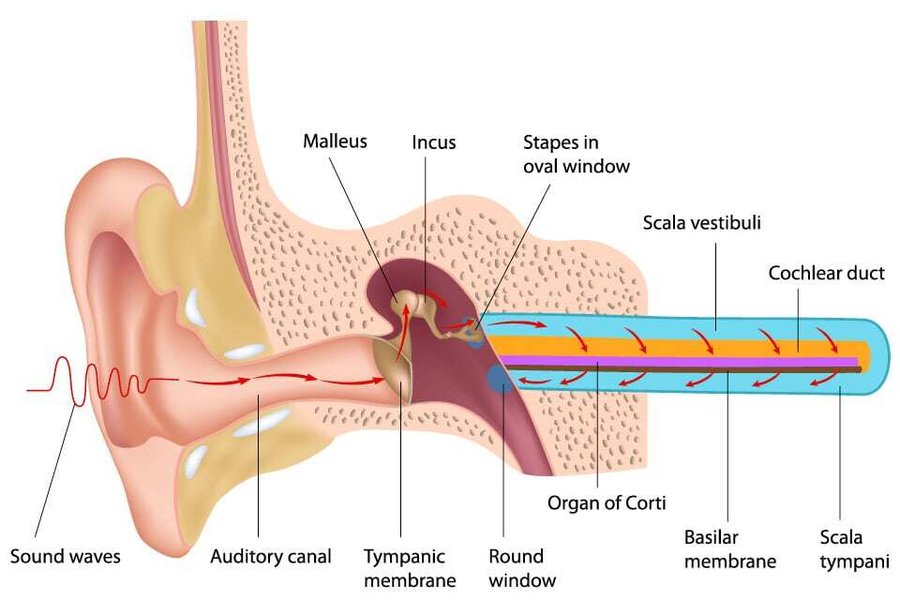
A visual representation of an individual experiencing difficulty hearing, a common symptom of SNHL.
Common Auditory Symptoms
- Difficulty Understanding Speech: A hallmark symptom, especially in noisy environments, on the telephone, or when multiple people are speaking. Individuals may perceive others as mumbling.
- Muffled or Soft Sounds: Sounds may lose their clarity and seem muted, making it hard to hear soft speech or high-frequency sounds.
- Trouble Distinguishing Fricatives and Sibilants: Specific speech sounds like 's', 'f', 'th', 'sh', and 'ch' may be particularly challenging to differentiate.
- Loss of Sound Directionality: Difficulty pinpointing where sounds are coming from, particularly with high-frequency sounds.
- Recruitment: Some sounds, especially loud ones, may seem excessively loud or even painful. This is due to a narrowed dynamic range between the softest sound heard and the loudest sound tolerated.
- Tinnitus: A persistent ringing, buzzing, hissing, or roaring sound in one or both ears is reported by nearly half of individuals with SNHL.
Associated Non-Auditory Symptoms
- Dizziness or Vertigo: If the damage extends to the vestibular structures of the inner ear (responsible for balance), individuals may experience episodes of dizziness, lightheadedness, or a sensation of spinning.
- Feeling of Ear Fullness: A sensation of pressure or fullness in the affected ear.
Sudden Sensorineural Hearing Loss (SSHL)
SSHL, also known as sudden deafness, is a rapid and unexplained loss of hearing that occurs immediately or over a few days. It typically affects one ear and is considered a medical emergency. Prompt medical attention (within two weeks of onset) is crucial, as early treatment with corticosteroids can significantly improve the prognosis for regaining some hearing.
Diagnosing SNHL: A Comprehensive Approach
Accurate diagnosis of SNHL involves a thorough evaluation by an audiologist and often an otolaryngologist (ear, nose, and throat specialist) to determine the type, degree, and potential underlying causes of hearing loss.
Key Diagnostic Tests
The diagnostic process typically includes a combination of auditory and medical assessments:
- Pure Tone Audiometry (Audiogram): This fundamental test measures the softest sounds a person can hear at various frequencies through both air conduction (sound through the ear canal) and bone conduction (sound bypassing the outer and middle ear). It helps to determine the severity and configuration of hearing loss.

An example of an audiogram, a key diagnostic tool used to identify the type and severity of hearing loss.
- Speech Audiometry: Assesses an individual's ability to understand spoken words in different listening conditions, providing insight into speech recognition difficulties.
- Tympanometry: Evaluates the function of the middle ear and the mobility of the eardrum, helping to rule out conductive hearing loss components.
- Otoacoustic Emissions (OAEs): Measures faint sounds produced by the inner ear's outer hair cells in response to sound stimulation. The absence of OAEs suggests inner ear hair cell damage.
- Auditory Brainstem Response (ABR): Measures how the auditory nerve and brainstem respond to sound. This test is particularly useful for diagnosing SNHL in infants, young children, or individuals who cannot provide reliable behavioral responses.
- Medical History and Physical Examination: A detailed review of symptoms, medical history (including noise exposure, infections, and medications), and a physical examination of the ear.
- Imaging and Laboratory Tests: For unilateral SNHL or when specific underlying causes are suspected (e.g., tumors, Meniere's disease, autoimmune conditions), an MRI or CT scan may be performed. Blood tests might also be ordered to check for infections or autoimmune markers.
Treatment and Management Strategies for SNHL
While SNHL is often permanent due to the inability of damaged hair cells to regenerate naturally in humans, various treatments and management strategies can significantly improve hearing and communication, enhancing the quality of life for affected individuals. The treatment approach depends on the degree of hearing loss and its underlying cause.
Hearing Aids: Amplifying Sound
For individuals with mild to severe SNHL, hearing aids are the most common and effective treatment option. These electronic devices amplify sounds, making them louder and clearer, thereby compensating for the reduced hearing ability. Modern hearing aids come in various styles and offer advanced features like noise reduction and directional microphones to improve listening in challenging environments.
Cochlear Implants: Bypassing Damaged Structures
For those with severe to profound SNHL who receive limited benefit from hearing aids, a cochlear implant may be recommended. This surgically implanted electronic device bypasses the damaged inner ear and directly stimulates the auditory nerve. While they do not restore normal hearing, cochlear implants can provide a sensation of sound, significantly improving speech understanding and communication for many recipients.
This video illustrates how a cochlear implant functions to restore hearing in individuals with severe SNHL by directly stimulating the auditory nerve.
Medical Treatments for Specific Causes
- Corticosteroids: For sudden SNHL, a course of corticosteroids (oral prednisone and/or intra-tympanic steroid injections) is often the main treatment. Administering these medications within two weeks of onset offers the best chance of regaining some hearing by reducing inflammation.
- Hyperbaric Oxygen Therapy (HBOT): For early presentation of sudden SNHL, HBOT has shown to significantly improve prognosis by increasing oxygen delivery to the inner ear.
- Treatment of Underlying Conditions: If SNHL is caused by an identifiable condition like an infection, Meniere's disease, or an autoimmune disorder, addressing that specific condition is a crucial part of the management strategy.
Assistive Listening Devices (ALDs) and Rehabilitation
Beyond hearing aids and cochlear implants, various assistive listening devices can enhance communication and safety. These include alerting systems for doorbells or phones, personal FM systems, and specialized telephone amplifiers. Auditory rehabilitation, including auditory training and communication strategies, helps individuals adapt to their hearing loss and maximize the use of their amplification devices.
Emerging Therapies and Future Outlook
Research continues into potential future treatments for SNHL, particularly in the realm of hair cell regeneration. Promising results have been observed in experimental settings, such as using drugs to stimulate supporting cells to become new hair cells in adult mammalian ears. While these are still experimental, they offer hope for restorative therapies in the future.
Understanding Degrees of Hearing Loss
The severity of sensorineural hearing loss is categorized based on the decibel (dB) level of the softest sounds an individual can hear. This classification helps in determining the most appropriate management strategy.
| Degree of Hearing Loss | Hearing Threshold (dB HL) | Impact on Hearing |
|---|---|---|
| Normal Hearing | 0-25 dB | Ability to hear all speech sounds and environmental noises. |
| Mild SNHL | 26-40 dB | Difficulty hearing soft sounds, understanding speech in noisy environments, or distinguishing certain consonants. |
| Moderate SNHL | 41-55 dB | Trouble hearing conversational speech, especially with background noise. Frequent requests for repetition. |
| Moderately Severe SNHL | 56-70 dB | Significant difficulty hearing normal speech. Requires increased volume for TV/radio. Speech understanding is very challenging without amplification. |
| Severe SNHL | 71-90 dB | Only able to hear very loud sounds. Relies heavily on lip-reading or amplification. Conversational speech is not understood. |
| Profound SNHL | 91+ dB | Cannot hear most sounds. Relies on visual cues and/or sign language. Communication is severely impacted without high-power amplification or cochlear implants. |
This table illustrates how varying degrees of SNHL affect daily auditory experiences, guiding clinicians in determining the most effective interventions.
A Snapshot of SNHL Contributing Factors
The following radar chart offers a visual representation of the relative contribution of various factors to the development of Sensorineural Hearing Loss, based on current medical understanding and prevalence. This chart provides an opinionated analysis rather than hard data, reflecting the impact and commonality of each factor.
Navigating the Landscape of SNHL: A Mind Map
This mind map visually organizes the core aspects of Sensorineural Hearing Loss, illustrating the interconnectedness of its definition, causes, symptoms, diagnosis, and treatment options. It serves as a concise overview for quick understanding.
Frequently Asked Questions About SNHL
What is the main difference between SNHL and conductive hearing loss?
Can sensorineural hearing loss be cured?
What should I do if I experience sudden hearing loss?
Are there ways to prevent sensorineural hearing loss?
How do hearing aids and cochlear implants differ in treating SNHL?
Conclusion
Sensorineural Hearing Loss (SNHL) is a pervasive and often irreversible condition stemming from damage to the inner ear's intricate structures or the auditory nerve. As the most common form of hearing impairment, its impact on communication and quality of life is profound. Key contributing factors include the natural aging process, exposure to excessive noise, genetic predispositions, and various infectious or medical conditions. While SNHL presents significant challenges, modern audiologic and medical interventions offer substantial relief. Hearing aids and cochlear implants have revolutionized the ability of individuals with SNHL to engage with the auditory world, offering a pathway to improved communication and reduced social isolation. Furthermore, ongoing research into regenerative therapies holds immense promise for future breakthroughs in restoring hearing. Early diagnosis, appropriate intervention, and preventive measures, such as noise protection, remain paramount in managing SNHL and enhancing the well-being of those affected.
Recommended Further Exploration
- What are the long-term impacts of noise pollution on hearing health and how can individuals protect themselves?
- Explore the latest technological advancements in cochlear implants and their efficacy across different age groups.
- How is genetic testing utilized in identifying inherited forms of sensorineural hearing loss and what are the implications for early intervention?
- Investigate promising regenerative therapies and stem cell research aimed at restoring damaged inner ear hair cells.