
Understanding Superconducting Materials
A deep dive into the materials, types, and applications of superconductivity
Key Highlights
- Zero Resistance & Magnetic Expulsion: Superconducting materials exhibit unique properties below a critical temperature including zero electrical resistance and the expulsion of magnetic fields.
- Types & Material Classes: Superconductors are broadly categorized into low-temperature and high-temperature types, each with distinct material compositions, such as elemental metals, alloys, and complex ceramics.
- Technological Impact: Applications range from medical imaging and energy transmission to advanced scientific research, with ongoing research pushing the boundaries toward room-temperature superconductivity.
Introduction to Superconductivity
Superconductivity is a quantum mechanical phenomenon characterized by the complete absence of electrical resistance and the expulsion of magnetic fields (known as the Meissner effect) when certain materials are cooled below a critical temperature, \( T_c \). Since its discovery, the study of superconducting materials has evolved significantly, uncovering a diverse array of materials that exhibit superconductivity under various conditions. This article explores the properties, classifications, recent advancements, and numerous applications of superconducting materials.
Properties of Superconducting Materials
Critical Temperature, Magnetic Fields, and Currents
A fundamental aspect in understanding superconductivity is the concept of the critical temperature (\( T_c \)), which is the maximum temperature below which the material exhibits superconducting behavior. In addition to \( T_c \), superconducting materials also have a critical magnetic field (\( H_c \)). Exceeding this field will typically destroy the superconducting state. A third critical parameter is the critical current density (\( J_c \)), which defines the maximum current the material can transport without losing its superconductivity. These parameters are critical to the material's performance in real-world applications.
Mathematical Representation
The critical temperature and magnetic field for a superconductor can be expressed mathematically. For instance, the suppression of superconductivity by a magnetic field can be approximated by:
\( \displaystyle H_c(T) = H_c(0)\left(1 - \left(\frac{T}{T_c}\right)^2\right) \)
where \( H_c(0) \) is the critical magnetic field at absolute zero.
Types and Classifications of Superconducting Materials
Elemental and Alloy Superconductors
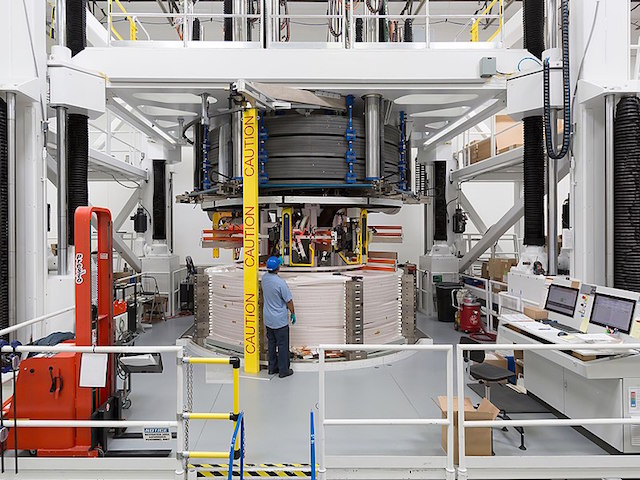
Many elemental metals and their alloys fall into the category of low-temperature superconductors (LTS). For example, elemental mercury, lead, aluminum, and tin have been historically significant in the early understanding of superconductivity. Alloys such as niobium-titanium (Nb-Ti) and niobium-tin (Nb\(_3\)Sn) have been developed specifically for their superconducting properties, especially in high magnetic field environments. These materials are typically engineered to perform reliably under conditions where superconductivity is critical, for instance in the windings of superconducting magnets used in particle accelerators and MRI machines.
High-Temperature Superconductors (HTS)
High-temperature superconductors, often ceramic copper-oxide compounds (cuprates), represented a breakthrough in the field. With critical temperatures above that of liquid nitrogen (\(77\,\text{K}\)), materials such as Yttrium Barium Copper Oxide (YBCO) have revolutionized applications by significantly reducing cooling requirements. Moreover, recent research has further diversified the class of HTS by exploring new compounds such as iron-based superconductors and nickelate materials. These discoveries continue to challenge prior assumptions about the behavior of electrons and open new pathways for technological applications.
Emerging Superconductors and Novel Materials
In recent years, scientists have been actively engaged in the discovery of superconductors that operate under less stringent conditions. Among the innovative approaches is the manipulation and doping of two-dimensional materials like twisted graphene. Additionally, compounds such as lanthanum superhydride (LaH10) have shown promising superconducting behavior at comparatively higher temperatures, indicating the potential for future breakthroughs toward ambient temperature superconductivity. The continual exploration of these new materials fuels optimism in overcoming longstanding technical challenges, such as the need for extreme cooling.
Comparison of Superconducting Materials
Comprehensive Overview Table
| Material | Type | Critical Temperature (\( T_c \)) | Applications |
|---|---|---|---|
| Mercury (Hg) | Elemental | 4.2 K | Early experiments, research |
| Niobium-Titanium (Nb-Ti) | Alloy (LTS) | ~9.2 K | MRI machines, particle accelerators |
| Niobium-Tin (Nb\(_3\)Sn) | Alloy (LTS) | ~18.1 K | High-field magnets |
| Yttrium Barium Copper Oxide (YBCO) | Ceramic (HTS) | ~93 K | Magnetic levitation, power transmission |
| Magnesium Diboride (MgB\(_2\)) | Intermetallic Compound | 39 K | Scientific instrumentation, power cables |
| Lanthanum Superhydride (LaH10) | Hydride (Novel HTS) | \( 250\,K^*\) (under high pressure) | Research; potential for ambient superconductivity |
*Note: The critical temperature for Lanthanum Superhydride is subject to pressure conditions and ongoing research, with recent studies suggesting advancements towards higher operational temperatures.
Applications of Superconducting Materials
Medical and Scientific Advances
One of the most impactful applications of superconducting materials can be found in the medical field. MRI (Magnetic Resonance Imaging) machines, which rely on strong and stable magnetic fields, are powered by superconducting magnets. The ability to produce magnetic fields without the significant energy losses typically encountered with conventional conductors is essential for high-resolution imaging and efficient diagnostic performance.
Particle Accelerators and Research Facilities
Particle accelerators benefit immensely from superconducting technologies. The zero-resistance property allows for the creation of very high magnetic fields with minimal energy loss, thus ensuring precise control over particle trajectories. This capability is central to experiments in high-energy physics that probe the fundamental structure of matter.
Energy Transmission and Power Applications
The potential use of superconducting materials in power transmission is one of the most exciting prospects for reducing global energy waste. Superconductors allow for lossless electrical transmission, which, coupled with their high current densities, presents a transformative possibility for modern transmission grids. Alongside efficient power cables, superconducting fault current limiters and energy storage systems could dramatically reduce energy losses and help integrate renewable energy sources more effectively.
Transportation and Advanced Technologies
Superconductivity has also fostered innovations in transportation, particularly in magnetic levitation (maglev) systems. These systems, which use superconducting magnets, offer frictionless and efficient travel solutions. As a result, modern maglev trains exhibit less wear and significantly lower maintenance costs compared to traditional rail systems. Additionally, superconductors have potential applications in the aerospace industry and the development of frictionless bearings that enhance energy efficiency in electric motors.
Challenges and Future Directions
Current Limitations
Despite their promising capabilities, superconducting materials face several challenges. Most notably, the requirement for extremely low temperatures—or in some cases high pressures—creates significant engineering hurdles and operational costs. Low-temperature superconductors (LTS) typically necessitate the use of liquid helium, which is both costly and logistically challenging. Although high-temperature superconductors (HTS) enable the use of liquid nitrogen for cooling, their complex ceramic structures often present manufacturing difficulties and brittleness.
Material Stability and Fabrication Issues
The synthesis and fabrication of superconducting materials pose additional challenges. Achieving homogeneous, defect-free materials remains a significant hurdle, as imperfections can seriously degrade superconducting properties. As research continues, improved doping strategies and crystal fabrication techniques are being developed to overcome these issues.
Ongoing Research and Prospects
The field of superconductivity is dynamic, driven by both theoretical advancements and experimental breakthroughs. Leading research includes:
- Developing new material classes such as iron-based and nickelate superconductors to broaden the range of available superconducting properties.
- Exploring two-dimensional and twisted materials, including graphene-based structures, to manipulate electron behavior and enhance superconducting properties.
- Investigating lanthanum superhydride and similar compounds that push the limits of \( T_c \) closer to room temperature under specific conditions.
The ultimate goal in many research circles is to develop a superconductor capable of operating at ambient conditions, which would revolutionize industries ranging from energy transmission to transportation. This ongoing research is increasingly supported by both academic initiatives and significant industry investments, indicating a promising future for the commercialization of superconducting technologies.
Market Trends and Industrial Implications
Global Market Dynamics
The global market for superconducting materials has seen consistent growth, particularly as their applications extend into new fields. In 2023, the market was valued at approximately US$7.8 billion, reflecting substantial investments in research, development, and deployment. Key drivers in this market include advancements in medical imaging, energy applications, and precision scientific instrumentation.
As superconducting technologies mature, industries are increasingly exploring ways to integrate these materials into everyday applications. For example, the ongoing shift to renewable energy sources has emphasized the need for more efficient transmission systems—a niche where superconductors could lead to transformative changes due to their near-lossless power handling capabilities.
Industrial Table of Material Applications
| Sector | Superconducting Material | Key Benefit |
|---|---|---|
| Medical | Nb-Ti, YBCO | High magnetic fields for precise imaging |
| Energy Transmission | MgB2, HTS | Lossless current conduction |
| Transportation | YBCO, Novel HTS | Efficient maglev technology and frictionless bearings |
| Scientific Research | Nb3Sn, Iron-based | Precision control in high-energy experiments |
Research and Future Perspectives
Emerging Frontiers in Superconductivity
Cutting-edge research is steadily changing the future of superconductivity. Laboratories across the globe are examining the impacts of nanostructuring and engineered crystal lattices on electron pairing mechanisms. These studies aim not only to improve the performance of existing materials but also to discover entirely new classes of superconductors. The possibility of realizing superconductivity at or near room temperature is a particularly enticing area of research, promising to revolutionize conventional power grids, advanced computing, and transportation systems.
Notable Research Areas
- Two-dimensional materials and heterostructures for enhanced electron mobility.
- Environmental doping and pressure tuning of superconducting phases.
- Theoretical modeling that integrates quantum mechanics and material science to predict new superconductors.
These research initiatives not only contribute to a deeper fundamental understanding of superconducting mechanisms but also drive practical advancements in technology, potentially leading to the development of consumer-friendly superconducting devices in the long term.
References
-
Superconductors Market Research - BusinessWire
- Superconducting Materials Market - Grand View Research
- Superconductivity - Wikipedia
- Breakthrough Discoveries in Superconductive Materials - The Municheye
- Room Temperature Superconductivity Achieved - Earth.com
Recommended Further Queries
Last updated March 8, 2025