
The 2013-2017 Suzuki Swift Automatic: A Fun Drive or a Compromise?
Unpacking the driving enjoyment of this popular small hatchback with an automatic gearbox.
The Suzuki Swift from the 2013 to 2017 model years has a well-earned reputation for being a nimble and enjoyable small car. But does this "fun-to-drive" character extend to the automatic transmission versions? This comprehensive analysis explores the driving dynamics of the automatic Swift of this era, weighing its inherent strengths against the characteristics of its self-shifting gearbox.
Key Insights: Is the Automatic Swift Fun?
- Fundamental Agility: The Suzuki Swift's lightweight construction and well-tuned chassis provide a base level of driving enjoyment, characterized by agile handling and responsive steering, regardless of transmission type.
- Automatic Transmission Impact: Automatic gearboxes from this period (often a 4-speed conventional automatic, CVT, or less commonly an Automated Manual Transmission - AMT) can temper the "fun factor." They might exhibit slower responses or a less direct connection compared to the manual gearbox, sometimes making the engine feel less potent.
- Context Matters: While perhaps not as thrilling as its manual counterpart or the dedicated Swift Sport model, the automatic Swift can still be enjoyable for city driving, daily commuting, and for those prioritizing ease of use over outright driver engagement.
Delving into the Driving Experience
The 2013-2017 Suzuki Swift is often praised for its "go-kart-like" handling, a testament to its light kerb weight (typically around 900-975 kg) and well-sorted suspension. This inherent characteristic makes it keen to change direction and provides a sense of connection to the road, which are key ingredients for a fun driving experience.
The 2013-2017 Suzuki Swift, known for its compact dimensions and agile nature.
The Heart of the Matter: Engine and Powertrain
The 1.2-litre Petrol Engine
Most Swifts from this era are equipped with a 1.2-litre naturally aspirated petrol engine. This unit is generally described as rev-happy, delivering power in a smooth and linear fashion. When paired with the right transmission, it can contribute to a sprightly performance feel, especially in urban environments. However, its modest power output means it needs to be worked to extract maximum performance.
The Automatic Transmission's Role
The "fun" quotient is significantly influenced by the automatic transmission. During the 2013-2017 period, Suzuki Swifts were available with different types of automatic gearboxes depending on the market and specific model variant. These commonly included:
- 4-Speed Conventional Automatic: While generally smooth enough for everyday driving, this type of gearbox can feel dated, with fewer ratios potentially leading to less optimal power delivery and slower responses compared to more modern transmissions or the manual version. Some reviews note it can "rob the engine of power," making the driving experience feel a little frustrating or less engaging.
- Continuously Variable Transmission (CVT): CVTs can offer smooth acceleration without distinct gear shifts, which is beneficial for city driving and fuel economy. However, some drivers find the engine drone or "rubber band" effect associated with certain CVTs to be less engaging than a traditional stepped automatic or a manual. Reviews for the Swift's CVT are mixed, with some praising its smoothness for urban commuting while others find it less dynamic.
- Automated Manual Transmission (AMT): Less common in all markets for this specific generation but used by Suzuki in various models, AMTs operate a manual gearbox with automated clutch control. They can be more fuel-efficient but are often criticized for jerky or hesitant shifts, particularly at low speeds, which can detract from a smooth and fun driving experience.
Regardless of the specific type, the consensus is that the automatic transmissions in the 2013-2017 Swift tend to prioritize convenience and ease of driving over sporty engagement. They can make the car feel less responsive than its manual counterpart, especially during spirited driving or when quick acceleration is desired.

The Swift's handling prowess is a key part of its appeal.
Handling and Ride Comfort
The Swift's suspension setup typically strikes a good balance between comfort and control. It’s generally adept at soaking up minor road imperfections while maintaining composure through corners. The steering is often highlighted as being direct and providing good feedback, enhancing the driver's confidence and the car's playful character. Even with an automatic transmission, these underlying chassis qualities shine through, making navigating twisty roads or bustling city streets a relatively enjoyable affair.

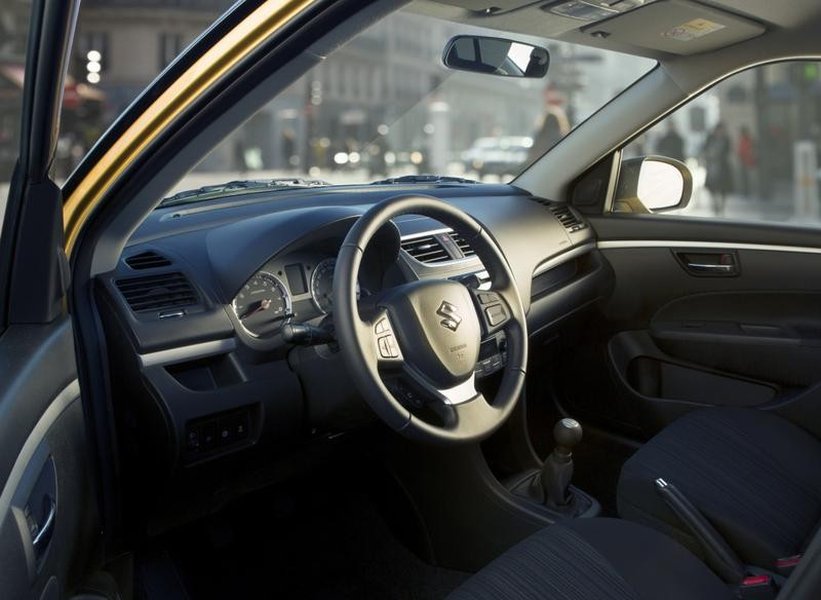
The interior of the Swift, focusing on functionality and driver ergonomics.
Comparative Driving Attributes: Automatic vs. Manual Swift
To better understand the driving dynamics, the radar chart below offers a visual comparison between the automatic and manual versions of the 2013-2017 Suzuki Swift across several key attributes. These are generalized assessments based on typical reviews and owner feedback for this generation.
As the chart illustrates, while both versions benefit from the Swift's inherent handling agility, the manual version generally scores higher in powertrain responsiveness and driver engagement. The automatic variant excels in urban driving comfort, reflecting its ease of use in stop-and-go traffic.
Visualizing the Fun Factor Elements
The mindmap below breaks down the various components contributing to (or detracting from) the "fun-to-drive" nature of the 2013-2017 Suzuki Swift Automatic.
Is It Fun to Drive?"] id1["Positive Attributes"] id1a["Lightweight Design"] id1b["Agile Handling"] id1c["Responsive Steering"] id1d["Good for Urban Maneuverability"] id1e["Competent Suspension Balance"] id2["Automatic Transmission Influence"] id2a["Convenience & Ease of Use"] id2b["Potentially Slower Gear Shifts"] id2c["Reduced Engine Responsiveness (compared to Manual)"] id2d["Less Direct Driver Engagement"] id2e["Transmission Types & Traits"] id2e1["4-Speed Auto: Can feel dated, sap power"] id2e2["CVT: Smooth for city, but can lack excitement"] id2e3["AMT: Economical, but potentially jerky"] id3["Engine Characteristics (1.2L Petrol)"] id3a["Rev-Happy Nature"] id3b["Linear Power Delivery"] id3c["Modest Power Output (requires working)"] id4["Comparison Points"] id4a["Manual Version: Generally more engaging & fun"] id4b["Swift Sport: Performance benchmark (typically manual)"] id5["Overall Verdict"] id5a["Moderately Fun: Enjoyable for daily driving and city use"] id5b["Compromised Thrill: Not as exhilarating as manual or dedicated sports models"] id5c["Practicality Focus: Stronger on ease and comfort than outright sportiness"]
This mindmap highlights that while the Swift's core DNA is sporty, the automatic transmission introduces a layer of compromise for those seeking maximum driving pleasure.
A Closer Look: Automatic vs. Manual Swift (2013-2017)
The table below provides a direct comparison of key attributes often discussed when evaluating the driving experience of the automatic versus manual Suzuki Swift models from this generation.
| Feature | 2013-2017 Suzuki Swift Automatic | 2013-2017 Suzuki Swift Manual |
|---|---|---|
| Primary Appeal | Ease of use, urban comfort, convenience | Driver engagement, sporty feel, direct control |
| Common Gearbox Type(s) | 4-speed automatic, CVT (Continuously Variable Transmission), some markets AMT (Automated Manual Transmission) | 5-speed manual (standard), 6-speed manual (Swift Sport) |
| Perceived "Fun Factor" | Moderate; enjoyable for daily driving but less thrilling | High; praised for its engaging and lively character |
| Gearbox Responsiveness | Can be slower to respond, may dull engine's zest, AMTs can be jerky | Direct, allows driver to exploit engine's power band effectively |
| Driving Style Suitability | City commuting, relaxed cruising, drivers prioritizing convenience | Enthusiastic driving, B-roads, drivers seeking involvement |
| Engine Power Feel | Can feel less potent or somewhat muted by the transmission | More direct access to engine power, feels more sprightly |
| Fuel Economy | Generally good, though some automatic models (e.g., older 4-speeds) might be slightly less efficient than manuals or CVTs. | Often slightly better or on par with the best automatics, depending on driving style. |
Video Perspective: Review of the Era
For a real-world look at the Suzuki Swift from the 2013-2017 generation, the following video provides a review that covers various aspects of the car. While it may not focus exclusively on the automatic's "fun-to-drive" nature, it gives context to the overall vehicle package from that period.
A review of the second-generation Suzuki Swift (2013-2017 facelift model), offering insights into its features and driving characteristics.
Frequently Asked Questions (FAQ)
Is the 2013-2017 automatic Suzuki Swift good for city driving?
Yes, the automatic Suzuki Swift from this era is generally well-suited for city driving. Its compact size, light steering, and the convenience of an automatic transmission make it easy to maneuver in traffic and park in tight spaces. The automatic gearbox, whether a conventional auto or a CVT, typically provides a smoother experience in stop-and-go conditions compared to a manual.
Which is more fun to drive: the automatic or manual 2013-2017 Suzuki Swift?
The manual version of the 2013-2017 Suzuki Swift is widely regarded as more fun to drive. The manual gearbox allows for more direct control over the engine's power and provides a more engaging driving experience, complementing the car's agile chassis. While the automatic is competent, it generally doesn't offer the same level of driver involvement or responsiveness as the manual.
What kind of automatic transmission did the 2013-2017 Suzuki Swift have?
The 2013-2017 Suzuki Swift could be equipped with a few different types of automatic transmissions depending on the market and specific model. Commonly found options included a 4-speed conventional torque converter automatic and a Continuously Variable Transmission (CVT). Some markets might have also seen Automated Manual Transmissions (AMTs), though these were generally less common for the Swift in major Western markets during this period compared to the other two.
Does the automatic transmission in the 2013-2017 Swift significantly impact performance?
Yes, the automatic transmission can impact performance. Compared to the manual versions, automatic Swifts might feel slightly less responsive or slower to accelerate. Some automatic transmissions, particularly older 4-speed units or certain AMTs, can "rob" some of the engine's power or have noticeable delays in gear changes, which can make the car feel less lively than its manual counterpart.
Conclusion: Fun, With an Asterisk
The 2013-2017 Suzuki Swift automatic can indeed be a fun car to drive, largely thanks to its inherently playful chassis, light weight, and responsive steering. It excels as an urban runabout and offers a pleasant driving experience for those who prioritize ease of use and comfort.
However, if your definition of "fun" leans heavily towards spirited driving, sharp throttle response, and maximum driver engagement, the automatic transmissions of this era do present a compromise. They generally don't match the directness and involvement of the manual gearbox, and can sometimes make the otherwise eager 1.2-litre engine feel a bit muted. For a truly thrilling experience in a Swift from this period, the manual versions, particularly the Swift Sport, remain the enthusiasts' choice.
Ultimately, the "fun factor" of the automatic Swift is subjective and depends on your priorities. It’s a competent, agile, and enjoyable small car, but its automatic gearbox makes it more of a comfortable and convenient companion than an outright pocket rocket.
Recommended Further Exploration
- How does the fuel economy of the automatic 2013-2017 Suzuki Swift compare to the manual version?
- What are the common reliability concerns for the automatic transmission in a 2013-2017 Suzuki Swift?
- How does the 2013-2017 Suzuki Swift automatic stack up against competitors like the Ford Fiesta automatic from the same period?
- What makes the Suzuki Swift Sport from 2013-2017 different from the standard models?
References
Last updated May 21, 2025