
SynHash: Revolutionizing Retrieval-Augmented Generation with Syntactic Compression and Semantic Hashing
Enhancing Efficiency and Accuracy in Information Retrieval Systems
Key Takeaways
- Innovative Integration: SynHash combines syntactic compression with semantic hashing to streamline data retrieval in RAG systems.
- Enhanced Efficiency: The hierarchical approach significantly reduces computational load and accelerates retrieval processes.
- Improved Accuracy: By preserving semantic integrity, SynHash ensures that retrieved information is both relevant and contextually appropriate.
Introduction to SynHash
In the rapidly evolving landscape of artificial intelligence and machine learning, the demand for efficient and accurate information retrieval systems has never been higher. Retrieval-Augmented Generation (RAG) systems, which combine generative models with information retrieval capabilities, play a pivotal role in providing contextually relevant and up-to-date responses. However, as the volume of data grows exponentially, maintaining efficiency and accuracy becomes increasingly challenging. Enter SynHash—a groundbreaking approach that synergizes syntactic compression with semantic hashing to achieve hierarchical efficiency in RAG systems.
Understanding the Core Components of SynHash
Syntactic Compression
Syntactic compression refers to the process of reducing the size of textual data by focusing on its structural properties while preserving essential grammatical and relational information. This method involves eliminating redundancies, simplifying sentence structures, and retaining only the critical syntactic elements that contribute to the overall meaning of the text. By doing so, syntactic compression significantly decreases the data footprint, making it more manageable for subsequent processing stages.
Semantic Hashing
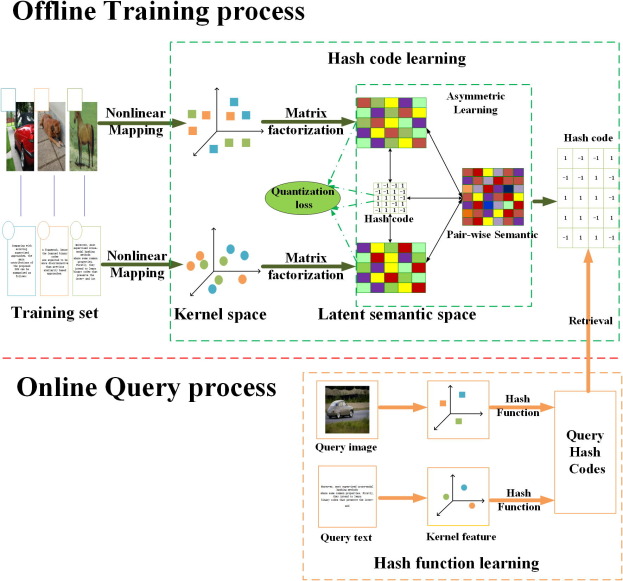
Semantic hashing is a technique that converts high-dimensional data, such as textual information, into compact binary codes known as hash codes. These hash codes are designed to capture the semantic essence of the original data, ensuring that semantically similar documents produce similar hash codes. This facilitates rapid similarity searches using efficient hash-based lookups, thereby enhancing the speed and accuracy of information retrieval.
Retrieval-Augmented Generation (RAG)
Retrieval-Augmented Generation is a framework that enhances the capabilities of large language models by incorporating external knowledge sources during the generation process. In RAG systems, when a query is presented, the system retrieves relevant documents or passages from a vast corpus to inform and ground the generated response. This integration ensures that the output is not only coherent and contextually relevant but also enriched with up-to-date information.
Hierarchical Efficiency
Hierarchical efficiency in the context of SynHash refers to the multi-layered approach to data processing and retrieval. At the foundational level, syntactic compression manages and stores the data efficiently by reducing its size. Building upon this, semantic hashing enables quick retrieval of pertinent information by encoding the compressed data into semantic hash codes. This layered strategy ensures that the system can handle large datasets with reduced computational overhead while maintaining high retrieval accuracy.
How SynHash Operates within RAG Systems
Step-by-Step Process
-
Data Ingestion and Syntactic Compression
Incoming data, such as documents or textual passages, undergoes syntactic compression. This initial step strips away redundancies and simplifies the structural elements of the text, resulting in a leaner representation that retains critical syntactic relationships.
-
Semantic Encoding through Hashing
The compressed data is then transformed into semantic hash codes. Utilizing algorithms that preserve semantic similarities, SynHash ensures that similar texts produce hash codes that are close in the binary space, facilitating efficient similarity searches.
-
Hierarchical Retrieval Mechanism
When a query is issued, the system first computes its semantic hash code. A hierarchical search is then performed, where a coarse search using hash similarity narrows down the potential matches quickly. Subsequently, a finer search refines these results by reintroducing syntactic details to pinpoint the most relevant documents.
-
Augmentation and Generation
The retrieved documents are fed into the generative model, which synthesizes a response informed by the relevant information. This ensures that the generated output is not only contextually accurate but also enriched with the latest and most pertinent data.
Advantages of SynHash
Enhanced Computational Efficiency
By integrating syntactic compression, SynHash significantly reduces the volume of data that needs to be processed and stored. This reduction leads to lower computational requirements, enabling faster data processing and retrieval operations. The compact binary representations from semantic hashing further expedite similarity searches, making the entire retrieval process more efficient.
Scalability
The hierarchical structure of SynHash allows it to scale seamlessly with growing datasets. As the volume of data increases, the system maintains its efficiency by continuing to compress and hash data in a structured manner. This scalability ensures that RAG systems can handle large-scale information sources without compromising on performance.
Improved Retrieval Accuracy
Semantic hashing ensures that semantically similar documents are closely aligned in the hash space. This alignment enhances the accuracy of similarity searches, ensuring that the most relevant documents are retrieved in response to a query. The preservation of syntactic integrity through compression further refines the retrieval process, minimizing the chances of retrieving irrelevant or noisy data.
Reduced Storage Requirements
Syntactic compression effectively minimizes the storage footprint of large datasets. Coupled with the compact nature of semantic hash codes, SynHash ensures that vast amounts of information can be stored more efficiently, reducing the overall storage costs and infrastructure requirements.
Technical Implementation of SynHash
Algorithms and Techniques Used
The implementation of SynHash involves a combination of advanced techniques in natural language processing and machine learning. Key components include:
-
Dependency Parsing: Analyzing the grammatical structure of sentences to identify relationships between words, which aids in syntactic compression.
-
Sentence Embeddings: Generating dense vector representations of sentences that capture their semantic meanings, facilitating semantic hashing.
-
Locality-Sensitive Hashing (LSH): A method for hashing that ensures similar data points map to similar hash codes, crucial for semantic similarity preservation.
Data Structures and Storage
SynHash employs efficient data structures to manage and store compressed and hashed data. Binary trees or hash tables are often used to organize hash codes, enabling rapid lookup and retrieval. Additionally, indexing mechanisms are implemented to support hierarchical searches, ensuring that both coarse and fine searches can be performed swiftly.
Integration with RAG Systems
Integrating SynHash with RAG systems involves connecting the hashing and compression modules with the generative model. APIs and middleware facilitate the seamless flow of data between components, ensuring that queries trigger the appropriate retrieval mechanisms and that the retrieved information is correctly fed into the generative process.
Comparative Analysis
SynHash vs. Traditional Retrieval Methods
| Feature | SynHash | Traditional Methods |
|---|---|---|
| Data Compression | Syntactic compression reduces data size while preserving structure. | Typically relies on full-text storage without compression. |
| Hashing Technique | Semantic hashing ensures similar semantics map to similar hashes. | Uses general-purpose hashing with no semantic considerations. |
| Retrieval Speed | Faster due to hierarchical and hash-based searches. | Slower, especially with large datasets. |
| Storage Efficiency | Higher storage efficiency through compression and hashing. | Lower efficiency; larger storage footprint. |
| Scalability | Highly scalable with hierarchical structure. | Less scalable; performance degrades with data size. |
Practical Applications of SynHash
Knowledge Management Systems
In enterprises, managing vast repositories of documents and knowledge bases is a common challenge. SynHash can enhance these systems by enabling rapid retrieval of relevant documents, improving information accessibility, and supporting informed decision-making processes.
Customer Support Automation
Automated customer support systems can leverage SynHash to quickly retrieve relevant information from extensive databases, thereby providing accurate and efficient responses to customer inquiries.
Academic Research
Researchers dealing with large volumes of literature can utilize SynHash to swiftly locate pertinent studies, papers, and data, thereby accelerating the research process and fostering more comprehensive literature reviews.
Content Personalization
Platforms that deliver personalized content, such as news aggregators or recommendation systems, can employ SynHash to ensure that content is both relevant and contextually aligned with user preferences, enhancing user engagement and satisfaction.
Implementation Challenges and Solutions
Balancing Compression and Information Preservation
One of the primary challenges in syntactic compression is ensuring that essential information is not lost during the compression process. SynHash addresses this by focusing on preserving key syntactic relationships and leveraging semantic hashing to maintain the semantic integrity of the data.
Managing Hash Collisions
Hash collisions, where different inputs produce the same hash code, can undermine the effectiveness of semantic hashing. SynHash mitigates this risk by employing robust hashing algorithms that minimize collisions and by using hierarchical retrieval to further distinguish between similar hash codes.
Scalability Concerns
As data volumes grow, maintaining retrieval speed and accuracy becomes increasingly challenging. SynHash's hierarchical efficiency model ensures that even with expanding datasets, the system remains performant by efficiently organizing and retrieving data through multi-tiered search mechanisms.
Future Directions and Potential Enhancements
Integration with Advanced Machine Learning Models
Future iterations of SynHash could incorporate more sophisticated machine learning models to enhance both syntactic compression and semantic hashing, potentially leveraging deep learning techniques to capture more nuanced linguistic features.
Real-Time Data Processing
Implementing real-time syntactic compression and semantic hashing can further improve the responsiveness of RAG systems, making SynHash suitable for applications that require instantaneous data retrieval and generation.
Cross-Modal Retrieval
Expanding SynHash to handle multi-modal data, such as images and audio alongside text, can broaden its applicability, enabling more comprehensive retrieval-augmented generation across different types of content.
Conclusion
SynHash represents a significant advancement in the realm of information retrieval and generation systems. By ingeniously combining syntactic compression with semantic hashing, it addresses the dual challenges of efficiency and accuracy that plague traditional RAG systems. The hierarchical efficiency model not only optimizes data processing and storage but also ensures rapid and precise information retrieval, making SynHash a valuable tool for a wide array of applications ranging from knowledge management to personalized content delivery. As data continues to grow in volume and complexity, approaches like SynHash will be pivotal in shaping the future of intelligent, responsive, and scalable information systems.
References
Last updated February 5, 2025