
Unlocking Tariff Authority: A Constitutional Perspective
Discover how the U.S. Constitution delineates tariff power between the branches.
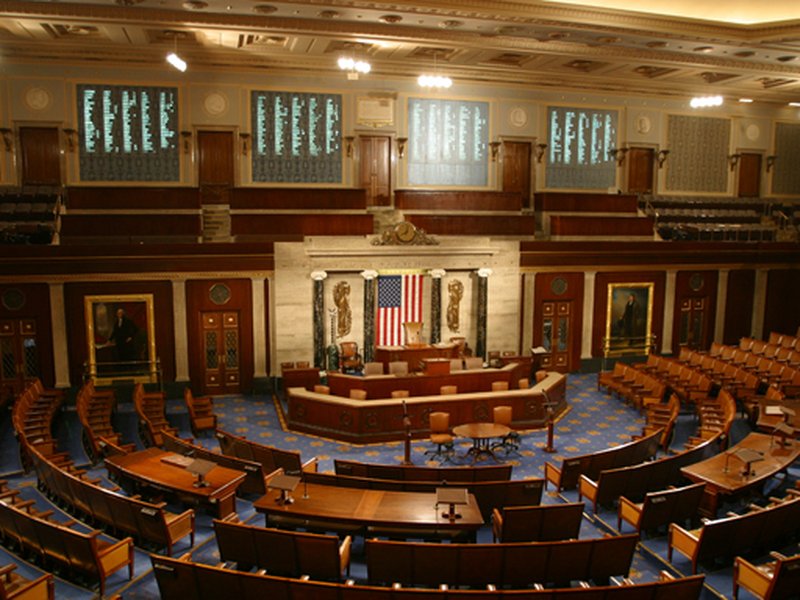
Key Highlights
- Constitutional Mandate: Article I, Section 8 of the U.S. Constitution explicitly grants Congress the power to lay and collect taxes, duties, imposts, and excises.
- Delegated Executive Authority: While Congress holds primary power, several trade statutes have delegated tariff-setting authority to the Executive under specific conditions.
- Balancing Separation of Powers: Judicial interpretations and legislative guidelines ensure that while the President may act in emergencies, Congress maintains oversight in trade policy.
Detailed Analysis
The United States Constitution is the fundamental document that delineates the structure of the federal government and the distribution of powers among its branches. When it comes to the authority to levy tariffs, the Constitution is unambiguous: the power is granted exclusively to Congress. Article I, Section 8 specifically states that Congress has the power “to lay and collect Taxes, Duties, Imposts and Excises” and to “regulate Commerce with foreign Nations.” These provisions embed the responsibility for tariff imposition within the legislative process, ensuring that any decision to levy taxes on imported goods is made by the elected representatives of the people.
Legislative Authority
Congress’s exclusive authority over tariff levies reflects the framers’ intention to insulate such significant fiscal decisions from unilateral executive action. The design of the Constitution requires that changes to this fiscal mechanism undergo the thorough debate and approval of a legislative body, thereby upholding democratic principles and checks and balances. Furthermore, this constitutional mandate ensures consistent oversight and review by the legislative branch. By controlling tariffs, Congress can directly influence national trade policy, protect emerging industries, and address imbalances in international trade.
Constitutional Provisions
Article I, Section 8 is centrally important here. The section enumerates the powers granted to Congress, including:
- The power to levy and collect taxes and duties.
- The responsibility to regulate commerce with foreign nations.
- The broader authority over fiscal matters that impact the nation’s economy.
This language establishes a clear division of power by positioning Congress as the principal architect of tariff policy. The responsibility for setting tariffs is thus not only a fiscal matter but a fundamental expression of legislative authority over interstate and international commerce.
Executive Delegation: The Evolving Role
While the Constitution assigns tariff authority to Congress, practical governance has led to a gradual delegation of some of these powers to the Executive Branch under specific circumstances. Over decades, several significant pieces of legislation have allowed the President and his administration a measure of discretion in implementing trade policy.
Statutory Delegations
Key legislative acts that have enabled this delegation include:
- Trade Expansion Act of 1962: This law introduced provisions—most notably Section 232—that permit the President to raise tariffs in response to national security concerns. This delegation acknowledges that in times of critical threats or changing economic circumstances, swift executive action may be necessary to protect the nation.
- Trade Act of 1974: This statute further refined the executive's role by authorizing the USTR (United States Trade Representative) to negotiate trade agreements and impose tariffs as a remedy against unfair foreign trade practices. These powers, while facilitating rapid responses to international trade issues, remain subject to congressional oversight.
- International Emergency Economic Powers Act (IEEPA): Occasionally invoked in times of geopolitical tension, this act allows the president to exercise extraordinary economic powers, including the imposition of tariffs, to safeguard national interests.
It is important to note that although these statutory provisions enable the executive branch to act independently on tariff matters, they do so only within narrowly defined circumstances. Judicial review and historical precedent ensure that such actions remain consistent with the constitutional design of segregated powers.
Checks and Balances
The delegation of tariff authority to the executive branch is not without its limitations. The Supreme Court and various legal interpretations have consistently underscored that any delegation of power must be circumscribed by clear guidelines and legislative intent. This judicial oversight acts as a safeguard, ensuring that the President's use of delegated authority does not usurp the constitutional prerogatives of Congress.
Implications for Trade Policy and National Security
The evolving landscape of international trade has further complicated the traditional dynamics between Congress and the Executive. In recent years, national security concerns have sometimes necessitated swift executive action to protect domestic industries and critical infrastructure. For instance, instances of invoking Section 232 have allowed a more immediate response to perceived threats, such as those on the automotive industry. However, these measures are generally seen as temporary or emergency responses rather than a reallocation of the fundamental power established by the Constitution.
Economic Considerations
From an economic standpoint, having a singular branch responsible for tariff policy provides clarity and reduces the bureaucratic inertia that might otherwise hinder rapid response to international market fluctuations. Nevertheless, this concentration of power is balanced by the need for accountability. Congress retains oversight by engaging in legislative reviews, hold hearings, and occasionally reasserting its authority through subsequent legislation that can restrict or modify the scope of executive actions.
Visualizing Tariff Authority Dynamics
The following radar chart illustrates a conceptual overview of how different attributes—such as constitutional power, executive delegation, economic responsiveness, national security, and judicial oversight—compare in shaping the overall approach to tariff authority. The datasets represent an opinionated analysis based on our synthesis of historical, legal, and economic perspectives.
Comparative Overview Table
The table below summarizes the roles and limitations of the legislative and executive branches regarding tariff authority, as reflected by constitutional mandates and statutory delegations.
| Aspect | Legislative Branch (Congress) | Executive Branch (President) |
|---|---|---|
| Constitutional Authority | Granted explicitly in Article I, Section 8 | Delegated via trade acts (e.g., Trade Expansion Act, Trade Act of 1974) |
| Primary Role | Oversees and sets tariff laws | Implements and adjusts tariffs in emergencies |
| Checks and Balances | Full oversight, legislative debate and amendments | Actions subject to judicial review and congressional oversight |
| Legal Constraints | Strict adherence to constitutional mandates | Limited to defined circumstances like national security concerns |
| Example Provisions | Article I, Section 8 | Section 232 (Trade Expansion Act), Section 301 (Trade Act of 1974), IEEPA |
Expanded Context and Historical Insights
A thorough exploration of tariff authority in U.S. governance uncovers several layers of debate and interpretation that have evolved over time. Initially, the framers of the Constitution firmly intended for tariff imposition to remain a congressional prerogative, embedding it within the framework of legislative deliberation. This ensures that taxation, a matter directly affecting citizen welfare and economic policy, is not concentrated in the hands of a single individual or administrative entity.
Over the years, however, the need for a more nimble response to global economic shifts and national security threats has led Congress to legislate mechanisms that empower the Executive Branch under specific conditions. For example, during periods of economic uncertainty or international trade disputes, the President may be tasked with adjusting tariffs with speed and precision. Nonetheless, these executive actions are designed as temporary measures, always subject to the broader oversight of Congress.
Legal scholars and historic benchmarks underscore that while executive delegation enhances operational flexibility, it does not diminish Congress’s constitutional supremacy in matters of tariff law. The interplay between these branches exemplifies the balance of power that is fundamental to the U.S. federal system. Judicial interpretations have repeatedly affirmed that any temporary transfer of authority does not compromise the original constitutional assignment. Rather, it provides a structured approach to address emergent issues without undermining the rule of law or democratic accountability.
The Role of Judicial Oversight
Judicial decisions have played a critical role in delineating the scope of executive actions. Courts have consistently maintained that the delegation of tariff-setting powers must be clear and narrowly defined by Congress. This ensures that the core fiscal authority remains with the legislature, while still permitting the executive to act decisively in what are deemed exceptional circumstances. Such judicial safeguards are essential to prevent overreach and uphold the separation of powers outlined in the Constitution.
Contemporary Debates
In recent years, debates over tariff imposition have intensified, especially in the context of international trade wars and national security concerns. Critics argue that broad executive discretion might upset the balance intended by the Constitution, while proponents highlight the need for rapid intervention in times of crisis. These debates reinforce the importance of maintaining clear statutory guidelines and robust congressional oversight, ensuring that the constitutional balance is preserved even as the nation responds to global challenges.
Interactive FAQ Section
Q: Which branch of government has the constitutional authority to levy tariffs?
A: According to the U.S. Constitution, Congress holds the explicit authority to levy tariffs as it is granted in Article I, Section 8.
Q: How does the delegation of tariff powers to the Executive Branch work?
A: While the Constitution vests tariff authority in Congress, subsequent trade laws like the Trade Expansion Act of 1962 and the Trade Act of 1974 have authorized the Executive to act under defined conditions, such as national security concerns or unfair trade practices, while remaining under congressional oversight.
Q: What checks exist to ensure that executive tariff actions do not exceed congressional intent?
A: Judicial review and statutory limitations ensure that the executive's use of delegated tariff power aligns with congressional intent. Additionally, Congress maintains oversight through legislative reviews and debates, reinforcing the constitutional balance of powers.
References
- Article I, Section 8 - U.S. Constitution Resources
- Tariffs Background - Council on Foreign Relations
- Delegation of Tariff Authority - Cassidy Levy
-
Presidential Tariff Powers - Miami Herald
- Trade Authority Analysis - Yeutter Institute
Recommended Queries
Last updated April 3, 2025