
Interconnections of Taxonomic, Ecological Hierarchies with Climate and Soil
Exploring how biological classification and ecosystem processes intertwine with climate and soil dynamics
Key Insights
- Integrated System Dynamics: Both taxonomic and ecological hierarchies interrelate with climatic and soil processes to shape biodiversity and ecosystem functionality.
- Climate as a Driver and Feedback: Climate influences species distributions, soil formation, and ecological interactions, while ecological systems and soils also feed back into the global climate system.
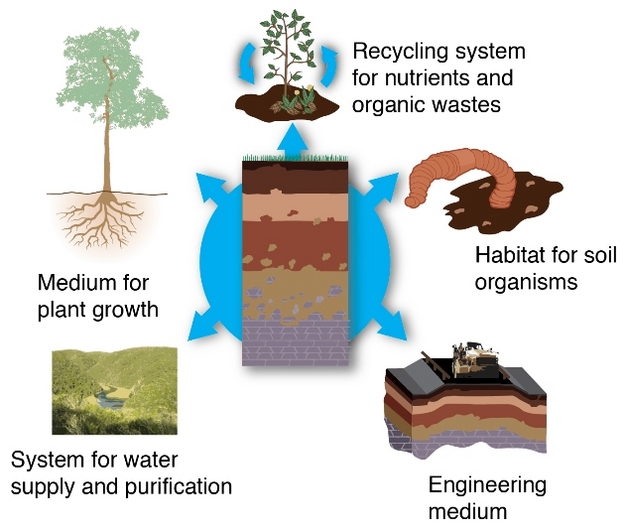
- Soil’s Active Role: Soil is not just a passive medium; it actively participates in regulating climate through carbon storage, nutrient cycling, and modulating ecosystem responses.
Understanding Taxonomic Hierarchies
Taxonomic hierarchies provide a systematic framework for classifying all forms of life based on shared anatomical, genetic, and evolutionary traits. This system begins with broad categories, such as kingdoms and phyla, and moves towards more specific levels, like genus and species. The purpose of taxonomy is to organize biodiversity in a way that highlights evolutionary relationships and adaptations.
Role in Biodiversity and Ecosystem Study
By organizing life into hierarchical categories, taxonomy enables researchers to track evolutionary changes and species adaptations over time. These classifications are fundamental to biodiversity studies and conservation efforts. For instance, variations in plant species—and their differential reactions to environmental pressures—can be better understood when species are analyzed within their taxonomic context. Such analyses help predict how communities might shift under changing climate regimes.
The Ecological Hierarchy Explained
The ecological hierarchy organizes biological interactions and environmental relationships at multiple spatial scales. This organization ranges from individual organisms to populations, communities, ecosystems, and ultimately, biomes and the entire biosphere. Each level describes increasingly complex interactions between living organisms and their surrounding environment.
Ecological Interactions Across Scales
At the individual level, interactions focus on physiological and behavioral responses to environmental conditions. At higher levels, such as communities and ecosystems, the focus shifts to the interactions between species and the flow of energy and nutrients. For example, in a forest ecosystem, not only do individual trees respond to changes in temperature and water availability, but the entire community structure may shift as species with differing tolerances compete for resources.
These hierarchical layers are not isolated; they overlap and interact. The taxonomic classification of species offers insights into how ecological roles and functions are distributed within ecosystems. This interplay is foundational to understanding the impact of global climatic patterns on diverse ecosystems.
Climate: The Global Regulator
The global climatic system is a complex network of interacting atmospheric, oceanic, and terrestrial processes that govern weather patterns and long-term climate conditions. Changes in climate, driven by both natural and anthropogenic factors, profoundly impact both taxonomic and ecological hierarchies.
Influence on Species Distribution and Evolution
Climate conditions such as temperature, precipitation, and sunlight determine the geographical distributions of species. Over evolutionary timescales, climate has been a crucial force in driving speciation and extinction events. For example, historical climatic shifts—such as glacial cycles—have led to the isolation of populations, promoting genetic divergence and speciation. This dynamism is reflected in taxonomic hierarchies, where closely related species may exhibit different adaptations to prevailing climatic conditions.
Feedback Mechanisms
Not only does climate shape ecosystems, but ecosystems and their components, including soils, provide feedback to the climate system. Vegetation affects local climate by influencing evapotranspiration rates, albedo (reflectivity) of surfaces, and the concentration of greenhouse gases. Through these processes, ecosystems contribute to broader climatic patterns.
Soil: A Living Component of Ecosystems
Soil is far more than a substrate supporting plant growth. It is a dynamic medium that plays a vital role in ecosystem health and climate regulation. Soil properties are influenced by, and in turn can influence, both climatic and ecological factors.
Physical and Chemical Characteristics
Soils are composed of organic matter, minerals, water, and air, forming a complex matrix that supports microorganisms and plant life. The chemical composition and physical structure of soil affect its ability to store water, retain nutrients, and sequester carbon. For instance, soil organic carbon is an essential component of the carbon cycle, serving as a significant sink for atmospheric carbon dioxide \( \mathrm{CO_2} \).
Soil-Climate Feedback
The interaction between soil and climate forms a bidirectional feedback loop. Warmer climates can accelerate decomposition processes, leading to the release of stored carbon, while changes in precipitation can alter soil moisture levels, further affecting nutrient cycling and carbon sequestration. Soils in different eco-climatic zones exhibit distinct characteristics; for example, tropical soils tend to have rapid nutrient cycling compared to their temperate counterparts.
Interplays: Taxonomy, Ecology, Climate, and Soil
The interactions among taxonomic and ecological hierarchies, the global climatic system, and soil illustrate the highly interconnected nature of Earth’s biosphere. These relationships become evident when investigating how species are distributed, how ecosystems function, and how environmental changes impact natural systems.
Taxonomy and Ecology: A Symbiotic Relationship
Taxonomic classification provides the backbone for identifying and categorizing species within ecological communities. The evolutionary relationships indicated by taxonomy help predict ecological interactions; species that are closely related may share similar environmental requirements or ecological functions. This understanding is critical when assessing the resilience of ecosystems to climate change. For example, if a particular taxonomic group is vulnerable to drought, entire communities dominated by that group may decline under prolonged dry conditions.
Moreover, the integration of taxonomic data into ecological studies enhances our understanding of ecosystem processes. It helps in identifying keystone species—organisms that have a disproportionately large effect on their environment relative to their abundance. Knowledge of taxonomic classifications and inter-species relationships is crucial for managing natural resources and preserving biodiversity, especially under changing climatic conditions.
Ecological Hierarchies: Scaling Up from Individuals to Biomes
Ecological hierarchies encompass the range of interactions from individual organisms to entire ecosystems and biomes. At the most granular level, the physiology and behavior of single organisms are molded by local soil properties and microclimate conditions. As these interactions aggregate, they shape community-level processes and, eventually, the dynamics of entire ecosystems.
This scaling effect is vital in understanding how climate change manifests across different ecological scales. For instance, while an individual plant may adapt to minor increases in temperature, a community of such plants might be collectively affected due to shifts in nutrient availability or changes in soil microbial composition. Ecological models that account for these hierarchical levels offer a better predictive understanding of how ecosystems will respond to environmental stressors.
Climate-Soil Dynamics and Their Impact on Flora and Fauna
Climate and soil interactions are among the most influential factors determining ecosystem function. The formation and properties of soil are driven by climatic parameters—temperature influences chemical weathering, while precipitation facilitates the leaching and redistribution of nutrients. In return, soil properties such as organic matter content and moisture retention directly modulate local climate conditions by altering surface albedo and heat absorption.
These interdependencies are critical for the establishment of vegetation patterns. For instance, areas with nutrient-rich, moist soils are more likely to support diverse and dense vegetation cover, which in turn influences local weather patterns by increasing moisture through evapotranspiration. In contrast, arid soils, which may result from limited precipitation and high temperatures, support only specialized, drought-resistant species.
Analyzing Relationships Through Data and Models
Scientists extensively use models and empirical data to understand the connections between taxonomic, ecological, climatic, and soil dynamics. Below is a table that summarizes key interactions among these components:
| Component | Role/Process | Interactions |
|---|---|---|
| Taxonomic Hierarchy |
Systematic classification Insights into evolutionary patterns |
Informs species-specific climate responses Guides conservation strategies based on ecological roles |
| Ecological Hierarchy |
Organization of communities Energy and nutrient flow analysis |
Determines how species distribution is influenced by climate Affects and is affected by soil properties at multiple scales |
| Global Climatic System |
Controls global and regional weather patterns Drives ecological shifts over time |
Induces changes in species distributions Affects soil formation and nutrient cycles |
| Soil |
Medium for nutrient and water cycling Active role in carbon sequestration |
Modulates local climate via moisture retention and albedo Influences vegetation types and ecosystem functions |
Mechanisms and Feedback Loops
The dynamic interactions between these components create several feedback loops essential for ecosystem resilience and adaptability. For example, when climatic conditions change, they alter soil moisture and nutrient dynamics, which leads to changes in plant physiology and species composition. These shifts are observed within taxonomic groups, with some species adapting while others become less competitive.
Climate-Driven Adaptation
Changes in temperature and precipitation force plants and animals to adapt. The mechanisms of adaptation often involve alterations in physiology, phenology, and even genetic composition. These adaptive responses are usually reflected in the taxonomic hierarchy—closely related species might exhibit divergence in traits depending on their ecological niches.
In many instances, climatically-induced adaptations also affect soil processes. For example, a shift towards more drought-resistant species can lead to changes in the organic matter composition of soil, thus altering its carbon storage capabilities \( \left( C_{storage} \right) \) and nutrient cycles.
Ecosystem Feedback Mechanisms
Feedback mechanisms also include the modulation of local climates by vegetation. A mature forest, with its dense canopy and extensive root system, not only sequesters large amounts of carbon but also contributes to higher local humidity levels through transpiration. This in turn can moderate temperature extremes, creating microclimates that influence the survival and proliferation of neighboring species.
Integrative Approaches in Research
Modern ecological research increasingly relies on integrative approaches that combine taxonomic classifications, ecological data, climatic models, and soil science. Advances in remote sensing, geographic information systems (GIS), and molecular biology allow researchers to gather large-scale data over multiple spatial and temporal scales. These integrated datasets provide insights into:
- How historical climatic events have shaped current biodiversity patterns.
- The role of soil type variability in supporting distinct ecological communities.
- The predictive capacity of taxonomic data in modeling ecosystem responses to future climatic scenarios.
Such integrative research is essential for developing robust conservation and land management strategies. Ecosystem managers use these insights to predict potential changes in species distributions and to plan interventions that can mitigate the adverse effects of climate change.
Implications for Conservation and Sustainable Management
Understanding the interplay among taxonomic and ecological hierarchies, climate, and soil is vital for conservation efforts. When biodiversity is mapped accurately through taxonomic identification, and when ecological hierarchies are analyzed in the context of dynamic environmental conditions, it becomes possible to identify areas of high ecological vulnerability. Such analyses inform strategies that target the protection of critical habitats and key species.
Protecting Biodiversity
Conservation efforts that take into account the interlinked nature of climate, soil, and biological hierarchies can more effectively address issues such as habitat fragmentation and the loss of keystone species. For instance, managing soil health through sustainable agriculture practices can help maintain ecosystem services such as carbon sequestration and water regulation, which are indispensable in buffering the effects of climate change.
Sustainable Land-Use Practices
Integrating ecological and taxonomic data into land-use planning allows for a more nuanced approach to sustainability. Considering soil properties alongside ecological hierarchies ensures that land management practices—such as reforestation, controlled burns, or agricultural rotations—are tailored to support local biodiversity while maintaining or enhancing soil health. This integrative approach not only supports immediate ecological goals but also contributes to global efforts aimed at mitigating climate change.
References
- Article on Biodiversity Patterns - Nature
- Research on Ecosystem Dynamics - Frontiers in Ecology
- Ecological Interactions in Changing Climates - Nature
-
Soil, Land, and Climate Change - European Environment Agency
- Overview of Ecology - Wikipedia
-
Taxonomic Diversity and Climate - ScienceDirect
-
Climate and Soil Interactions - ScienceDirect
- Diversity under Climate Change - Nature
- Hierarchical Structure of Ecosystems - Evolution Outreach
-
Ecological Research Review - PMC
Recommended Further Queries
Last updated March 3, 2025