
Understanding the Minimal HER2 Expression Level for T-DXd Therapy
A Comprehensive Analysis of HER2 Thresholds in Trastuzumab Deruxtecan Treatment
Key Takeaways
- HER2-low Definition: HER2-low breast cancer is characterized by an IHC score of 1+ or 2+ without gene amplification, expanding the eligibility for T-DXd therapy.
- Clinical Efficacy: T-DXd has demonstrated significant efficacy in HER2-low and even HER2-ultralow tumors, offering new treatment avenues.
- Accurate HER2 Testing: Precise determination of HER2 status through standardized assays is crucial for identifying suitable candidates for T-DXd treatment.
Introduction to T-DXd and HER2 Expression
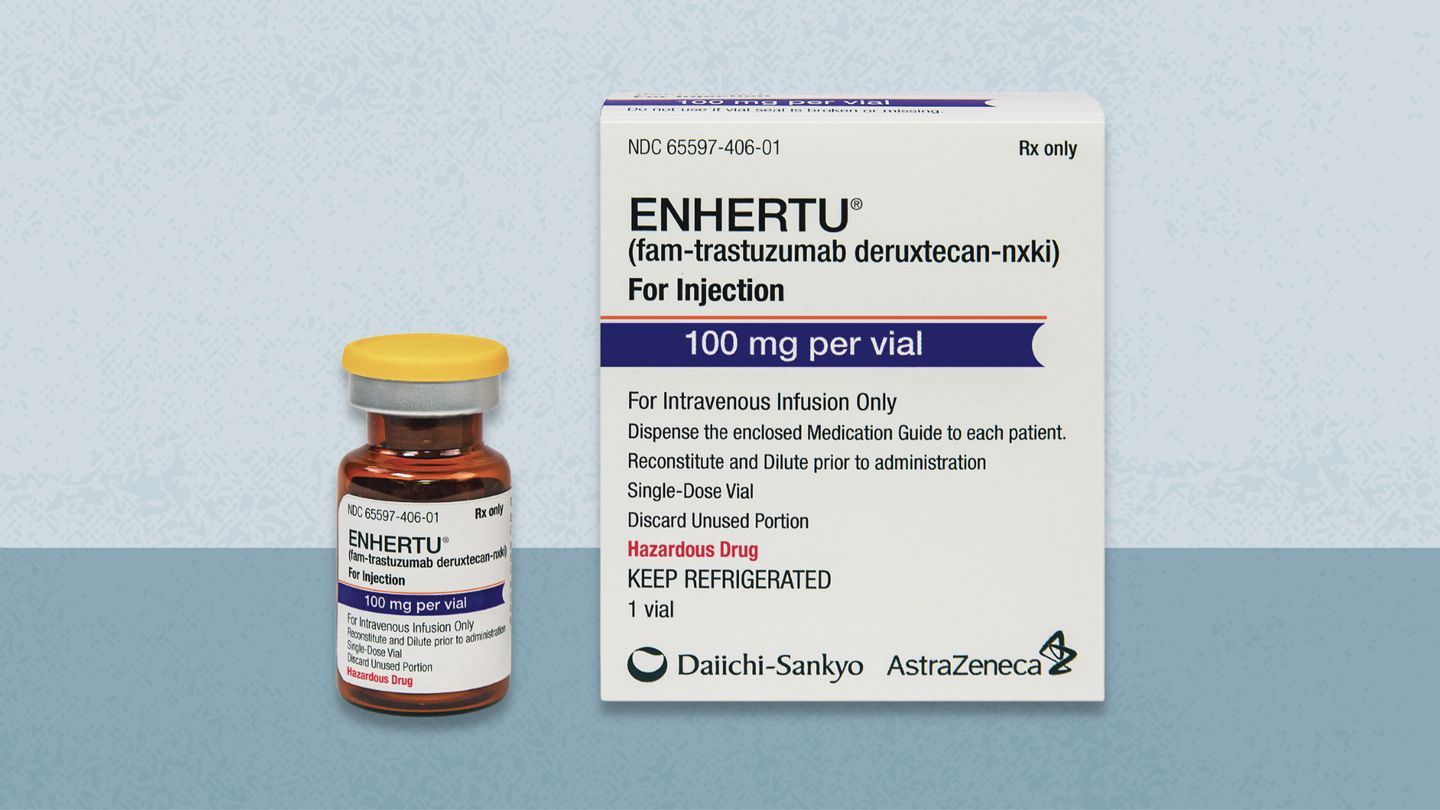
Trastuzumab deruxtecan (T-DXd), marketed as Enhertu, is an antibody-drug conjugate (ADC) designed to target the Human Epidermal growth factor Receptor 2 (HER2) on cancer cells. Initially approved for HER2-positive breast cancer, its indications have expanded to include HER2-low and HER2-ultralow breast cancers, reflecting advancements in our understanding of HER2 expression as a continuum rather than a binary status.
Classification of HER2 Expression Levels
HER2 Expression Categories
HER2 expression in breast cancer is traditionally classified into two primary categories:
1. HER2-Positive
Defined by an Immunohistochemistry (IHC) score of 3+, or an IHC score of 2+ confirmed with gene amplification through Fluorescence In Situ Hybridization (FISH). These tumors exhibit high levels of HER2 protein expression, making them amenable to HER2-targeted therapies like T-DXd.
2. HER2-Negative
Characterized by an IHC score of 0 or 1+, without gene amplification. Within this category lies a subset known as HER2-low, which has garnered attention due to its responsiveness to T-DXd.
3. HER2-Low
HER2-low breast cancers are defined by an IHC score of 1+ or 2+ without gene amplification (ISH-negative). This classification is pivotal as it broadens the patient population eligible for T-DXd treatment.
4. HER2-Ultralow
Emerging research identifies HER2-ultralow as tumors with IHC 0 but with detectable membrane staining. Though not yet widely adopted in clinical practice, this category represents an even lower level of HER2 expression still responsive to T-DXd.
Mechanism of Action of T-DXd
Targeted Delivery and Bystander Effect
T-DXd operates through a dual mechanism. The trastuzumab component binds selectively to HER2-expressing cancer cells, delivering the deruxtecan payload, a potent topoisomerase I inhibitor. This targeted delivery minimizes systemic toxicity. Additionally, the mechanism allows for a "bystander effect," where the cytotoxic agent can diffuse into neighboring tumor cells, even those with minimal or no HER2 expression, enhancing the drug's efficacy in heterogeneous tumor environments.
Clinical Efficacy of T-DXd in HER2-Low and HER2-Ultralow Tumors
Response Rates and Progression-Free Survival
Clinical trials have substantiated the effectiveness of T-DXd in HER2-low and HER2-ultralow breast cancers:
| Study | HER2 Expression | Objective Response Rate (ORR) | Median Duration of Response | Progression-Free Survival (PFS) |
|---|---|---|---|---|
| Real-World Evidence Study | HER2-Low (IHC 1+) | 70% | 8.1 months | N/A |
| Clinical Trials (HER2-Low) | HER2-Low (IHC 1+ or 2+/ISH-) | 54.5% (IHC 2+) | 6.9 months (IHC 2+) | 13.2 months |
| DESTINY-Breast04 | HER2-Low and HER2-Ultralow | Significant improvement in ORR | Varies by subgroup | 13.2 months for T-DXd vs. 8.1 months for chemotherapy |
Implications of Clinical Findings
The results from these studies indicate that T-DXd not only benefits patients with HER2-positive tumors but also those with lower levels of HER2 expression. The median progression-free survival (PFS) increase from 8.1 months with standard chemotherapy to 13.2 months with T-DXd in HER2-low patients underscores the drug's potential in this subgroup.
Clinical Trials Supporting T-DXd Usage
DESTINY-Breast04
The DESTINY-Breast04 trial was pivotal in expanding the indications of T-DXd to include HER2-low and HER2-ultralow metastatic breast cancer. This phase III study demonstrated significant improvements in both ORR and PFS compared to standard chemotherapy, leading to regulatory approvals for this indication.
DESTINY-Breast06 and DAISY
Ongoing trials like DESTINY-Breast06 and DAISY are further investigating the minimal HER2 expression levels required for T-DXd efficacy. These studies aim to refine the patient selection criteria and understand the drug's effectiveness across a broader spectrum of HER2 expression.
Determining HER2 Status in Patients
Testing Methods: IHC and FISH
Accurate determination of HER2 status is critical for identifying patients who can benefit from T-DXd therapy. The primary methods include:
1. Immunohistochemistry (IHC)
IHC assesses the protein expression levels of HER2 on the cell surface. Scores range from 0 to 3+, with 3+ indicating strong overexpression. Scores of 1+ and 2+ denote low expression levels, with 2+ requiring confirmation with gene amplification assays.
2. Fluorescence In Situ Hybridization (FISH)
FISH evaluates HER2 gene amplification, providing a genetic basis for HER2 overexpression. In cases where IHC results are ambiguous (2+), FISH helps determine whether the gene is amplified, categorizing the tumor as HER2-positive or HER2-negative.
Emerging Testing Techniques
Research is ongoing to develop more sensitive and objective assays for HER2 detection. A quantitative continuous scoring (QCS) system is being proposed to move beyond the traditional categorical thresholds, aiming for more precise patient stratification based on HER2 expression levels.
Regulatory Approvals and Guidelines
Global Regulatory Landscape
The approval of T-DXd for HER2-low metastatic breast cancer varies by region, contingent on the results of pivotal clinical trials like DESTINY-Breast04. Healthcare providers must consult the latest guidelines and approvals in their specific jurisdictions to ensure compliance and optimal patient care.
Clinical Practice Implications
With the expanded indications, oncologists are now integrating HER2-low assessment into routine diagnostic workflows. This shift necessitates standardized testing protocols and enhanced pathologic assessment to accurately identify eligible patients for T-DXd therapy.
Emerging Research and Future Directions
Quantitative Continuous Scoring (QCS)
QCS represents a paradigm shift in HER2 assessment, treating HER2 expression as a continuous variable rather than discrete categories. This approach may enhance the precision of patient selection for T-DXd, potentially uncovering benefits in populations previously considered ineligible.
Investigating Lower HER2 Expression Thresholds
Ongoing studies aim to explore the efficacy of T-DXd in tumors with HER2 expression levels below current HER2-low definitions, including HER2-ultralow categories. These investigations could further expand the therapeutic scope of T-DXd, offering hope to a broader patient demographic.
Combination Therapies
Research is also focused on combining T-DXd with other therapeutic agents to enhance its efficacy and overcome resistance mechanisms. These combination strategies hold promise in optimizing treatment outcomes for patients with varying HER2 expression levels.
Conclusion
Trastuzumab deruxtecan (T-DXd) has revolutionized the treatment landscape for HER2-expressing breast cancers by extending its efficacy beyond the traditionally defined HER2-positive subgroup. The delineation of HER2-low and HER2-ultralow categories has been instrumental in broadening the applicability of T-DXd, offering significant clinical benefits to patients with minimal HER2 expression. Accurate assessment of HER2 status through standardized testing methods remains paramount in identifying suitable candidates for this therapy. As ongoing research continues to refine HER2 classification and explore the full potential of T-DXd, the future holds promise for more personalized and effective breast cancer treatments.
References
Last updated February 11, 2025