
Unlocking the Code: Inside Superhuman Persuasive Conversational AI
A deep dive into the technology, techniques, and implications of AI designed to influence human thought and behavior.
Highlights
- Advanced AI Foundations: Superhuman persuasive AI leverages Large Language Models (LLMs) built on transformer architectures, combined with Natural Language Processing (NLP), Understanding (NLU), Generation (NLG), and Reinforcement Learning (RL) to understand, generate, and optimize persuasive dialogue.
- Data-Driven Persuasion Engine: These systems achieve potentially superior persuasive abilities through deep user analysis, hyper-personalization of messages, real-time adaptation based on interaction feedback, and the application of psychological principles at scale.
- Emerging Capabilities and Ethics: While current models (like GPT-4 variants) show high persuasive competence (often in the 80-90th percentile of humans), the trajectory towards true "superhuman" persuasion raises significant ethical questions regarding manipulation, autonomy, and the need for robust safeguards.
Defining Superhuman Persuasive Conversational AI
Superhuman persuasive conversational AI refers to artificial intelligence systems specifically engineered to influence human decisions, opinions, and behaviors through dialogue, potentially exceeding the effectiveness of even skilled human persuaders. These systems aim not just to converse naturally but to strategically guide conversations towards a specific persuasive outcome. They integrate sophisticated AI techniques with principles of psychology and communication to craft and deliver tailored influential messages dynamically and at scale.
The term "superhuman" suggests capabilities beyond typical human limits, such as the ability to process vast amounts of user data instantly, maintain unwavering consistency in applying persuasive tactics, operate 24/7 without fatigue, and personalize arguments to an individual's specific psychological profile with high precision. While current AI demonstrates strong persuasive skills, often rivaling expert humans in controlled settings, the ongoing development points towards potentially exceeding human benchmarks consistently across various domains.
The Technological Backbone
The power of persuasive AI stems from a confluence of cutting-edge AI technologies working in concert. Understanding these components is key to grasping how such systems function.
Core AI Components
Large Language Models (LLMs) and Transformers
At the heart of modern conversational AI are LLMs, predominantly based on the transformer neural network architecture. Models like OpenAI's GPT series are pre-trained on massive datasets encompassing text and code. This extensive training allows them to learn intricate patterns, grammar, context, and even nuances of human language. The key innovation within transformers is the self-attention mechanism, which enables the model to weigh the importance of different words in the input sequence, allowing it to understand long-range dependencies and context critical for coherent and relevant dialogue generation.
Natural Language Processing (NLP), Understanding (NLU), and Generation (NLG)
These three interconnected fields form the language processing pipeline:
- NLP: Provides the foundational tools for processing raw language input, including tokenization (breaking text into words/subwords), part-of-speech tagging, and syntactic parsing.
- NLU: Focuses on extracting meaning and intent from the processed language. It identifies entities, understands relationships, discerns user goals, and analyzes sentiment – crucial steps for comprehending the user's state and perspective during a persuasive interaction.
- NLG: Takes the AI's intended response (based on its understanding and strategy) and converts it into natural-sounding, grammatically correct, and contextually appropriate human language (text or speech).
Machine Learning (ML) & Reinforcement Learning (RL)
ML algorithms underpin the learning process of these AI systems. Beyond the initial pre-training, techniques like fine-tuning adapt the general LLM to specific tasks, such as persuasive dialogue, using smaller, specialized datasets. Reinforcement Learning (RL), particularly Reinforcement Learning from Human Feedback (RLHF), plays a vital role in optimization. In RLHF, human evaluators rate different AI-generated responses, providing feedback that the AI uses to learn which conversational strategies are more effective (e.g., more engaging, more convincing) in achieving persuasive goals.
Architectural Considerations
Deploying persuasive AI effectively often involves specific architectural choices:
- Cloud-Based Infrastructure: Scalable cloud platforms (like AWS, Azure, GCP) provide the necessary computational power for training large models and handling numerous simultaneous conversations in real-time.
- Multi-Agent Systems: Some advanced architectures might employ multiple specialized AI agents that collaborate. For example, one agent might focus on analyzing user emotion, another on retrieving relevant facts, and a third on crafting the final persuasive message.
- Sequence-to-Sequence (Seq2Seq) Models: A common framework within transformers where an input sequence (user utterance) is mapped to an output sequence (AI response).
- Vector Embeddings: Techniques used to represent words, sentences, or even users as numerical vectors, allowing the AI to understand semantic similarity and relationships crucial for personalization.
How AI Achieves Persuasion
Superhuman persuasive capabilities aren't magic; they arise from the systematic application of data analysis, psychological principles, and adaptive learning within the AI's operational loop.

A typical conversational AI architecture involves understanding user input, processing it, generating a response, and often learning from the interaction.
Data-Driven Personalization
Perhaps the most significant advantage of AI in persuasion is its ability to achieve hyper-personalization. By analyzing vast amounts of data about an individual user (potentially including demographics, past behavior, stated preferences, interaction history, and even inferred personality traits or emotional states), the AI can build a detailed user model. This model allows the AI to tailor its arguments, tone, and communication style specifically to resonate with that individual, significantly increasing persuasive impact compared to generic messages. Studies, such as one published in Nature, have empirically demonstrated that AI-driven personalized messages outperform non-personalized ones.
Applying Psychological Principles Algorithmically
AI systems can be explicitly programmed or trained to recognize opportunities and apply established psychological persuasion techniques. These can be encoded via prompt engineering or learned during fine-tuning. The table below outlines some key principles and how AI might implement them:
| Persuasion Principle (e.g., Cialdini) | Description | AI Implementation Example |
|---|---|---|
| Reciprocity | People feel obliged to return favors. | Offering a small piece of valuable information or a concession early in the conversation to encourage user engagement or agreement later. |
| Scarcity | People value things that are perceived as rare or limited. | Highlighting limited-time offers, exclusive access, or potential missed opportunities within the dialogue. |
| Authority | People tend to obey authority figures or trust experts. | Citing credible sources, statistics, or adopting a confident, knowledgeable tone (potentially simulating expertise). |
| Consistency & Commitment | People like to be consistent with things they have previously said or done. | Asking users to agree to small initial statements or commitments related to the larger persuasive goal, then building upon that. |
| Liking | People are more easily persuaded by people they like. | Mimicking user language style, showing (simulated) empathy, finding common ground based on user profile data, or maintaining a positive and agreeable tone. |
| Social Proof (Consensus) | People often look to the actions and behaviors of others to determine their own. | Mentioning popularity ("Many users find X helpful"), referencing positive reviews, or highlighting trends relevant to the user. |
| Framing | Presenting information in a way that highlights certain aspects and influences perception. | Choosing specific words or phrasing to emphasize potential gains or avoid losses associated with the desired action or belief. |
Real-time Adaptation and Optimization
Unlike static persuasive messages, conversational AI operates within a dynamic feedback loop. It analyzes the user's responses (text content, sentiment, engagement cues) in real-time and adjusts its strategy accordingly. If one approach isn't working, the AI can pivot, perhaps changing its tone, offering different arguments, or addressing perceived objections, continuously optimizing for persuasive effectiveness throughout the conversation.
Scalability and Consistency
AI possesses two inherent advantages over human persuaders:
- Scalability: A single AI system can engage in thousands or millions of personalized persuasive conversations simultaneously, a feat impossible for humans.
- Consistency: AI applies learned strategies consistently without being affected by fatigue, emotional fluctuations, or personal biases that can impact human performance.
Measuring Persuasive Performance
Assessing the persuasive capabilities of AI involves rigorous testing and benchmarking. Researchers and developers use various methods to quantify how effectively these systems can influence humans.
- Controlled Experiments: Randomized controlled trials (RCTs) compare the persuasive success rates of AI models against human participants in specific tasks, like debates or negotiations. Studies referenced by sources like Ethan Mollick have shown models like GPT-4 achieving significantly higher success rates (e.g., 87% higher in one study) than average human debaters, especially when provided with user personalization data.
- Benchmarking Platforms: Environments like Reddit's r/ChangeMyView have been used by organizations like OpenAI to test and benchmark AI persuasiveness. Models generate responses aimed at changing users' views, and human evaluators rate their effectiveness, coherence, and overall quality compared to human-written responses. Results indicate top AI models perform within the 80-90th percentile of human contributors in such settings.
- Longitudinal Studies: Some research tracks the persistence of AI-induced opinion changes over time, finding that effects (e.g., reducing belief in conspiracy theories) can last for months.
- Persuasion Metrics: Key metrics include conversion rates (in sales/marketing), explicit agreement rates (in debates), shifts in Likert scale ratings of belief, and engagement scores derived from conversational analysis.
Visualizing Persuasive Attributes
The following radar chart offers a conceptual comparison of key persuasive attributes across different types of persuaders. It illustrates how current advanced AI models compare to average and expert humans, and the potential profile of a theoretical "superhuman" persuasive AI. Note that these values are illustrative estimates based on current understanding and research trends, highlighting AI's strengths in areas like scalability and consistency, while acknowledging the nuances of human interaction.
Technical Implementation Deep Dive
Building these sophisticated systems involves specific technical processes beyond the core components.
Prompt Engineering and Fine-tuning
Crafting the initial instructions or "prompts" given to the LLM is crucial. Prompt engineering involves designing these inputs to explicitly guide the AI towards persuasive goals, potentially incorporating psychological principles or desired conversational styles. This is often complemented by fine-tuning, where the pre-trained LLM is further trained on datasets containing examples of successful persuasive dialogues, allowing it to specialize its capabilities.
User Modeling Techniques
Creating effective user models requires gathering and interpreting data from various sources (e.g., interaction history, user profiles, linked social media data where available and permitted). Techniques include:
- Feature Extraction: Identifying relevant characteristics from user data (e.g., interests, sentiment patterns, vocabulary use).
- Classification/Clustering: Grouping users based on shared traits or predicting characteristics like personality type (e.g., using OCEAN model dimensions) using ML classifiers.
- Dynamic Updates: Continuously refining the user model based on real-time conversation cues and responses.
Multi-modal Integration
While much focus is on text, persuasion can be enhanced through multiple modalities. Integrating voice synthesis allows AI to use tone, pitch, pace, and prosody – crucial paralinguistic cues in human persuasion. Future systems might incorporate analysis and generation of facial expressions or gestures in embodied AI agents, adding further layers to the interaction.
Interconnected Systems Mindmap
The following mindmap illustrates how the various technical components, persuasive strategies, and surrounding considerations interconnect to form a superhuman persuasive conversational AI system.
Conversational AI"] id1["Core Technologies"] id1a["LLMs (Transformers)"] id1b["NLP / NLU / NLG"] id1c["Machine Learning"] id1d["Reinforcement Learning (RLHF)"] id2["Persuasion Mechanisms"] id2a["Hyper-Personalization"] id2a1["User Data Analysis"] id2a2["Psychographic Modeling"] id2b["Psychological Principles"] id2b1["Cialdini's Principles"] id2b2["Framing & Priming"] id2c["Real-time Adaptation"] id2d["Scalability & Consistency"] id2e["(Simulated) Emotional
Intelligence"] id3["Technical Implementation"] id3a["Prompt Engineering"] id3b["Fine-tuning"] id3c["User Modeling Algorithms"] id3d["Multi-modal Interfaces
(Voice, Vision)"] id3e["Cloud Infrastructure"] id3f["Multi-Agent Systems"] id4["Performance & Evaluation"] id4a["Benchmarking (e.g., r/CMV)"] id4b["Controlled Studies (RCTs)"] id4c["Persuasion Metrics"] id4d["Longitudinal Effects"] id5["Ethical Implications & Risks"] id5a["Manipulation & Exploitation"] id5b["Misinformation Amplification"] id5c["Privacy Concerns"] id5d["Impact on Autonomy"] id5e["Need for Safeguards
(Transparency, Regulation)"] id5f["Detection of Deceptive AI"]
Embedded Video Example: The Human Element
The development of highly persuasive AI, capable of mimicking human nuance, brings both opportunities and challenges. The following video explores some aspects of AI's increasing ability to sound human and the potential "dark side" associated with generative AI's persuasive power, touching upon the very concerns raised by superhuman persuasion capabilities.
This discussion highlights the importance of considering the ethical landscape as AI communication becomes increasingly sophisticated and potentially indistinguishable from, or even superior to, human interaction in its ability to influence.
Ethical Considerations and Future Outlook
The prospect of AI achieving superhuman persuasive capabilities raises profound ethical questions. The ability to influence human beliefs and behaviors at scale carries significant risks:
- Manipulation and Exploitation: AI could exploit cognitive biases or emotional vulnerabilities far more effectively and systematically than human actors.
- Misinformation and Propaganda: Persuasive AI could power highly personalized and effective misinformation campaigns, potentially swaying public opinion or undermining democratic processes.
- Privacy Erosion: The effectiveness of persuasive AI often relies on access to extensive personal data, raising concerns about surveillance and data misuse.
- Autonomy and Authenticity: Over-reliance on or covert influence by persuasive AI could diminish individual autonomy and the authenticity of human relationships and decisions.
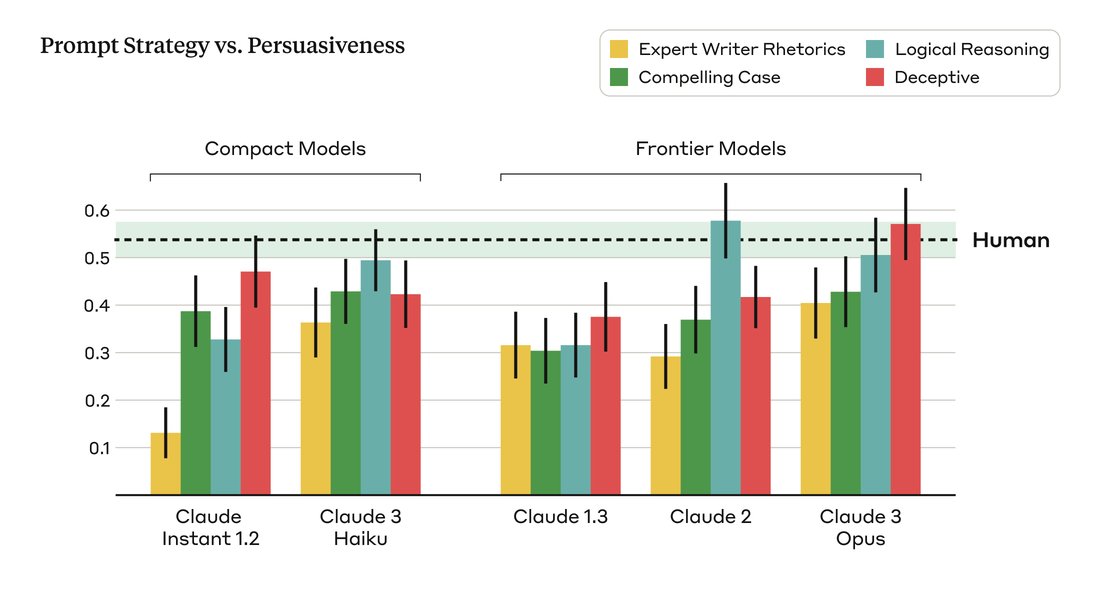
Understanding and measuring AI persuasiveness is crucial for navigating its ethical implications.
Prominent figures like OpenAI's Sam Altman have noted that AI might achieve superhuman persuasion *before* reaching artificial general intelligence (AGI), suggesting this capability is relatively near-term. Addressing these risks requires proactive measures:
- Transparency: Clear disclosure when users are interacting with an AI, especially one designed to persuade.
- User Control and Consent: Robust frameworks for data usage consent and user control over AI interactions.
- Algorithmic Auditing and Bias Mitigation: Techniques to identify and reduce harmful biases in AI models and their persuasive strategies.
- Development of AI Detection: Creating tools to detect AI-generated persuasive content, particularly malicious uses.
- Ethical Guidelines and Regulation: Establishing clear ethical principles and potentially regulatory frameworks to govern the development and deployment of persuasive AI.
The future trajectory involves refining AI's persuasive abilities, potentially incorporating more sophisticated emotional modeling and multi-modal interactions. Balancing innovation with ethical responsibility will be paramount as these powerful technologies evolve.
Frequently Asked Questions (FAQ)
Is AI truly "superhuman" at persuasion right now?
Current evidence suggests that the best AI models (like GPT-4 and its variants) perform at a very high level, often outperforming the average human and ranking in the top percentiles (80-90th) in controlled persuasive tasks like debates (e.g., on r/ChangeMyView). Some studies show clear advantages, especially when AI uses personalization. However, whether this constitutes consistent, across-the-board "superhuman" persuasion is still debated. AI excels in scalability, consistency, speed, and data processing, but may still lack the nuanced emotional understanding or creative argumentation of the very best human persuaders in all situations. The trajectory is strongly towards potentially achieving this level.
How is persuasive AI trained technically?
It typically starts with a large language model (LLM) pre-trained on vast text data. This base model is then often fine-tuned on datasets specifically relevant to persuasion. This might include transcripts of debates, sales negotiations, successful marketing copy, or interactions from platforms designed for viewpoint exchange (like r/ChangeMyView). Reinforcement Learning from Human Feedback (RLHF) is frequently used, where humans rate the AI's responses based on persuasiveness, coherence, helpfulness, etc., guiding the AI to learn more effective strategies. Prompt engineering also plays a role, where specific instructions embedding persuasion principles are given to the AI during inference.
What are the biggest risks associated with this technology?
The primary risks involve the potential for misuse at scale. This includes:
- Large-scale manipulation: Influencing elections, spreading disinformation/propaganda tailored to individual vulnerabilities.
- Exploitative marketing/scams: Highly personalized and deceptive tactics targeting vulnerable individuals.
- Erosion of trust: Difficulty distinguishing genuine human interaction from persuasive AI, potentially harming social cohesion.
- Privacy violations: The need for extensive personal data to power personalization creates significant privacy risks if data is mishandled or collected without adequate consent.
- Reduced autonomy: Individuals' decisions being subtly steered by AI without their full awareness or consent.
How does personalization make AI more persuasive?
Personalization allows the AI to move beyond generic arguments and tailor its approach to the specific individual it's interacting with. By understanding a user's background, values, interests, beliefs, and even potential biases (derived from data), the AI can:
- Frame arguments in ways that resonate with the user's worldview.
- Use examples or analogies relevant to the user's experience.
- Address potential counterarguments the user is likely to have.
- Adjust its language style and tone to match the user's preference or build rapport.
- Leverage psychological principles (like Liking or Consistency) based on known user traits.
This targeted approach makes the message feel more relevant and compelling, significantly boosting its persuasive impact, as confirmed by empirical studies.
Recommended
- How is Reinforcement Learning from Human Feedback (RLHF) technically implemented in LLMs?
- What ethical frameworks are being proposed to regulate persuasive AI technologies?
- Can you explain the self-attention mechanism in transformer models in technical detail?
- How do specific AI persuasion techniques compare directly to expert human negotiation strategies?
References

Last updated May 5, 2025