
The Nuances of "The Long Goodbye": Exploring its Diverse Meanings
Unpacking a Phrase That Spans Literature, Cinema, and Human Experience
Key Insights into "The Long Goodbye"
- Raymond Chandler's Noir Masterpiece: "The Long Goodbye" is most famously the title of Raymond Chandler's 1953 detective novel, featuring the iconic private investigator Philip Marlowe, which delves into themes of loyalty, betrayal, and societal corruption in 1950s Los Angeles.
- Robert Altman's Neo-Noir Adaptation: The term also refers to Robert Altman's highly influential and polarizing 1973 film adaptation of Chandler's novel, which deconstructs the traditional film noir genre by transplanting a classic Marlowe character into a cynical 1970s Hollywood.
- Anticipatory Grief and Dementia: Beyond its artistic interpretations, "the long goodbye" is a poignant idiom used to describe the prolonged and often painful grieving process experienced by loved ones as someone slowly declines due to conditions like Alzheimer's disease or other serious illnesses, marked by a gradual loss of personality and cognitive function.
"The Long Goodbye" is a phrase that carries significant weight across various contexts, most prominently in literature and cinema, but also as a deeply empathetic descriptor for a specific human experience. From the gritty streets of post-war Los Angeles as depicted by Raymond Chandler to Robert Altman's deconstruction of the detective genre in the 1970s, and then into the very real, heart-wrenching journey of anticipatory grief, the term evokes complex themes of loss, transformation, and enduring loyalty.
Raymond Chandler's Literary Masterpiece: A Deep Dive into the Novel
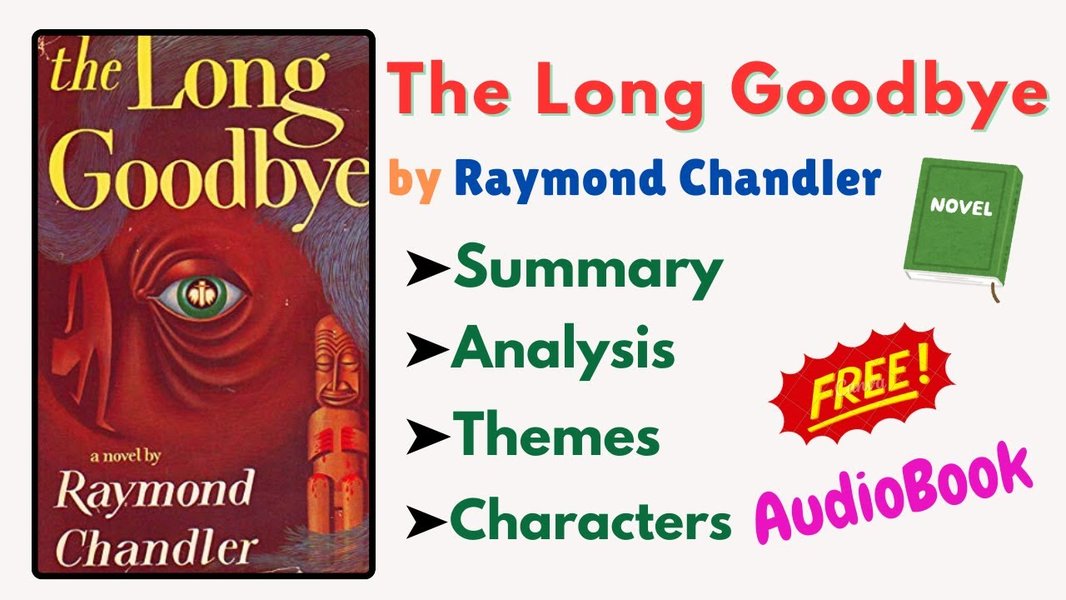
At its core, "The Long Goodbye" is the sixth novel in Raymond Chandler's celebrated series featuring the hard-boiled private investigator, Philip Marlowe. Published in 1953, the novel plunges Marlowe into a complex web of friendship, betrayal, and murder, set against the backdrop of a corrupt Los Angeles society. It is considered by many critics, and even Chandler himself, to be his most personal and arguably finest work.
Synopsis of a Shifting Landscape
The story begins with Marlowe befriending a seemingly down-and-out, but elegant, war veteran named Terry Lennox. Their bond is tested when Lennox's wealthy and unfaithful wife, Sylvia, is found murdered, and Lennox confesses to the crime before seemingly committing suicide in Mexico. Marlowe, convinced of his friend's innocence, embarks on an investigation that uncovers layers of deceit, involving rich elites, alcoholic writers, and dangerous gangsters.
Chandler's narrative style is a hallmark of the hard-boiled noir genre, characterized by sharp dialogue, vivid descriptions of Los Angeles, and a pervasive sense of melancholic cynicism. The plot, while intricate, serves as a vehicle for exploring themes of loyalty, honor, and the elusive nature of truth in a morally ambiguous world. Marlowe's steadfast loyalty to Terry Lennox, even in the face of overwhelming evidence and police brutality, underscores the novel's central emotional conflict. The title itself, "The Long Goodbye," reflects Marlowe's prolonged and ultimately painful process of letting go of his belief in Lennox's innocence, and by extension, a certain ideal of friendship and integrity in a decaying society.
Character Depth and Societal Commentary
Beyond the plot, Chandler's novel is celebrated for its rich character development. Philip Marlowe, in this installment, is portrayed with a heightened sense of loneliness and an aging sensibility, grappling with his moral code in a world that seems to be losing its values. The novel offers a poignant social commentary on post-war American society, highlighting its gritty and corrupt underbelly, where wealth often shields crime and justice is a commodity.
Here's an illustration depicting Raymond Chandler's iconic character, Philip Marlowe, often associated with the hard-boiled detective genre and the world of "The Long Goodbye" novel.
Philip Marlowe, the central figure in Chandler's "The Long Goodbye."
Robert Altman's Cinematic Reinvention: The 1973 Film
In 1973, director Robert Altman released his controversial yet acclaimed film adaptation of "The Long Goodbye," starring Elliott Gould as Philip Marlowe. Altman's film is not a faithful recreation of Chandler's novel but rather a radical revisionist take on the film noir genre, transplanting the classic detective into a cynical, sun-drenched 1970s Los Angeles. This adaptation is often cited as a key work of New Hollywood neo-noir.
A "Rip Van Marlowe" in a New Era
Altman's "Long Goodbye" is characterized by its whimsy, spontaneity, and narrative perversity. Elliott Gould's portrayal of Marlowe is a significant departure from previous interpretations (like Humphrey Bogart's), presenting him as a disheveled, mumbling, chain-smoking anachronism—a "Rip Van Marlowe" who awakens from the 1950s into a bewildering new world. This version of Marlowe is less a competent professional and more a confused outsider, highlighting the decay of traditional heroic figures and moral certainties.
The film deliberately deconstructs the tropes of classic film noir, offering a sardonic critique of Hollywood and American mythology. Cinematographer Vilmos Zsigmond's experimental exposure techniques give the film a faded, dreamlike look, resembling old postcards of Los Angeles, further emphasizing a sense of nostalgia and decay. Altman's signature flowing camera movements, often panning and floating in and out of scenes, create a voyeuristic effect, drawing the audience into the unfolding mystery as if they are secretly witnessing events.
Genre Subversion and Cultural Commentary
The film's ending is notably different from the novel, a change that initially sparked controversy but has since been lauded for its bold and cynical statement on loyalty and justice. Altman, along with screenwriter Leigh Brackett (who also co-wrote the 1946 film adaptation of Chandler's "The Big Sleep"), crafted a script that was inventive, oblique, and often hilarious, allowing for a degree of improvisation that infused the film with a unique humanity and reality. The film's title song, composed by John Williams and Johnny Mercer, is cleverly re-used throughout the movie in various styles, serving as a recurring leitmotif that underscores the film's blend of tribute and subversion.
The film's exploration of decadence and moral ambiguity in 1970s America makes it a significant cultural artifact, reflecting anxieties and shifts in societal values. It's a film that demands engagement, often eliciting strong reactions from viewers, making it a compelling piece of cinematic history.
This radar chart illustrates the comparative stylistic and thematic elements of Raymond Chandler's novel and Robert Altman's film adaptation of "The Long Goodbye," highlighting their unique approaches to the narrative and genre.
The Idiomatic "Long Goodbye": Grieving and Loss
Beyond its literary and cinematic interpretations, "the long goodbye" is a deeply evocative phrase commonly used to describe the protracted and often agonizing process of grieving someone who is slowly declining due to a terminal illness, most notably Alzheimer's disease or other forms of dementia. This usage highlights the unique pain associated with losing a loved one gradually, piece by piece, while they are still physically present.
Anticipatory Grief and Ambiguous Loss
When applied to conditions like Alzheimer's, "the long goodbye" refers to a form of anticipatory grief. This is the grieving experienced prior to the actual death of a loved one, as family members and caregivers witness the gradual disappearance of their loved one's mind, personality, and abilities. The person they knew slowly fades away, often losing the capacity for memory, communication, and self-care. This continuous decline means that the traits, tendencies, and abilities that defined the individual depart long before their physical death.
This experience is also closely tied to the concept of "ambiguous loss," where a person is physically present but psychologically or socially absent. This creates a complex emotional landscape for caregivers, who may feel a profound sense of loss and sadness while simultaneously providing care for someone who is no longer the person they once were. The extended duration of these illnesses, which can span years or even decades, means that the grieving process is not a single event but a prolonged journey.
The following table summarizes the key aspects of "The Long Goodbye" across its various meanings:
| Aspect | Raymond Chandler's Novel | Robert Altman's Film | Idiomatic Usage (e.g., Dementia) |
|---|---|---|---|
| Primary Focus | Hard-boiled detective mystery, loyalty, societal corruption. | Neo-noir deconstruction, genre subversion, cynical social critique. | Anticipatory grief, gradual loss, emotional impact on caregivers. |
| Key Themes | Friendship, betrayal, honor, truth, loneliness, moral decay. | Anachronism, disillusionment, changing societal values, Hollywood's decline. | Loss of identity, memory, personality, prolonged mourning, caregiving challenges. |
| Narrative Style/Tone | Gritty, melancholic, cynical, sharp dialogue, intricate plot. | Whimsical, spontaneous, ironic, meandering, visually faded, jazz-like. | Poignant, sorrowful, emotionally draining, empathetic, often bittersweet. |
| Central Figure/Experience | Philip Marlowe's quest for justice and loyalty. | Elliott Gould's detached, confused Marlowe in a new era. | Caregivers and family witnessing cognitive decline. |
| Emotional Impact | Sense of loss for a bygone era and moral clarity. | Discomfort and re-evaluation of established genres. | Profound sadness, emotional exhaustion, complex grief before death. |
Finding Meaning in the Midst of Decline
Despite the immense pain, many individuals facing "the long goodbye" seek to find purpose and meaning within this difficult period. This can involve cherishing moments of clarity, finding joy in simple interactions, and practicing acceptance. Support groups and open communication among family members are crucial for navigating the intense emotions associated with this form of grief, helping individuals to process their feelings and avoid isolation.
The term encapsulates a universal human experience of profound loss that is not sudden, but rather a slow, continuous unfolding, requiring immense resilience and emotional fortitude from those who are saying goodbye.
The Cultural Impact of "The Long Goodbye"
The phrase "The Long Goodbye" has cemented its place in popular culture, largely due to the enduring legacy of Raymond Chandler's novel and Robert Altman's film. It has influenced subsequent works in various media, testifying to its resonance and adaptability.
Influence Across Media
Chandler's novel set a benchmark for detective fiction, influencing countless writers and filmmakers. Its complex portrayal of Marlowe and its nuanced exploration of morality continue to be studied and admired. The novel's title itself has been alluded to in other works of fiction with a hardboiled or noir theme, demonstrating its iconic status.
Altman's film, on the other hand, is celebrated for its radical departure from traditional adaptations, pioneering a neo-noir style that influenced future directors in their approach to genre. It demonstrated how a classic narrative could be reinterpreted to comment on contemporary society, proving that faithfulness isn't always the path to artistic success. The film's unique aesthetic and Gould's performance remain subjects of critical discussion and appreciation among film enthusiasts.
The widespread understanding of "the long goodbye" as a term for anticipatory grief reflects its deep emotional resonance within the human experience. It speaks to the shared challenges of coping with chronic illness and the slow, painful process of watching a loved one change.
This video delves into what makes Robert Altman's "The Long Goodbye" a great film, highlighting its unique cinematic qualities.
Frequently Asked Questions (FAQ)
What is the main plot of Raymond Chandler's "The Long Goodbye" novel?
How does Robert Altman's film adaptation differ from Chandler's novel?
What does "the long goodbye" mean in the context of dementia?
Is "The Long Goodbye" considered a classic of its genre?
What themes are common across the different interpretations of "The Long Goodbye"?
Conclusion
"The Long Goodbye" is a multifaceted phrase that resonates deeply across diverse domains. From Raymond Chandler's quintessential hard-boiled narrative, which masterfully explores loyalty and corruption through the eyes of Philip Marlowe, to Robert Altman's audacious cinematic reimagining that deconstructs the very essence of film noir, the term has significantly impacted literature and cinema. Beyond these artistic realms, it powerfully encapsulates the profound and prolonged emotional journey of anticipatory grief, particularly for those witnessing the slow decline of loved ones due to illnesses like Alzheimer's. Each interpretation, though distinct, shares a core sentiment of enduring a drawn-out farewell, marking a significant and often painful transition. This phrase, therefore, is not merely a title, but a poignant descriptor for processes of loss, transformation, and complex human relationships, reflecting a universal experience of gradual parting in various forms.
Recommended Further Exploration
- Analysis of Philip Marlowe's Character Evolution in Chandler's Novels
- The influence of Robert Altman's directorial style on New Hollywood cinema
- Understanding anticipatory grief in the context of chronic illnesses
- The evolution of film noir into neo-noir and its key characteristics
References
 jacquiwine.wordpress.com

Last updated May 21, 2025